
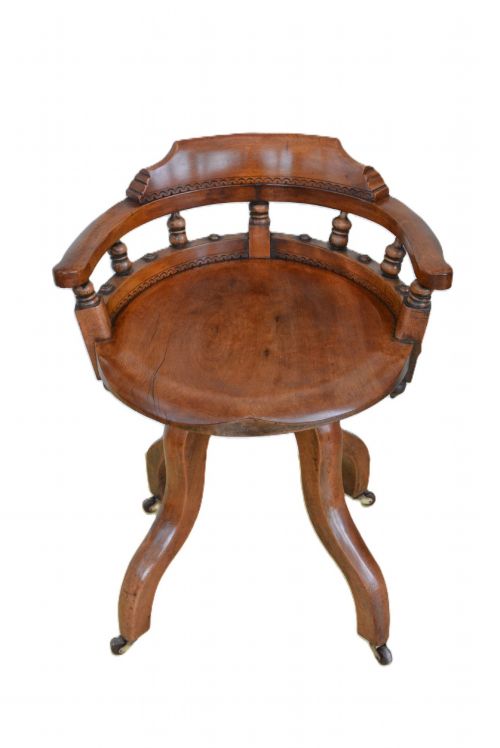


Edwardian Swivel Desk Chair
An edwardian swivel desk chair brings mechanical ingenuity and sturdy timber to a home workspace with enduring grace.
Edwardian Swivel Desk Chair
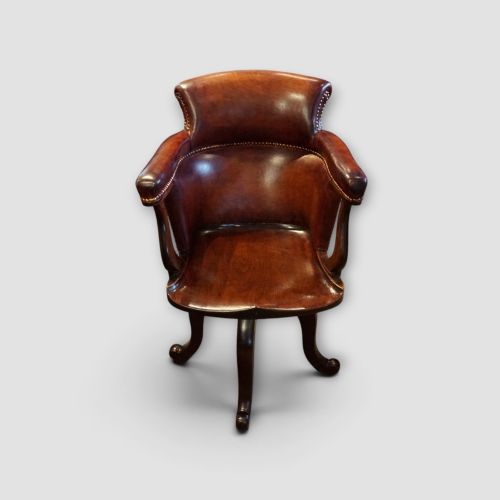
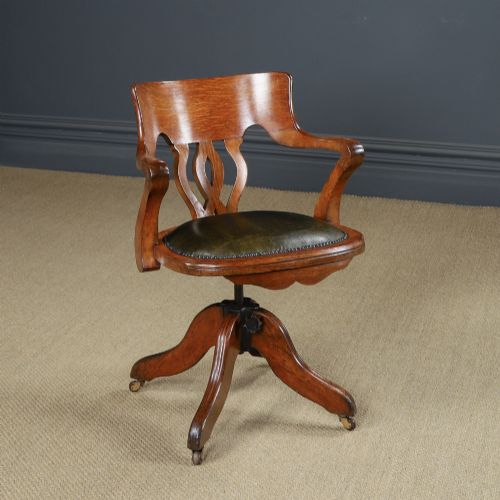
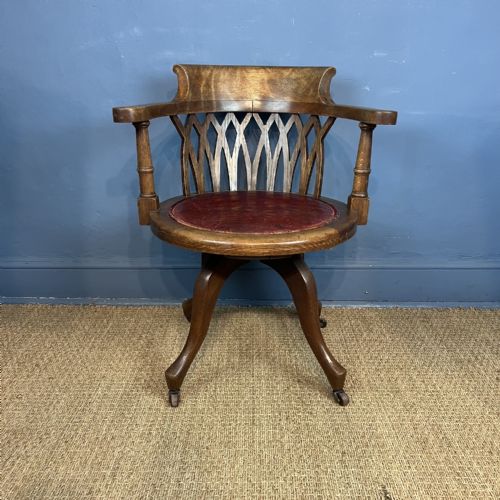
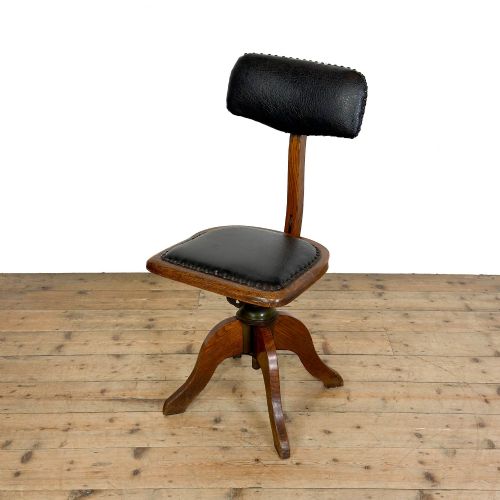
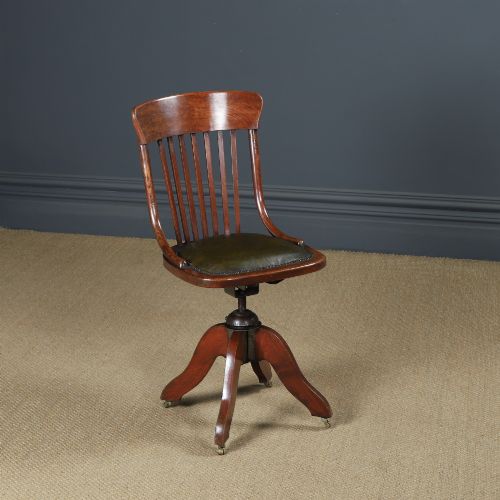
When searching for an edwardian swivel desk chair, one encounters sturdy seating designed for the functional offices of the early twentieth century. Oak and mahogany predominate among these office chairs, frequently paired with supple leather or hide inserts on the seats.
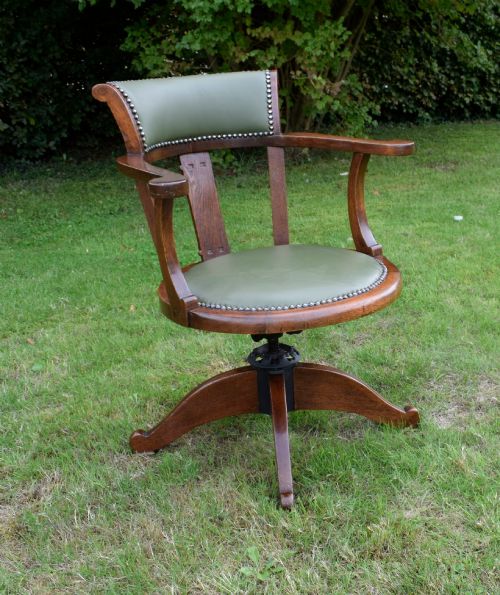
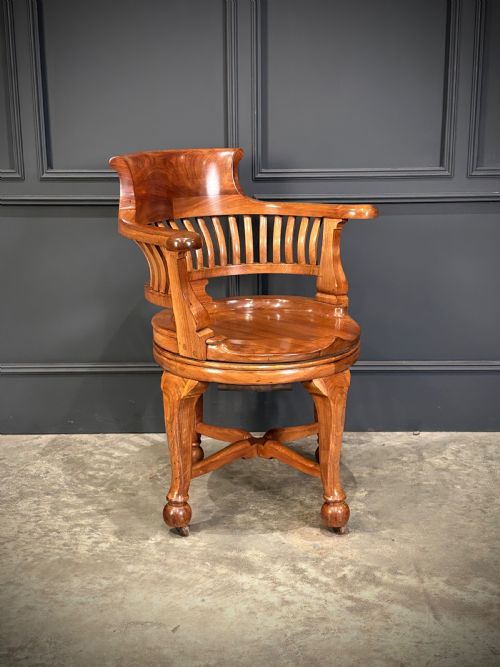
The most common version met on this page is the revolving armchair featuring a central spindle and adjustable height mechanism. Makers of the period drew upon late Victorian traditions while refining the proportions for daily professional use.
Materials and Construction
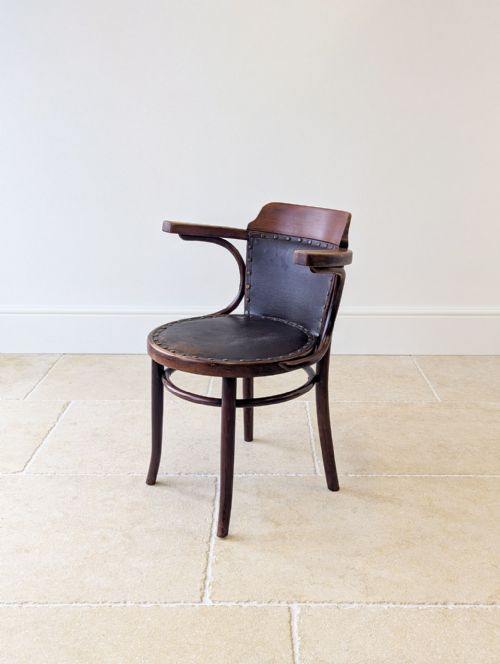
Solid timbers such as oak, mahogany, walnut, beech and ash form the primary framework of these pieces. Workshops utilised steam bending for curved wooden components like tub backs and bentwood frames.
Cast iron and brass mechanisms underneath provide the swivel and tilt functions, anchored by four or five pronged bases. Upholstered sections utilise traditional leather or hide fastened with metal tacks.
Certain maritime examples hail from P & O steamships, bringing rough ocean service directly to the writing desk.
Distinctions in Quality
The refinement of the undercarriage mechanism and the weight of the cast iron assembly separate standard production models from finer examples. More substantial frames display sophisticated joinery and carefully selected timber grain rather than plain utility cuts.
The presence of maker signatures or distinctive hardware branding elevates a piece above anonymous workshop output. Original swivel actions that operate smoothly without excessive wobble demonstrate superior initial manufacture.
Kendrick & Jefferson·Hillcrest·Edward William Godwin·Shoolbred
The Edwardian Swivel Desk Chair Glossary
- Swivel
- A mechanical pivot allowing the upper portion of the chair to rotate completely around the base. This movement relied on cast iron spindles concealed beneath the seat.
- Revolving
- An alternative term for a swivel action commonly used in period trade catalogues. It describes the continuous rotation permitted by the central column.
- Rise and fall
- An adjustment mechanism allowing the seat height to be raised or lowered by turning the seat on its threaded spindle. This function accommodated different desk heights and user statures.
- Bentwood
- Wood shaped by exposure to steam and pressure into curved structural components. Thonet workshops popularised this technique for resilient chair frames.
- Hide
- Untanned or tanned heavy animal skin utilised for durable seat upholstery. Tan and green colours appear frequently on office seating.
Edwardian Swivel Desk Chair: Frequently Asked Questions
How do I adjust the height?
Most models feature a central threaded spindle that raises or lowers the seat when rotated. Turning the chair clockwise or anticlockwise alters the vertical position.
Some variants utilise a mechanical lever to control the rise and fall action. Ensure the thread is lubricated to prevent binding during adjustment.
Can I use it on carpet?
These pieces function adequately on short pile carpets, though movement may require slightly more effort. The heavy wooden bases remain stable on most floor surfaces.
Placing a protective mat underneath prevents the wooden or cast iron feet from snagging delicate rug fibres. Heavier models stay firmly in place during daily tasks.
How do I maintain the leather?
Apply a neutral leather balm periodically to keep the hide supple and prevent cracking. Avoid harsh chemical cleaners that strip the original surface finish.
Keep the seating away from direct heat sources and strong sunlight to preserve the colour. Gentle dusting with a dry cloth maintains the daily appearance.
Are these chairs comfortable for working?
The ergonomic curved wooden backs provide substantial support for upright desk tasks throughout the day. Padded leather inserts offer additional cushioning compared to plain wood.
Because they lack modern pneumatic springs, the seated position remains firm and fixed at the chosen height. Users accustomed to traditional furniture find them remarkably supportive.