



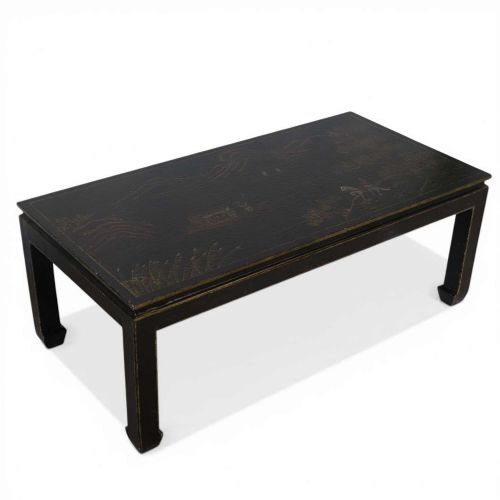


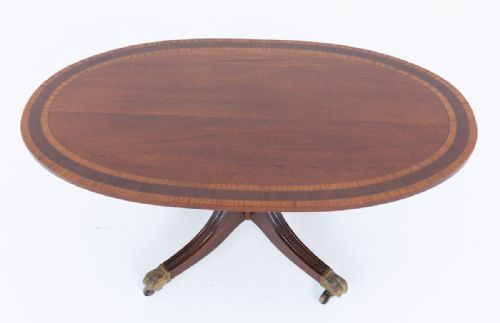


Edwardian Style Low Table
An edwardian style low table brings low surface utility into a room, spanning coffee tables, stools, and occasional forms.
Edwardian Style Low Table
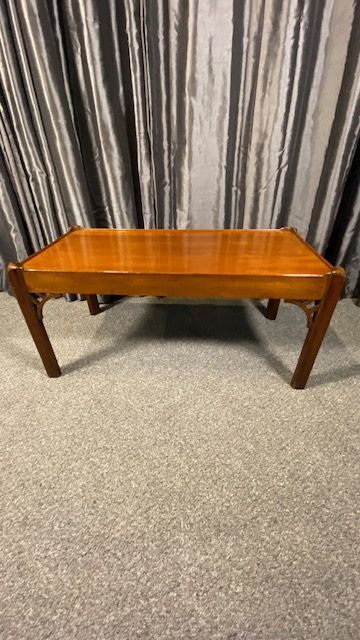
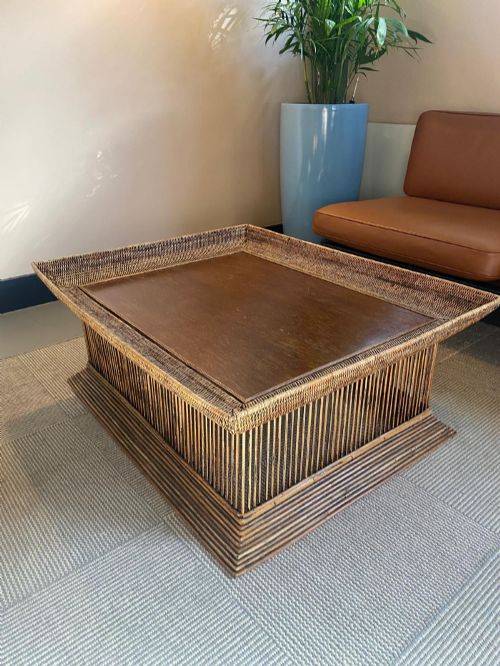
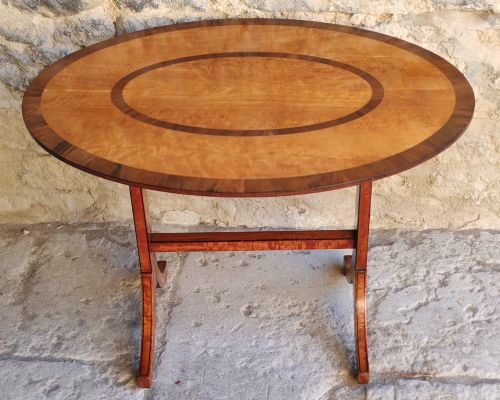
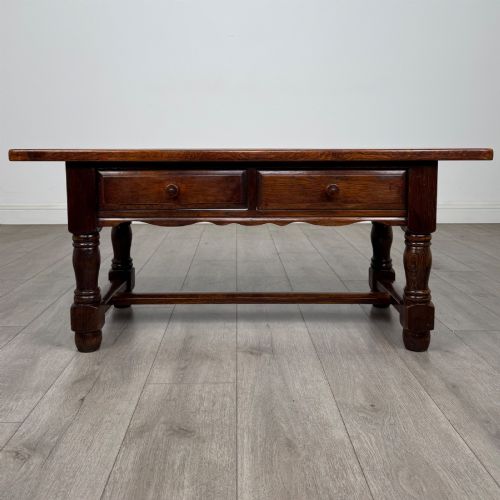
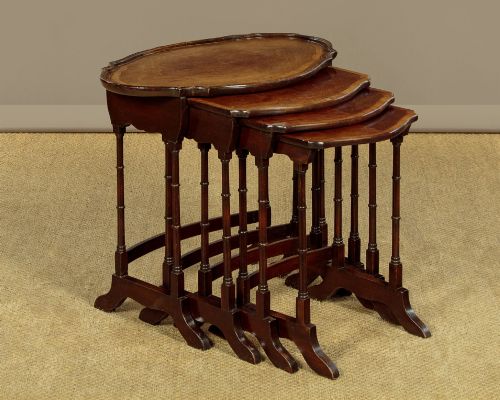
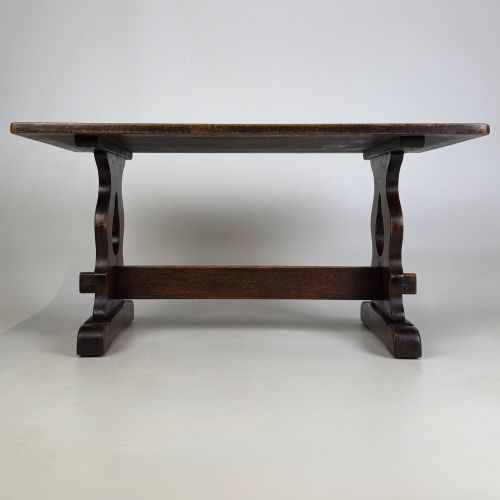
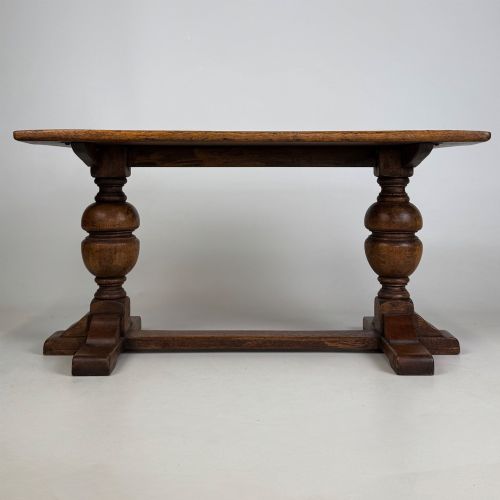
When you search for an edwardian style low table, you encounter a varied group of low-set furniture forms adapted from earlier periods. The pieces appearing here span coffee tables, dressing table stools, footstools, and low occasional tables originating across the late nineteenth and early twentieth centuries, alongside revival interpretations.
The most common formats on this page are mahogany and walnut coffee tables, alongside lacquered Chinoiserie tray tables and various low stools. These low tables utilise woods like oak, yew, and burr walnut, sometimes finished with paint, lacquer, or gilt details.
Makers and designers drew on Georgian, Regency, Queen Anne, and Jacobean revivals. Pieces range from straightforward timber coffee tables to intricately decorated lacquer tray tables and marble-topped designs.
Materials and construction
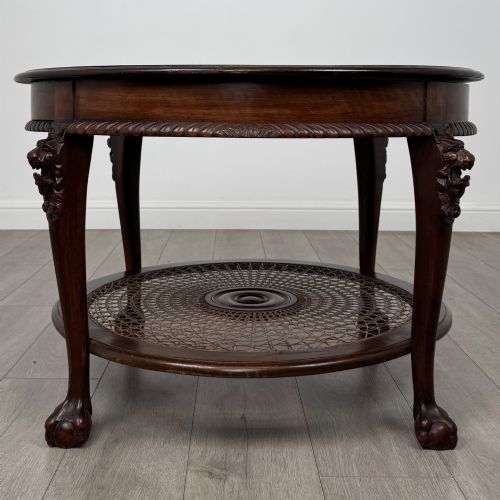
Makers constructed these low tables primarily using timbers such as mahogany, walnut, oak, and yew wood, often incorporating burr veneers or oyster veneers for decorative surfaces. Supporting elements frequently feature carved cabriole legs, cross stretchers, or castors.
Surface decoration involves specialised techniques including Chinoiserie lacquer, decorative painted scenes, gilt work, marble tops, and leather upholstery. Tray top designs and pie crust mouldings require careful edge shaping and joinery.
Edwardian Style Low Table Retail Price Guide 2026
Typical asking prices for edwardian style low table among the pieces listed under this phrase on Sellingantiques today, from the lower quarter to the upper quarter. They describe what is for sale here now, not the wider market.
Listings feature woods including mahogany, walnut, oak, yew, and gilt paint, alongside periods spanning from the nineteenth century into the 1930s.
Distinctions in quality
Quality in these low tables rests upon the selection of timber figures, such as burr walnut or figured yew, and the crispness of hand-carved details on legs and edges. Refined execution in painted Chinoiserie scenes and lacquer finishes elevates certain pieces significantly above plain utility items.
The integrity of the construction, from stable cross stretchers to tightly fitted marble tops and proper veneer application, separates standard production from superior examples. Signed works or specialised regional variants demonstrate heightened craftsmanship within revival styles.
Waring and Gillow·E. Daligny
The Edwardian Style Low Table Glossary
- Chinoiserie
- European decorative style reflecting Chinese artistic motifs. It typically employs lacquer and painted scenes.
- Pie crust
- A raised, scalloped edge carved around the perimeter of a circular table top. This moulding resembles pastry work.
- Cabriole leg
- A furniture leg that curves outward at the knee and tapers inward toward the foot. It often terminates in a pad or claw foot.
- Dresser base
- A lower sideboard or console structure featuring drawers and cupboards. These form the lower section of a traditional dresser.
- Cross stretcher
- Intersecting wooden struts running horizontally between table or stool legs for added stability. They frequently meet at a central point.
Edwardian Style Low Table: Frequently Asked Questions
What is an edwardian style low table?
An edwardian style low table encompasses low-set furniture items built or styled around the early twentieth century. These pieces include coffee tables, tray tables, and low stools.
Design influences draw heavily on earlier historical revivals like Chippendale, Queen Anne, and Sheraton. They utilise woods such as mahogany, walnut, and oak.
Were these tables originally coffee tables?
Many low tables from this era started life in alternative forms, such as dressing stools, tray stands, or occasional tables. Lower proportions became desirable as room layouts evolved.
Some items retain stool frames or tray configurations while functioning as low coffee tables today.
How do I care for a lacquered table?
Lacquered and painted surfaces require gentle treatment with a soft, dry cloth to remove dust. Avoid moisture, direct sunlight, and chemical cleaners that can damage the finish.
Wax polishing should be used sparingly and only on unpainted wooden sections, keeping liquids away from delicate Chinoiserie scenes.