
Edwardian Style Dining Table
These edwardian style dining table pieces bring formal grace to rooms, offering extendable timbers and classic revival details for hosting.
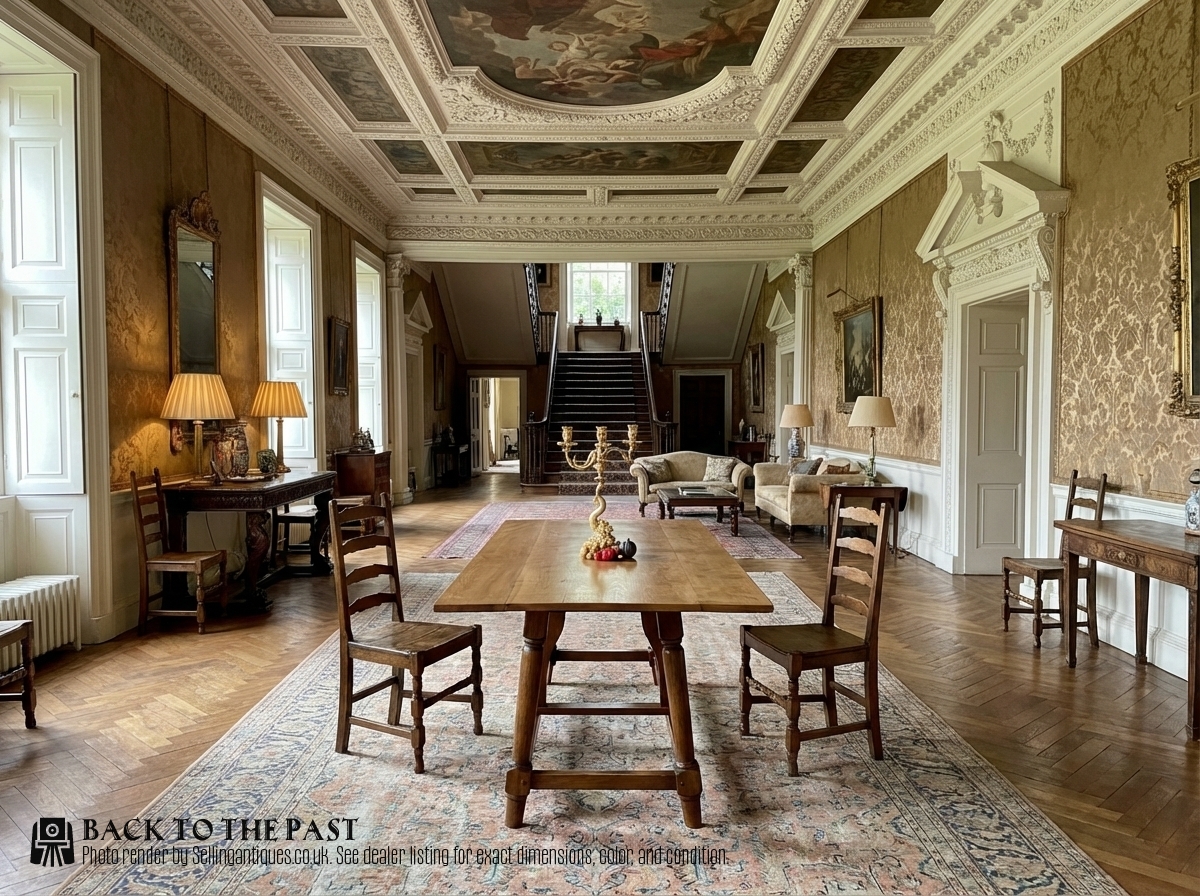
Edwardian Style Dining Table
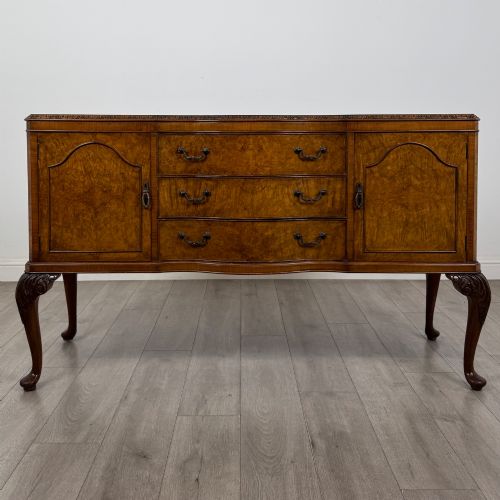
When you search for an edwardian style dining table, you encounter pieces spanning the late nineteenth century through the early decades of the twentieth. The selection relies heavily on mahogany and oak timbers, often referencing earlier Georgian, Regency or Sheraton forms.
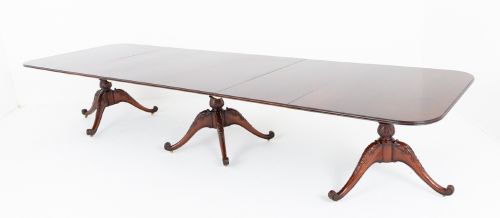
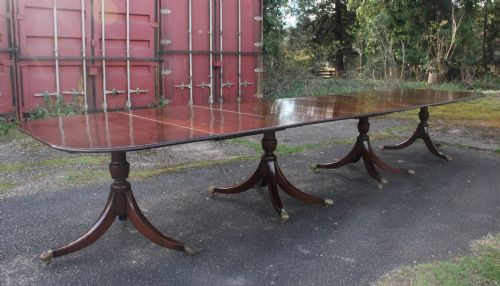
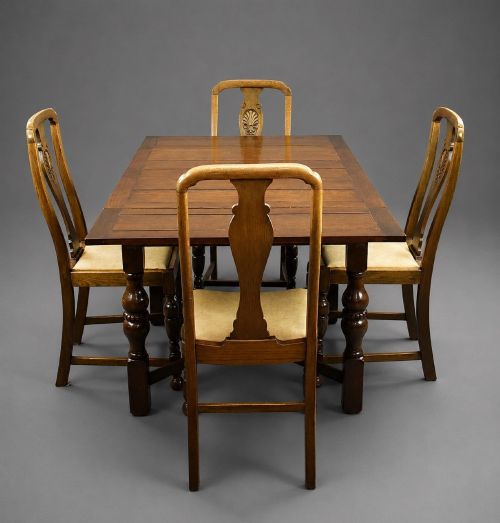
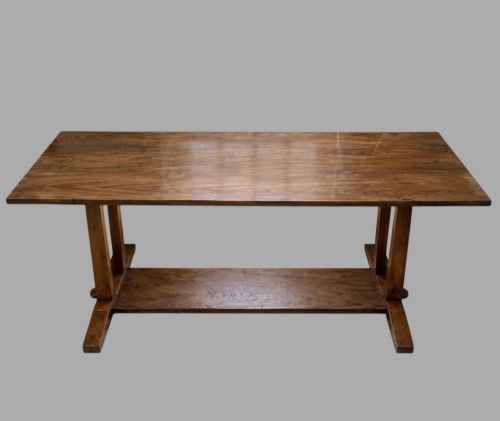
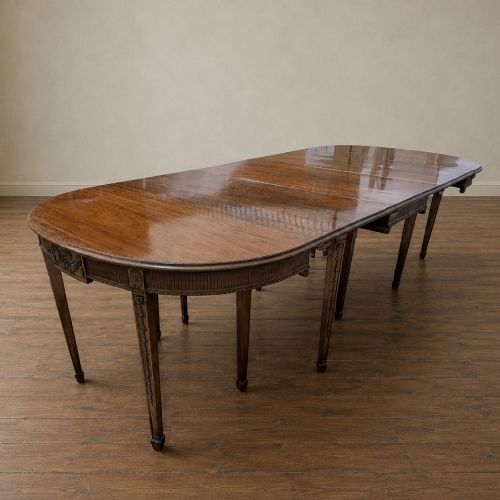
Extending mechanisms define many of the dining tables found here, allowing leaves to be added or wound out for larger gatherings. Alongside these, solid oak refectory formats and pedestal arrangements appear frequently from the Edwardian period and subsequent revival decades.
Materials and construction
Makers utilised solid mahogany and quartered oak as the primary structural woods, frequently applying satinwood, boxwood or wood inlay for decorative banding and borders. These timbers were selected for grain pattern and stability during the manufacture of large dining surfaces.
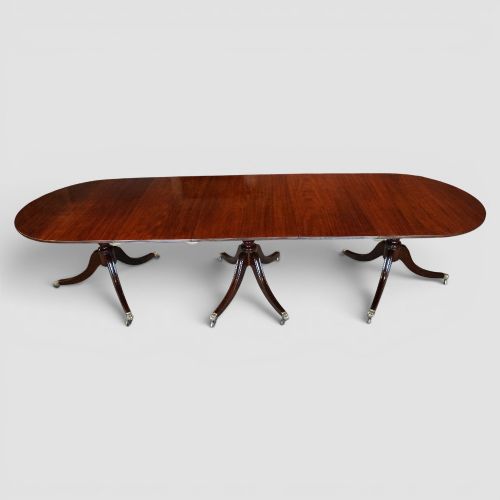
Joinery methods included draw leaves, gateleg hinges and mechanical wind-out systems supported by multi-pillar pedestals or trestle ends. Brass fittings often reinforced extension mechanisms and castors on heavy pedestal feet.
The inventory spans dining tables from the late Victorian era through the Edwardian period and into the nineteen thirties.
Assessing quality and craftsmanship
Superior examples demonstrate meticulous timber selection, where mahogany flame veneers and oak quarters align precisely across extending leaves. The integrity of the internal winding mechanisms and the weight of the timber dictate the longevity and smoothness of the extension.
Refinement in carving, crispness of crossbanding and the retention of original brass hardware elevate certain dining tables above simpler utilitarian counterparts from the same era.
Waring and Gillow·Whytock and Reid·M. D. Miller and Sons
The Edwardian Style Dining Table Glossary
- Crossbanding
- A decorative border of veneer laid perpendicular to the grain of the main surface. This technique frames the top of a dining table with contrasting wood tones.
- Wind out
- A mechanical system utilising a metal screw rod operated by a crank handle to separate table halves for insertion leaves. It allows smooth adjustment of the table length.
- Refectory
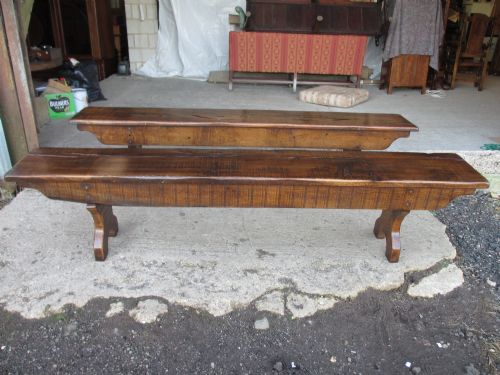
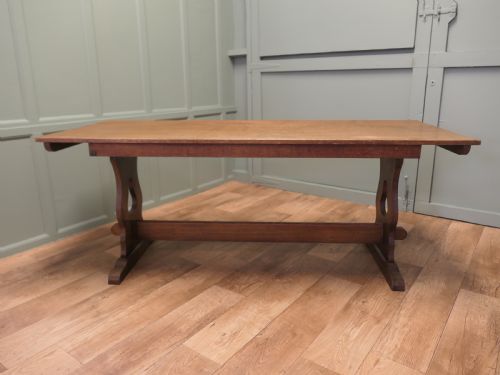
- A long, narrow dining table traditionally supported by substantial legs connected with low stretchers. These sturdy oak pieces derive from monastic dining halls.
- Gateleg
- A drop-leaf table where hinged legs swing outward to support the folded leaves when raised. This design provides flexible surface area in domestic spaces.
- Pedestal
- A central column support resting on splayed feet, often used in multiples for long dining tables. This construction allows greater legroom around the perimeter.
Edwardian Style Dining Table: Frequently Asked Questions
How do extending dining tables operate?
Many tables utilise a winding mechanism operated by a handle, parting the central sections to accommodate removable timber leaves.
Other formats employ draw-leaves stored underneath the main top, which pull outward to extend the surface area.
What woods were commonly used?
Mahogany and oak predominate among these dining tables, providing the necessary structural strength for large surfaces.
Satinwood and boxwood frequently appear as inlay materials to create contrasting decorative borders.
How do I care for a wood table?
Maintain timber surfaces by dusting with a dry cloth and avoiding excessive moisture or direct heat sources.
Apply natural beeswax periodically to nourish the grain and protect the polished finish from daily wear.
How are revival styles distinguished?
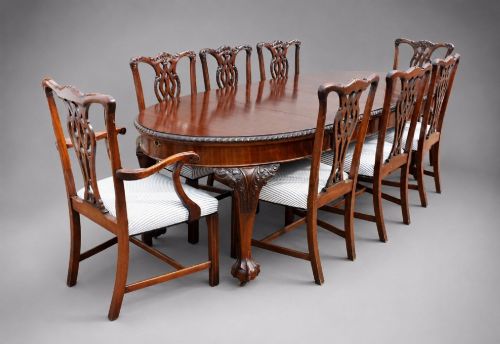
Revival pieces incorporate decorative motifs from earlier eras, such as Sheraton satinwood banding or Chippendale carved mahogany edges.
Construction details and secondary timbers usually point to the actual manufacturing date in the Edwardian period or later.