



Edwardian Style Desk Clock
An Edwardian style desk clock brings functional elegance to a working surface, combining period charm with reliable timekeeping.
Edwardian Style Desk Clock
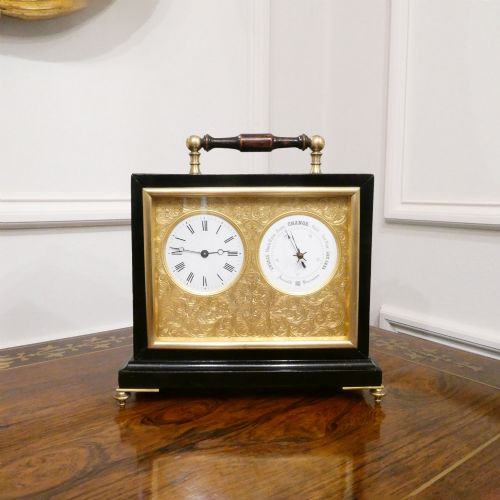
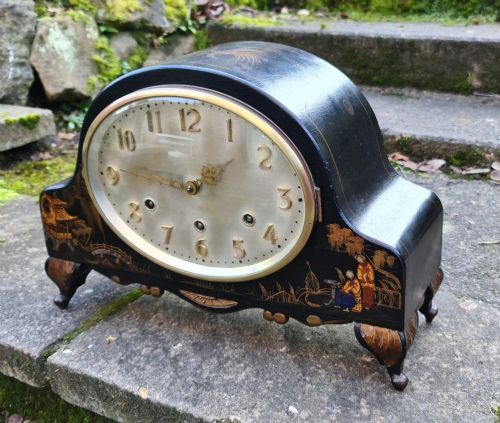
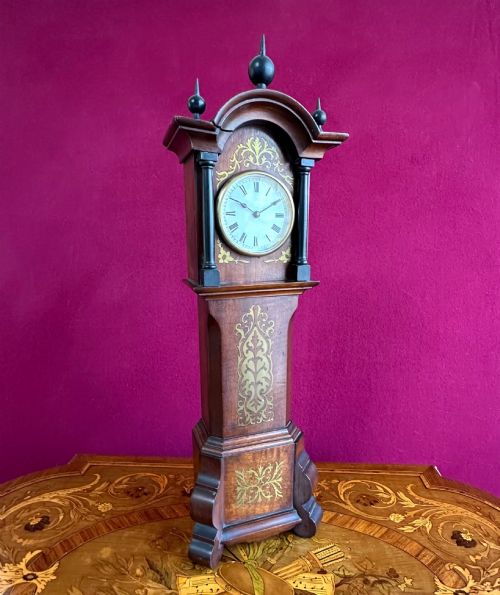
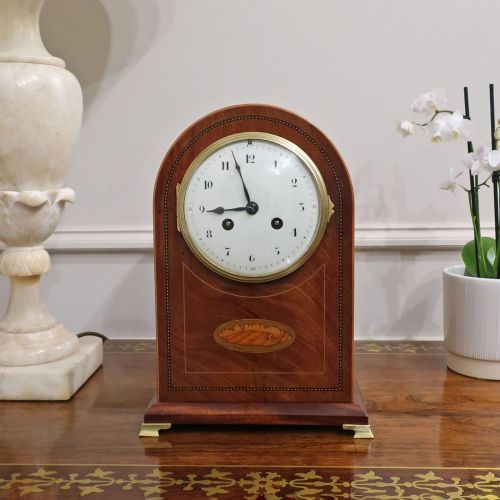
The selections on this page span several decades and decorative approaches, including Belle Epoque influences, Chinoiserie finishes, and classical revivals. These pieces function equally well on a writing desk, mantelpiece, or bedside table.
Most pieces date around nineteen hundred, though the selection includes Victorian precursors and later interpretations from the nineteen thirties. Compact proportions and detailed metalwork or woodwork define the group.
How they were made
Maker's workshops utilised traditional cabinet-making and metalworking techniques to build these timepieces. Cases feature polished brass, gilt bronze, and silver alongside timbers such as mahogany, satinwood, burr walnut, and ebonised wood.
Glass panels protect delicate dials, frequently paired with enamel faces and fine hand-painted details on Chinoiserie models. Metal components demonstrate precision casting, chasing, and gilding typical of high-grade horology.
What varies in quality
The distinction between standard production and superior craftsmanship rests in the weight of the materials and the crispness of the case details. Heavy cast bronze, solid silver, and precisely fitted wood marquetry separate finer examples from simpler commercial pieces.
Subtlety in design and the integration of maker signatures, such as those from established London retailers, elevate an individual clock. The quality of the enamel dial and the preservation of original gilding or polish determine the overall standing of the object.
J C Vickery London·Baldwin of Loughborough·Liberty s London·Asprey Of London
The Edwardian Style Desk Clock Glossary
- Carriage clock
- A small, portable spring-driven clock designed for travel, typically featuring a glass-panelled brass case and a swinging handle. Originating in the nineteenth century, they sit comfortably on modern desks.
- Chinoiserie
- A decorative style reflecting European interpretations of Chinese artistic traditions, often applied through lacquered wood and painted scenes. It adds distinctive colour and narrative detail to clock cases.
- Strut clock
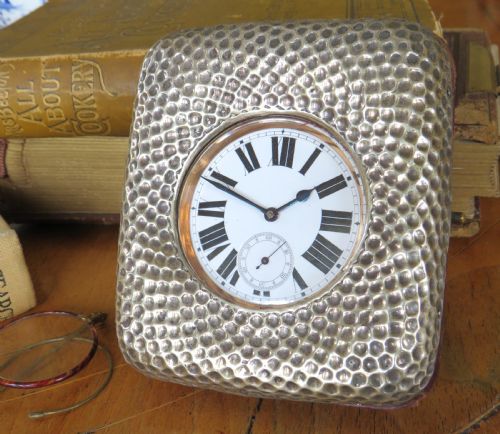
- A timepiece supported by a hinged prop or stand at the back, allowing it to rest securely on a flat surface. These frequently employ silver or gilt brass frames.
- Inlay
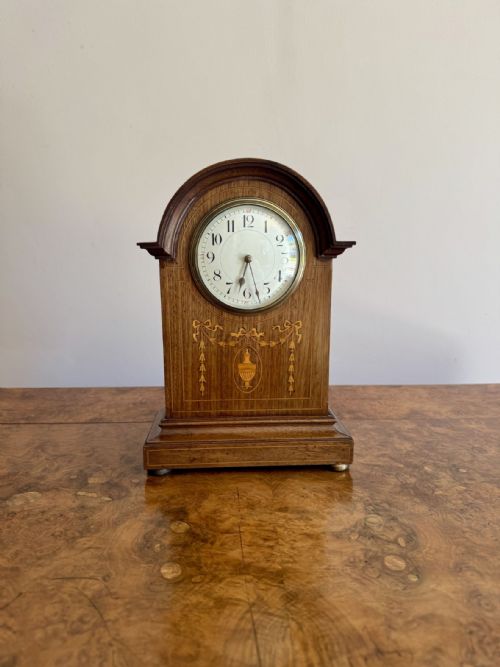
- A technique where pieces of contrasting timber, such as satinwood on a mahogany ground, are inserted into depressions to create decorative patterns. This demands high precision from the cabinet maker.
- Gilt bronze
- Copper alloy treated with a layer of gold, providing a durable and luminous metallic finish. It characterises the most ornate French and English decorative clocks.
Edwardian Style Desk Clock: Frequently Asked Questions
Where should I place an edwardian style desk clock?
These clocks suit smaller surfaces where their decorative cases can be appreciated up close, such as a writing desk, a library table, or a bedside cabinet. Their compact footprints allow them to integrate easily into existing interior schemes without dominating a room.
Because many examples were originally designed for travel or intimate spaces, positioning them away from direct sunlight and damp environments helps preserve delicate wood finishes and metal gilding.
How do I wind and maintain my clock?
Most mechanical desk clocks rely on a mainspring that requires periodic winding using a matching key or an integrated butterfly key. Care must be taken not to overwind the spring, which can cause internal damage.
Professional cleaning and oiling every few years will keep the movement running smoothly. Dusting the exterior with a soft cloth protects the polished wood and metal surfaces from tarnishing.
Are these clocks suitable for daily use?
Many of these pieces remain fully functional timepieces capable of keeping accurate daily time when properly serviced. However, antique mechanisms require gentle handling compared to modern quartz clocks.
Placing the clock on a stable, level surface ensures the pendulum or escapement operates correctly. Regular use actually benefits mechanical movements by distributing the oils evenly throughout the gear train.
How can I tell the period of a desk clock?
Dating relies on examining the case style, materials, dial typography, and any maker marks or hallmarks stamped on the metal components. For instance, silver cases often bear assay office marks and date letters that pinpoint the exact year of manufacture.
Stylistic cues also provide guidance, as Edwardian pieces frequently feature lighter wood inlays and neoclassical motifs, whereas Victorian examples tend towards heavier proportions and darker timbers.