
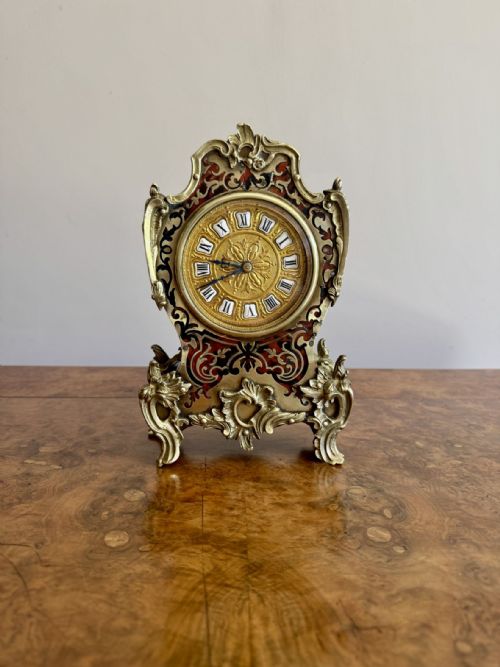


Brass Inlaid Mantle Clock
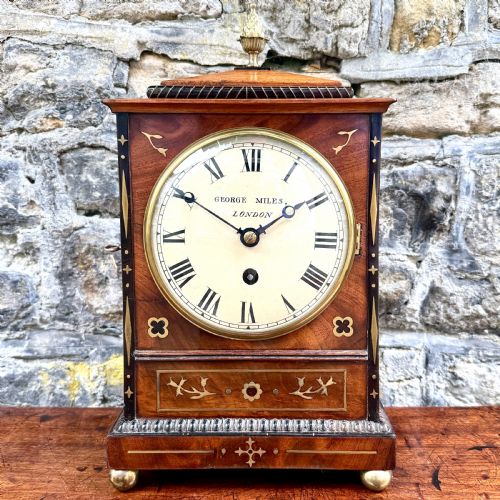
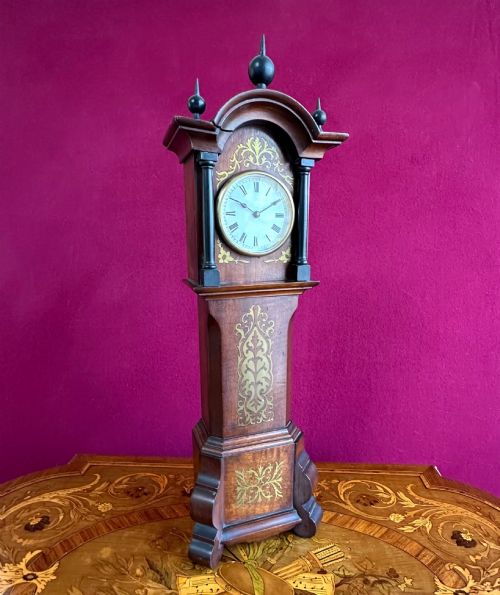
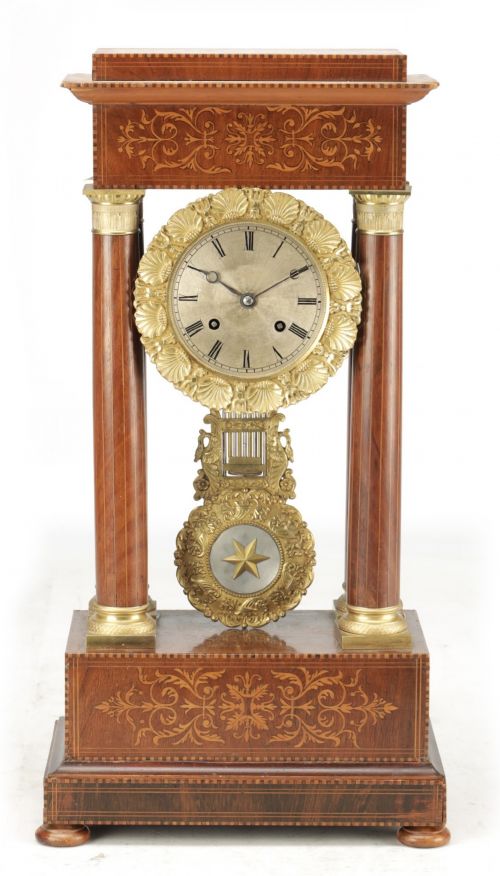
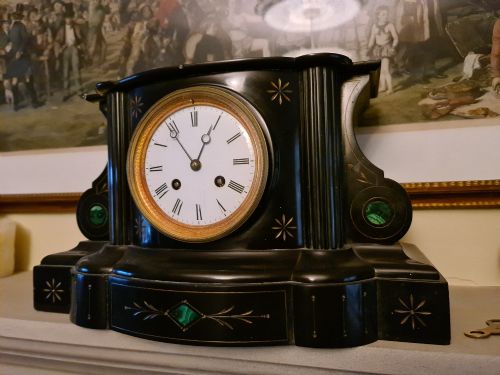
A brass inlaid mantle clock brings rich timber grain and bright metal detail to a desk or sideboard, adding precise mechanics to a room.
Brass Inlaid Mantle Clock
A brass inlaid mantle clock combines functional timekeeping with decorative cabinet work, sitting squarely on shelves or furniture surfaces rather than hanging on a wall. When you search for a brass inlaid mantle clock, you encounter domestic timepieces that span periods from the Regency era through to the Edwardian decades, alongside Victorian interpretations.
The prevailing form on this page is the wooden table or bracket clock, frequently constructed from rich timbers like mahogany or rosewood and embellished with contrasting brass lines or scrollwork. Pieces emerge from English workshops as well as French makers, reflecting regional preferences in case architecture and dial arrangement.
Mantle clocks vary from restrained architectural bracket designs to elaborate balloon shapes and French Boulle or regulator formats. Each version adapts the same basic mechanical movement to a distinct aesthetic vocabulary shaped by its period of origin.
How they were made
Cases combine dense hardwoods such as mahogany and rosewood with precision-cut brass inlay, creating striking contrast across the front and sides. Dial faces frequently feature enamel chapters and dark numerals protected behind curved or flat glass panels.
Movements rely on traditional brass gear trains, sometimes driven by fusee mechanisms or pendulum controls housed securely within the timber or slate enclosures. Surface finishes depend on hand-polished wax or French polish to highlight the natural grain of the wood alongside polished or gilt metal mounts.
What varies in quality
The distinction between standard examples and the finest pieces rests on the crispness of the cabinet work and the precision of the brass inlay. Superior clocks display flush, tightly fitted metal lines that follow the contours of the wood without gaps or lifting edges.
Movement sophistication also divides the range, distinguishing simple timepieces from complex chiming bracket clocks housed in heavier, architectural cases. Original dials, well-preserved glass, and signed movements by known makers elevate a clock above mass-produced alternatives.
George Orpwood·L. Vick of Stroud·Thomas Moss·Cording of London·Baby and Jannings·Thomas A Paris·Paul Garnier·Walker and Hall·Seikosha·Vulliamy
The Brass Inlaid Mantle Clock Glossary
- Bracket clock
- A portable domestic clock originally designed to sit upon a wall bracket or table surface. These pieces often feature sturdy wooden cases with carrying handles.
- Fusee
- A conical pulley used in better mechanical clocks to maintain an even pull on the gear train as the mainspring unwinds. This device improves timekeeping accuracy across the power reserve.
- Boulle
- A form of marquetry employing brass and tortoiseshell inlaid in intricate scroll patterns, named after the cabinetmaker Andre-Charles Boulle. It appears frequently on French revival mantle pieces.
- Double fusee
- A movement incorporating two separate fusee cones, typically driving both the timekeeping train and the striking mechanism independently. This setup ensures consistent power distribution for chiming functions.
- Regulator
- A precision pendulum clock designed for high accuracy, often housed in a case with glass panels that reveal the internal movement. Nineteenth-century French examples frequently adopt this open format.
Brass Inlaid Mantle Clock: Frequently Asked Questions
How do I wind my mantle clock?
Insert the appropriate winding key into the dial arbor and turn it gently until you feel resistance, taking care not to overwind the mainspring.
Most domestic mantle clocks require winding once a week or every eight days, depending on the specific movement type.
Where should I place a mantle clock?
Position the clock on a stable, level surface away from direct sunlight, draughts, and damp environments to protect the wooden case and internal metalwork.
A mantle or sideboard surface works best, as a level foundation ensures the pendulum swings evenly and the clock keeps accurate time.
How can I tell a Regency clock from a Victorian one?
Regency clocks generally feature cleaner architectural lines, subtle brass inlay, and rich rosewood or mahogany veneers that emphasise classical proportions.
Victorian examples often display heavier ornamentation, marble or slate integration, and more exuberant revival styles influenced by French taste.
Why does my clock gain or lose time?
Mechanical clocks are sensitive to temperature changes and minor shifts in surface level, which can alter the effective beat of the pendulum.
Regulation adjustments can be made via the small nut on the pendulum rod to speed up or slow down the swing as needed.