



Edwardian Storage Stool
These edwardian storage stool examples are practical period seats that lift to reveal hidden compartments for sheet music and small household items.
Edwardian Storage Stool
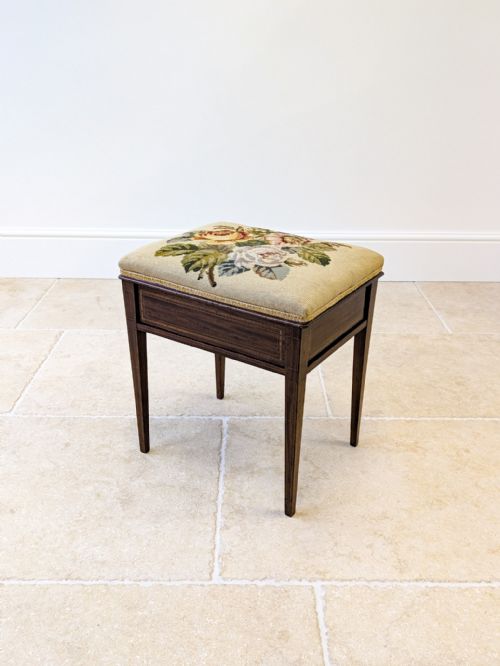
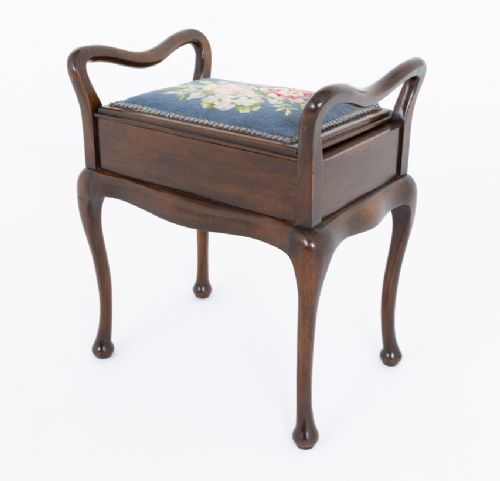
An edwardian storage stool combines everyday seating with a concealed compartment beneath a lift-up lid, designed originally to keep sheet music tidy near a piano. The pieces you meet most often on this page belong to the Edwardian period or date from the early twentieth century, though nineteenth-century and later variants appear.
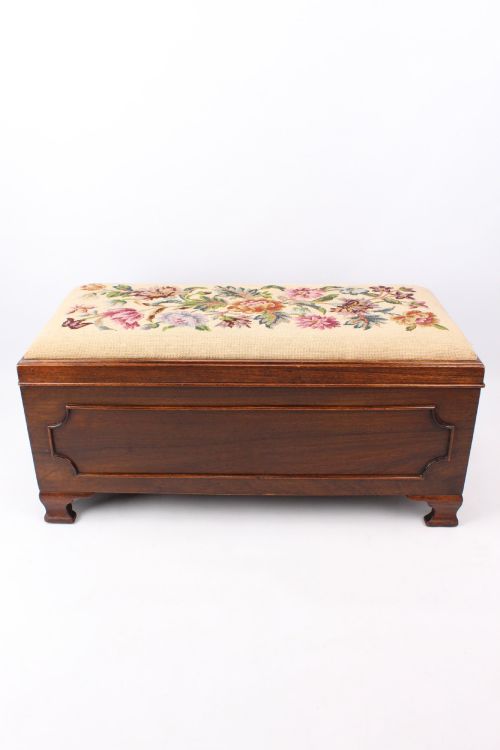
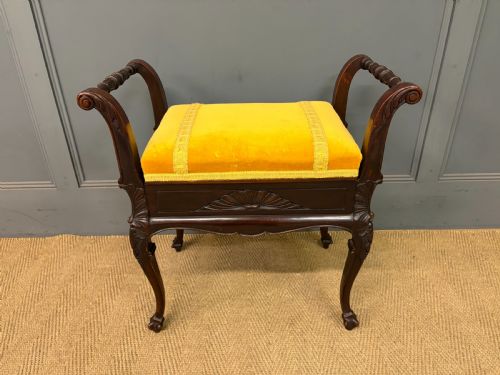
Forms span across piano stools, duet piano stools, music stools, ottomans, and occasional slipper boxes. These pieces turn up in mahogany and oak, frequently paired with upholstered seats upholstered in fabric, velvet, wool, or tapestry.
Materials and construction
Makers built these pieces primarily from solid and veneered mahogany, alongside oak, utilising boxwood inlay for decorative contrast on panelled frames. Secondary woods provide structural stability inside the storage wells.
Upholstery techniques involve traditional stuffing secured beneath textile coverings, ranging from plain woven fabrics and tartan to patterned needlework, tapestry, and Liberty fabric.
Edwardian Storage Stool Retail Price Guide 2026
Typical asking prices for edwardian storage stool among the pieces listed under this phrase on Sellingantiques today, from the lower quarter to the upper quarter. They describe what is for sale here now, not the wider market.
Mahogany is the dominant timber across these listings, accompanied by oak, boxwood inlay, and various textile upholstery types including wool and velvet.
What separates the best from the rest
The distinction in quality lies in the crispness of the boxwood inlay and the selection of figured mahogany or solid oak for the frame. Smoother movement in the lift-up seat mechanism and tighter joinery at the corners separate finer workshop production from simpler utility items.
Upholstery finish also dictates character, with hand-stitched tapestry and specialist printed textiles reflecting higher original commissioning costs than plain functional coverings.
The Edwardian Storage Stool Glossary
- Duet piano stool
- A wider seating form designed to accommodate two players side by side while they practice. These longer variants provide extended internal storage compartments beneath the hinged lid.
- Boxwood inlay
- A decorative technique where contrasting pale wood strips are set flush into the darker mahogany surface. This detail defines the refined Sheraton Revival aesthetic seen across many Edwardian examples.
- Tapestry seat
- A heavy woven textile cover featuring pictorial or floral patterns applied to the top of the stool. These decorative panels add considerable visual texture to the wood frame.
- Slipper box
- A compact storage container designed for footwear rather than music sheets. Solid oak versions are particularly robust examples of this specific form.
Edwardian Storage Stool: Frequently Asked Questions
What were edwardian storage stools used for?
These pieces served primarily beside upright and grand pianos to hold sheet music, songbooks, and practice rolls neatly out of sight. The hinged seat lifted easily to give musicians immediate access while seated.
Beyond the music room, households utilised them in parlours and bedrooms to store small textiles, sewing gear, and everyday clutter while providing an extra seat.
How do I tell Edwardian from Victorian storage stools?
Edwardian examples tend to show lighter timbers, slender proportions, and delicate boxwood stringing or inlay influenced by the Sheraton Revival style. They lean towards refinement and simpler geometric lines.
Victorian predecessors often display darker, heavier timber with denser carving, bulkier frames, and sturdier turnings reflecting earlier nineteenth-century tastes.
Where should I place a storage stool today?
They fit naturally at the end of a bed, in a hallway for shoes, or beside a living room armchair where hidden storage is useful. Their compact footprint allows them to tuck into smaller corners.
Keep them away from direct heat sources and strong sunlight to protect the polished mahogany veneer and delicate textile upholstery from fading or drying out.
Are these stools comfortable for daily seating?
Most feature firm, flat upholstered pads designed for upright posture rather than deep lounging. The padding supports short periods of sitting at a piano or dressing table.
If you plan to use one continuously, check the condition of the internal stuffing and webbing to ensure the seat retains adequate support.