

Edwardian Sterling Silver Cutlery
Edwardian sterling silver cutlery brings solid craftsmanship and polished weight to the table, spanning individual spoons, fitted boxes, and specialist serving pieces.
Edwardian Sterling Silver Cutlery
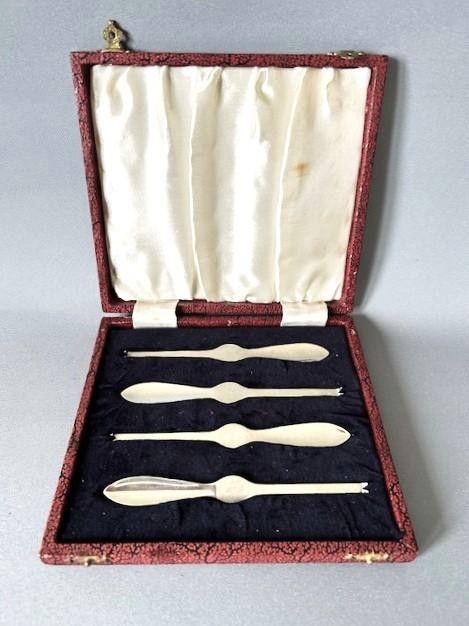
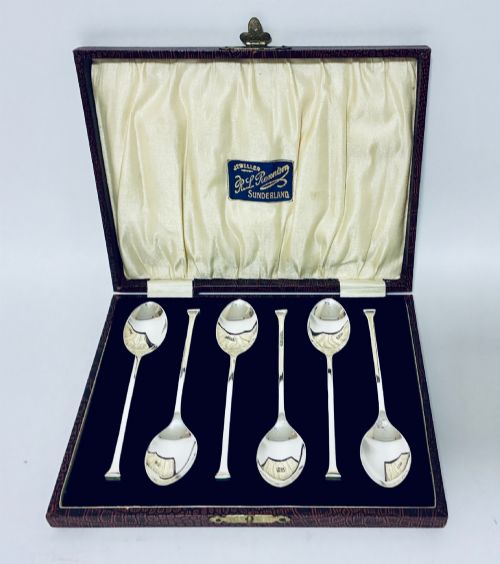
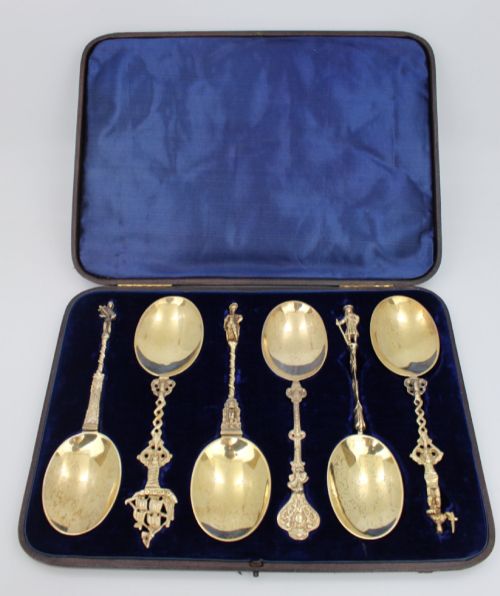
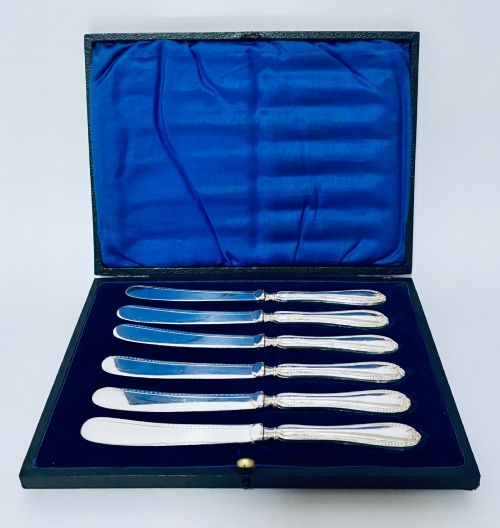
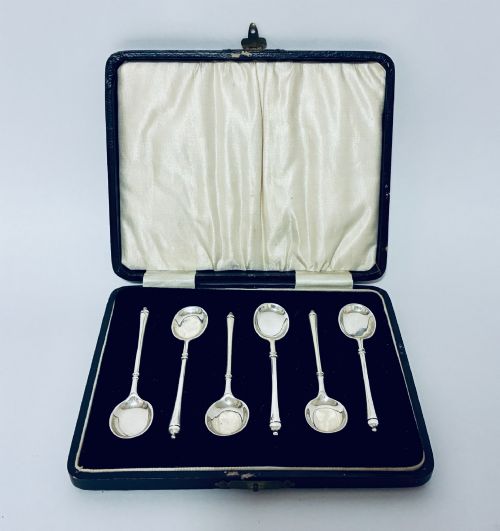
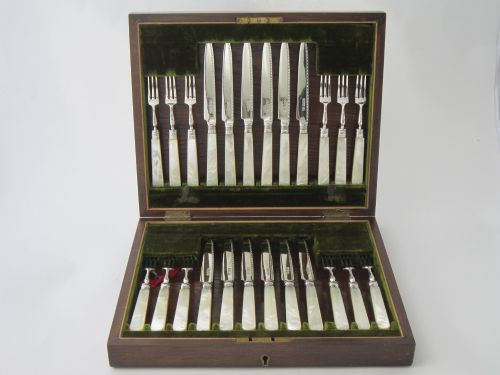
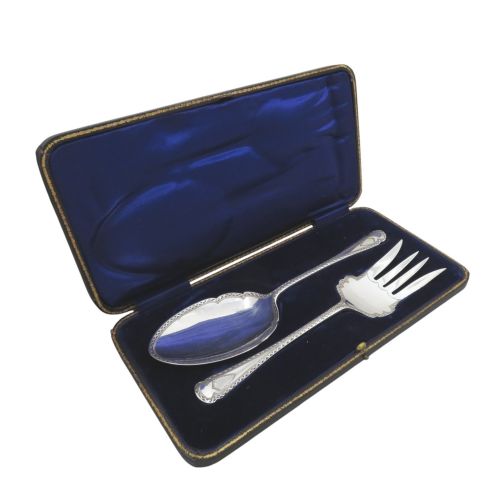
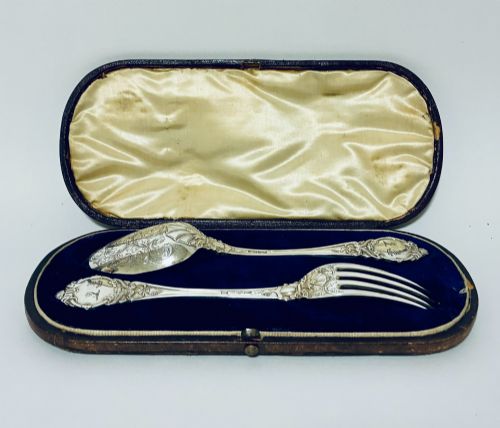
Edwardian sterling silver cutlery comprises a diverse range of implements designed for dining, from modest teaspoons and butter knives to substantial serving sets and grape shears. When searching for edwardian sterling silver cutlery, a buyer encounters single items alongside fitted presentation boxes containing forks, spoons, and knives.
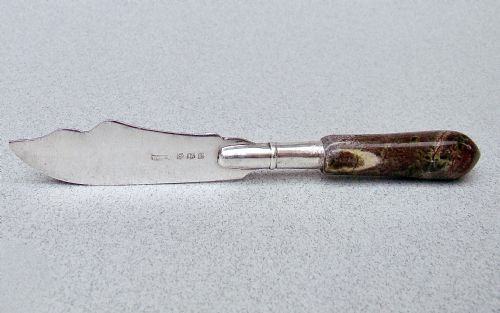
The objects frequently combine silver with auxiliary materials such as mother of pearl, bone, and glass, whilst occasionally appearing with interior linings of silk, velvet, or leatherette. Pieces originate primarily from the early twentieth century, though the selection extends to include adjacent Victorian, George V, and Art Deco periods.
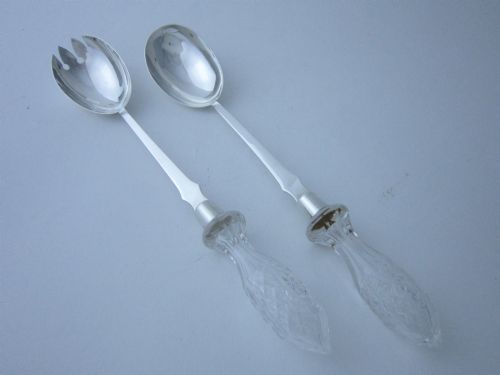
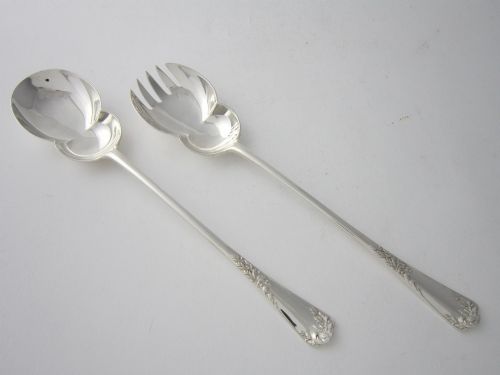
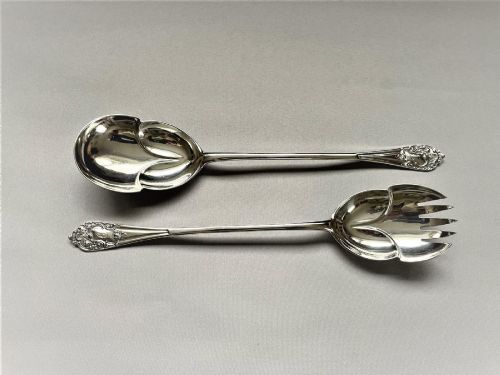
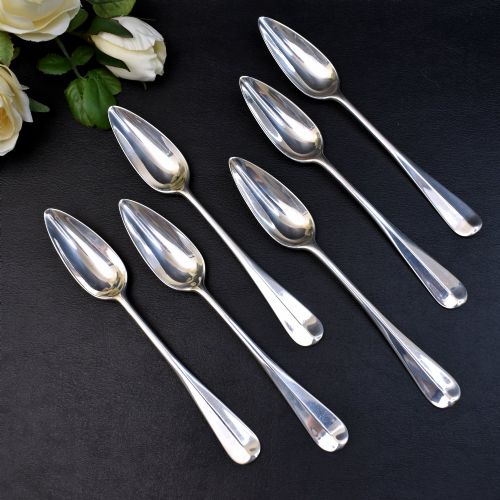
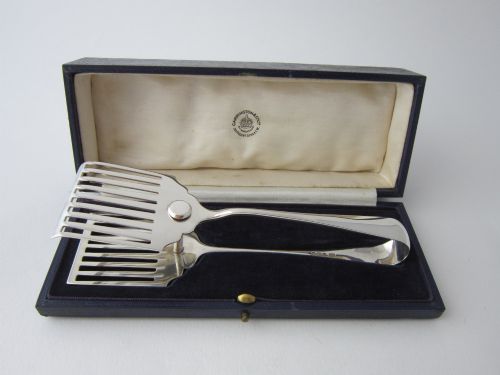
Specialist utensils form a distinct category within the selection, encompassing asparagus tongs, salad servers, preserve spoons, and fish servers. These items reflect the elaborate dining habits of their period, offering specific tools for courses that required dedicated implements.
The Measure of Quality
Quality rests in the crispness of the chasing and engraving, where sharp, well-defined details distinguish superior workshops from routine manufacturing. The gauge of the silver dictates the heft and rigidity of the piece, preventing unwanted flexing during use.
The preservation of original fitted cases and the integrity of auxiliary materials like mother of pearl or enamel directly influence the standing of a set. Maker marks and clear hallmarks anchor the provenance, separating unmarked production from documented silversmith work.
Edwardian Sterling Silver Cutlery Retail Price Guide 2026
Typical asking prices for edwardian sterling silver cutlery among the pieces listed under this phrase on Sellingantiques today, from the lower quarter to the upper quarter. They describe what is for sale here now, not the wider market.
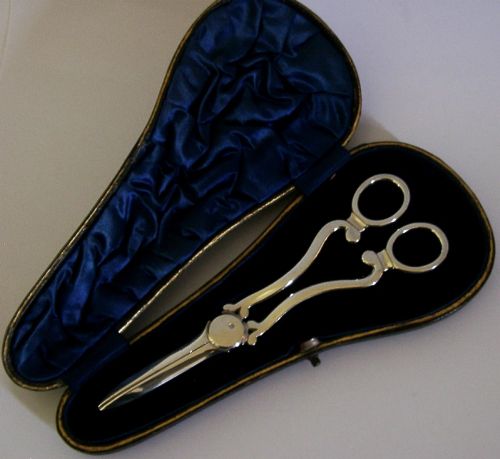
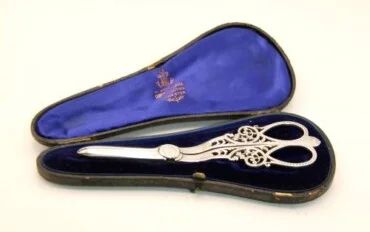
Grape shears ensure that no host ever has to struggle with unruly fruit vines at the mahogany dining table.
Hamilton and Inches·Vale and John·William Devenport·Amy Sandheim·Garrard and Co·Robert Stebbings·Alvin
The Edwardian Sterling Silver Cutlery Glossary
- Sterling silver
- A silver alloy containing 92.5 percent pure silver and 7.5 percent other metals, usually copper, ensuring durability for functional items. This standard is marked by the lion passant on British pieces.
- Hallmark
- An official stamp applied to precious metals indicating the maker, assay office, and year of testing. These small impressions provide secure dating for silver objects.
- Rat tail
- A strengthening tongue of metal extending down the back of a spoon bowl from the handle. This traditional feature adds reinforcement to high-stress joints.
- Silver-gilt
- Sterling silver that has been coated with a thin layer of gold, creating a rich yellow surface finish. It is often found on the interior bowls of spoons and serving sets.
- Assay office
- A statutory body responsible for testing the purity of precious metals and stamping them with official marks. Towns such as Birmingham, Sheffield, Chester, and Edinburgh maintained distinct offices.
Edwardian Sterling Silver Cutlery: Frequently Asked Questions
What is included in a cutlery set?
These sets typically comprise matching groups of spoons, forks, or knives, sometimes arranged with specific serving utensils like tongs or servers.
Larger configurations often arrive in fitted wooden cases lined with fabric to protect the individual pieces.
How do I clean sterling silver?
Maintenance requires gentle washing in warm soapy water followed by thorough drying with a soft cloth to preserve the surface finish.
Harsh abrasive dips or vigorous scrubbing should be avoided to protect engraved details and hallmarks.
Can these items be used daily?
Many buyers incorporate these solid silver pieces into regular dining routines, as the metal is durable and designed for practical service.
Specialist items like asparagus tongs or berry spoons may see more occasional use depending on the menu.
How do I identify the date?
Dating relies primarily on the stamped assay office marks and date letters found on the reverse or handle of each silver piece.
Stylistic cues such as Art Nouveau curves or Edwardian proportions also offer helpful indicators of the period.