



Edwardian Silver Rack
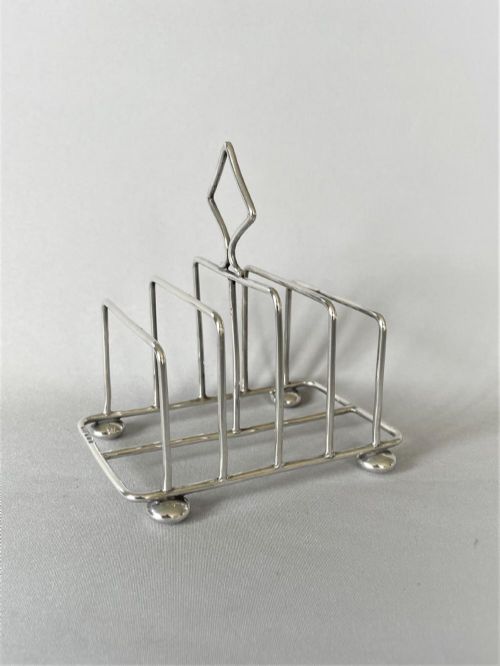
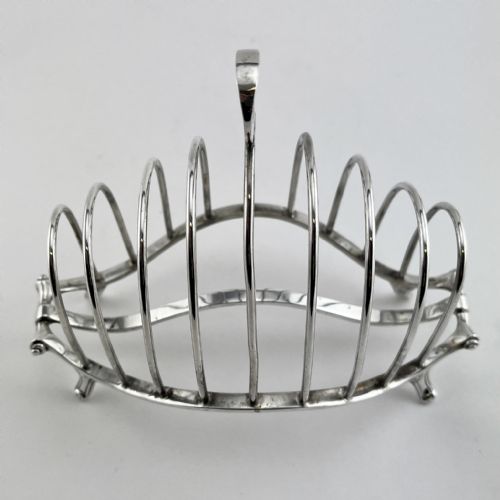
An edwardian silver rack organises the breakfast table with wirework arches designed to keep crisp crusts apart.
Edwardian Silver Rack
The edwardian silver rack is a dedicated table accessory designed principally for holding triangular toast slices upright during breakfast. While formal dining traditions inspired many variations, the core form remains a series of metal loops or arches set above a flat base.
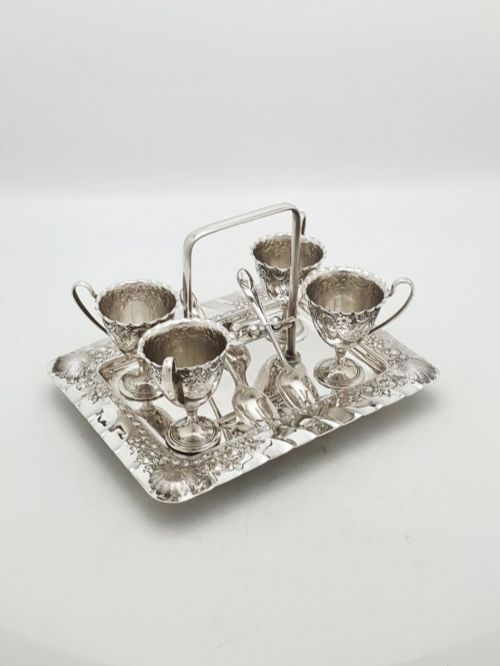
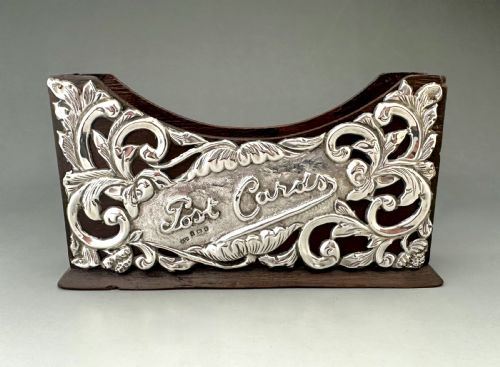
Most examples encountered across this selection originate from the early twentieth century, spanning solid sterling silver and silver plated metal. Alongside traditional toast holders, related serveware items such as egg cruets and letter holders frequently share the same material palette and aesthetic.
Makers of the period produced both simple four-slice formats and larger six-slice configurations, occasionally experimenting with novelty silhouettes including hearts, gongs, and animal themes. These domestic objects reflect the refined hospitality rituals characteristic of the period.
How They Were Made
Silversmiths utilised traditional manufacturing methods combining sheet metal bases with shaped wire arches soldered by hand. Sterling silver examples bear hallmarks stamped directly into the metal, recording the assay office, year, and maker's mark.
Silver plated versions relied on electroplated nickel silver or standard metal bases treated with a thin coating of silver. Cut glass inserts and wooden elements such as oak bases also appear alongside metal components in composite serving dishes and cruet sets.
Breakfast tables gained considerable charm from toast racks shaped like swans, ships, and human hearts.
What Varies in Quality
Quality rests upon the weight of the metal and the precision of the soldering where the arches meet the base. Solid sterling silver pieces maintain structural integrity and display crisp hallmarks, whereas plated wares depend on the thickness of the original silver coating over the base metal.
Design complexity distinguishes standard utilitarian models from exceptional artisan productions. Novelty forms and substantial gauges of silver indicate higher production standards from established silversmithing firms.
Mappin and Webb·Roberts & Belk·Walker and Hall·Joseph Gloster·Goldsmiths & Silversmiths Company·S. Garrard·Harrison Brothers & Howson·C.E. Nixon·William Hutton & Sons·Atkins Brothers·Hukin & Heath
The Edwardian Silver Rack Glossary
- Sterling silver
- A standard alloy composed of pure silver and other metals to increase durability. Items made to this standard typically display official assay office hallmarks.
- Silver plate
- A base metal such as nickel silver covered with a thin layer of pure silver through electrolysis. This technique provided an affordable alternative to solid silver for domestic tableware.
- Cruet set
- A matched collection of bottles, jars, or racks designed to hold condiments or breakfast items together on the dining table.
- Hallmark
- A series of official marks stamped onto precious metal items to guarantee purity and origin. These marks identify the maker, assay office, and year of manufacture.
- EPNS
- An abbreviation for electroplated nickel silver, commonly found on serving dishes and tableware from the period.
Edwardian Silver Rack: Frequently Asked Questions
How do I know if it is solid silver or plated?
Solid sterling silver pieces feature a series of stamped hallmarks denoting the assay office, standard, and maker. Plated items usually bear maker initials alongside marks like EPNS rather than official silver hallmarks.
What does a six slice rack mean?
The term refers to the number of individual compartments created by the wire loops for holding pieces of toast. Four-slice and six-slice versions are the most common configurations found on the table.
Are novelty shapes common?
Silversmiths occasionally produced whimsical designs shaped like hearts, animals, or ships alongside standard geometric arches. These decorative variations were popular for wedding gifts and special household occasions.