



Edwardian Silver Plate Kettle
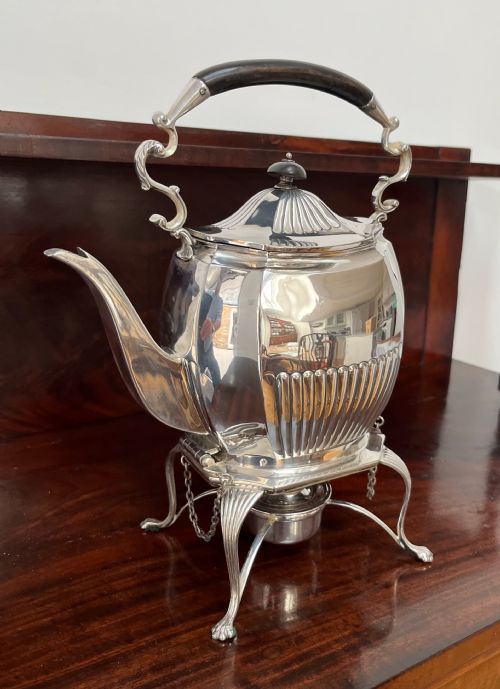
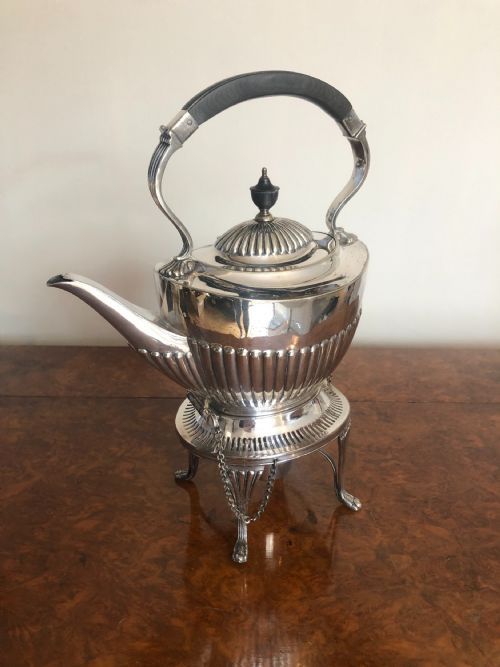
An Edwardian silver plate kettle brings formal hospitality to the room, offering heavy metal stands and spirit burners for daily use or display.
Edwardian Silver Plate Kettle
An edwardian silver plate kettle sits upon a dedicated metal stand, paired with a small spirit burner beneath the water reservoir to keep tea hot at the table. These pieces emerge primarily from the edwardian period around nineteen hundred to nineteen ten, alongside occasional later examples from nineteen thirty and revival designs that mirror earlier Georgian fashions.
How these kettles were made
Makers formed the main vessels from base metals before applying a durable layer of silver plate, often stamped as EPNS to denote electroplated nickel silver. Stands and burners shared this plated construction, engineered to support the weight of boiling water safely above an open flame.
Handles incorporated natural materials such as bone and ebony, shaped and fitted to insulate the metal uprights. These organic elements contrast with the bright plated surfaces and provide a secure grip for tilting the heavy vessel.
Listings show these kettles appearing across the edwardian period alongside occasional pieces dated to nineteen thirty and nineteen ten.
What varies in quality
The distinction between standard production and top tier pieces lies in the crispness of the casting on the stand and the weight of the metal used for the kettle body. Finer examples display substantial silver plating that resists thinning, alongside carefully turned wooden or bone handle mounts.
Detailing on the mounts, the solidity of the burner mechanism, and the harmonious balance of the kettle on its stand separate ordinary utilitarian pieces from the high quality items produced by notable workshops.
Fenton Brothers·Walker & Hall
The Edwardian Silver Plate Kettle Glossary
- Silver plate
- A thin layer of silver bonded to a base metal core. This technique allowed manufacturers to produce domestic metalware that looked and felt like solid silver at a lower cost.
- EPNS
- Electroplated nickel silver. This mark indicates a base alloy of copper, nickel, and zinc coated with a layer of pure silver through an electrical process.
- Spirit kettle
- A water vessel mounted on a metal frame with an integrated alcohol burner. It allowed hosts to heat or maintain water temperature away from the kitchen hearth.
- Samovar
- A large heated metal urn used to boil and dispense water for tea. These pieces generally feature a central internal tube for the heating element and a spigot near the base.
- Ebonised wood
- Timber treated with a dark finish to imitate ebony. Makers utilised this material for kettle handles and insulators where organic grip was required.
Edwardian Silver Plate Kettle: Frequently Asked Questions
How do I use the burner?
The spirit burner sits in a ring beneath the suspended kettle and holds a small amount of liquid fuel with a wick. You fill the reservoir, light the wick, and place the kettle on the stand to keep the water warm.
Exercise caution when operating the burner indoors and ensure the stand is placed on a stable, heat resistant surface away from drafts.
Can I polish the silver plate?
Regular gentle cleaning with a specialised silver cloth maintains the shine without wearing through the thin plated surface. Avoid harsh abrasive dips that strip the plating over time.
Store the kettle in a dry environment to prevent tarnish from developing too quickly between uses.
Are these kettles safe for boiling water?
Many surviving examples remain structurally sound for boiling water if the interior is thoroughly cleaned and inspected. However, most modern buyers treat them as decorative display items for the dining room or sideboard.
If you intend to heat water, check the integrity of the soldered joints and ensure the interior plating is intact.
How do I distinguish Edwardian from Georgian revival?
Edwardian pieces made around nineteen hundred often feature lighter scaling and specific machine assisted manufacturing marks like EPNS. Georgian revival items adopt earlier decorative motifs, such as classical urn shapes and gadroon borders, while retaining early twentieth century construction methods.
Examining the underside marks and the style of the handle mounts usually reveals the true manufacturing era.