
Edwardian Silver Decanter
An edwardian silver decanter combines heavy lead glass with hallmarked metal mounts, bringing functional elegance to a sideboard or bar.
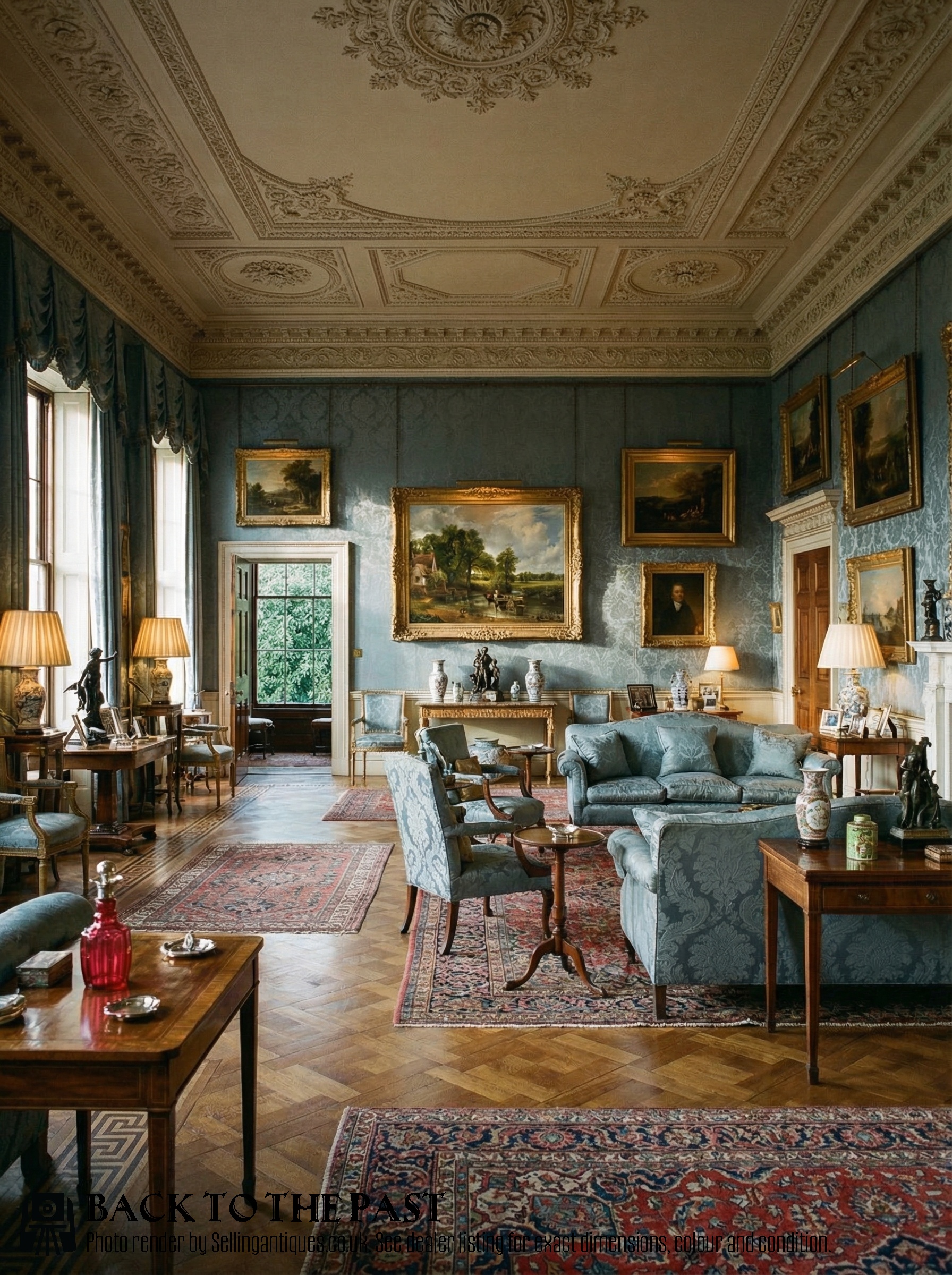
Edwardian Silver Decanter
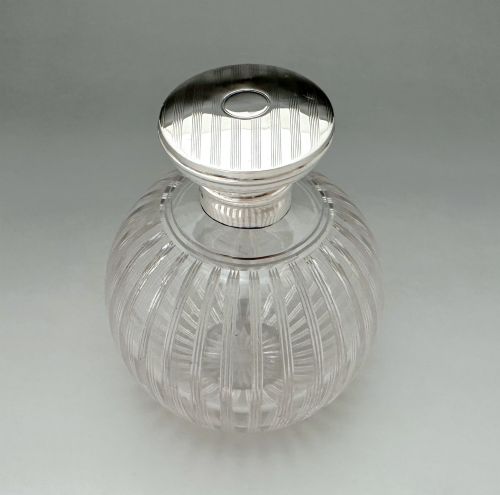
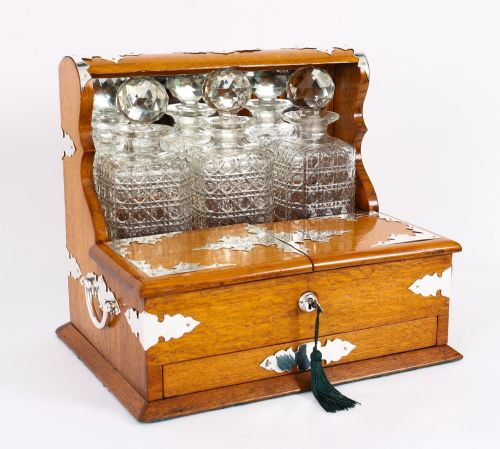
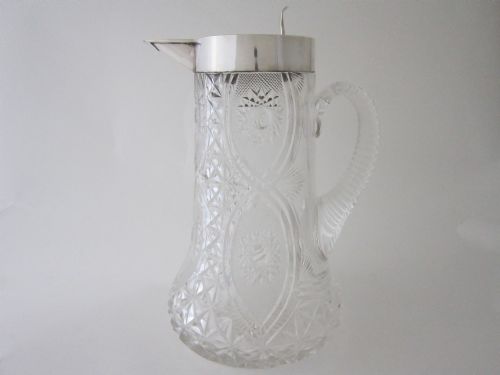
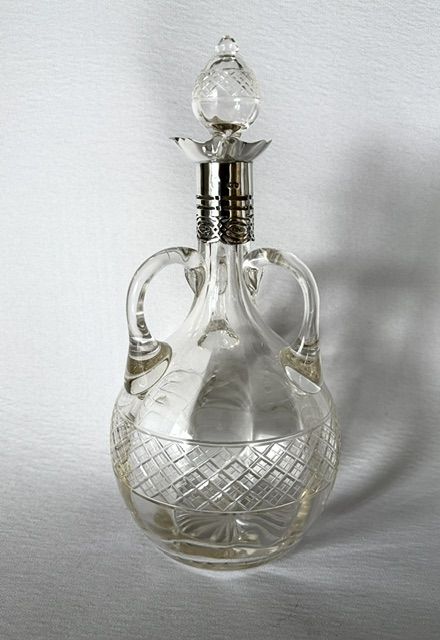
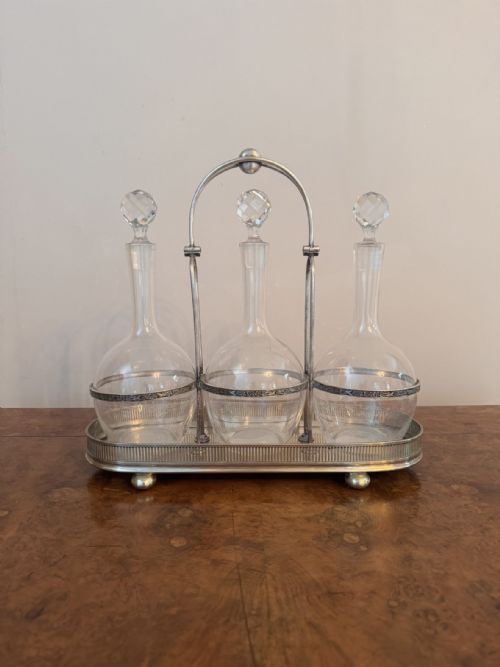
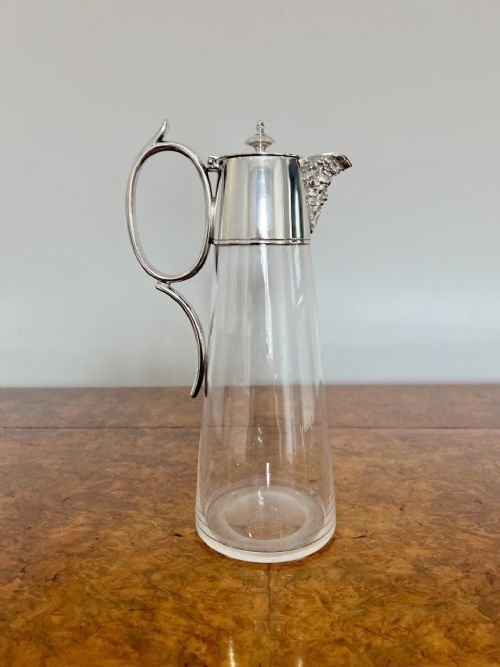
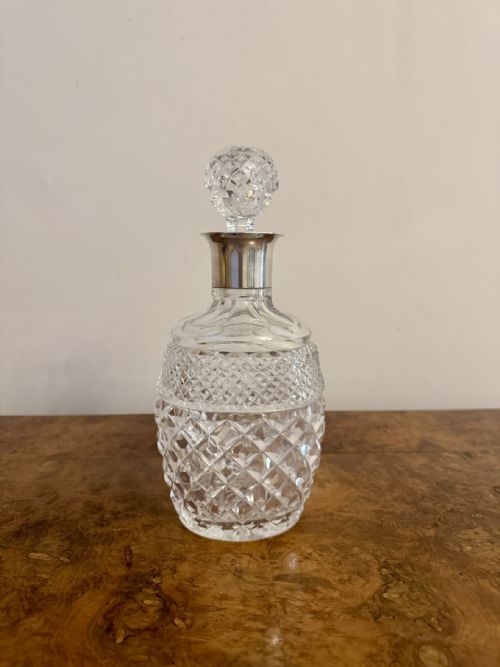
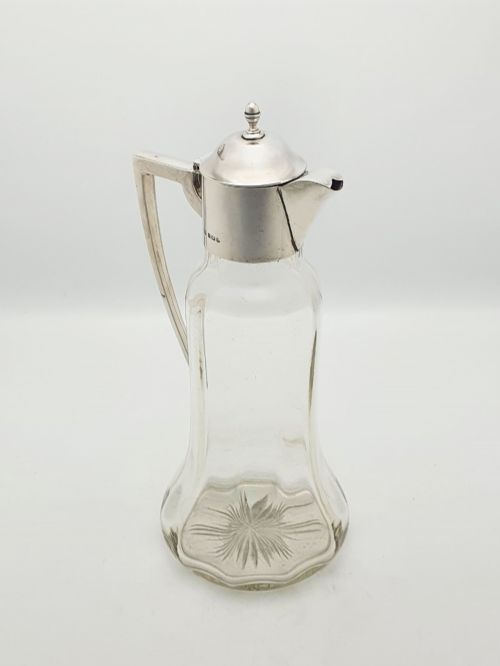
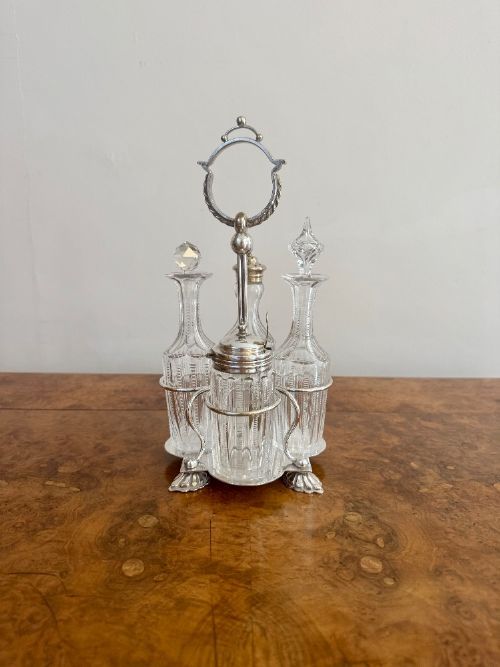
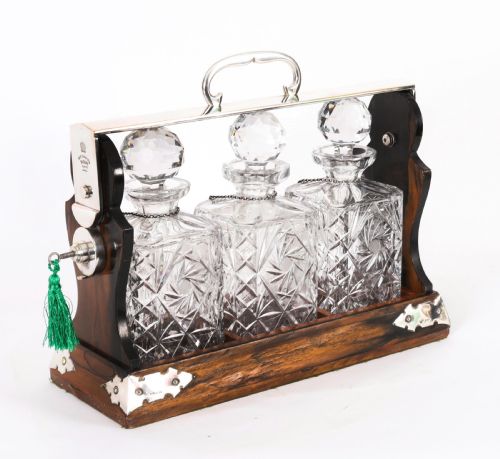
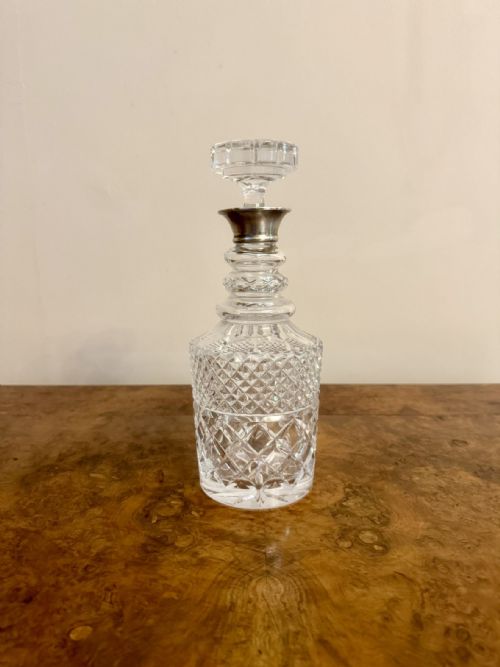
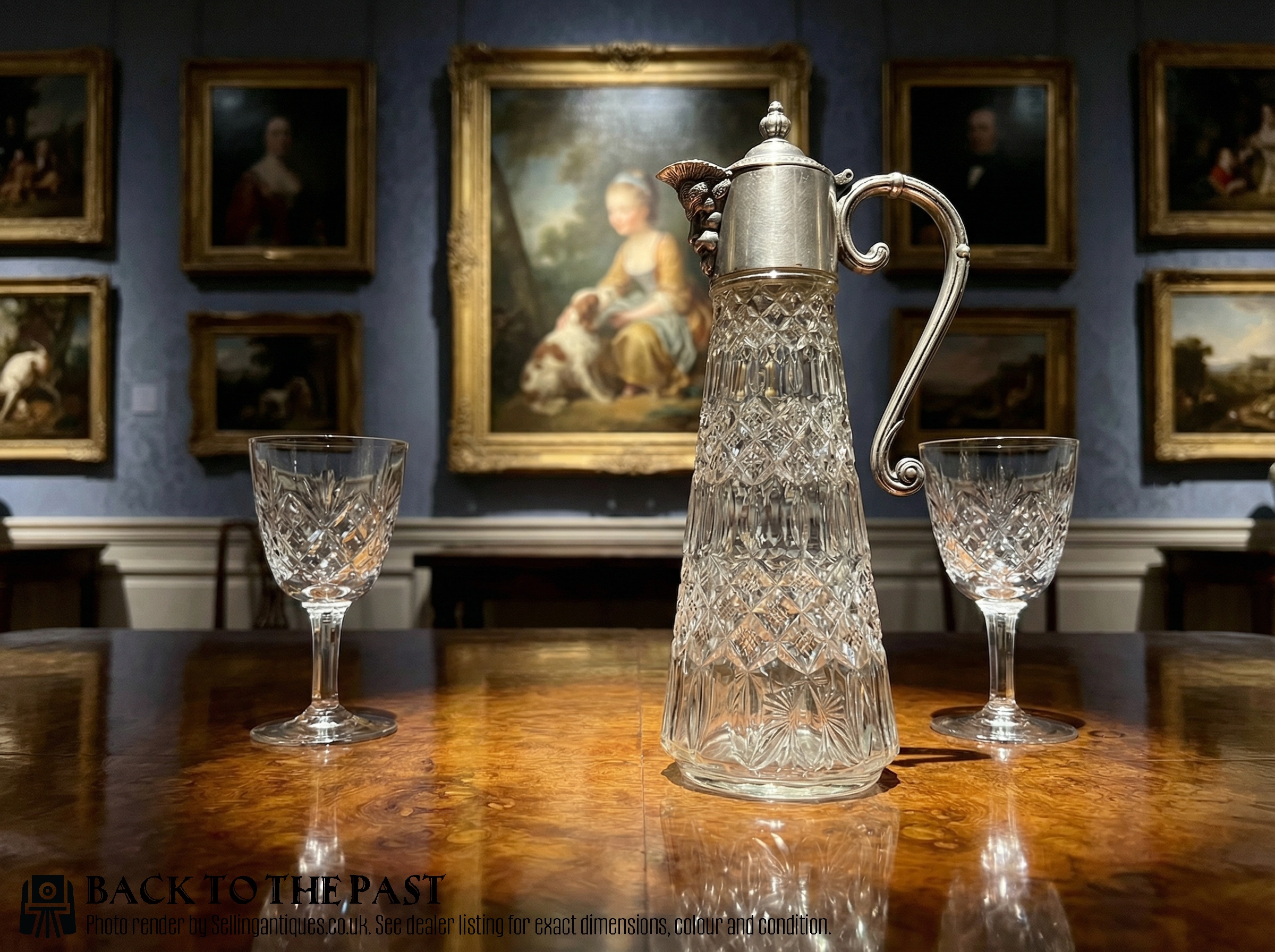
An edwardian silver decanter encompasses spirit bottles, claret jugs, and whisky noggins produced during the early twentieth century. Most examples pair a clear cut-glass body with a sterling silver collar, stopper mount, or pouring spout. The selection ranges from single ships decanters to locking oak tantalus sets containing three matching vessels.
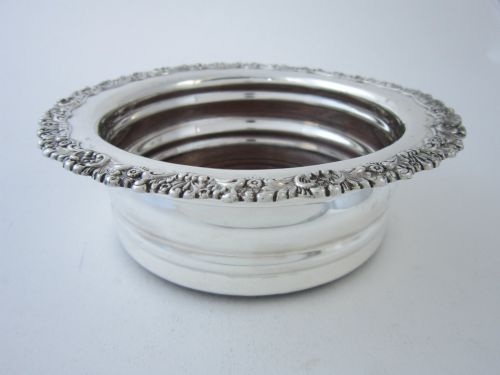
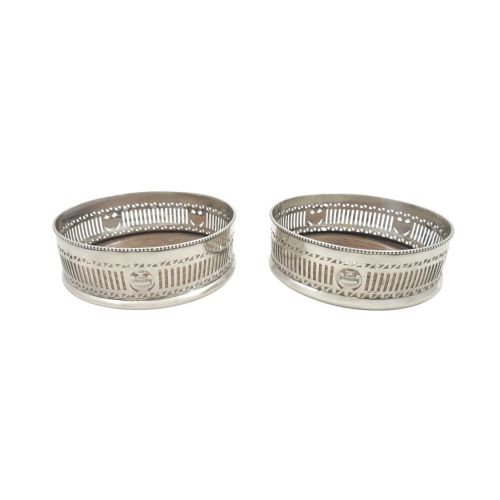
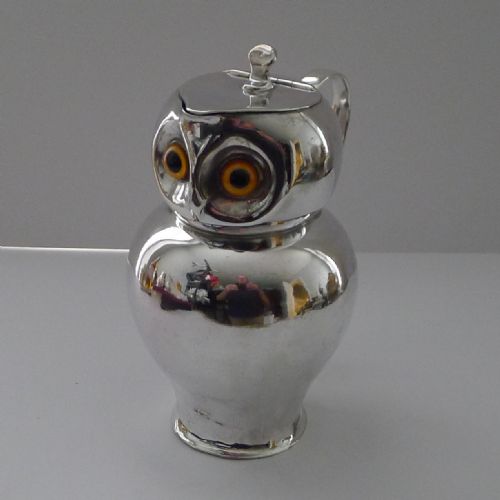
Beyond standard spirit decanters, related serving pieces appear frequently under this category. Silver-plated bottle coasters, scent bottles, and engraved spirit labels accompany the main vessels. Makers also produced novelty items, including owl-shaped jugs with glass eyes and intricate games compendiums fitted with silver-mounted glassware.
How they were made
Glass bodies were typically heavy-moulded or hand-cut with flutes, hobnails, and diamond patterns to catch the light. Some specialised forms, such as glug-glug decanters, required complex multi-chambered glassblowing techniques to produce their distinctive bubbling sound when poured.
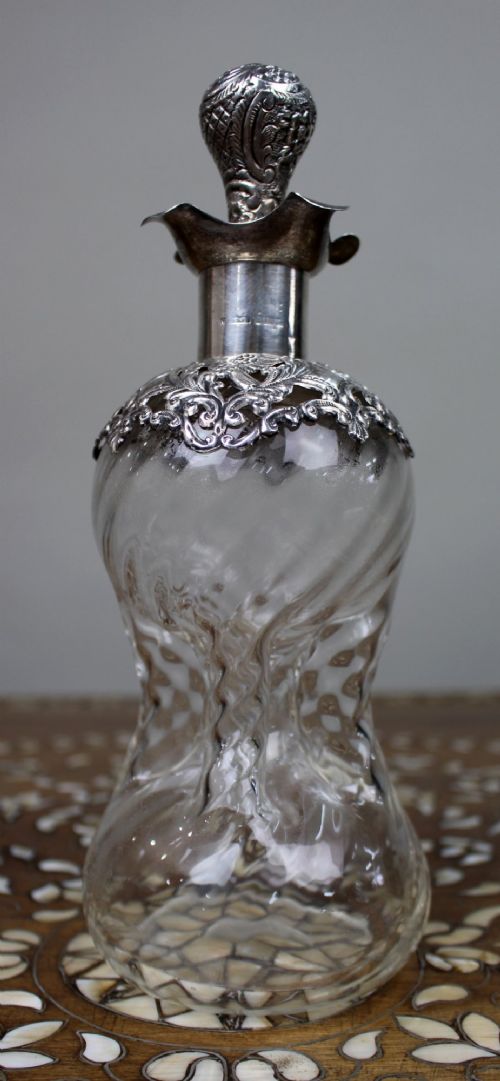
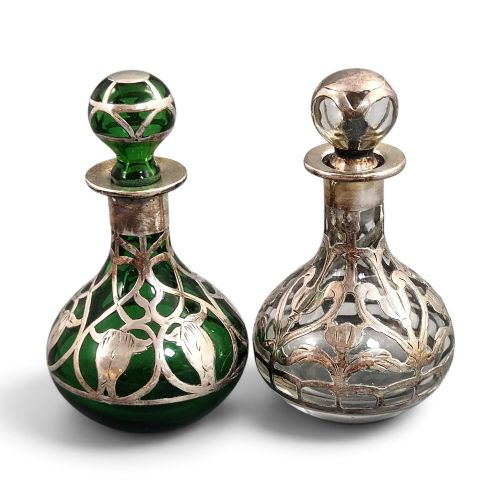
Metalwork involved either solid sterling silver or silver plate applied over a base metal. Silversmiths stamped hallmarks onto collars and mounts to indicate the assay office, year, and purity, while decorative techniques included repoussé work, Art Nouveau organic overlays, and smooth polished collars.
Edwardian Silver Decanter Retail Price Guide 2026
Typical asking prices for edwardian silver decanter among the pieces listed under this phrase on Sellingantiques today, from the lower quarter to the upper quarter. They describe what is for sale here now, not the wider market.
Several Edwardian novelty decanters feature piercing glass eyes that stare back from silver-plated owl heads.
What varies in quality
Quality rests upon the weight and clarity of the glass coupled with the substantialness of the silver mounts. Heavy, deep-cut crystal paired with thick hallmarked sterling silver collars represents the higher tier of production, whereas lighter glass and thin silver plate occupy the standard commercial level.
The presence of matching elements dictates desirability among collectors. Complete sets featuring original stoppers, matching silver labels, and fitted wooden tantalus frames command greater interest than assembled or incomplete pieces.
Gorham·Brook and Son·Betjemann·Hukin and Heath·Walker and Hall·Latham and Morton
The Edwardian Silver Decanter Glossary
- Whisky noggin
- A small single-serving spirit decanter, usually featuring a looped handle and a star-cut base. These pieces often include a matching silver label designating the contents.
- Glug-glug decanter
- A vessel with a multi-tubular neck designed to restrict airflow and produce a gurgling sound when liquid is poured. This clever engineering slows the pour and aerates the spirit.
- Tantalus
- A locking wooden frame that secures decanters by their stoppers to prevent unauthorized access to the contents. The mechanism typically requires a key to release the top bar.
- Ships decanter
- A bottle featuring a wide, heavy base and a conical body designed to prevent tipping aboard a vessel. This pragmatic form remains stable on dining tables and sideboards alike.
- Hallmark
- An official stamp struck into precious metal indicating the standard of purity, the assay office, and the date letter. These marks provide definitive evidence of origin and age.
Edwardian Silver Decanter: Frequently Asked Questions
Are original stoppers important?
Original stoppers that match the cut pattern and bore of the decanter greatly enhance the integrity of the piece. Replacements often fit loosely or show subtle variations in glass tint and weight.
Collectors look closely at the ground glass neck and matching number tallies to confirm the stopper belongs to that specific bottle.
How do I identify a whisky noggin?
A whisky noggin is characterised by its miniature scale, single loop handle, and prominent spout designed for individual pours. They frequently appear alongside a small silver-mounted tag identifying the spirit.
Most examples date from the late nineteenth century through the Edwardian period and sit low on the sideboard next to matching glasses.
What is a silver overlay technique?
Silver overlay involves applying liquid silver decoration directly onto the finished glass surface before firing and polishing. This method created smooth, tactile Art Nouveau floral and abstract motifs.
The resulting designs sit flush with the glass, differing from traditional bolted collars and mounts.