
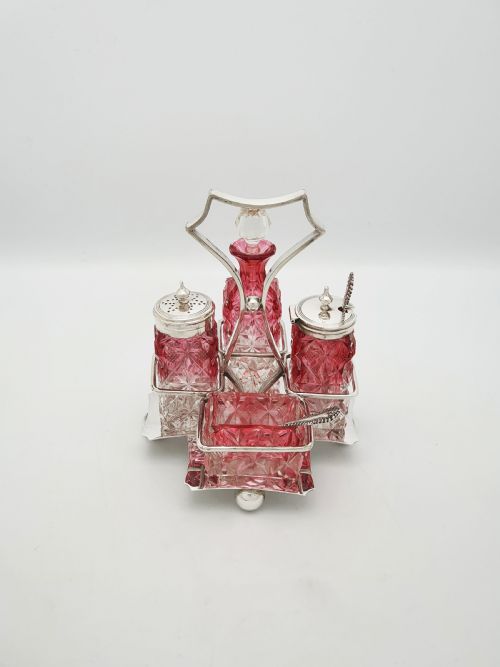


Edwardian Silver Cruet
When you search for an Edwardian silver cruet, you are looking at the dining tables of the early twentieth century.
Edwardian Silver Cruet
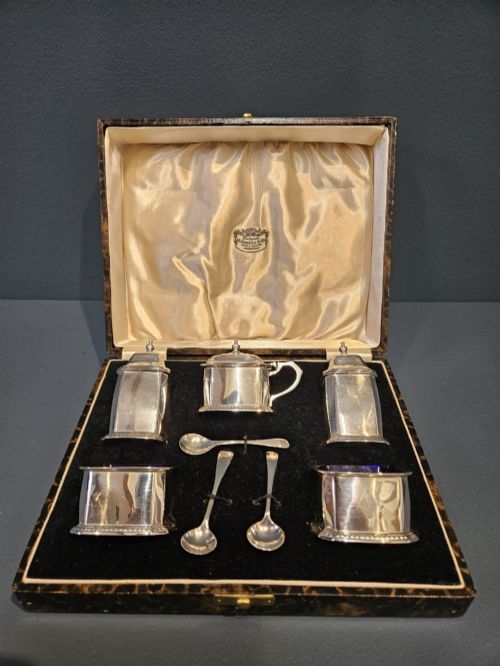
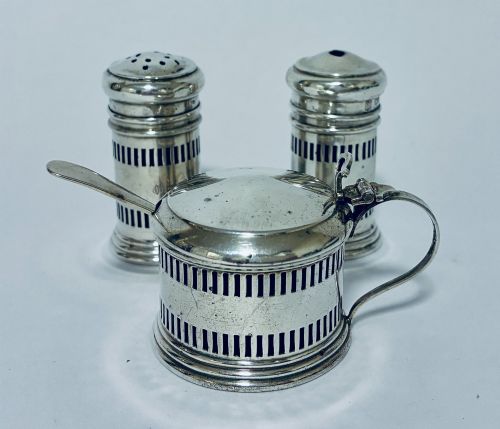
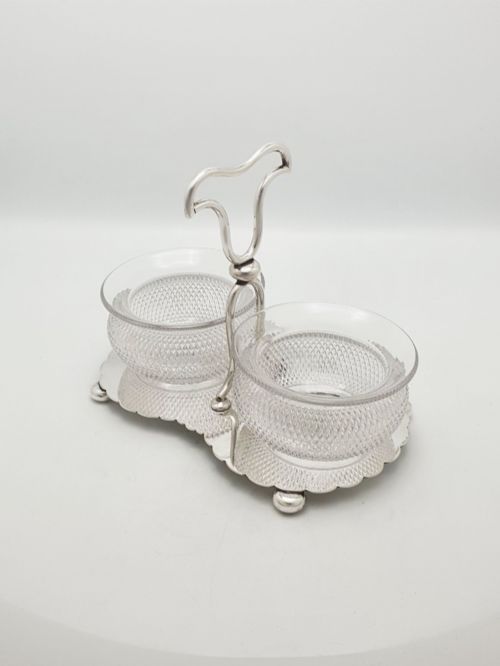
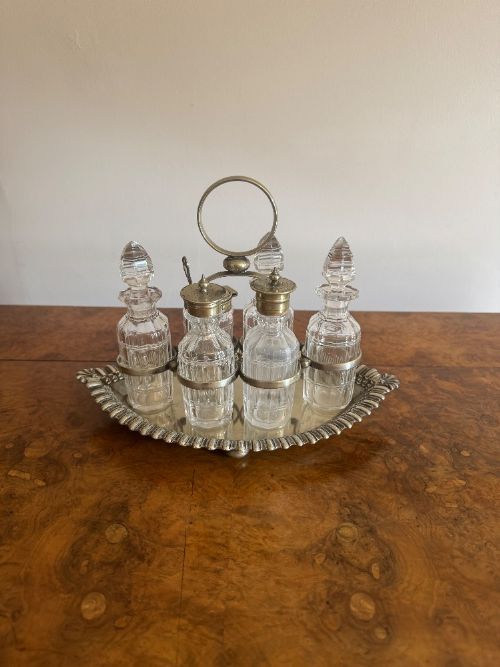
An edwardian silver cruet brings together containers for salt, mustard, pepper, oil and vinegar, designed to sit together on a fitted stand or frame. The form draws heavily on late victorian dining habits, while carrying the lighter decorative touch typical of the edwardian period.
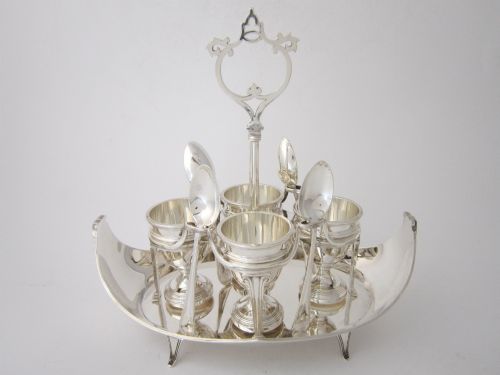
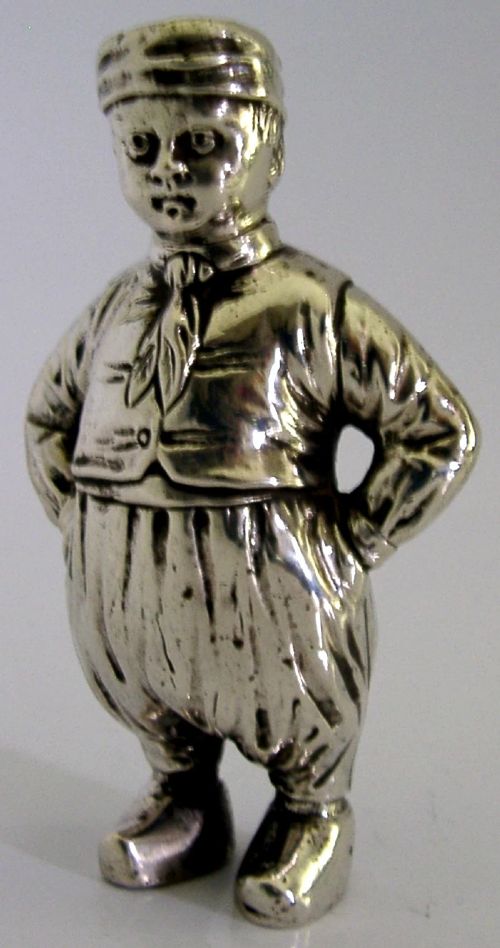
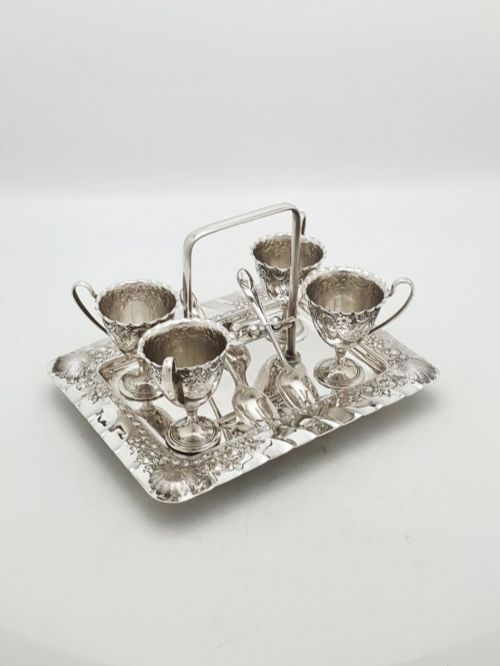
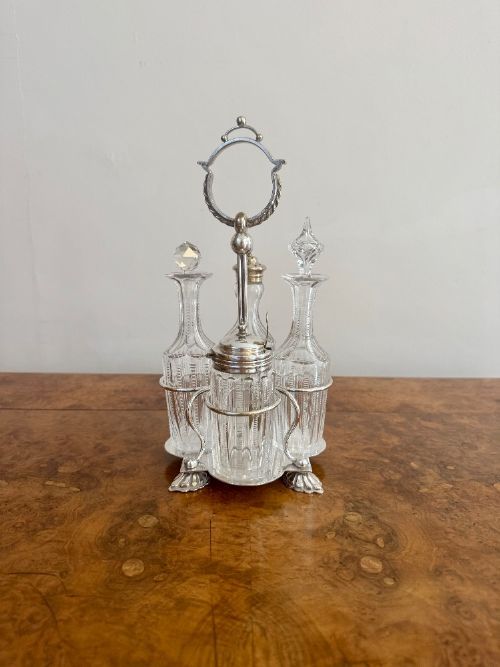
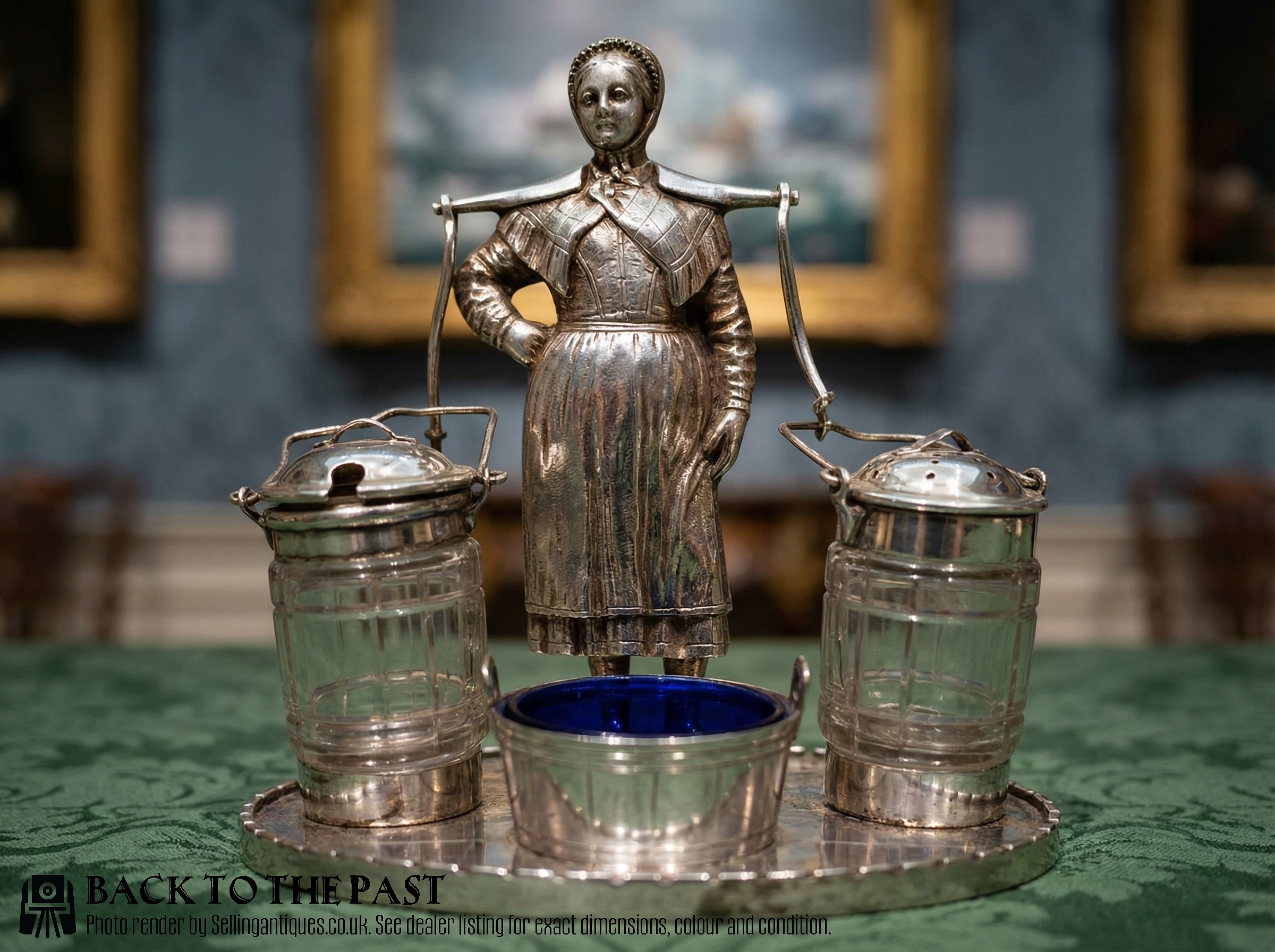
Most examples found in these listings are silver plated rather than solid sterling silver, often featuring multi-bottle frames or dedicated egg cruet sets complete with matching spoons. Alongside these standard breakfast and dinner sets, individual condiment stands and novelty salt and pepper shakers appear frequently.
While the core of the selection sits firmly in the edwardian era and the surrounding years of george v, pieces occasionally stretch back into the victorian period or forward into art deco designs of the nineteen-thirties.
Metals, glass and construction
Makers built the frames and stands using a base metal heavily coated in silver plate or utilising solid sterling silver, often combining the metalwork with blown, cut or flashed glass inserts for bottles and jars. Coloured elements such as cranberry flashed glass and blue glass liners provide contrast within the metal framework.
Techniques relied on careful soldering of wire work and stamped mounts, alongside embossed decoration applied to handles, rims and shields. Velvet linings occasionally appear inside fitted presentation cases, while glass bottles feature ground stoppers and cut geometric patterns.
Assessing quality in condiment stands
Quality shows in the weight of the metal frame and the crispness of the stamping or embossing on handles and bottle collars. Substantial silver plating resists wear better over time, maintaining a clear surface across the central shield and wire work.
The matching of glass components determines the integrity of multi-bottle sets, where original cut glass bottles with proper matching stoppers hold significantly more interest than later replacement glassware. Makers who paid attention to the balance of the central carrying handle ensure the stand lifts level even when fully loaded.
Walker and Hall·Mappin and Webb·William Hutton and Sons·Sampson Mordan
The Edwardian Silver Cruet Glossary
- Cruet set
- A matched group of small condiment containers held together in a frame or stand for the dining table.
- Egg cruet
- A specialised breakfast stand designed to hold a set of boiled eggs upright alongside matching spoons and salt cellars.
- Silver plate
- A layer of silver bonded to a base metal core such as copper or brass, widely utilised for domestic tableware.
- Flashed glass
- A clear glass body dipped into a coloured glass batch while molten, then cut back to reveal the clear layer beneath.
- Condiment stand
- An open metal framework fitted with a handle and multiple rings to secure oil, vinegar and sauce bottles.
Edwardian Silver Cruet: Frequently Asked Questions
What was an edwardian silver cruet used for?
These sets held essential table seasonings and condiments, allowing diners to adjust flavours during formal breakfast, lunch and dinner services.
They sat centrally on the dining table or sideboard so guests could easily reach for salt, pepper, mustard, oil and vinegar.
How do I clean an edwardian silver cruet?
Use a soft cloth and a gentle silver cream formulated specifically for plated or sterling items to remove natural tarnish.
Avoid abrasive pads that can strip thin silver plating from the base metal, and wash glass inserts separately in warm soapy water.
Are replacement glass bottles common?
Many surviving frames lost their original glass inserts over decades of use, meaning replacement bottles are frequently fitted to complete the set.
Matching the exact period cut and collar size requires patience, as glass production tolerances varied significantly between makers.
How do I distinguish edwardian pieces from victorian ones?
Edwardian designs generally favour lighter frames, simpler wire work and restrained neoclassical or arts and crafts motifs.
Victorian examples tend to feature heavier embossed decoration, more elaborate figural elements and denser ornamentation across the frame.