

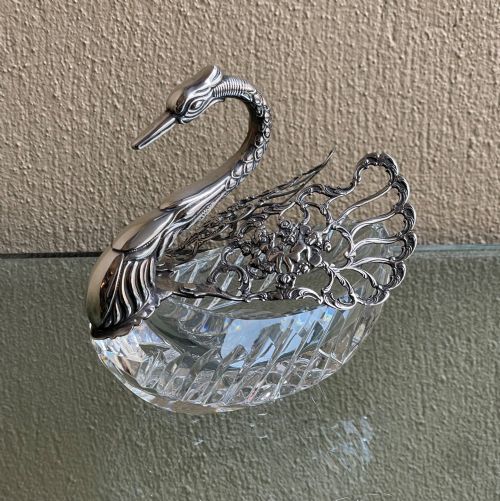


Edwardian Silver Cellar
These Edwardian silver cellar designs bring table elegance through pierced wirework, glass liners, and fitted cased sets.
Edwardian Silver Cellar
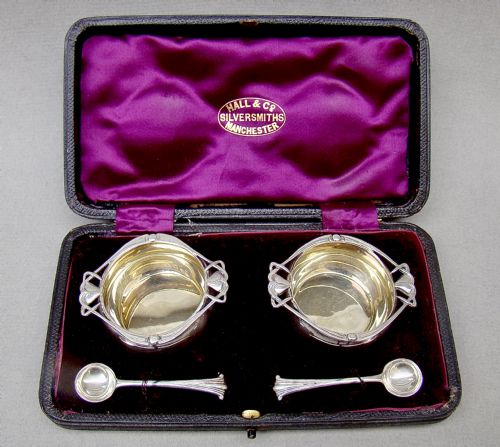
An Edwardian silver cellar is a small table vessel designed to hold salt or condiments for individual diners. Pieces range from single open salt tubs to matched sets supplied with spoons within fitted leather cases.
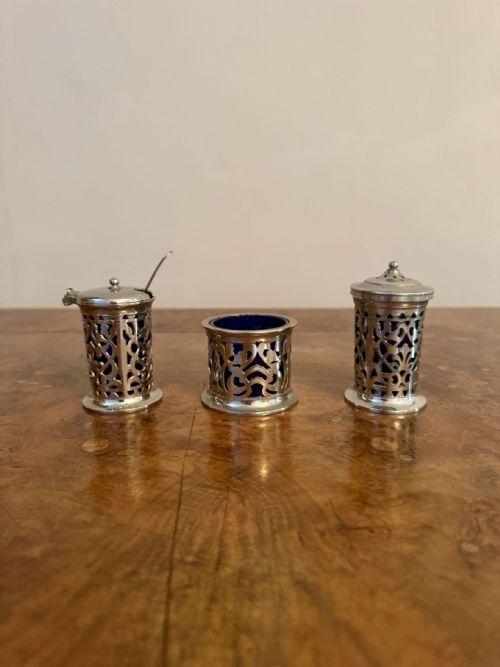
The selections here span open salt cellars, covered mustard pots, and multi-bottle condiment stands. While the core of the inventory dates to the Edwardian period, related examples appear from the Victorian and later decades.
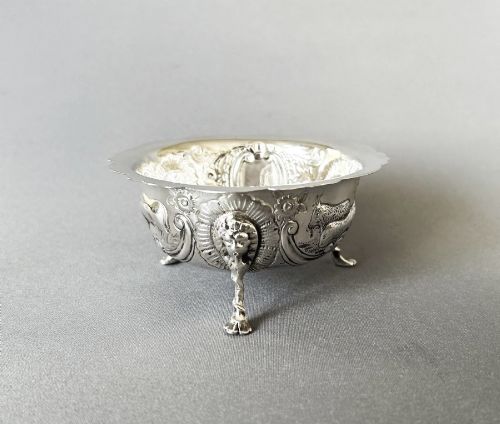
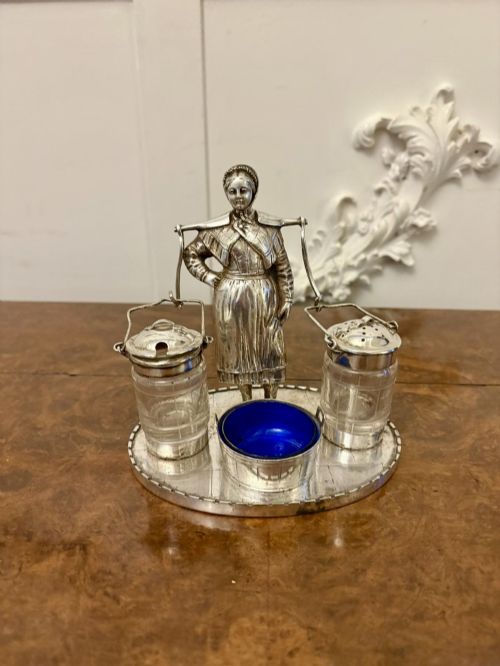
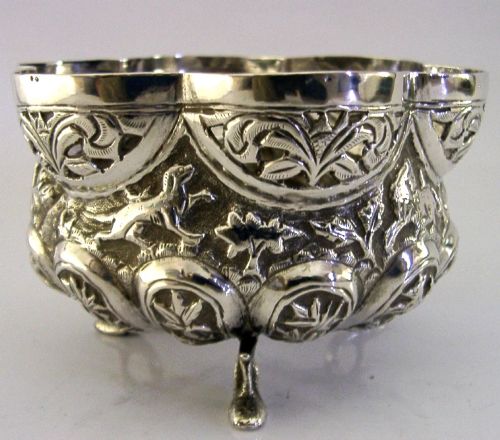
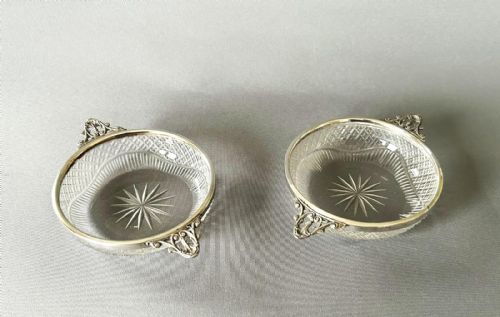
Forms vary from simple round sterling silver bowls to novelty animal figures, figural stands, and cut glass dishes with silver rims. Buyers encounter both solid sterling silver and silver-plated metal wares.
Materials and construction
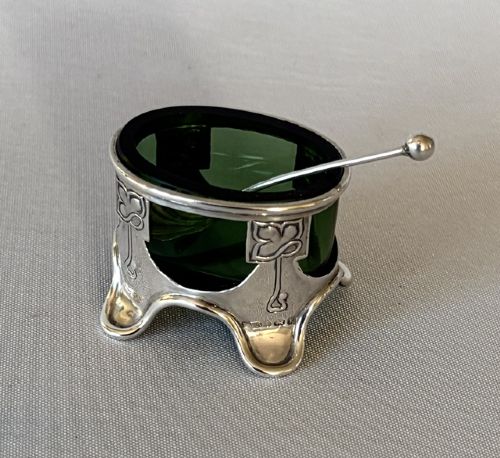
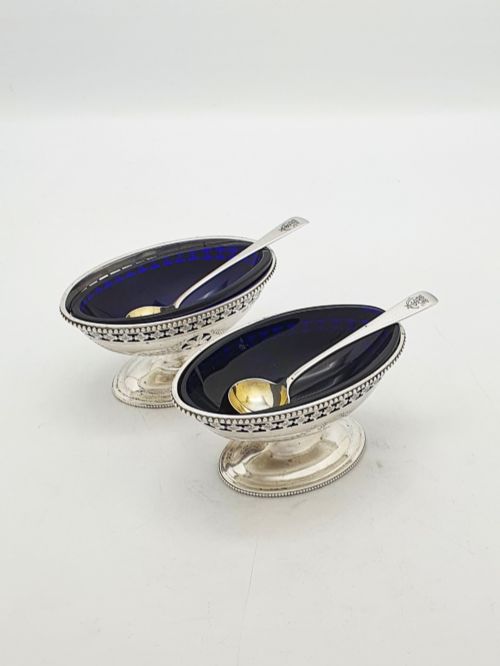
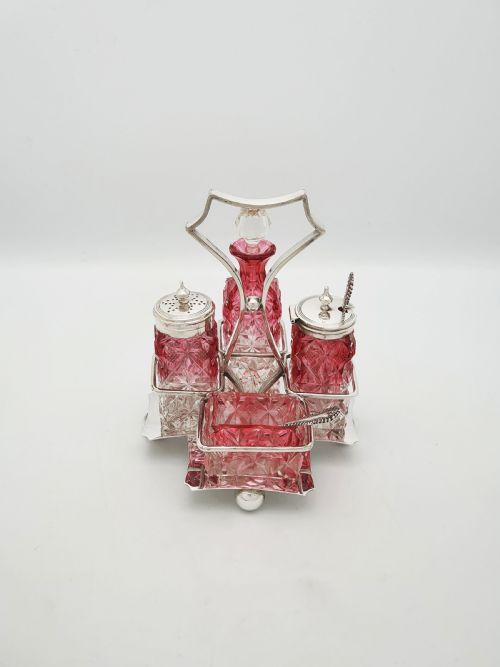
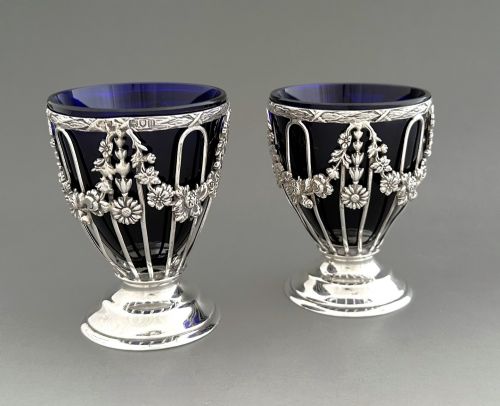
Silversmiths constructed these cellars using sterling silver, silver plate, and wirework frames. Many pieces incorporate coloured glass liners, including cobalt glass, green glass, cranberry flashed cut glass, and ruby red glass.
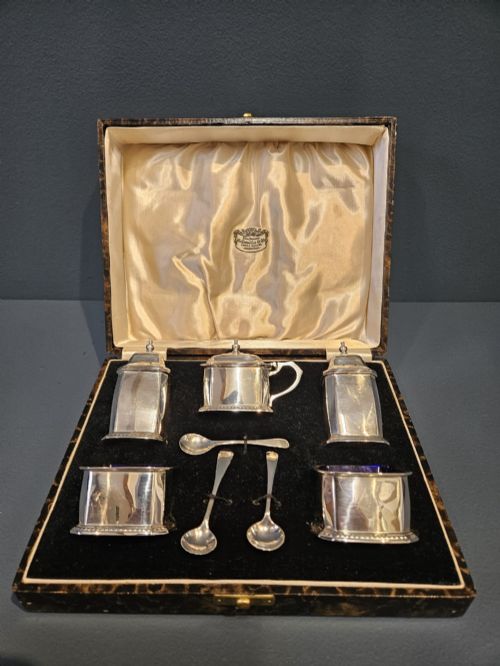
Internal linings protected the metal from corrosive salts and added vibrant colour contrast through transparent glass walls. Additional textures enter the designs via velvet and silk linings fitted inside presentation cases.
Surface decoration relies on pierced openwork, embossed animal motifs, and hand-cut facets on the glass bodies. Hallmarks stamped into the metal indicate the assay office, year, and maker.
Edwardian Silver Cellar Retail Price Guide 2026
Typical asking prices for edwardian silver cellar among the pieces listed under this phrase on Sellingantiques today, from the lower quarter to the upper quarter. They describe what is for sale here now, not the wider market.
Tiny silver chicks and goat motifs peer out from the salt cellars, guarding the seasoning on the dining table.
Distinctions in quality
Quality rests upon the weight of the metal and the precision of the silversmith's piercing or chasing work. Solid sterling silver pieces with crisp hallmarks sit above plated alternatives, though high-end plated stands feature elaborate frames and multiple matching bottles.
The presence of original matching components elevates a piece significantly. Complete sets retaining their original coloured glass liners, spoons, and fitted presentation cases command greater interest than assembled or incomplete groupings.
Josiah Williams & Co·Bricks And Sons·Sampson Mordan·Heath And Middleton
The Edwardian Silver Cellar Glossary
- Open salt
- A small vessel designed for loose salt served at the table before salt shakers became common. Diners used a tiny spoon or their fingers to take salt from the open bowl.
- Cruet set
- A matched collection of bottles, jars, or cellars held in a shared stand for condiments like oil, vinegar, salt, and pepper. These sets sat at the centre of the dining table.
- Cobalt glass
- A deep blue glass created by adding cobalt oxide to the molten batch. It frequently served as a contrasting liner inside open silver salt cellars.
- Wirework
- Open-lattice metalwork formed from soldered silver wires. This technique created lightweight, airy frames for glass salt tubs.
- Hallmark
- A series of stamped marks on precious metals indicating the standard of purity, the assay office, the maker, and the year of production.
Edwardian Silver Cellar: Frequently Asked Questions
What is an Edwardian silver cellar used for?
These small vessels held individual portions of salt or mustard on the formal dining table. Diners used small spoons to transfer the seasoning onto their plates.
Today, collectors utilise them as small decorative bowls or trinket dishes for dressing tables.
Are glass liners original?
Many Edwardian cellars retain their original blown or cut glass liners, which protected the silver from salt corrosion. Cobalt and cranberry glass liners are particularly typical of the period.
Replacement liners appear frequently due to the fragile nature of old glass.
How do I identify Edwardian pieces?
Silver pieces from this era often bear hallmarks indicating assay offices like Birmingham or London alongside date letters for the early twentieth century. Stylistic markers include Art Nouveau curves and crisp Edwardian revival motifs.
Comparing the hallmarks against standard date tables provides the exact year of manufacture.
What are condiment stands?
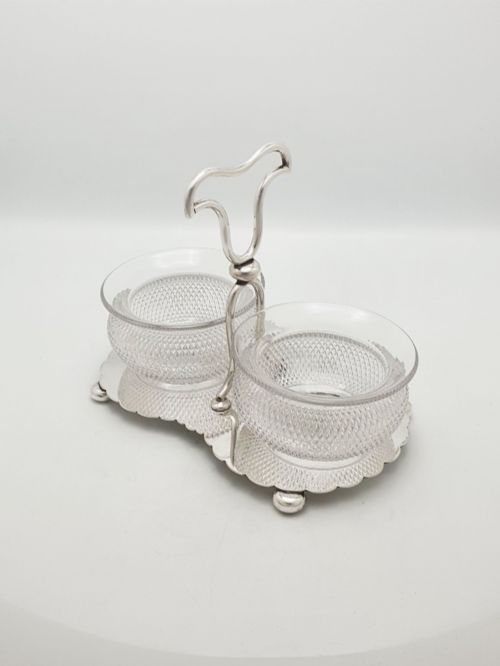
Condiment stands are frame structures designed to hold multiple bottles, salt cellars, and mustard pots together in one portable unit. They often feature a central carry handle for passing around the dining table.
Victorian and Edwardian examples frequently combine silver-plated wire frames with cut glass vessels.