



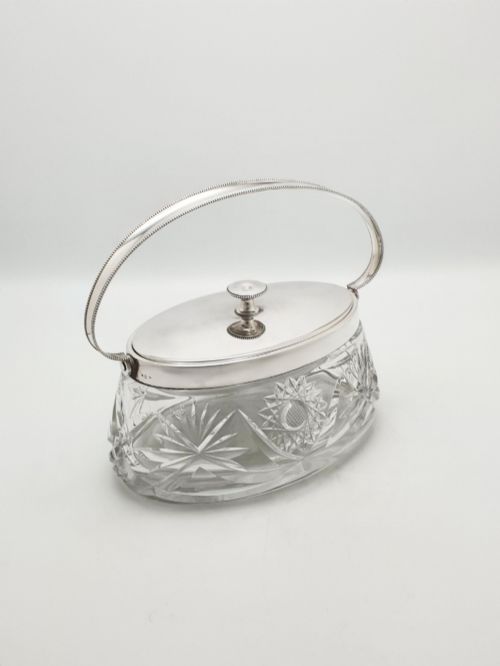


Edwardian Silver Biscuit Barrel
An Edwardian silver biscuit barrel brings formal hospitality to the table, combining polished metal mountings with glass, ceramic or oak bodies.
Edwardian Silver Biscuit Barrel
When searching for an Edwardian silver biscuit barrel, a buyer encounters covered vessels designed to store dry biscuits and dry goods safely in the dining room or drawing room. Most pieces appearing here date from the early twentieth century, reflecting the domestic tastes and dining habits of the period.
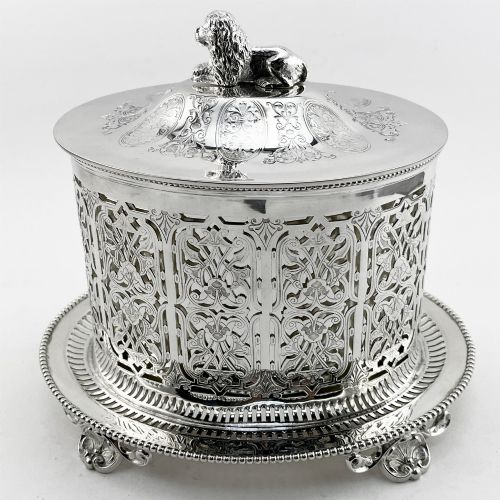
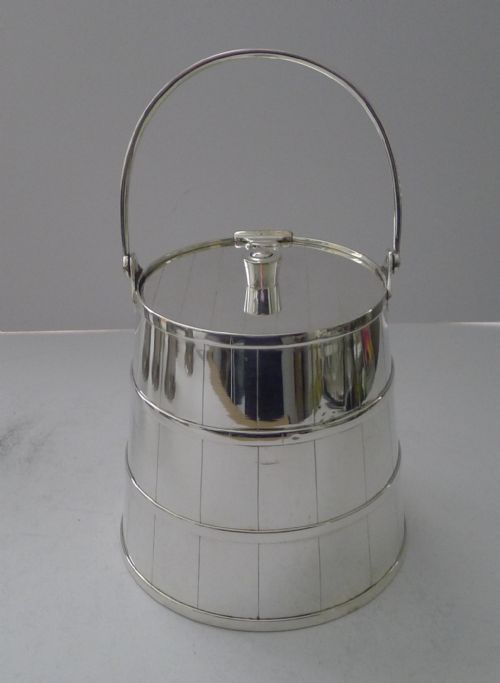
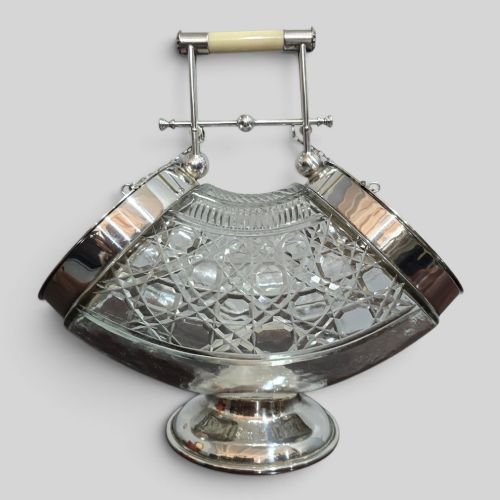
The form typically combines a fitted metal lid and mount with a substantial container body. While many examples are cylindrical or drum-shaped, variants range from handled glass vessels to oak barrels and novelty shapes.
Silver plate dominates the selection, though solid sterling silver versions also occur alongside ceramic liners and glass bodies. The domestic function bridges the gap between practical storage and decorative tabletop presentation.
Materials and construction
Makers combined silver plate or solid sterling silver with cut glass, earthenware and carved oak to build these containers. Metal mounts, swing handles and hinged lids required precision smithing to fit securely over glass bodies and ceramic liners.
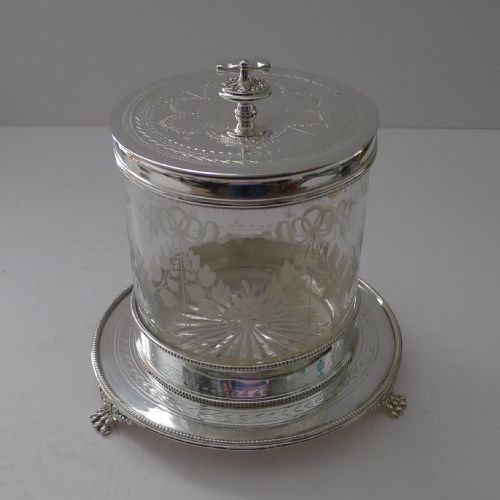
Glass bodies often feature hobnail cutting, faceting or twist moulding to catch the light through the transparent walls. Earthenware and ceramic versions utilise flow blue decoration or factory glazes like Crown Devon, while wooden examples employ turned oak staves.
Edwardian Silver Biscuit Barrel Retail Price Guide 2026
Typical asking prices for edwardian silver biscuit barrel among the pieces listed under this phrase on Sellingantiques today, from the lower quarter to the upper quarter. They describe what is for sale here now, not the wider market.
Listings feature oak, cut glass, cranberry glass and earthenware alongside silver plate and sterling silver.
Judging quality
Quality rests on the weight of the metal, the clarity and depth of the glass cutting, and the crispness of any applied mounts or floral chasing. Superior examples display substantial gauge silver plate or heavy sterling silver that resists denting and maintains a bright polish.
The integration of materials dictates the standard of manufacture, where tightly fitted lids, robust hinges and undamaged liners or crystal bodies separate standard domestic items from finer presentation pieces.
John Grinsell and Sons·James Dixon and Sons·WMF
The Edwardian Silver Biscuit Barrel Glossary
- Silver plate
- A base metal, such as copper or nickel silver, coated with a thin layer of pure silver. It allowed manufacturers to produce durable tableware at a lower cost than solid silver.
- Electroplated Nickel Silver
- A copper-nickel-zinc alloy coated with silver through an electrical process. This material provided a strong, corrosion-resistant foundation for heavy-use items.
- Cranberry glass
- A rich red glass produced by adding gold chloride to the molten metal batch. It gained popularity for decorative tableware and liners during the Victorian and Edwardian periods.
- Flow blue
- A cobalt blue transfer-printing technique on earthenware where the colour blurred slightly into the glaze during firing. This created a soft, misty aesthetic popular in late nineteenth and early twentieth century ceramics.
- Hobnail cut
- A sharp, geometric glass-cutting pattern featuring rows of small raised pyramids. It provided texture and enhanced the sparkle of crystal vessels.
Edwardian Silver Biscuit Barrel: Frequently Asked Questions
What is an Edwardian biscuit barrel?
An Edwardian biscuit barrel is a covered container made to hold dry biscuits on the dining table or sideboard during the early twentieth century.
These pieces typically pair a metal lid and swing handle with a glass, ceramic or wooden body.
How were biscuit barrels used?
They were filled with dry biscuits and placed on the table for afternoon tea or after-dinner hospitality.
The fitted lid kept the contents fresh and protected from moisture while guests served themselves.
Are these barrels made of solid silver?
Most surviving examples utilise silver plate or electroplated nickel silver over a base metal rather than solid sterling silver.
Solid silver versions do exist alongside silver-mounted glass and oak, but they are less common.
What materials besides metal do they use?
Makers frequently incorporated cut glass, cranberry glass, oak staves and earthenware ceramic bodies into the designs.
Many styles also include internal ceramic liners or removable glass inserts to hold the biscuits.