



Edwardian Sheraton Revival Chair
These edwardian sheraton revival chair examples offer classic neoclassical elegance through refined inlay and graceful proportions.
Edwardian Sheraton Revival Chair
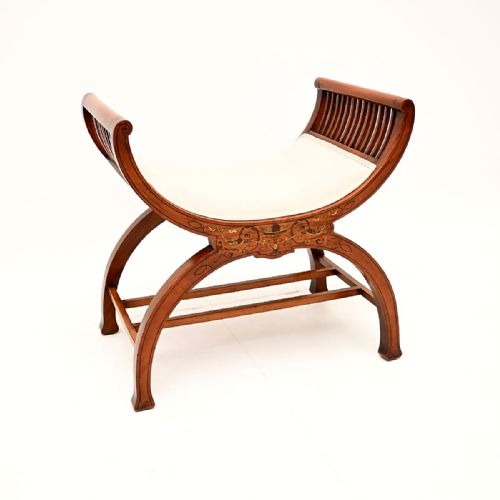
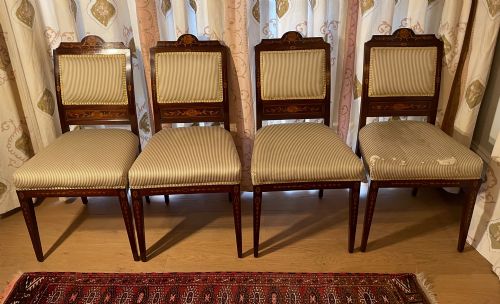
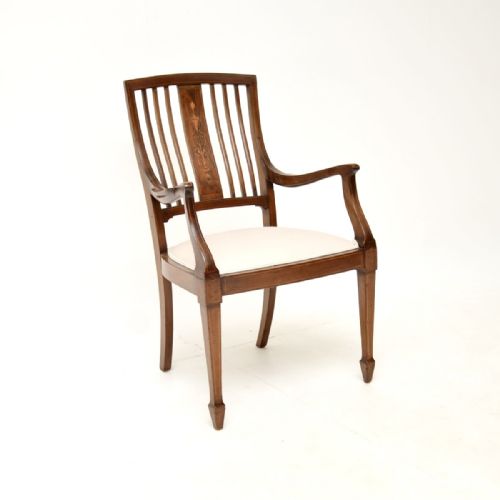
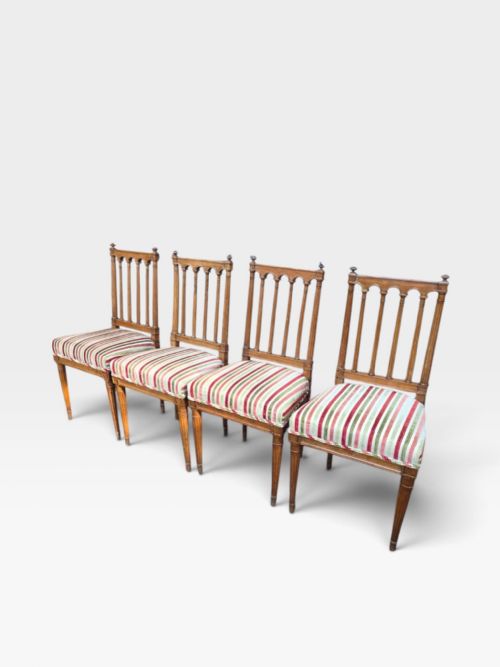
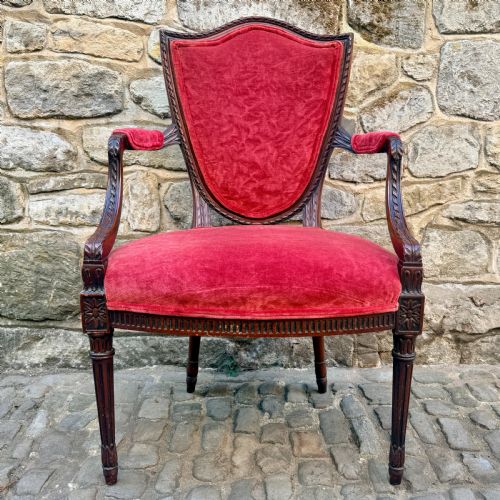
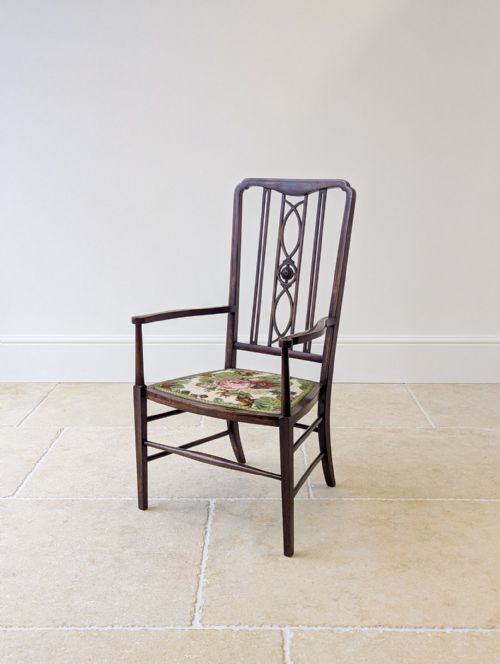
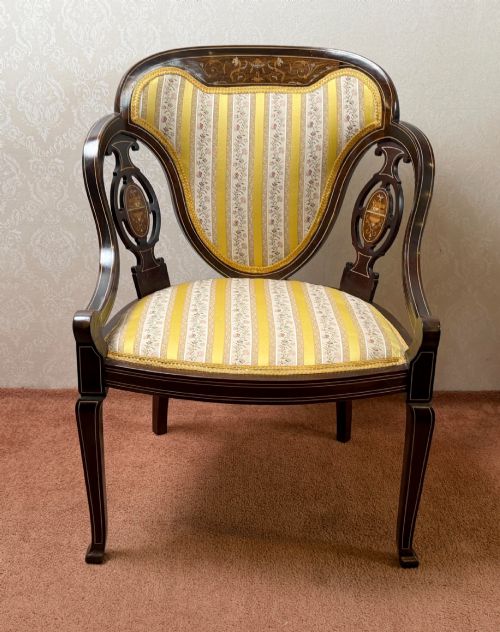
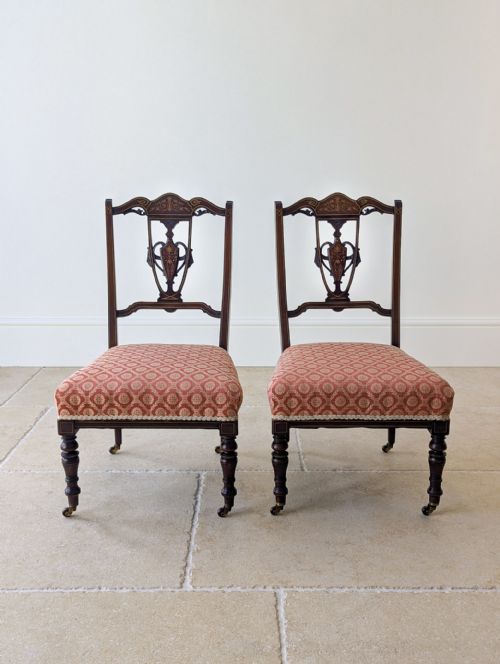
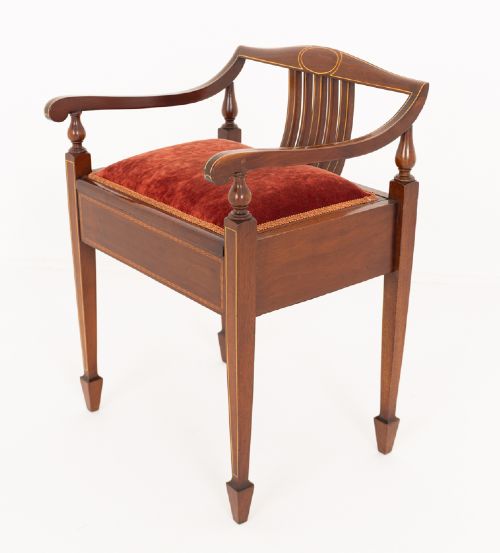
An edwardian sheraton revival chair draws upon late eighteenth-century neoclassical designs, reinterpreted during the Edwardian era and the late nineteenth century. You will encounter various forms here, ranging from dining chairs and armchairs to library chairs, desk chairs, and salon chairs.
How they were made
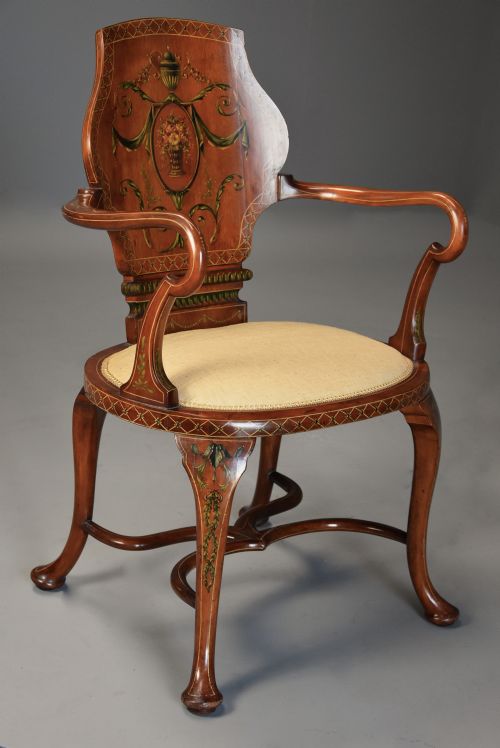
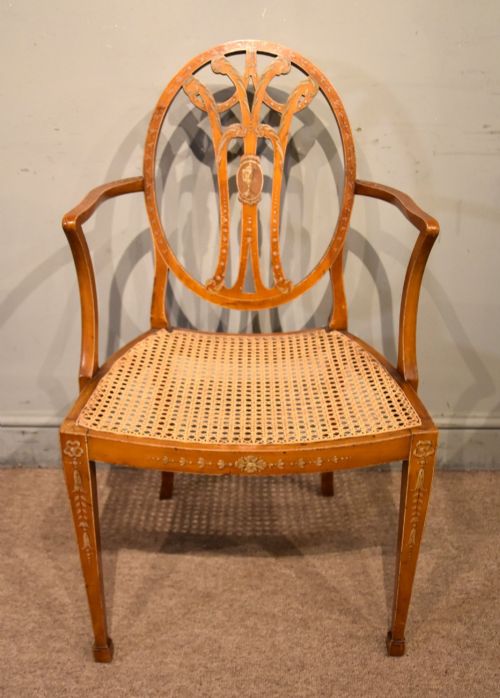
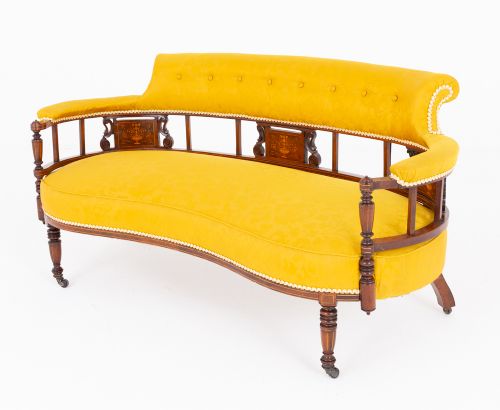
Cabinet makers utilised dense hardwoods such as mahogany and rosewood as the structural foundation, often pairing them with pale satinwood veneers. These surfaces were frequently embellished with precise boxwood and bone inlay, creating delicate contrasting linear patterns and classical motifs.
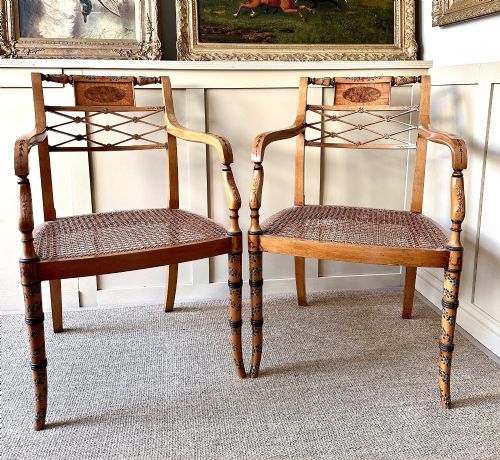
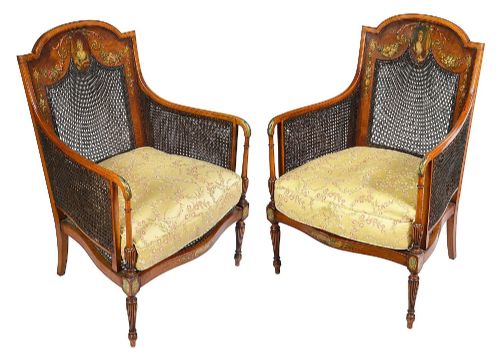
Upholstery techniques varied from traditional stuffed seats covered in contemporary fabric and velvet to woven cane panels fitted into library armchairs and bergere seats. Painted decoration was also applied to select satinwood frames, introducing floral or classical motifs directly onto the wood.
Edwardian Sheraton Revival Chair Retail Price Guide 2026
Typical asking prices for edwardian sheraton revival chair among the pieces listed under this phrase on Sellingantiques today, from the lower quarter to the upper quarter. They describe what is for sale here now, not the wider market.
Some library armchairs feature woven cane panels that kept nineteenth-century readers cool before the invention of electric fans.
What varies in quality
The refinement of the inlay work largely distinguishes the standard of execution, with tightly fitted, intricate botanical or geometric lines representing superior craftsmanship. Simpler versions rely on basic polished timber frames with minimal decoration.
Structural integrity and timber selection also divide the ordinary from the exceptional, particularly in how securely the joints hold and how smoothly the carved or turned elements are finished. Pieces featuring hand-painted details or cane panels require greater skill and therefore command closer attention.
The Edwardian Sheraton Revival Chair Glossary
- Sheraton Revival
- A design movement spanning the late nineteenth and early twentieth centuries that reinterprets the graceful neoclassical furniture forms associated with Thomas Sheraton.
- Satinwood
- A lustrous, yellowish-gold timber prized for its fine grain and used extensively for veneers and decorative panels on high-status furniture.
- Bergere
- An enclosed upholstered armchair with a wooden frame, frequently featuring woven cane panels on the back and sides.
- Inlay
- A decorative technique where pieces of contrasting materials such as boxwood or bone are inserted into recessed cavities flush with the surrounding wood.
- Tub Chair
- An upholstered armchair with a rounded, curved back that flows continuously into the armrests.
Edwardian Sheraton Revival Chair: Frequently Asked Questions
What is a sheraton revival chair?
A sheraton revival chair is a late nineteenth or early twentieth-century interpretation of eighteenth-century neoclassical furniture designs. These pieces typically feature slender proportions, tapered legs, and delicate inlay work.
They replicate the lightness and elegance championed by Thomas Sheraton, adapted to suit the drawing rooms and libraries of the Victorian and Edwardian periods.
How do I identify an edwardian chair?
Edwardian chairs generally date from the period between eighteen-ninety and nineteen-ten, often displaying lighter construction and brighter polished mahogany or satinwood than their heavier Victorian predecessors. Look for restrained neoclassical motifs and satinwood inlay.
Construction methods also help with dating, as machine assistance became more common while hand-finishing remained standard for decorative elements.
Where were these chairs used?
These seating pieces were designed primarily for formal and semi-formal spaces within the home, including drawing rooms, parlours, libraries, and bedrooms. Armchairs and desk chairs served functional roles in studies and libraries.
Smaller salon chairs and side chairs were easily moved around reception rooms to accommodate guests during social gatherings.
Are these chairs comfortable for daily use?
Many of these chairs provide a firm, upright seat intended for formal sitting rather than deep lounging. Upholstered versions offer varied levels of padding depending on whether they feature traditional spring units or webbed stuffing.
Library armchairs and tub chairs generally offer a more enveloping seat, making them suitable for prolonged reading or resting.