

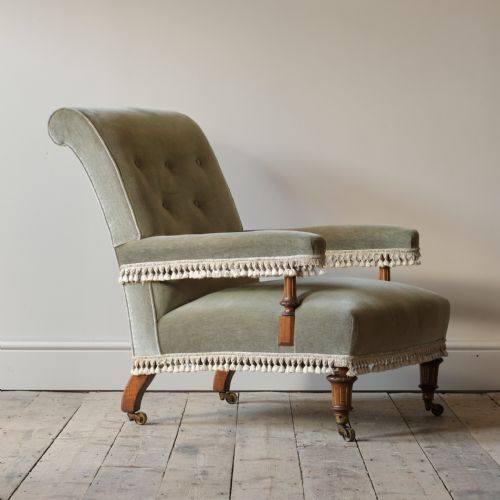
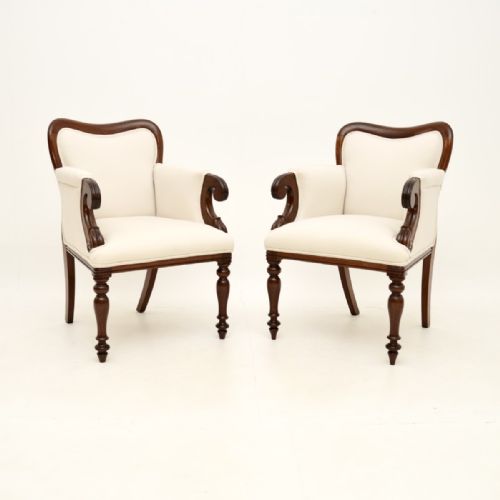
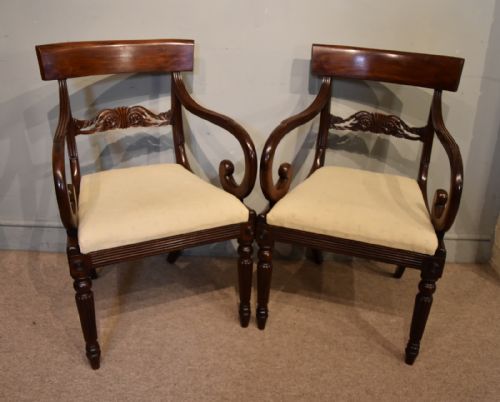
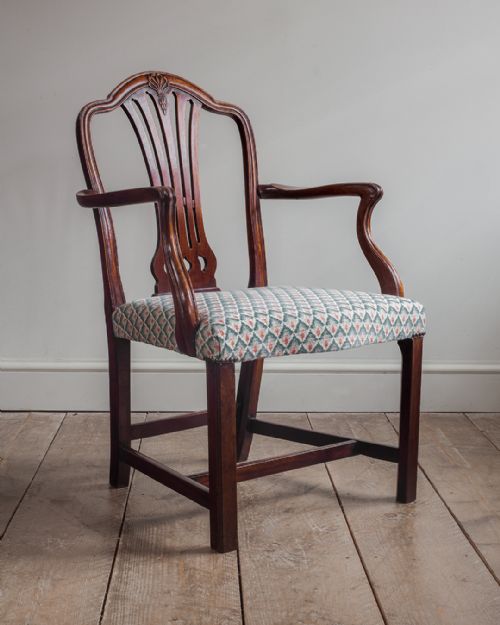
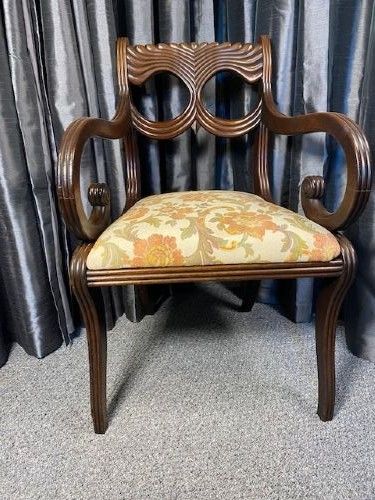
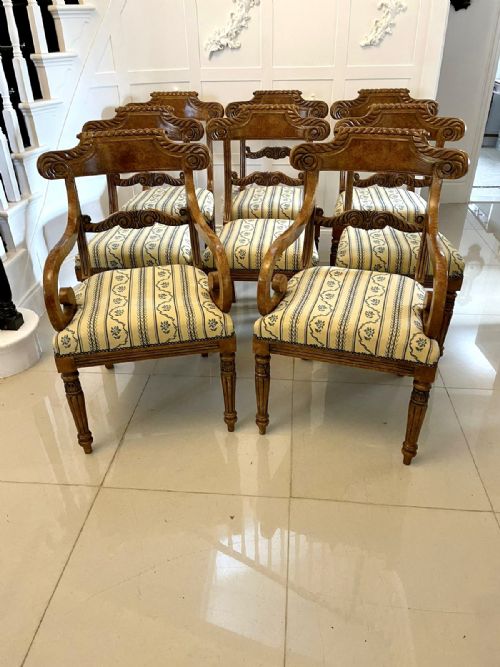


Period Mahogany Arm Chair
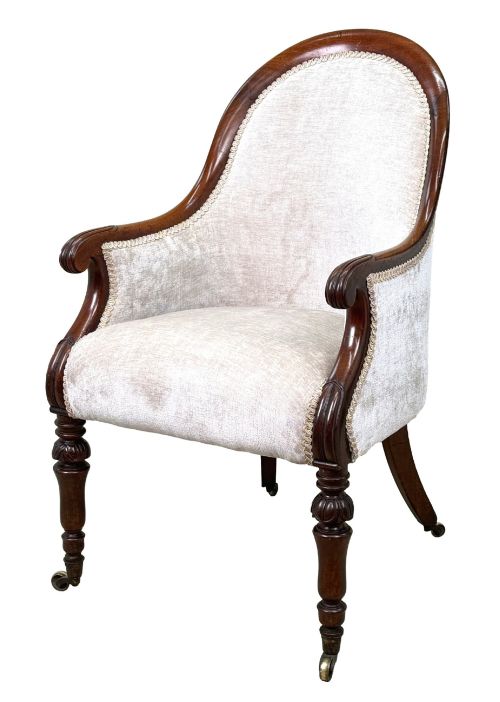
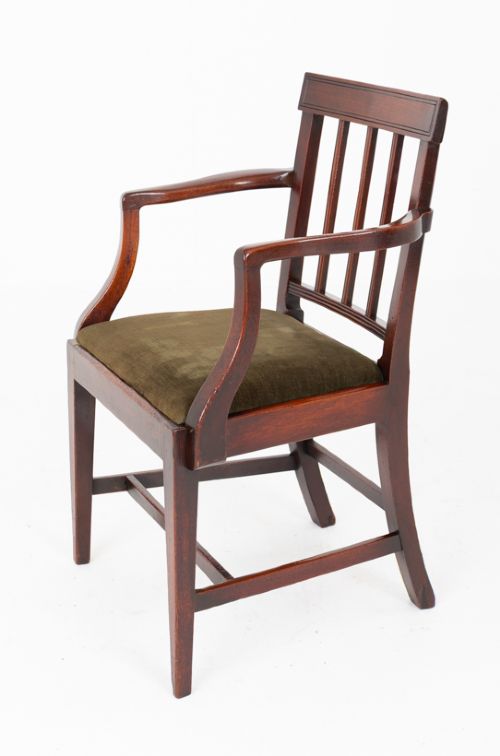
A period mahogany arm chair brings substantial timber and refined carving into a study or drawing room.
Period Mahogany Arm Chair
A period mahogany arm chair encompasses seating designed for libraries, dining rooms and desks from the eighteenth and nineteenth centuries. Buyers frequently encounter George III, Regency and William IV iterations, spanning robust Chippendale frameworks to restrained library seating.
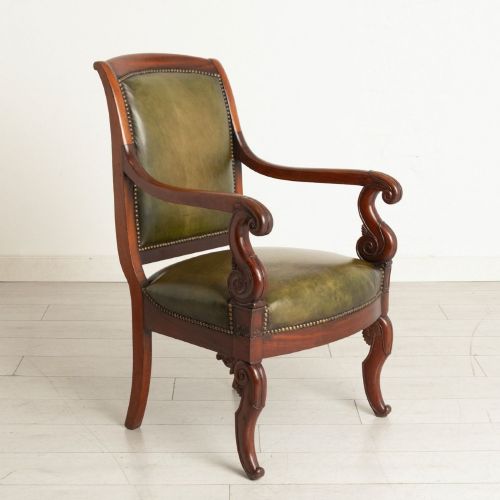
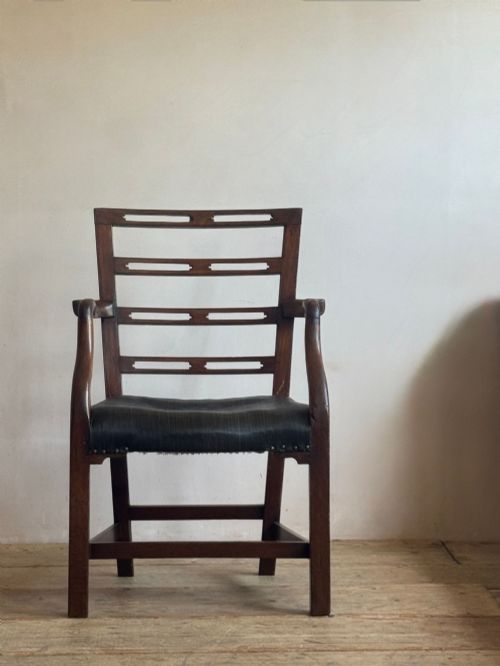
The selection ranges from simple ladder-back studies to library armchairs fitted with green leather or brass inlay. Dining sets often include matching carver chairs alongside single chairs for formal tables.
Materials and construction
Makers utilised dense mahogany timber, sometimes specified as Cuban variety, providing the structural integrity needed for sweeping scroll arms and fretwork backs. Frames were jointed securely to support frequent use in parlours and halls.
Upholstery relies on traditional fabrics, velvet, wool, caning or hand-dyed leather secured over supportive padding. Brass elements frequently appear as inlaid details or functional castors on library and desk variants.
Cockpen armchairs bring delightfully rounded wooden rails to the parlor.
Distinguishing quality
The excellence of a piece rests in the crispness of its carved details, such as ribbon backs or scroll terminals, and the proportional harmony of the arms and legs. Superior examples retain original timber surfaces with deep patination rather than over-restored finishes.
Structural honesty and the integration of original leather or brass components elevate certain chairs. Subtle variations in turning and joinery mark the distinction between standard provincial workshop production and fine urban cabinet-making.
Gillows·Hepplewhite·Chippendale
The Period Mahogany Arm Chair Glossary
- Carver chair
- An armchair designed with open sides, typically intended for the head of a dining table.
- Bergère
- An enclosed armchair with upholstered sides and back, often featuring cane panels.
- Scroll arm
- An armrest shaped into a curved, volute form characteristic of Regency and Victorian seating.
- Cuban mahogany
- A dense, high-grade timber prized for its rich grain and deep colour in eighteenth-century furniture.
- Gainsborough armchair
- A wide, upholstered seat with open padded arms, popular during the mid eighteenth century.
Period Mahogany Arm Chair: Frequently Asked Questions
How do I date a mahogany armchair?
Dating relies on stylistic shifts from eighteenth-century Chippendale fretwork to the clean lines of the Regency period and later Victorian scroll arms. Construction marks and timber characteristics offer further chronological clues.
Examining the underside and joint methods helps confirm whether a chair originates from the Georgian era or later revival periods.
Were these chairs used at desks?
Many sturdy mahogany armchairs served in libraries, studies and offices, often featuring leather inserts or desk-height proportions. Library and desk variants frequently incorporated castors for easy movement across floors.
Lower seating heights and open arms accommodated the practical needs of writing and reading in formal rooms.
Can I use an antique carver for dining?
Carver chairs were traditionally placed at the ends of dining tables to seat the host or principal guests. Sets of dining chairs often include matching carvers alongside standard single chairs.
Buyers should check the seat height and table clearance to ensure comfortable modern dining use.
How do I care for leather upholstery?
Hand-dyed leather seats benefit from gentle cleaning and periodic conditioning to maintain the supple texture of the hide. Keeping chairs away from direct heat sources prevents the leather from drying out.
Regular dusting preserves both the timber frame and the surrounding upholstery fabric without harsh chemical intervention.