

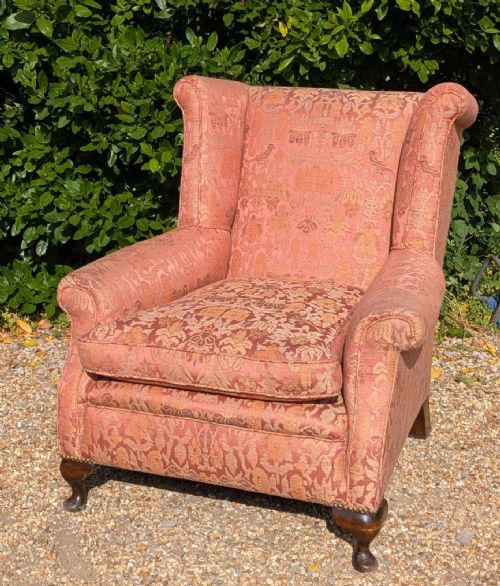


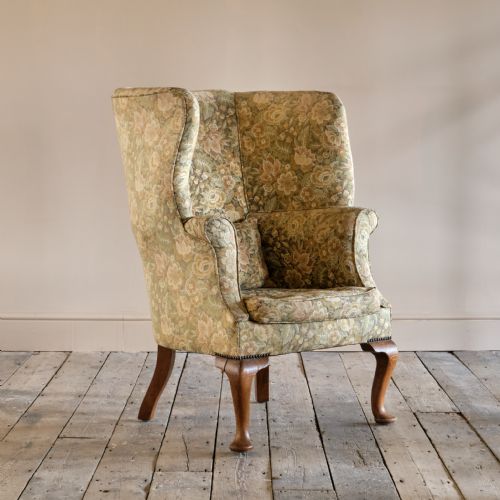


Vintage Patterned Wing Chair
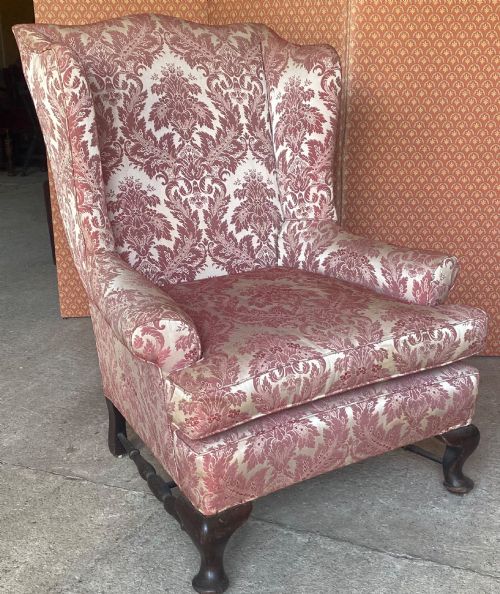
A vintage patterned wing chair anchors a room with high sides and deep comfort, spanning Edwardian and Victorian revivals.
Vintage Patterned Wing Chair
A vintage patterned wing chair brings traditional fireside seating into modern interiors through structured high backs and protective wings. Buyers searching this phrase encounter classic armchairs upholstered in patterned textiles, plaids, and tapestries.
The selection ranges from eighteenth-century examples to Edwardian and nineteen-thirties revivals. Common iterations include Queen Anne and Georgian style frames alongside Arts and Crafts and English country house aesthetics.
How they were made
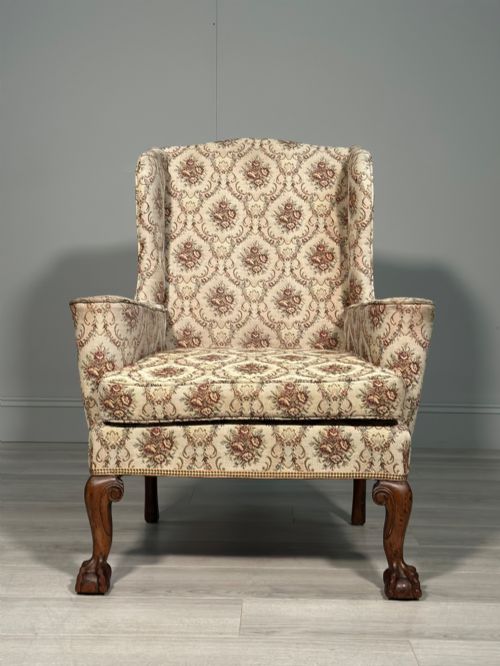
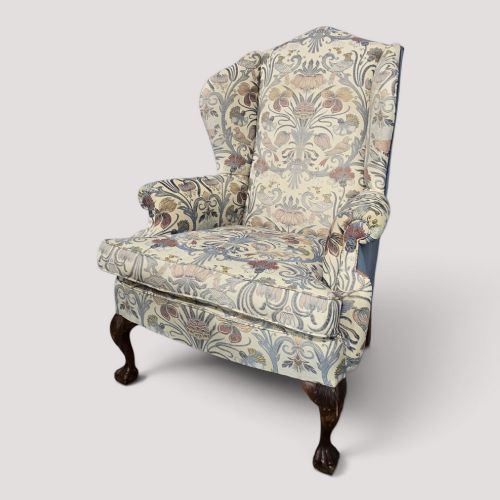
Frames rely on sturdy timbers such as mahogany, walnut, oak, and general hardwood, often supported by brass castors and detailed with carved claw and ball feet. Traditional construction methods involve feather filling and heavy textile upholstery.
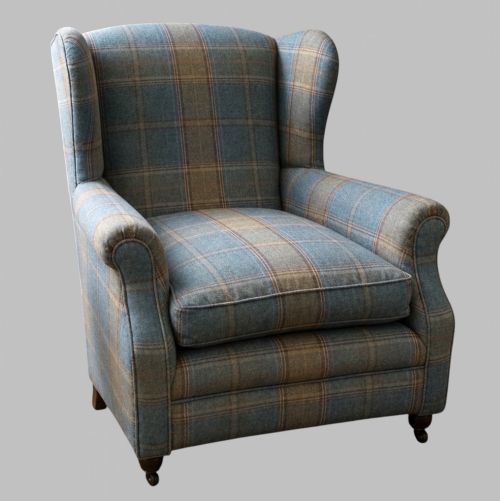
Textiles span woven tapestry fabric, wool plaids like Mulberry Shetland, and general patterned fabric. Wood frames receive polished or carved finishes that complement the patterned upholstery.
Vintage Patterned Wing Chair Retail Price Guide 2026
Typical asking prices for vintage patterned wing chair among the pieces listed under this phrase on Sellingantiques today, from the lower quarter to the upper quarter. They describe what is for sale here now, not the wider market.
Forest claw and ball feet ensure your chair maintains a firm grip on the carpet while surveying the room.
What varies in quality
Quality rests upon the integrity of the underlying hardwood frame and the fidelity of the period style revival, whether Queen Anne or Chippendale. Finer examples display superior timber selection, precise joinery, and substantial feather filling.
The distinction between standard production and exceptional work lies in the handling of textiles and the execution of carved details on the legs and arm supports.
Whytock and Reid·Howard and Sons·William Morris
The Vintage Patterned Wing Chair Glossary
- Wingback
- An armchair featuring high side panels designed to shield the sitter from draughts and retain fireplace heat. These wings define the silhouette of the fireside chair.
- Bergère
- An enclosed armchair with upholstered sides and back, frequently constructed with cane or fabric panels. This French-inspired form appears within Edwardian seating.
- Claw and ball
- A carved foot motif depicting a bird talon grasping a sphere, commonly found on eighteenth-century and revival chair legs. This detail finishes mahogany and walnut frames.
- Plaid
- A patterned wool textile featuring crisscrossed horizontal and vertical bands in multiple colours. These fabrics define nineteen-thirties and country house upholstery.
- Barrel back
- A seating design where the curved backrest flows continuously into the arms. This creates a semi-circular enclosure for the sitter.
Vintage Patterned Wing Chair: Frequently Asked Questions
How do I style a wing chair?
Pair the chair with a low reading lamp and a solid wood side table to balance the patterned upholstery.
Position the piece beside a fireplace or in a quiet corner where the high back creates a private seating zone.
Are these chairs comfortable for daily use?
The deep seats and feather filling provide substantial support for reading and relaxing.
High wings and padded arms offer a traditional enclosed feel that remains practical for modern living spaces.
How do I identify an Edwardian wing chair?
Edwardian examples typically combine lighter mahogany or oak frames with revival styles like Queen Anne or Georgian.
Look for refined proportions and tapered legs that distinguish this period from heavier Victorian seating.
What is the difference between Georgian and Queen Anne styles?
Queen Anne style frames often feature cabriole legs and pad feet with curved, flowing lines.
Georgian style interpretations frequently incorporate more robust proportions and carved details like claw and ball feet.