
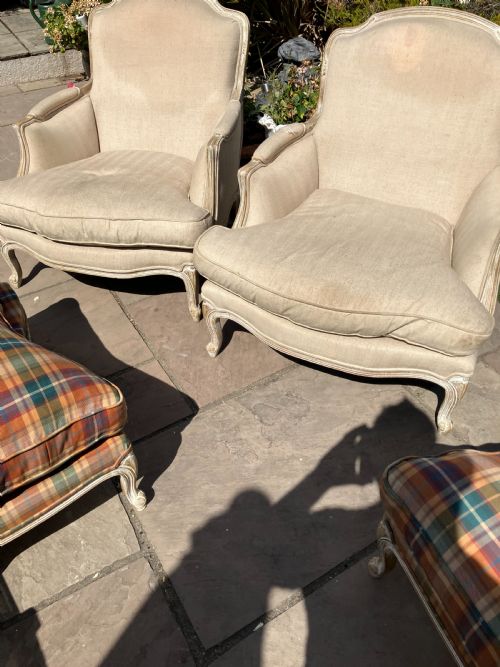

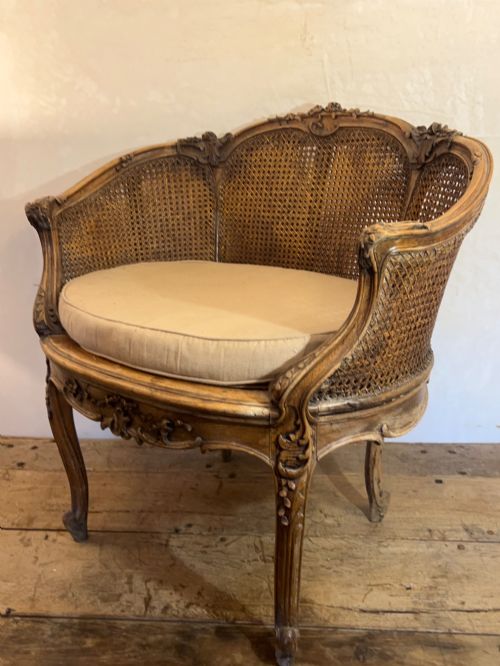
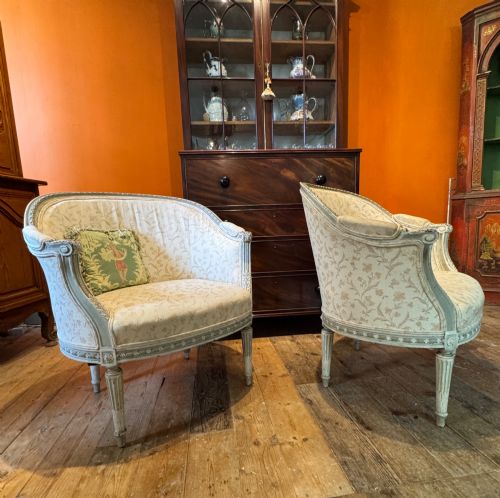
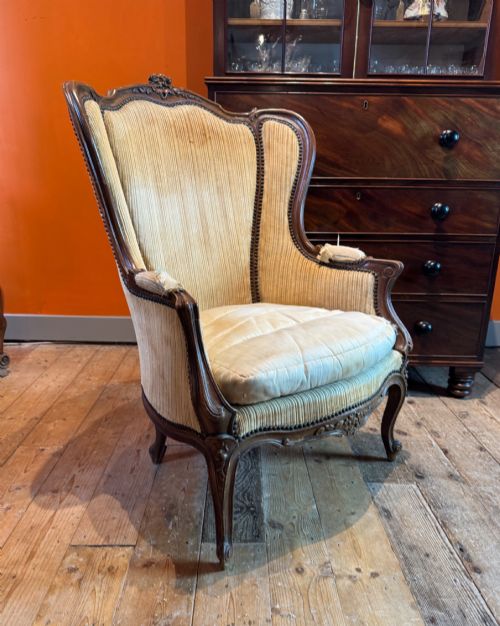

Bergere Style Armchair
When you want a bergere style armchair, you are looking at deep, enclosed seating built for comfort, crossing French and Regency designs.
Bergere Style Armchair
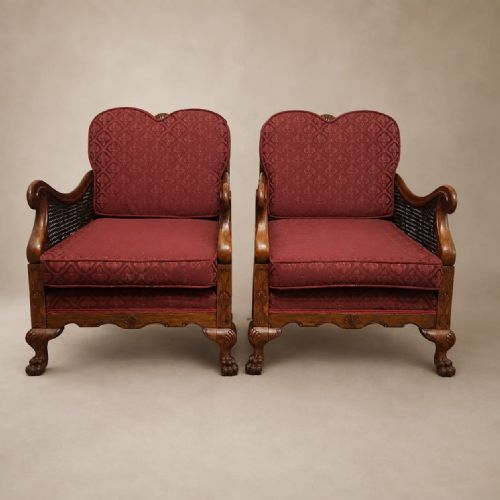
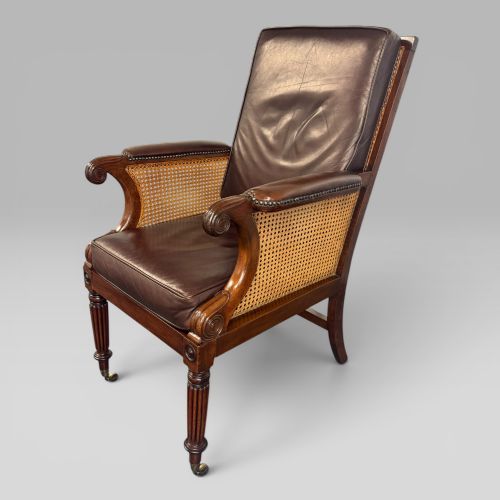
A bergere style armchair brings a traditional enclosed seating form into a room, typically featuring solid wooden frames with woven panels or upholstered sides. The selection spans the nineteenth century through the early twentieth century, drawing heavily on French origins and Regency influences.
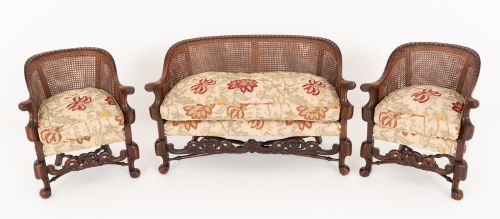
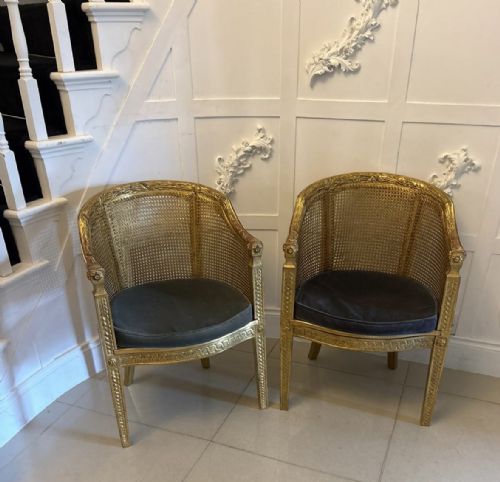
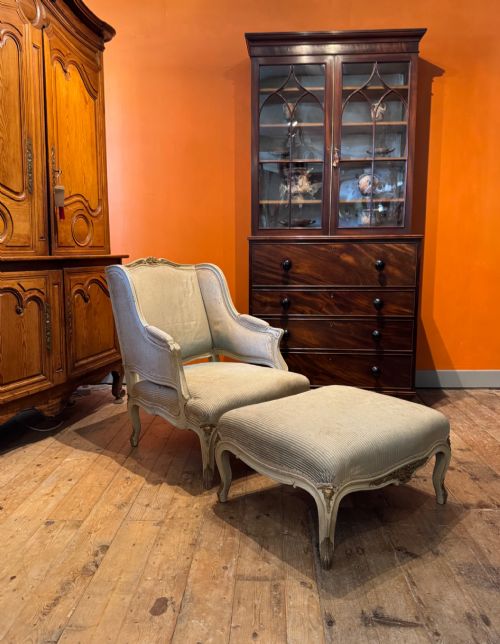
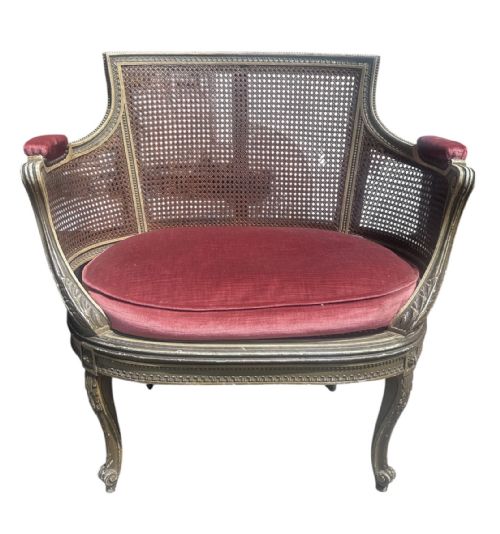
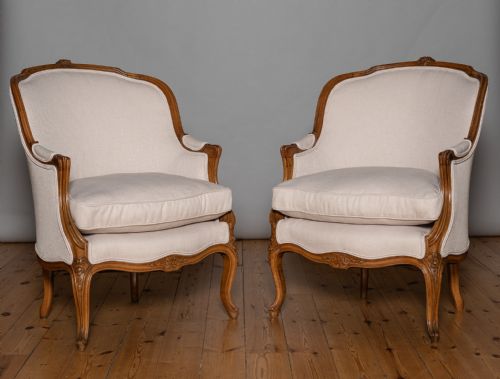
The versions most commonly encountered on this page display Louis XV and Louis XVI styling, often paired with cane panels and fitted cushions. Makers adapted these forms into library chairs, tub shapes, and larger salon seating suites over successive decades.
Materials and Construction
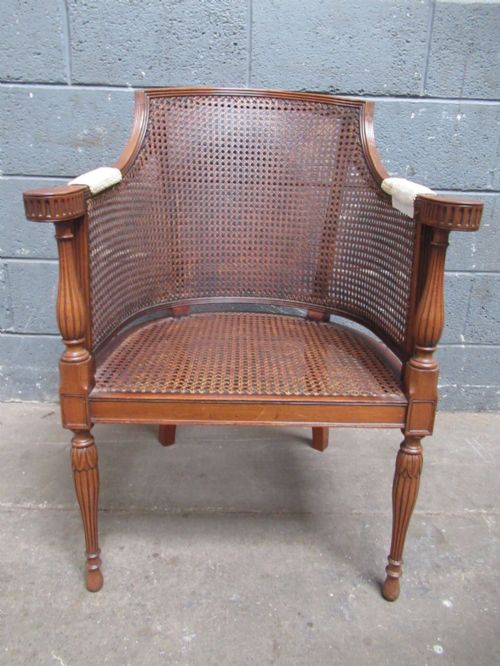
Frames rely on hardwoods such as mahogany, walnut, oak, beech, and ash, sometimes finished with giltwood, original paint, or ebonised surfaces. Caning techniques provide the characteristic woven back and side panels, often executed in split or double cane.
Upholstery incorporates traditional textile choices like silk, velvet, leather, and fabric for the loose or fitted cushions that complete the seat. Brass details and inlay work occasionally accent the timber structures.
Some nineteenth century small folk needed their own seating, resulting in miniature child-sized versions with fully functioning cane work.
Assessing Quality
Quality rests on the depth of the carving and the crispness of detail in the wooden frame, particularly where giltwood, paint, or mahogany are shaped by hand. The tightness and regularity of the cane work across the back and sides indicate skilled craftsmanship.
Proportion and structural integrity define the best examples, where the curve of the arms and the sweep of the back maintain balance without heavy or clumsy joints.
Gillows
The Bergere Style Armchair Glossary
- Bergere
- An enclosed upholstered armchair featuring solid wooden sides filled with cane or upholstery. It originated in France and typically includes a loose squab cushion.
- Caning
- A weaving technique using rattan or split cane to form open panels on chair backs and sides. This method lightened the visual weight of heavy wooden frames.
- Duchesse Brisee
- A chaise longue split into two or three components, often comprising an armchair and one or two footstools. These pieces form an extended lounging seat.
- Giltwood
- Timber coated with a thin layer of gold leaf. It appears frequently on decorative French salon frames.
- Squab cushion
- A loose, removable seat cushion placed over the base of a chair. These are traditionally filled with soft materials for comfort.
Bergere Style Armchair: Frequently Asked Questions
What is a bergere armchair?
A bergere armchair is a fully enclosed seat with solid wooden sides and back panels that are usually caned or upholstered. They developed in France as a comfortable alternative to stiff ceremonial seating.
These chairs usually include a thick loose cushion and provide a deep, enclosed posture suitable for reading or relaxing in a library or salon.
How do I style a bergere chair?
These armchairs suit living rooms, studies, and bedrooms where their distinct wooden frames and caned panels add texture. Pairing them with traditional side tables or placing a pair opposite a sofa creates a balanced seating arrangement.
Because they bridge French and Regency aesthetics, they mix easily with antique timber furniture and softer contemporary fabrics.
How do I identify French versus Regency styles?
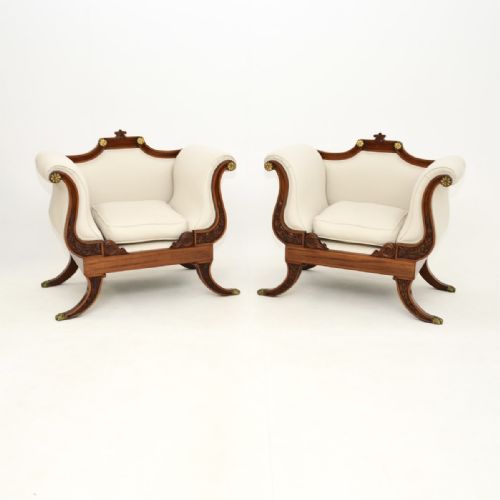
French styles like Louis XV and Louis XVI feature curved cabriole legs, carved floral motifs, and painted or giltwood surfaces. Regency pieces tend to be made of dark mahogany, sometimes with ebonised finishes, brass accents, and more austere classical lines.
Examining the woodwork and carving motifs usually reveals whether a piece leans towards continental curves or British classical restraint.
What is the difference between single and double caning?
Single caning uses a single strand woven through holes drilled in the frame, leaving the cane strands visible on both the inside and outside. Double caning uses two layers of mesh to conceal the construction knots and provide extra durability.
Double caned panels offer a cleaner finish on chairs where both the interior and exterior sides remain fully visible.