
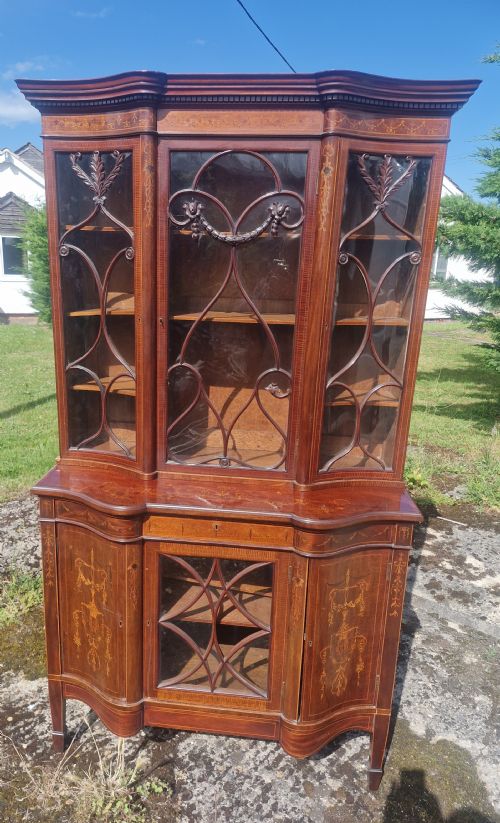

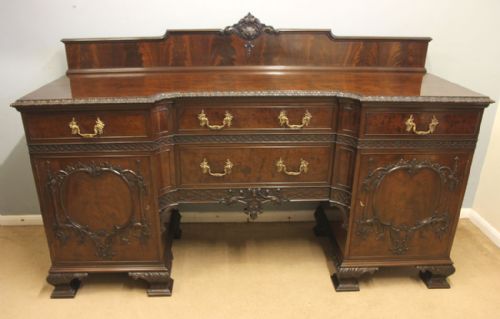


Edwardian Serpentine Sideboard
An Edwardian serpentine sideboard brings together flowing front curves and refined cabinet-making, offering a practical centrepiece for a dining room.

Edwardian Serpentine Sideboard
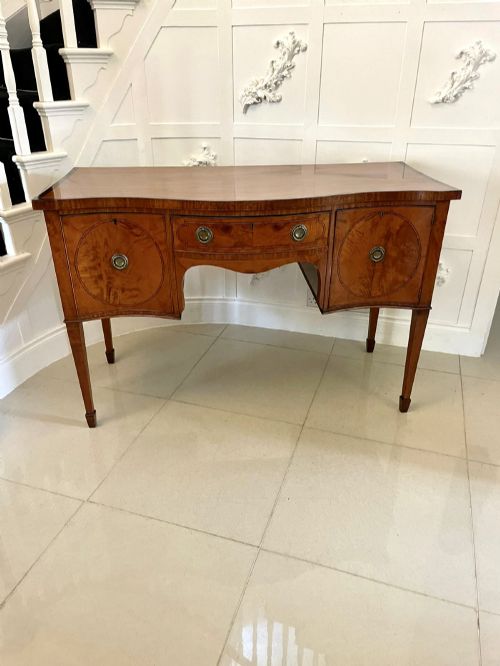
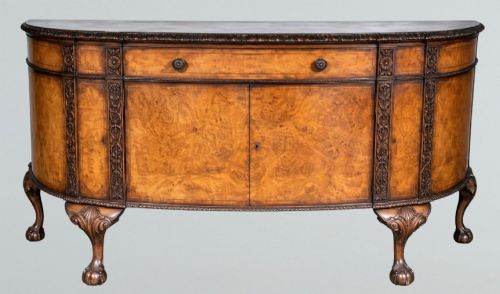
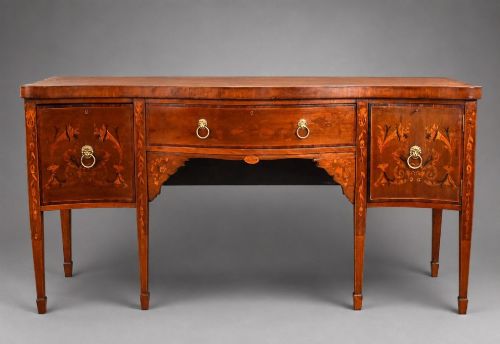
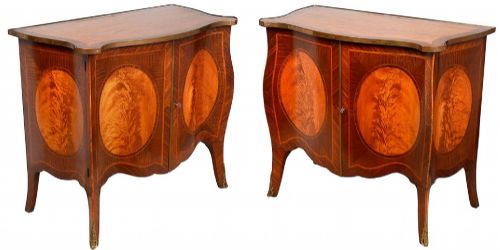
An edwardian serpentine sideboard combines a gently undulating curved front with cabinet storage designed for dining rooms. The pieces appearing here span Edwardian production alongside revival styles rooted in earlier centuries.
Makers of the period favoured rich timbers shaped into serpentine contours that catch the light across their curved surfaces. These storage items balance decorative marquetry and inlay with functional proportions for modern interiors.
How they were made
Cabinet-makers constructed carcasses using solid mahogany and walnut, applying finely figured veneers to curved drawer fronts and top panels. They incorporated boxwood stringing and contrasting satinwood to create detailed inlaid borders.
Brass handles and fixtures were fitted to drawers and cupboard doors, while glass panels featured on related display cabinets. The serpentine shape required careful timber bending and jointing by skilled hands.
Edwardian Serpentine Sideboard Retail Price Guide 2026
Typical asking prices for edwardian serpentine sideboard among the pieces listed under this phrase on Sellingantiques today, from the lower quarter to the upper quarter. They describe what is for sale here now, not the wider market.
The inventory includes matching display cabinets, serving tables, and credenzas alongside standard serpentine sideboards.
What varies in quality
The choice of timber grain defines the visual impact, with matched flame mahogany and burr walnut showing superior natural patterns. Finer examples display intricate marquetry work and precise boxwood inlay rather than painted substitutes.
Structural integrity depends on how well the curved joints and drawers withstand atmospheric changes over time. The sophistication of the overall design and the crispness of the serpentine sweep separate standard production from exceptional work.
Maple and Co
The Edwardian Serpentine Sideboard Glossary
- Serpentine
- A curved furniture front shaped in a convex-concave-convex wave line. This contour requires advanced woodworking skill to execute properly.
- Inlay
- A technique where pieces of contrasting wood or brass are set into the surface to form decorative patterns. Boxwood and satinwood are common choices for this detail.
- Marquetry
- Decorative veneer work arranged in pictorial or geometric patterns across cabinet doors and tops. It utilises various toned woods to achieve tonal depth.
- Credenza
- A sideboard or display cabinet originating in Italy, often featuring mirrored backs or glass doors. Victorian and later makers adapted the form for drawing rooms.
- Commode
- A low cabinet or chest of drawers fitted with doors or drawers. Edwardian makers produced serpentine versions influenced by earlier French and English designs.
Edwardian Serpentine Sideboard: Frequently Asked Questions
Where should I place a serpentine sideboard?
These pieces suit dining rooms or large hallways where their curved fronts can be viewed without obstruction. They provide useful surface space for serving food or displaying decorative items.
Ensure there is adequate clearance around the curved central projection so doors and drawers open fully without hitting surrounding furniture.
How do I care for mahogany surfaces?
Dust the timber regularly with a soft, dry cloth to prevent surface grit accumulation. Avoid placing the item in direct sunlight or near heat sources to protect the polished finish.
Apply a traditional beeswax polish occasionally to nourish the wood and maintain its natural lustre.
What is the difference between Edwardian and Georgian sideboards?
Edwardian interpretations often draw inspiration from Sheraton or Chippendale revival styles, utilising lighter mahogany veneers and delicate boxwood stringing. They reflect the decorative tastes of the early twentieth century.
Georgian originals tend to be heavier in construction and rely on solid timber framing rather than extensive veneering techniques.
Can I use a sideboard as a cocktail cabinet?
The interior cupboard space accommodates glassware and bottles efficiently for hosting guests. Many period pieces feature deep drawers or shelved compartments suited to this purpose.
Some related cabinets specifically incorporate fitted mirrors and glass shelves designed for entertaining.