


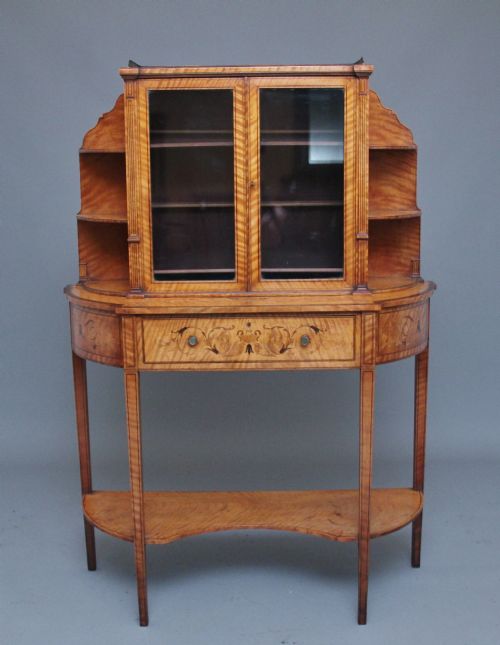

Edwardian Satinwood Side Cabinets
Edwardian satinwood side cabinets bring a bright, figured timber and refined neoclassical revival design to domestic interiors.
Edwardian Satinwood Side Cabinets
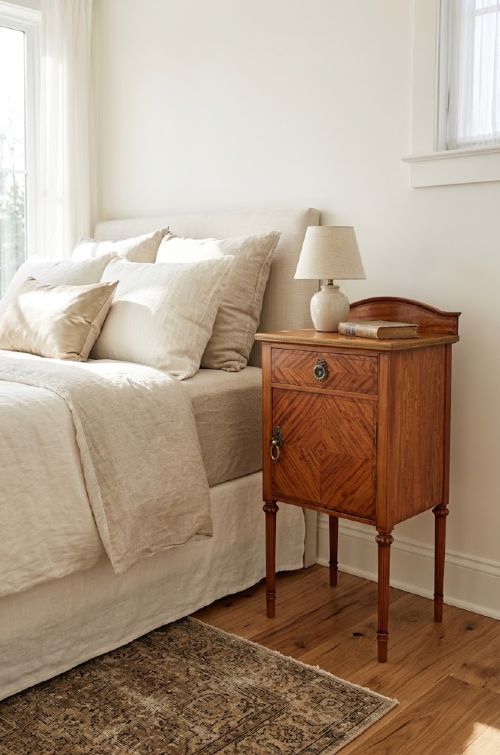
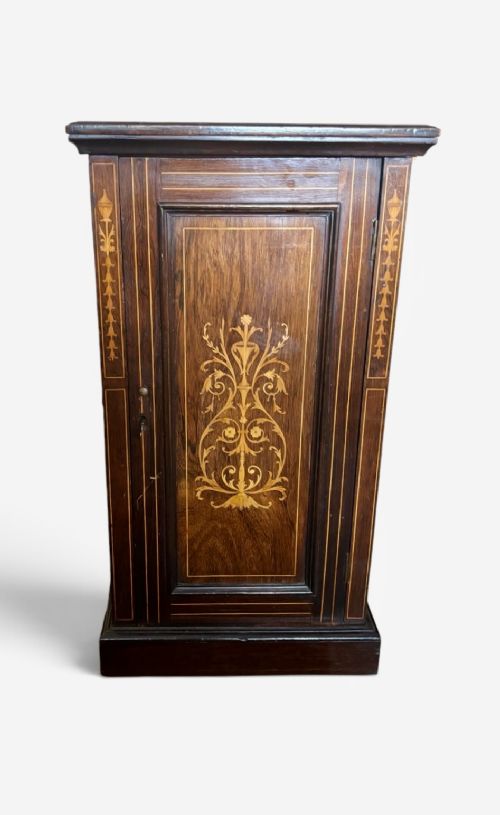
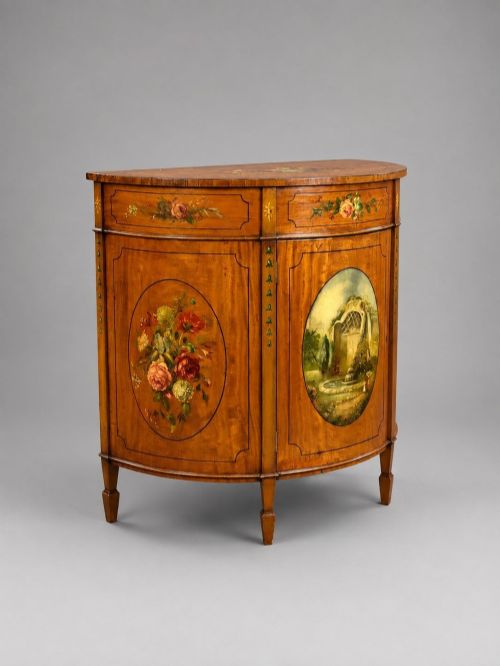
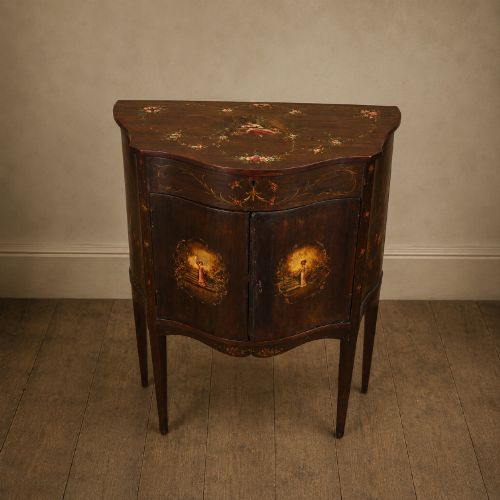
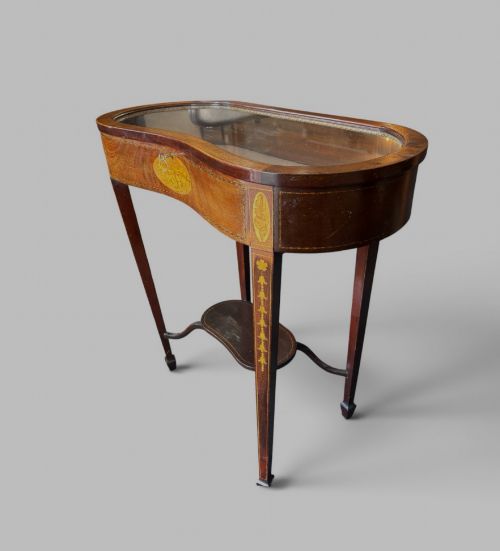
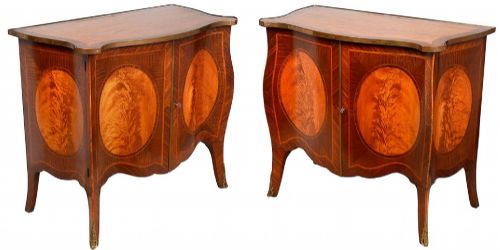
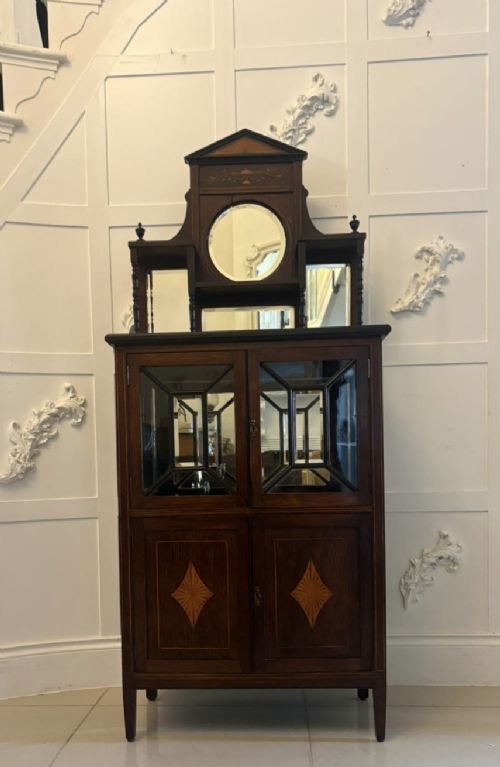
Edwardian satinwood side cabinets encompass a range of storage forms, from bedside cupboards and display cabinets to painted demi-lune commodes. These pieces typically date from the Edwardian period and the broader Sheraton revival, utilising pale timbers suited to formal reception rooms and bedrooms.
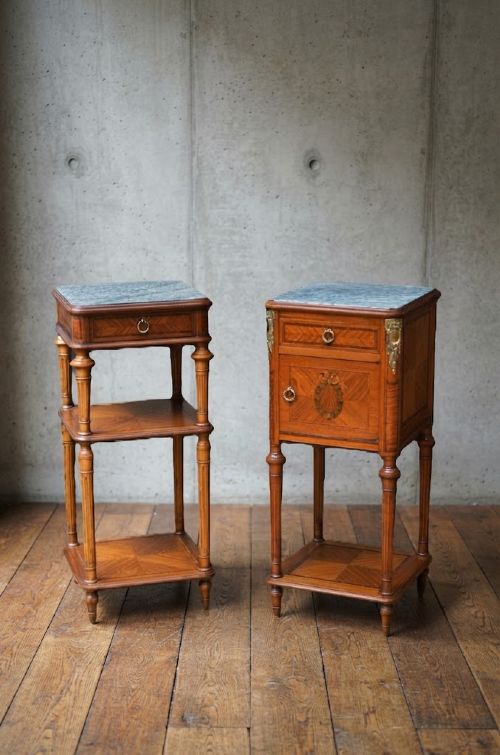
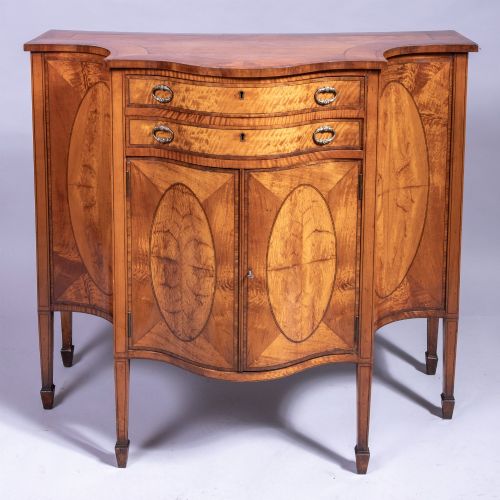
The buyer meets many variations on this page, including crossbanded mahogany pieces inlaid with satinwood, alongside whole satinwood carcases adorned with marquetry and hand-painted classical panels. Forms vary from narrow serpentine commodes to pairs of bedside cupboards.
How they were made
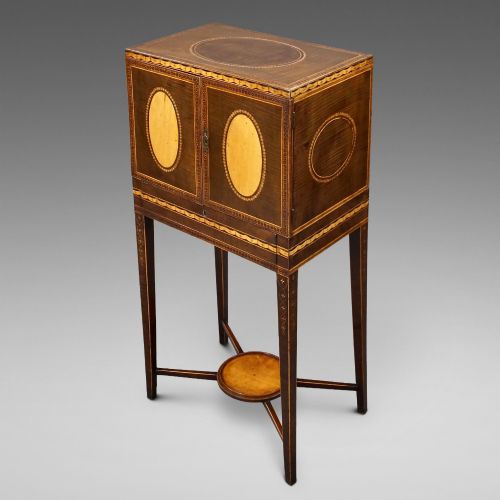
Cabinet makers utilised dense mahogany or native carcases as a base, applying fine veneers of figured satinwood across the exterior surfaces. Contrasting timbers such as boxwood and rosewood were worked into delicate stringing and intricate marquetry motifs.
Surface ornament often involved hand-painted details, whilst hardware typically consisted of cast brass handles and escutcheons. Selected pieces incorporated marble tops or mirrored backs to enhance light reflection.
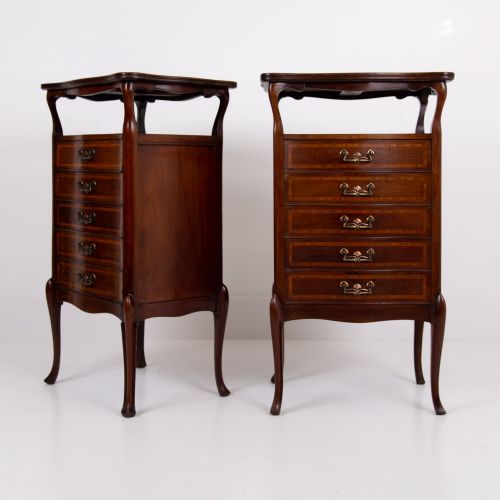
Sheet music cabinets stand ready to swallow scores behind dainty fall-fronts.
What varies in quality
Quality rests upon the selection and matching of the satinwood veneer, where superior examples display a rich, chatoyant grain across curved surfaces. The crispness of the boxwood inlay and the delicacy of any hand-painted classical panels dictate the standing of a piece.
Construction methods also separate standard production from superior workshops, seen in the seamless integration of serpentine fronts, solid drawer linings, and the retention of original brass hardware.
Maple & Co.·Harris Lebus·Collinson & Lock·Gillows·Edwards and Roberts·Waring & Gillows
The Edwardian Satinwood Side Cabinets Glossary
- Satinwood
- A hard, yellowish timber prized for its reflective sheen and smooth grain. It serves as the primary veneer on decorative late nineteenth and early twentieth century furniture.
- Demi-lune
- A half-moon shape characteristic of commodes and side cabinets designed to sit flush against a wall. This profile became particularly popular during the Sheraton revival.
- Marquetry
- The art of applying pieces of veneer to a structure to form decorative patterns and pictures. Makers used contrasting coloured woods to create floral and classical motifs.
- Crossbanding
- A border of veneer laid around the main panel of a drawer or top with the grain running at right angles to the centre. This technique frames the primary timber.
- Serpentine
- A gently curving contour featuring a convex centre flanked by concave ends. It demands high cabinet-making skill to execute across drawers and doors.
Edwardian Satinwood Side Cabinets: Frequently Asked Questions
How do I spot a revival piece?
Revival pieces from the Edwardian era or late nineteenth century often combine eighteenth-century neoclassical motifs with machine-sawn veneers and secondary woods like pine or oak.
Examination of the internal construction, drawer linings, and the style of the brass fittings helps distinguish these later interpretations from genuine Georgian furniture.
Where were these cabinets used?
These cabinets served multiple domestic roles, functioning as bedside cupboards, drawing room display pieces, or hallway commodes for storing small items.
Their decorative painted panels and figured satinwood veneers meant they were placed in principal rooms where appearance mattered.
Are painted panels original?
Many Edwardian satinwood cabinets feature hand-painted classical figures, urns, or floral garlands that were applied during the initial manufacture in the Sheraton revival style.
Closer inspection under magnification reveals whether the pigment sits naturally into the aged varnish and timber grain or belongs to a later decorative enhancement.
How do I care for satinwood?
Satinwood benefits from being kept away from direct sunlight and strong heat sources, which can fade the pale timber and dry out the historic polish.
Regular dusting with a soft, dry cloth and occasional application of appropriate conservation wax maintains the sheen without building up heavy residue.