


Edwardian Revolving Bookshelf
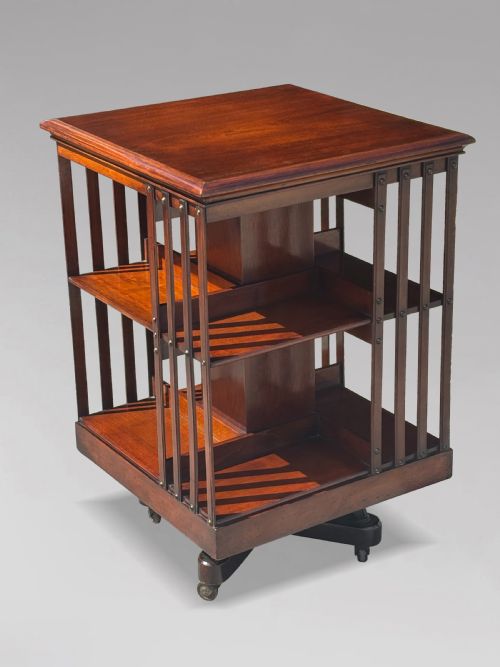
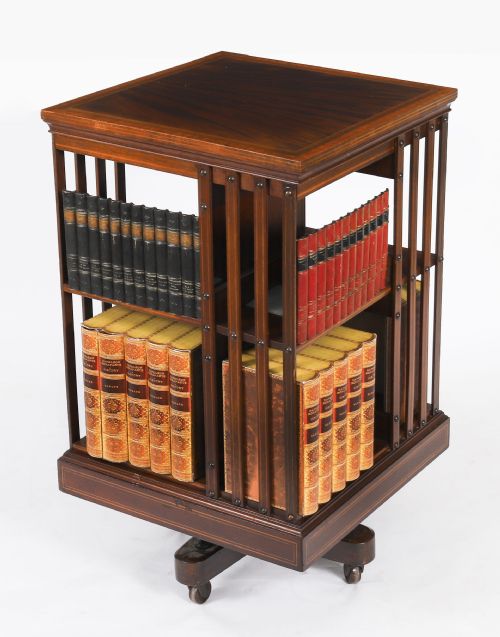
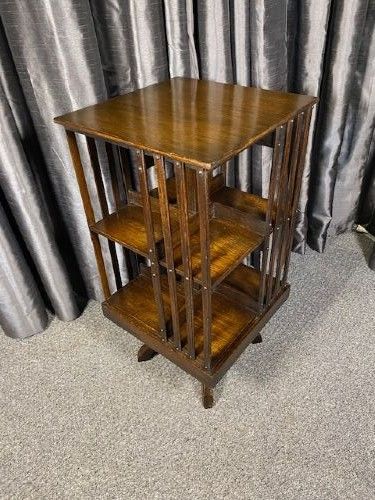
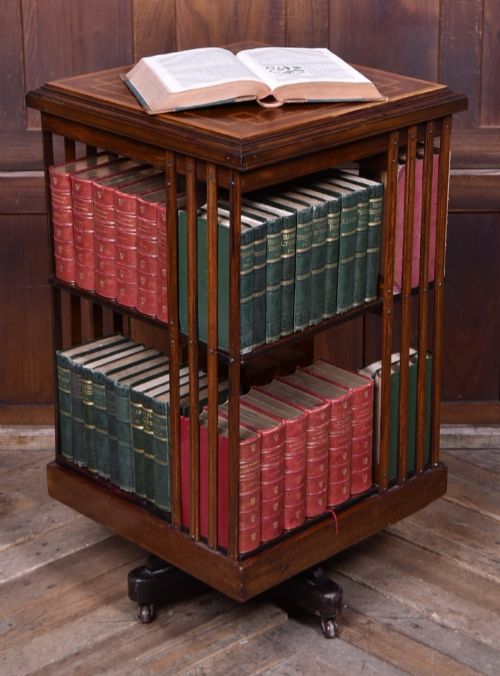
An Edwardian revolving bookshelf is a clever piece of rotating furniture that keeps favourite volumes within easy reach.
Edwardian Revolving Bookshelf
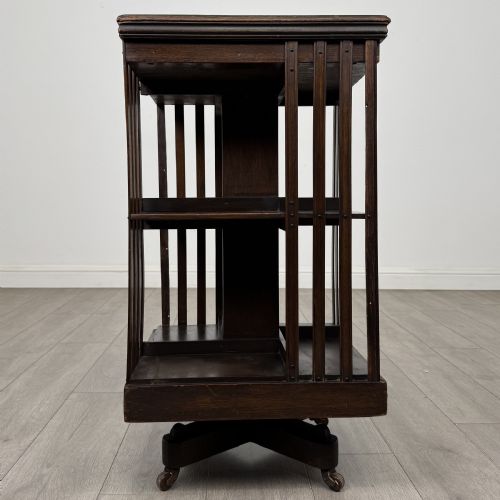
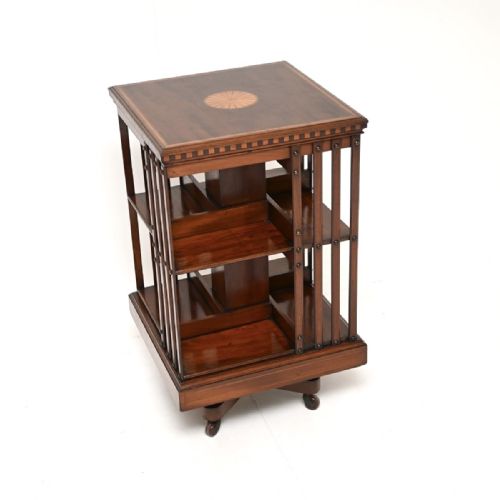
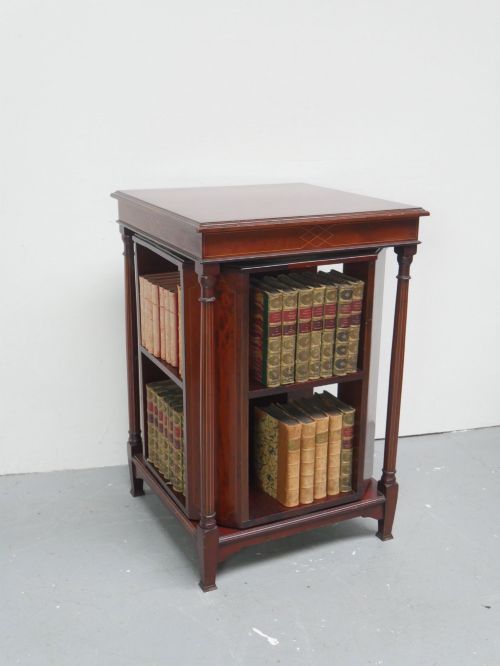
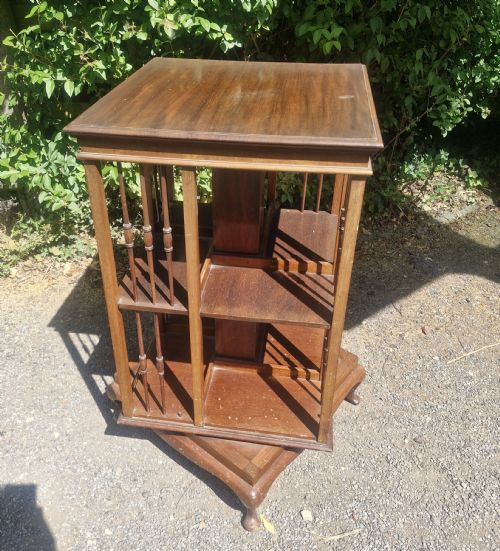
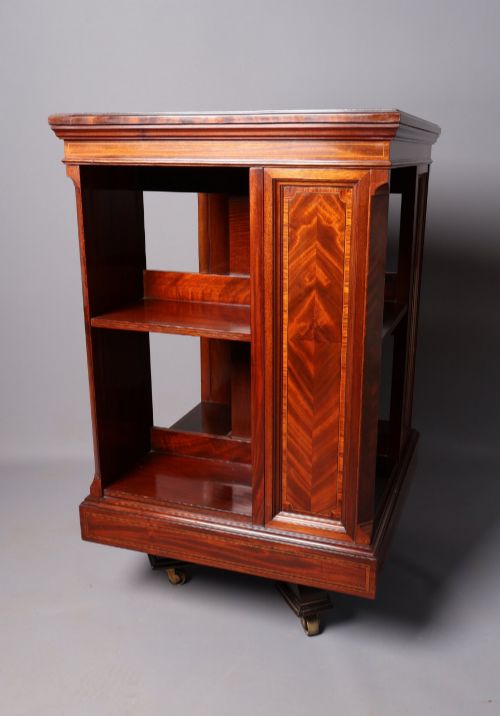
An edwardian revolving bookshelf sits upon a central pivot, allowing multiple tiers of books to spin smoothly for easy selection in a study or library. The versions encountered most frequently on this page date from the Edwardian period and the late Victorian era, taking the form of freestanding floor models or smaller desktop variants.
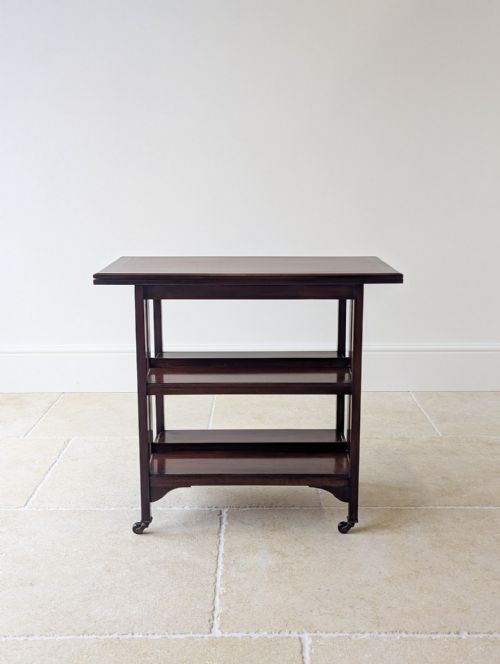
Most examples are constructed from mahogany, sometimes featuring satinwood inlay, flame mahogany veneers, or oak. Alongside standard bookcases, the selection includes related formats such as card tables with bookshelf bases and tabletop designs influenced by Arts and Crafts and Art Nouveau styles.
How they were made
Cabinet makers utilised solid timber and veneers of mahogany, oak, and walnut, often embellishing the wood with contrasting satinwood inlay. Internal turning mechanisms relied on iron, brass, and cast metal components to support the weight and ensure a smooth spin.
Joinery techniques combined traditional cabinet construction with robust hardware concealed beneath the base. Surface finishes highlighted the natural grain of the timber, particularly in flame mahogany and polished oak.
Some models double as games tables with built-in bookshelf bases for storing card decks beneath the playing surface.
What varies in quality
The sophistication of the timber selection largely determines the standing of a piece, with figured flame mahogany and crisp satinwood inlay sitting above plain oak or standard walnut. The integration of maker signatures, such as work by Heals or Maple and Co, also distinguishes standard production from finer output.
Mechanical fluidity within the internal pivot separates smoother operating examples from stiffer mechanisms. Attention to detail in the slatted dividers and the crispness of applied decorative styles like Chippendale influence the overall character of the piece.
Heals·Maple and Co
The Edwardian Revolving Bookshelf Glossary
- Edwardian
- Pertaining to the reign of King Edward VII, spanning the early years of the twentieth century. Furniture from this era often lighter in proportion than preceding Victorian designs.
- Satinwood
- A durable and lustrous tropical timber with a yellowish sheen. Frequently utilised for decorative stringing and inlaid motifs on darker woods like mahogany.
- Flame mahogany
- A veneer cut from the fork of the mahogany tree where the branch meets the trunk. It produces a distinctive flickering wave pattern across the surface of the wood.
- Arts and Crafts
- A design movement valuing handcraftsmanship and simple construction. Pieces in this style often display honest joinery and unpretentious oak timbers.
- Pivot
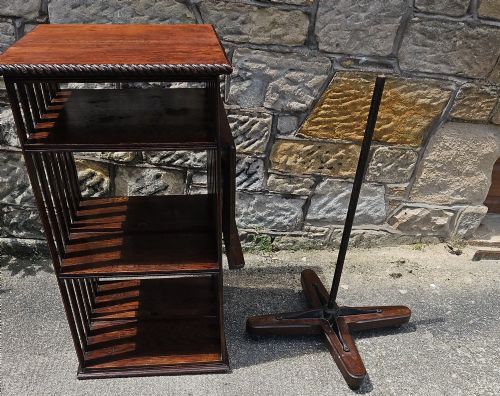
- The central vertical axis upon which the entire bookcase rotates. Hidden internal hardware allows the upper tiers to turn independently of the weighted base.
Edwardian Revolving Bookshelf: Frequently Asked Questions
How do these revolving bookcases work?
A concealed iron or brass mechanism beneath the tiers allows the entire wooden structure to spin smoothly on a fixed base. This design enables a reader to access multiple shelves of books from a single seated position.
Most freestanding models stand at a convenient height next to an armchair or desk. Tabletop versions offer the same rotating function on a smaller scale for use directly on top of a desk.
Where should I place a revolving bookshelf?
These pieces suit corners or open spaces beside seating where books need to be close at hand. Because they turn in a full circle, they require adequate clearance from surrounding furniture to spin freely.
Smaller tabletop versions sit well on wide desks, side tables, or cabinets. Floor models work effectively as standalone statement items in a study or living room.
What is the difference between floor and table models?
Floor models are taller freestanding units designed to hold substantial libraries on multiple tiers. They typically incorporate a heavy cruciform base with castors to support the weight and rotation.
Table models are compact variants intended to rest on flat surfaces like desks or tables. They feature fewer tiers and lighter frames suited to smaller collections of books.