

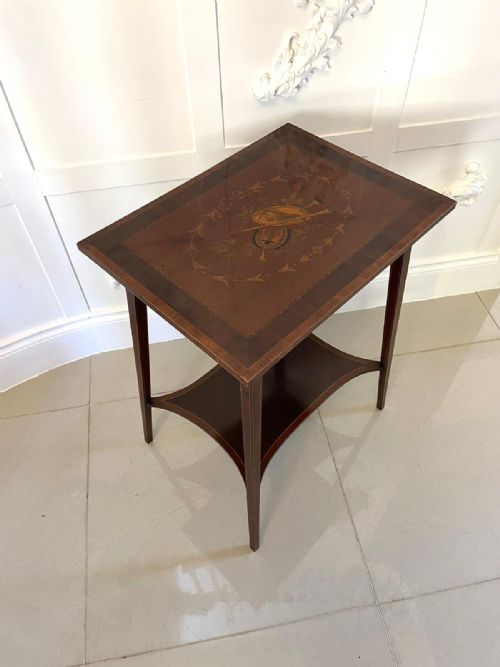


Edwardian Revival Tea Table
An edwardian revival tea table brings timeless elegance to a sitting room, offering a functional surface rooted in past centuries.
Edwardian Revival Tea Table
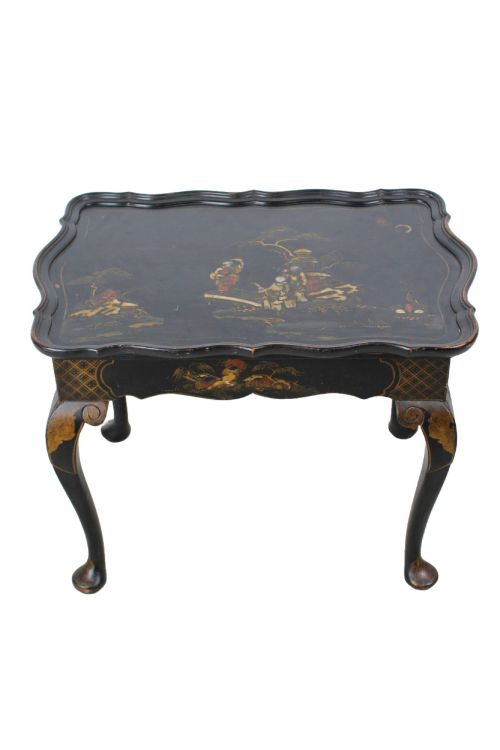
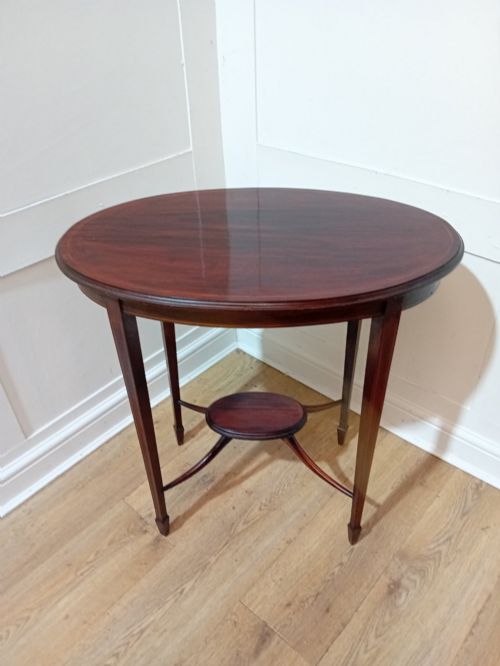
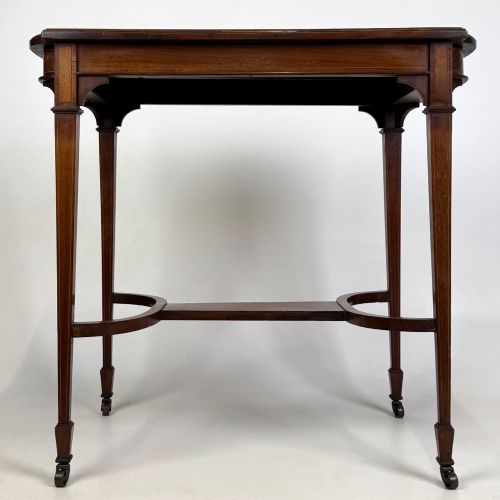
When you search for an edwardian revival tea table, you encounter pieces designed to evoke earlier historical eras such as the Georgian and Sheraton periods, executed during the late nineteenth and early twentieth centuries. These tables take various forms, including occasional tables, side tables, card tables, and drop-leaf designs intended for domestic hospitality and display.
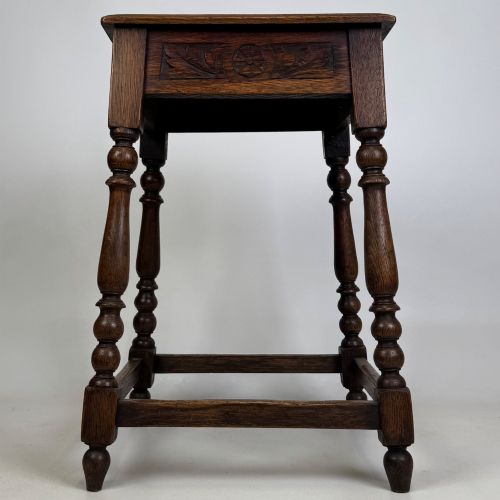
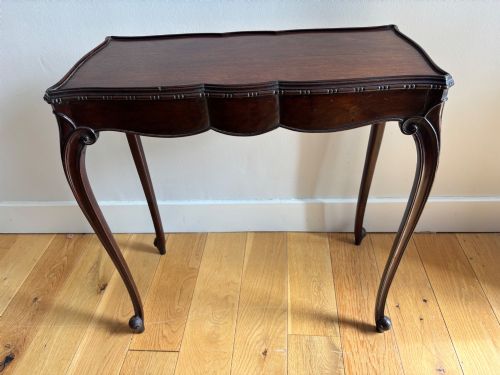
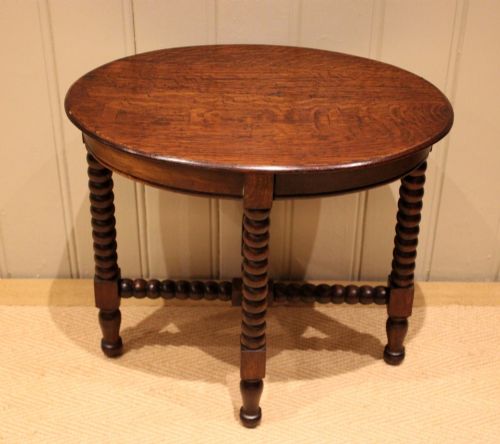
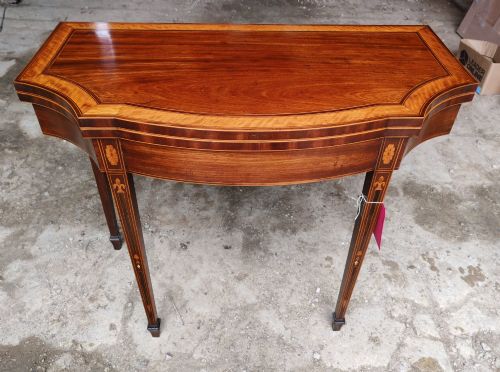
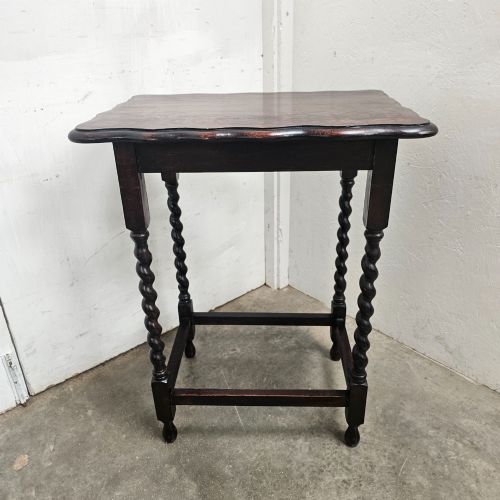
The pieces appearing on this page span the Edwardian period and adjacent decades, constructed in mahogany, satinwood, oak, and burr walnut. Alongside standard tea and occasional tables, the listings include specialised items such as tea caddies, tray top coffee tables, and centre tables displaying stylistic revivals from Chippendale to Jacobean designs.
Materials and construction
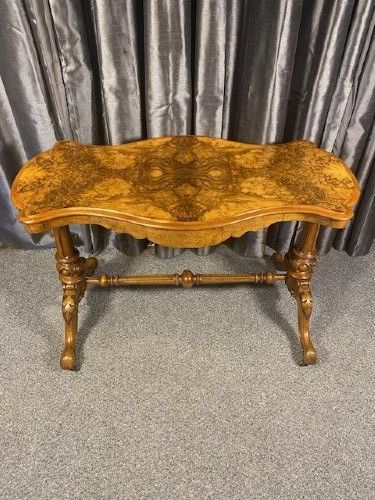
Cabinet makers relied heavily on timber selections such as mahogany and satinwood, frequently enhanced by boxwood inlay and marquetry decoration. Surfaces often feature fine grain patterns, particularly in burr walnut and oak variations, complemented by brass fittings where applicable.
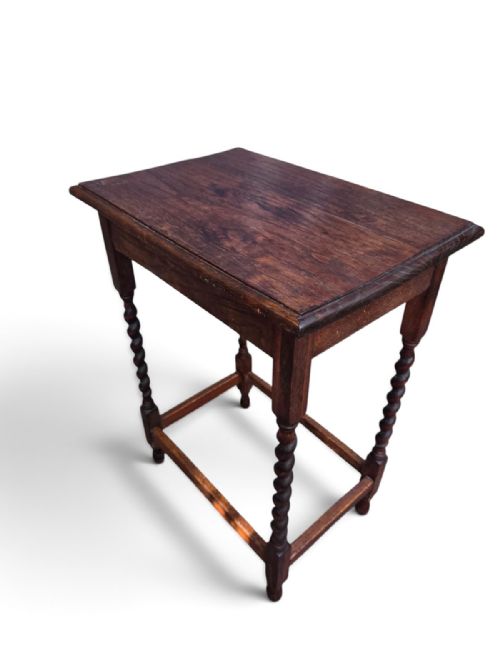
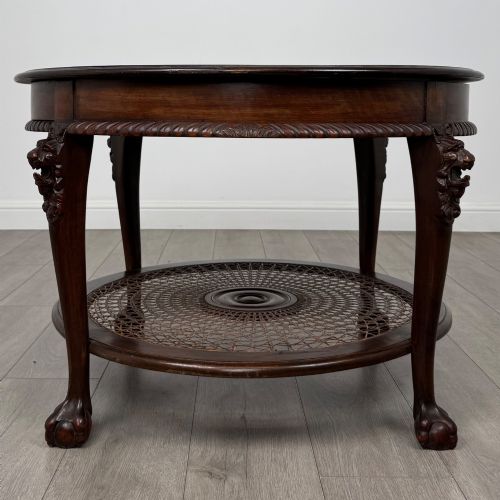
Structural techniques range from turned barley twist legs to carved cabriole supports reflecting earlier George III and Hepplewhite influences. Joinery is traditional, supporting multi-tier formations, drop leaves, and folding table tops designed for daily drawing room use.
Some tables feature secret folding mechanisms that would have delighted afternoon guests seeking a sudden game of cards.
Distinctions in quality
Quality reveals itself in the precision of the cabinet work, particularly in the crispness of carved details and the exact alignment of inlaid boxwood or marquetry motifs. Superior examples display carefully chosen timber veneers and balanced proportions that honour their eighteenth-century inspirations without appearing clumsy.
The refinement of painted decoration and the stability of folding or drop-leaf mechanisms further differentiate standard production from finer workshop output. Attention to secondary timbers and the integrity of the original polish indicate the level of care invested by the maker.
The Edwardian Revival Tea Table Glossary
- Marquetry
- A decorative technique where small pieces of veneer are arranged to form pictorial designs or geometric patterns on furniture surfaces. This method adds significant visual interest to tabletop centres.
- Drop leaf
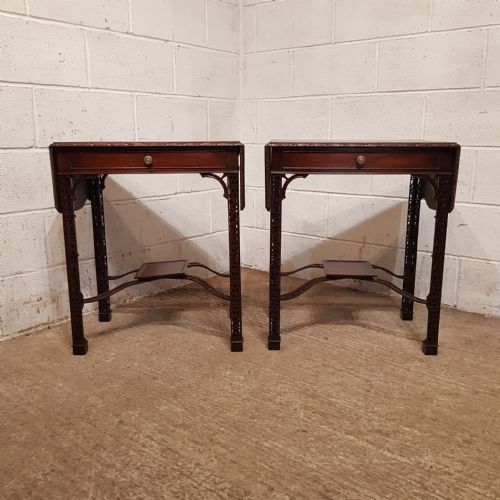
- A table featuring hinged flaps on the sides that fold down to save space or lift up to extend the surface area. These leaves are supported by swing legs or brackets.
- Barley twist
- A type of furniture turning resembling a twisted rope, popular in seventeenth-century English joinery and revived during later periods. It provides texture and vertical rhythm to table legs.
- Pie crust
- A carved, raised edge on a round table top featuring scalloped indentations resembling a pastry crust. This decorative detail is typically found on occasional and lamp tables.
Edwardian Revival Tea Table: Frequently Asked Questions
What is an edwardian revival tea table used for?
These tables were originally designed to serve afternoon tea in the drawing room, providing a stable and movable surface for cups, teapots, and caddies.
Today, they function primarily as decorative occasional pieces, lamp tables, or coffee tables in contemporary living spaces.
How do I identify a revival piece?
Revival furniture copies the styles of earlier centuries, such as Georgian or Chippendale, but uses the construction methods and timber treatments typical of the late Victorian and Edwardian eras.
Examination of the secondary woods, interior linings, and hardware often reveals the true manufacturing period rather than the stylistic era it imitates.
What materials are common in these tables?
Mahogany and satinwood predominate, frequently accented with boxwood inlay, contrasting stringing, or intricate marquetry panels.
Oak and burr walnut also appear regularly, sometimes featuring hand-carved details or painted floral decorations.
Are drop leaf tables practical for small spaces?
Drop leaf variants offer excellent versatility because the side flaps fold down neatly when floor space is limited.
When guests arrive, the leaves lift easily to create a larger surface for entertaining or display.