






Neo Classical Side Table
A neo classical side table brings architectural symmetry and refined proportion to a room, offering a surface that is both decorative and useful.
Neo Classical Side Table
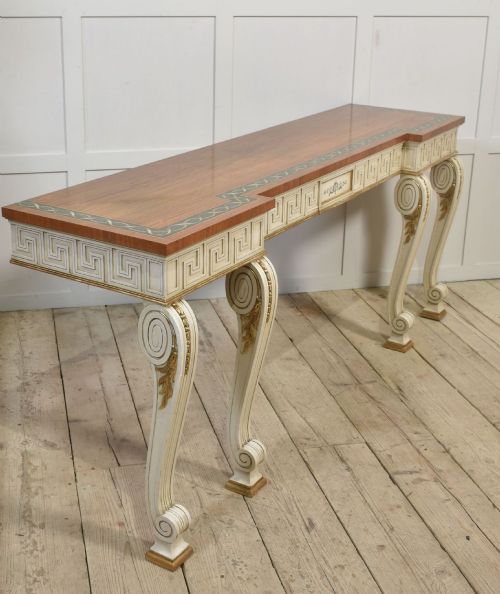
A neo classical side table draws upon ancient Greek and Roman motifs, translating classical architectural principles into domestic furniture. These pieces frequently appear as console tables, pier tables, and occasional tables designed to anchor a room.
The selections available span multiple centuries, ranging from eighteenth-century examples to later revival pieces from the nineteenth and early twentieth centuries. Mahogany and painted wood dominate the forms, frequently paired with marble tops.
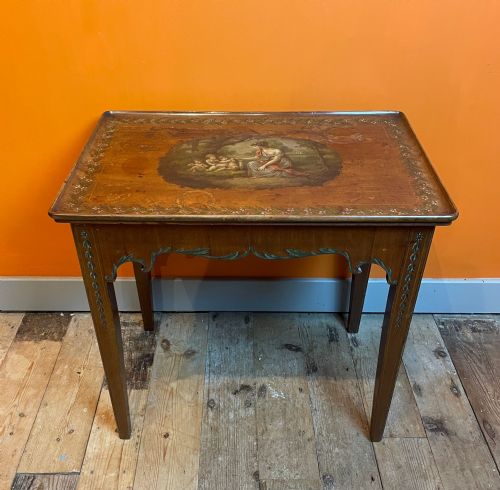
Origins vary across English, Italian, and French traditions, reflecting distinct interpretations of classical restraint and ornamentation. English pieces often favour understated mahogany, while continental examples lean towards painted surfaces and faux finishes.
How they were made
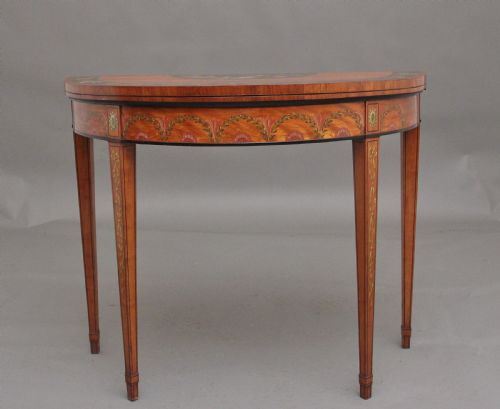
Cabinetmakers utilised dense timbers such as mahogany and walnut for structural stability, often applying satinwood veneers for lighter contrasting surfaces. Marquetry and intricate inlay work defined the decorative surfaces of finer tables.
Painted wood finishes frequently incorporated gilt accents, parcel-gilt details, and specialised treatments such as faux porphyry to mimic costly mineral specimens. Heavy marble tops rested upon wooden frames, requiring robust joinery to support the stone.
Brass mounts, columns, and hardware provided structural definition and reflective contrast against dark timbers or painted panels. Carved wooden elements introduced classical motifs including dolphins, fluted columns, and urns.
Listings feature nineteen-tenth and early twentieth-century revival pieces alongside eighteenth-century originals in mahogany, satinwood, and painted finishes.
What varies in quality
The refinement of the carving and inlay work separates standard production from exceptional examples, particularly in the precision of floral swags and geometric banding. Timber selection dictates the underlying character, with finely figured mahogany and choice satinwood veneers marking superior execution.
The integration of secondary materials such as genuine marble slabs and cast brass mounts determines the piece's overall ambition. Original painted and faux-finished surfaces retain greater integrity than later overpainting, influencing the visual depth of the object.
Gillows·Wilkinson London·Robert Adam
The Neo Classical Side Table Glossary
- Console table
- A table designed to stand against a wall, frequently supported by wall brackets or console legs. These pieces often feature elaborate front friezes and marble tops.
- Pier table
- A low table specifically proportioned to sit against the wall space between two windows. They mirror the height and decorative scheme of adjacent console tables.
- Marquetry
- The art of applying pieces of veneer to a structure to form decorative patterns and pictorial designs. Cabinetmakers used contrasting timbers to achieve tonal variation.
- Faux porphyry
- A decorative paint technique intended to imitate the rich purple and red igneous rock prized in antiquity. Artisans layered pigments to recreate crystalline mineral textures.
Neo Classical Side Table: Frequently Asked Questions
How do I style a neo classical side table?
Position the table against a primary wall where its architectural lines can anchor the room. Pair the surface with balanced objects such as bronze urn lamps or decorative pottery.
Keep surrounding decoration restrained to let the proportion and inlay work remain the focal point. Avoid overcrowding the top to maintain the clean silhouette characteristic of the style.
Are these tables suitable for everyday use?
Most antique examples function well for daily placement, provided they receive appropriate care. Marble tops offer a durable surface for holding lamps or decorative items.
Wooden surfaces benefit from coasters and careful cleaning to preserve fragile veneers and painted finishes. Consider the weight of objects placed on tables with delicate legs.
How can I tell an eighteenth-century piece from a later revival?
Examine the timber construction methods and the wear patterns on the underside and drawer linings. Eighteenth-century examples typically display hand-cut dovetails and period-specific secondary woods.
Revival pieces from the nineteenth and twentieth centuries often incorporate standardised fixings or machine-sawn elements. Look closely at the ageing of the painted surfaces and patination on the timber.
What is the difference between a console and a pier table?
Console tables traditionally require wall attachment for full stability, featuring decorative legs primarily at the front. Pier tables are specifically designed to fit the narrow wall pier between windows.
Both forms share flat rectangular or demi-lune tops intended to sit flush against a vertical surface. The distinction often lies in the original intended architectural placement within a formal room.