
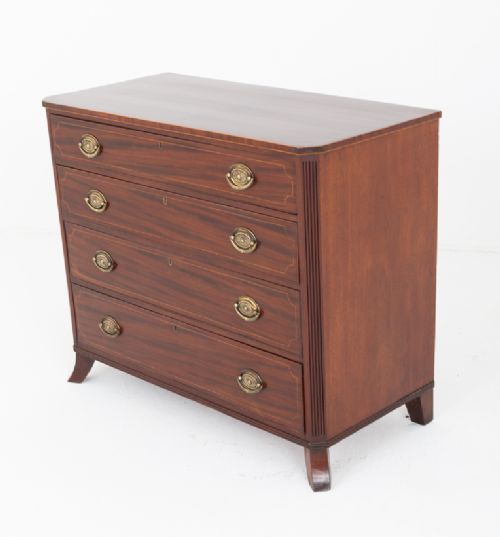


Edwardian Reeded Chest Drawers
Edwardian reeded chest drawers bring structured British refinement to a bedroom, combining practical storage with crisp architectural detail.
Edwardian Reeded Chest Drawers
When you search for edwardian reeded chest drawers, you are looking at utilitarian bedroom furniture produced during the Edwardian era alongside earlier Regency influences and nineteenth-century forms. These pieces provide deep, compartmented storage designed for daily utility while introducing linear architectural carving to domestic spaces.
The versions you are most likely to meet on this page span Edwardian items alongside nineteenth-century and Regency pieces. Makers and workshops of the period utilised various timber forms, incorporating specific decorative treatments to distinguish standard bedroom storage from finer chamber furniture.
How they were made
Cabinet makers constructed these chests using solid timbers and applied veneers, selecting mahogany, satinwood, oak, pine, and satin walnut for their grain and structural stability. Flame mahogany veneer provided striking figured surfaces for drawer fronts, while contrasting woods added decorative borders.
Metal hardware such as brass handles and drawer pulls completed the construction, fastened securely to house the drawers. Painted wood finishes also appeared on specific continental commodes, offering an alternative to polished natural timber surfaces.
Makers occasionally hid extra drawers behind deep plinths, giving startled owners secret compartments for their midnight valuables.
What varies in quality
The grade of timber selection and veneer matching defines the upper tier of these pieces. Grain alignment across multiple drawer fronts demonstrates superior cabinet-making skill compared to random board assembly.
Hardware integrity and internal secondary woods such as pine or oak further separate standard utility pieces from finer productions. The precision of the reeded detailing and the crispness of the joinery determine the overall standard.
Heals·Morison and Co
The Edwardian Reeded Chest Drawers Glossary
- Reeded
- A decorative moulding consisting of parallel convex strips resembling bundled reeds. This surface carving adds vertical or horizontal texture to furniture frames and drawer surrounds.
- Satinwood
- A durable, yellowish timber prized for its lustrous natural sheen and fine grain. It frequently appears as a primary veneer on finer Edwardian chamber pieces.
- Flame mahogany
- A highly figured wood veneer displaying a distinctive flickering flame pattern. Cabinet makers reserved this material for prominent drawer fronts to create visual depth.
- Commode
- A low chest of drawers or cabinet originating from continental traditions. These pieces often feature painted wood finishes rather than exposed timber.
Edwardian Reeded Chest Drawers: Frequently Asked Questions
How do I care for mahogany and satinwood surfaces?
Natural timber surfaces require protection from direct sunlight and excessive humidity to prevent timber movement and veneer lifting. Regular dusting with a dry cloth maintains the polish.
Avoid silicone-based sprays, opting instead for traditional beeswax applied sparingly to nourish the grain and preserve the original lustre of the wood.
Where were these chests used in a home?
Bedrooms served as the primary location for these chests, providing essential storage for garments and linens. Their structured proportions allowed them to fit easily against chamber walls.
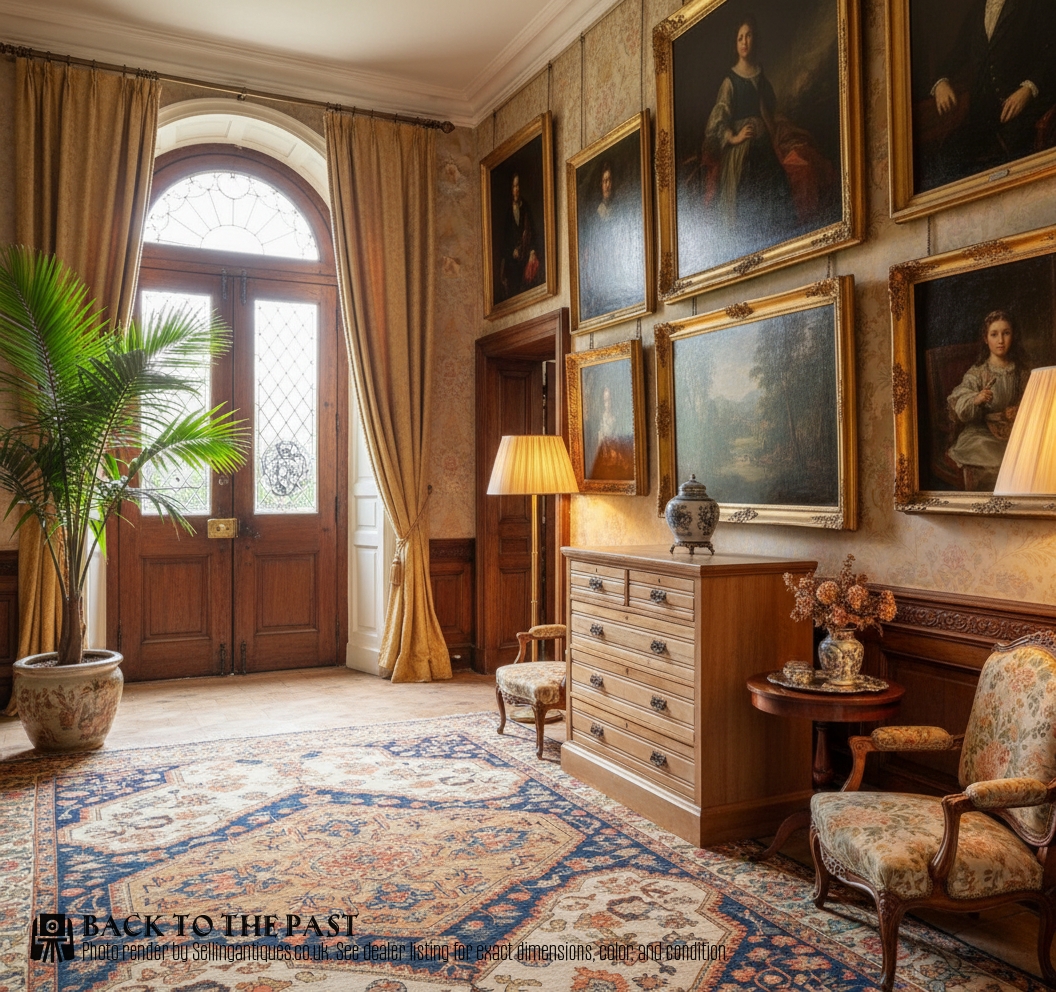
They also found placement in dressing rooms and hallways, where their flat top surfaces could hold decorative items or lighting fixtures.
How do I distinguish Edwardian pieces from Regency ones?
Edwardian chests often display lighter satinwood or satin walnut timbers alongside more restrained decorative lines. Regency examples tend to feature denser flame mahogany veneers and bolder classical proportions.
Examining the internal secondary woods, construction techniques, and hardware styles helps clarify the distinct manufacturing period of each specific chest.