
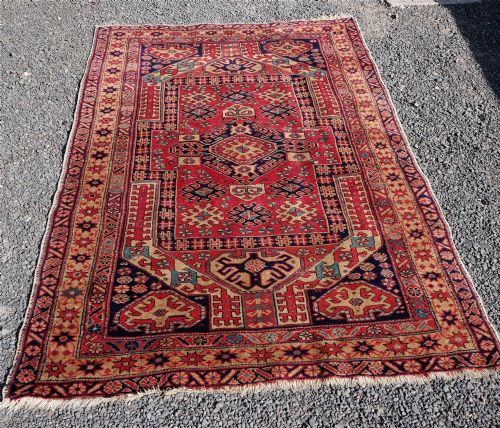
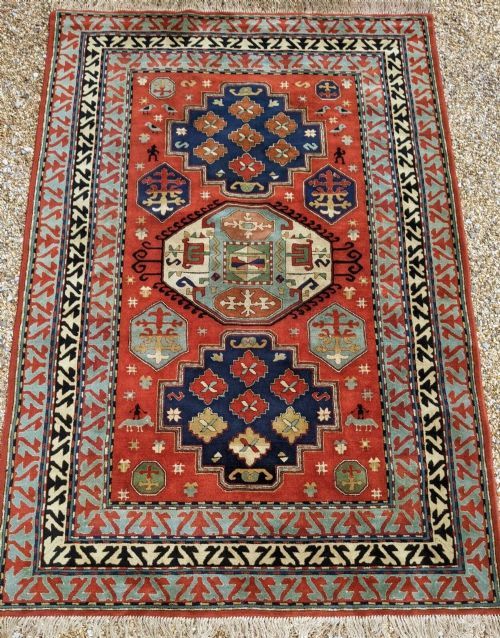


Edwardian Persian Carpet
An edwardian persian carpet brings character and depth to a room through traditional woven wool and cotton designs.
Edwardian Persian Carpet
When searching for an edwardian persian carpet, buyers encounter hand-knotted room-sized carpets and smaller rugs produced around the turn of the twentieth century. These pieces encompass regional village and town styles, including Heriz, Tabriz, Mahal, and Malayer.
The pieces on this page span the late nineteenth century through the 1930s, aligning broadly with the Edwardian era. Village rugs display geometric medallions and tribal motifs, while city pieces show intricate floral compositions.
Buyers will find formats ranging from large country house carpets to narrower runner rugs and specific village formats. Each piece reflects the traditional weaving practices of Persian workshops and tribal groups.
Materials and Construction
These carpets are constructed primarily from hand-spun wool pile knotted onto cotton or wool foundation warps and wefts. The quality of the wool determines the resilience and texture of the surface.
Natural and early synthetic dyes create the palette found in these rugs, ranging from soft pastels to deep ivory, red, and blue grounds. Finer city weaves utilise dense knotting on cotton foundations to achieve detailed patterns.
Edwardian Persian Carpet Retail Price Guide 2026
Typical asking prices for edwardian persian carpet among the pieces listed under this phrase on Sellingantiques today, from the lower quarter to the upper quarter. They describe what is for sale here now, not the wider market.
Listings feature wool, cotton, and silk materials spanning periods from 1890 to 1930.
Distinctions in Quality
Quality in these carpets rests on the fineness of the weave, the integrity of the foundation, and the balance of the design. Denser knotting allows for sharper pattern definition, particularly in city workshop pieces from centres like Tabriz or Kashan.
The condition of the wool pile and the survival of original borders dictate the desirability of a piece. Well-preserved village rugs maintain strong colours and structural stability across the field.
Benlian·Ziegler
The Edwardian Persian Carpet Glossary
- Medallion
- A central ornamental motif set into the middle of the carpet field. It often defines the geometric symmetry of village weaves.
- Boteh
- A stylised almond or pear-shaped motif representing a floral shoot or cypress tree. This ancient Persian design appears frequently in Sarouk and Malayer rugs.
- Ground
- The background colour of the main field surrounding the central design. Ivory, red, and blue grounds dominate the palette of these pieces.
- Runner
- A long, narrow carpet format designed for hallways or staircases. These pieces maintain traditional Persian patterns scaled for linear spaces.
Edwardian Persian Carpet: Frequently Asked Questions
How do I care for an antique wool carpet?
Vacuum gently without a rotating brush to protect the hand-knotted wool pile and cotton foundations. Professional cleaning preserves the natural dyes and structural integrity.
Keep the carpet out of direct sunlight to prevent fading of soft pastel or deeply saturated ground colours over time.
Where were these carpets originally made?
These pieces originate from various regions across Persia, including city workshops in Tabriz and Kashan, as well as village centres like Heriz, Mahal, and Malayer.
Tribal groups such as the Quchan Kurds, Baluch, and Bakhtiari also produced distinctive rugs with regional geometric and garden designs.
How can I tell village rugs from city rugs?
Village rugs typically feature bolder, geometric medallions and tribal motifs woven with heavier wool and more relaxed structures. They reflect local traditions passed down through generations.
City carpets display finer, more intricate floral compositions with dense knotting on cotton foundations, produced in established urban workshops.
Are these carpets suitable for heavy foot traffic?
Wool and cotton construction provides natural durability for everyday use in living spaces and hallways. Room-sized carpets handle household activity well when placed over a quality underlay.
Finer silk pieces, such as Kashan examples, suit lower-traffic areas where the detailed weave and delicate materials receive less friction.