


Edwardian Period Sideboard
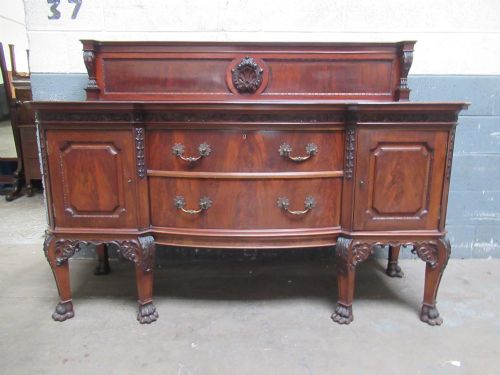
An edwardian period sideboard brings practical scale and refined cabinetwork into a dining room.
Edwardian Period Sideboard
When you search for an edwardian period sideboard, you are looking at large dining room storage pieces dating from the early decades of the twentieth century, alongside related sideboards, buffets, and servers from the wider Victorian, Regency, and eighteenth-century periods. These items provide generous surface space and interior storage for dining linen and silver.
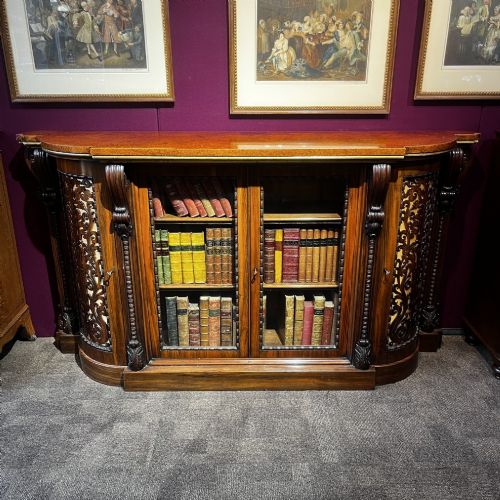
The pieces on this page span several decades and stylistic revivals, with Edwardian mahogany and satinwood models sitting alongside Arts and Crafts oak designs and earlier Regency forms. Buyers seeking an edwardian period sideboard frequently encounter examples featuring Sheraton revival styling, mirrorbacks, and decorative wood inlay.
Beyond standard sideboards, the selection encompasses related forms such as bookcases, commodes, chiffoniers, and serving tables in diverse timbers. Each piece reflects the functional requirements of its original dining room setting while offering distinct regional and period characteristics.
How they were made
Cabinetmakers constructed these sideboards using a foundation of solid timbers such as mahogany and oak, frequently embellished with satinwood veneers, wood inlay, and cross-banding. Brass handles, galleries, and hinges provide structural and decorative accents across the various forms.
Surface decoration relies on traditional woodworking techniques including marquetry, bow-front shaping, and applied carving. Master makers utilised natural grains and contrasting veneers to achieve the refined aesthetic seen in Sheraton revival and Arts and Crafts examples.
Listings feature mahogany, oak, satinwood, and brass across Edwardian, Regency, and Victorian periods.
What varies in quality
Quality in these pieces rests upon the selection of timber and the precision of the cabinetwork, from the choice of figured mahogany and satinwood to the execution of delicate wood inlay. Superior examples display careful matching of wood veneers and well-balanced proportions.
The integration of original brass hardware, glass panels, and structural elements distinguishes finer pieces from simpler utilitarian storage furniture. Expert construction ensures smooth drawer operation and stable framing across centuries of use.
Liberty & Co.
The Edwardian Period Sideboard Glossary
- Satinwood
- A durable tropical hardwood with a lustrous golden yellow appearance, frequently utilised for veneers and decorative banding.
- Bow-front
- A convex curved furniture front that projects outward in a smooth arc, common in sideboards and servers.
- Marquetry
- The art of applying decorative pieces of veneer to a structure to form ornamental designs and pictures.
- Mirrorback
- An upright superstructure incorporating a mirror, fitted to the rear of a sideboard or serving table.
Edwardian Period Sideboard: Frequently Asked Questions
How do I style a sideboard?
Position the piece against a dining room wall where it provides both a surface for serving food and interior space for tableware.
Complement the timber tones with simple ceramics or lamps, keeping the surrounding wall space clear to highlight the woodwork.
What is a mirrorback sideboard?
A mirrorback sideboard incorporates an integrated wooden frame holding a mirror above the main serving surface.
This design reflects light around the room and was popular during the Edwardian period for displaying decorative glassware.
How do I identify Edwardian furniture?
Edwardian furniture often draws inspiration from earlier Georgian and Sheraton styles while utilising lighter framing and refined satinwood cross-banding.
The period bridges late Victorian heaviness and twentieth-century simplicity.
Are these pieces suitable for modern dining rooms?
These sideboards provide substantial internal storage cupboards and drawers that suit contemporary dining and living spaces.
Their varied timber tones allow them to anchor both traditional and eclectic interior schemes.