
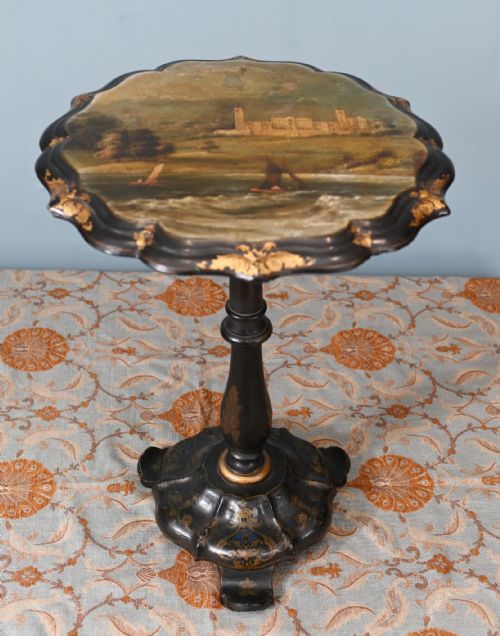
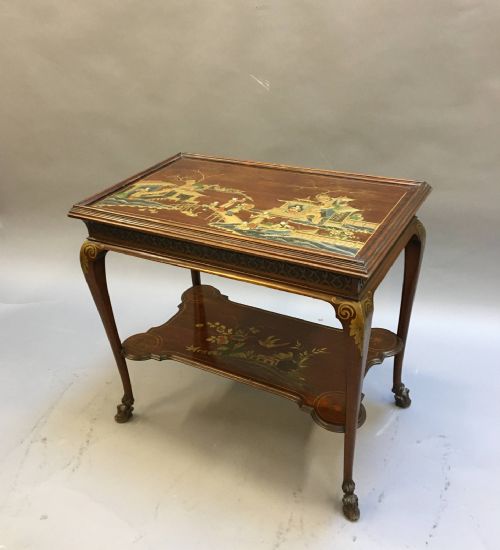
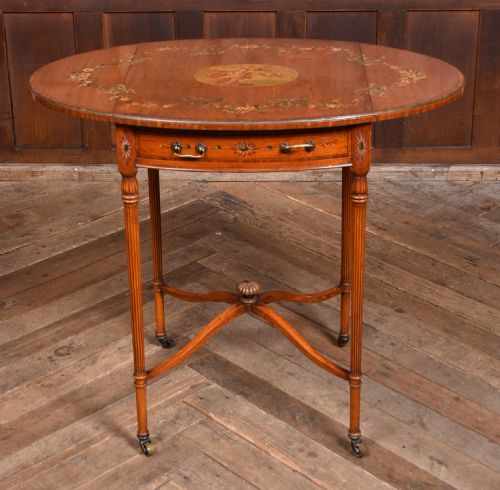


Edwardian Painted Tea Table
An edwardian painted tea table brings hand-finished colour and neoclassical or chinoiserie ornament into a sitting room.
Edwardian Painted Tea Table
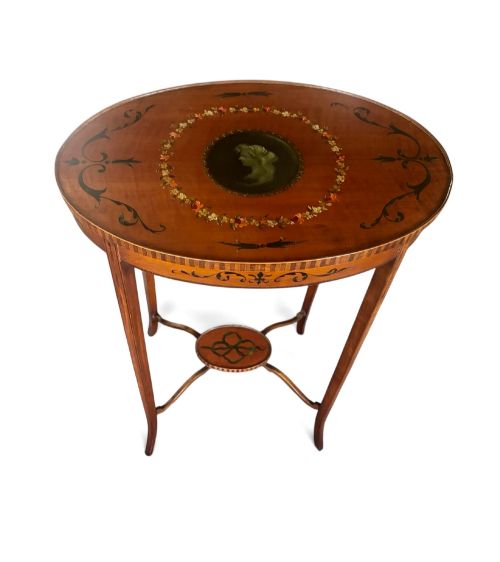
When you search for an edwardian painted tea table, you enter a world of light occasional furniture made for the drawing room. The typical piece from this period takes the form of an occasional, coffee, or pembroke table designed with slender tapered legs and a portable top.
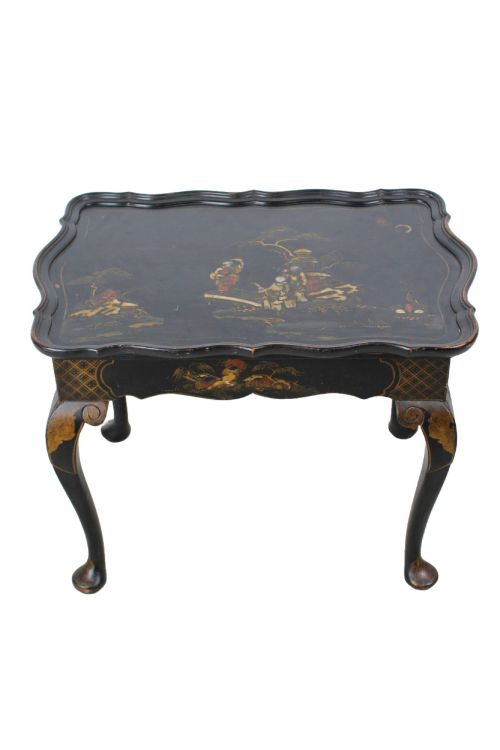
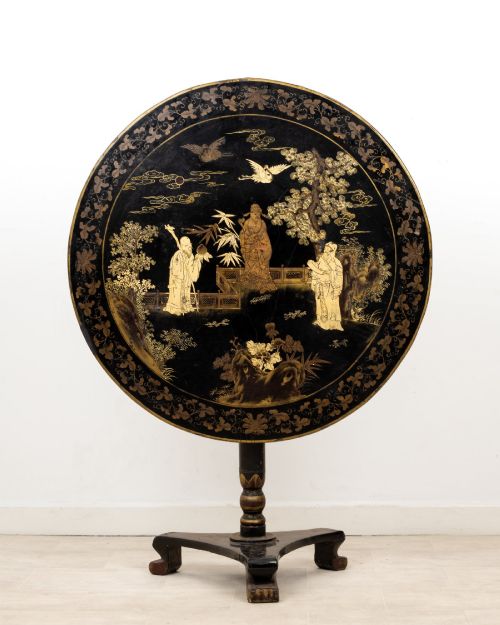
The materials recorded in these listings span satinwood, mahogany, and oak, united by surface paintwork. You will frequently encounter satinwood grounds adorned with floral motifs, alongside black or coloured lacquer surfaces executed in the chinoiserie taste.
Origins stretch from the Edwardian years back through the nineteenth century, taking in Regency and Sheraton Revival revivals. The dominant forms on this page remain the occasional table and the low coffee table adaptation.
How they were made
Cabinetmakers built the foundations of these tables using dense timbers such as satinwood and mahogany, sometimes employing oak for simpler rustic pieces. These woods provided a stable canvas for the decorative brushwork that defines the group.
Surfaces received applied layers of paint, lacquer, and occasional gilt or gold leaf detailing. Artisans painted floral garlands, neoclassical scenes, and oriental motifs directly onto the timber or lacquer ground, sealing the work with a clear polish.
One recorded table carries a direct provenance to Osbourne House, linking an occasional surface to the domestic orbit of Queen Victoria.
What varies in quality
The distinction between ordinary and superior examples lies in the execution of the painted ornament. Hand-painted floral swags and figures showing crisp brushwork and balanced composition separate the finer pieces from simpler, mechanical decoration.
Material selection also dictates the hierarchy. Solid satinwood frames and well-figured mahogany carry greater refinement than secondary woods, while intact original lacquer surfaces hold a distinct visual depth.
Osbourne House
The Edwardian Painted Tea Table Glossary
- Satinwood
- A tropical hardwood possessing a natural golden sheen and a fine grain. It served as the principal light-coloured timber for polite English furniture.
- Chinoiserie
- European artistic style reflecting Chinese decorative motifs. It appears here on lacquered table tops featuring figures, pavilions, and landscapes.
- Pembroke table
- A small rectangular table with two hinged drop leaves. It was designed for versatility in domestic reception rooms.
- Sheraton Revival
- A late nineteenth and early twentieth century design movement. It reinterpreted the neoclassical furniture forms associated with designer Thomas Sheraton.
Edwardian Painted Tea Table: Frequently Asked Questions
Where were these tables used?
These tables served primarily in the drawing room or parlour for holding tea service items, small lamps, or decorative objects. Their light construction allowed servants or family members to move them easily about the room as social groupings shifted.
Today, they function well as compact coffee tables or lamp tables in contemporary sitting rooms. Their painted surfaces add a focal point of colour without dominating the floor space.
How do I identify the period?
Edwardian examples typically display light satinwood, delicate floral swags, and slender tapered legs characteristic of the early twentieth century. Pieces drawing on nineteenth century Regency or Sheraton Revival styles show heavier classical influences and bolder proportions.
Examine the construction joints and the wear patterns on the painted surface to help judge age. Lacquered pieces often display fine craquelure that develops naturally across decades.
Are painted tables fragile?
The decorated surfaces require sensible care to protect the paint and lacquer from moisture and heat. Using coasters and placing them away from direct sunlight preserves the original pigments.
Solid wood frames remain sturdy, but the decorative top layers benefit from gentle dusting with a dry cloth rather than wet cleaning.