
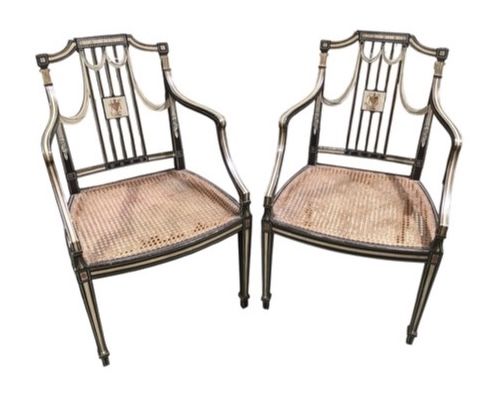
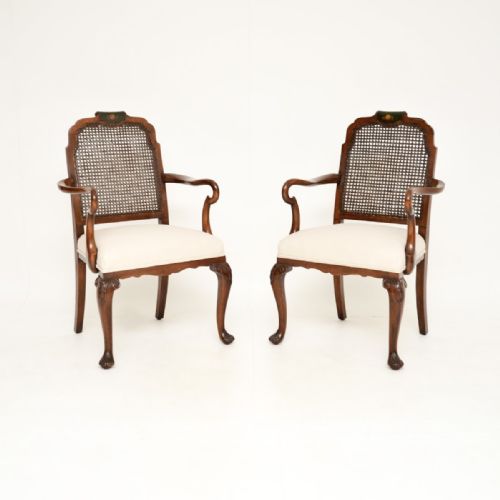


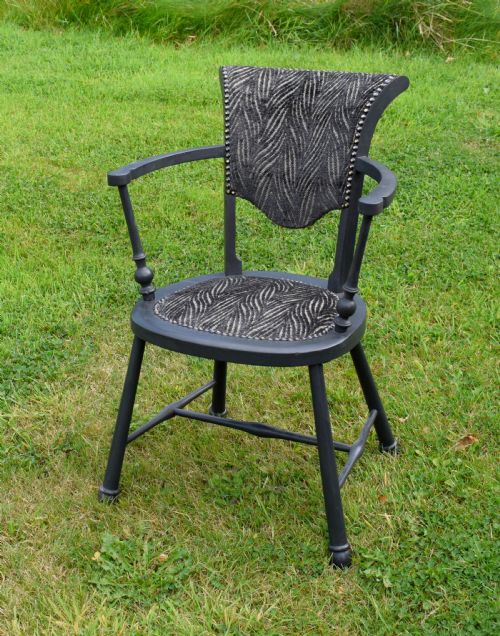

Edwardian Painted Armchair
An edwardian painted armchair brings lightness and painted refinement to a room, offering decorative charm alongside practical seating.
Edwardian Painted Armchair
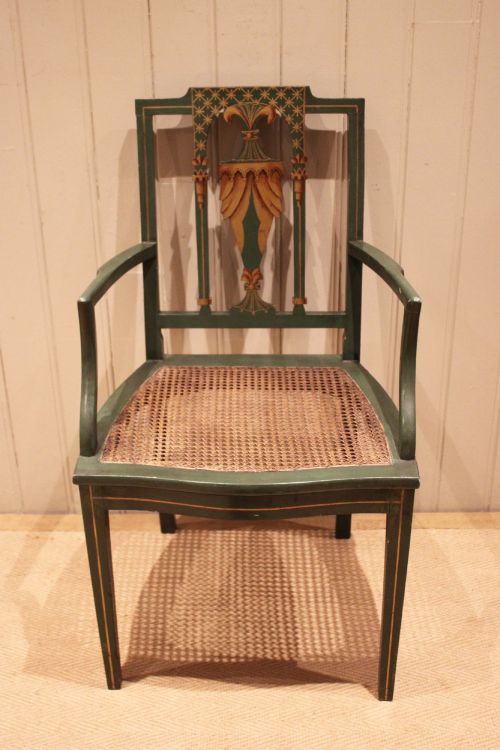
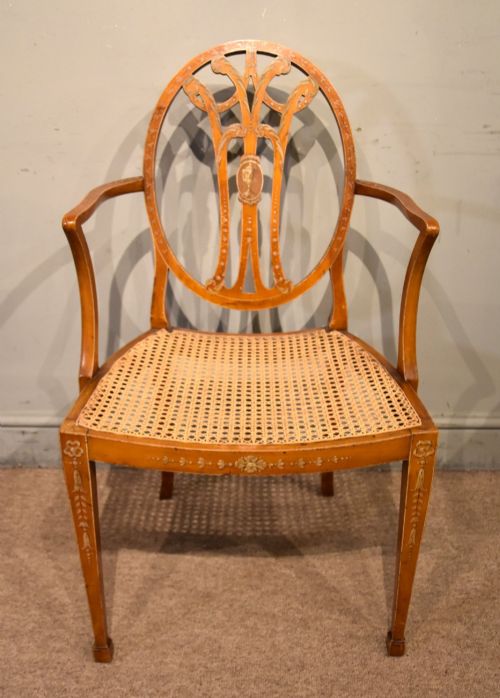
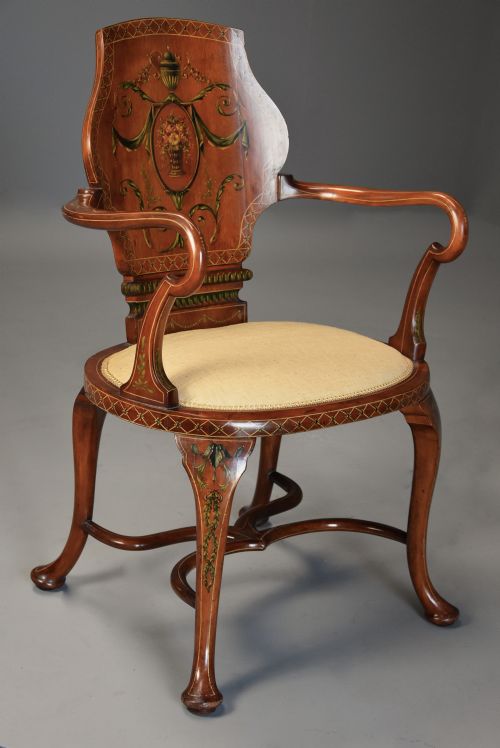
When you search for an edwardian painted armchair, you encounter seating that frequently combines satinwood or walnut frames with delicate brushwork. These pieces often draw on earlier revivals, displaying influences from Sheraton, Hepplewhite, and French designs.
The version most commonly met on this page dates from the Edwardian period or the early twentieth century, though nineteenth-century iterations also appear. They span salon chairs, bergere library seats, and occasional chairs with cane or fabric upholstery.
How They Were Made
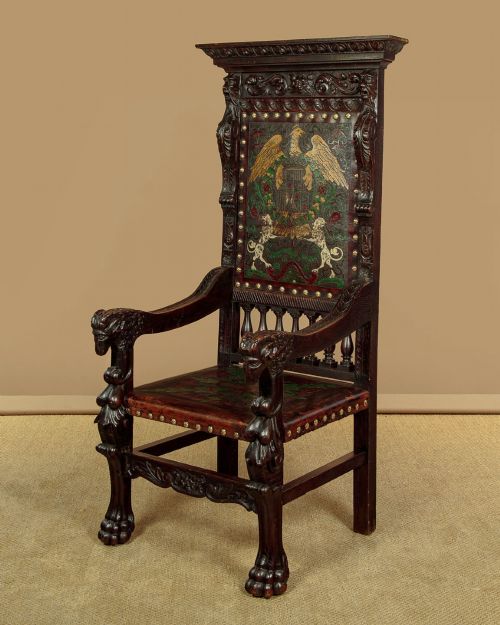
Makers utilised timber frames of satinwood, walnut, mahogany, and oak, frequently applying a painted or lacquered finish to the wood. Decoration relied on hand-painted floral motifs, classical ribbons, and Chinoiserie scenes.
Seating portions often incorporated woven cane panels, upholstered pads in velvet or contemporary fabric, and carved wooden details such as fluted legs or splat backs.
Some chairs sport hand-painted ribbons so delicate they appear tied by a milliner rather than brushed by a cabinetmaker.
What Varies in Quality
The refinement of the painted decoration separates standard examples from exceptional ones, with crisp, detailed brushwork commanding greater attention. The choice of underlying timber, particularly figured satinwood or richly grained walnut, also defines the upper tier.
Structural integrity of the frame and the preservation of original painted surfaces influence the overall standard. Pieces retaining undisturbed decoration and intact cane work represent the finer end of the scale.
The Edwardian Painted Armchair Glossary
- Satinwood
- A hard, yellowish timber native to Ceylon and India, prized for its lustrous grain and used extensively for fine Edwardian furniture. It serves as a pale canvas for delicate painted decoration.
- Bergere
- An enclosed upholstered armchair with wooden sides, often filled with canework. This French-inspired form provides a deep, comfortable seat.
- Chinoiserie
- European imitation of Chinese and East Asian artistic traditions, expressed through painted motifs on furniture. It introduces exotic landscapes and figures to chair splats and frames.
- Splatt
- The central upright slat in the back of a chair. In these pieces, the splatt often carries the hand-painted ornament.
- Sheraton Revival
- A late nineteenth and early twentieth-century design movement replicating the neoclassical furniture styles of Thomas Sheraton. It favours straight tapering legs and painted satinwood surfaces.
Edwardian Painted Armchair: Frequently Asked Questions
Where should I place an edwardian painted armchair?
These chairs suit drawing rooms, bedrooms, or reading corners where their decorative frames catch the light.
They function well as occasional seating rather than heavy everyday armchairs.
How do I clean painted wooden furniture?
Dust the surface gently with a dry, soft cloth to remove everyday particles without disturbing the finish.
Avoid chemical polishes and moisture, which can damage aged painted decoration.
Are these chairs comfortable for daily use?
Many feature upholstered pads or cane seats designed for relaxed sitting in a salon or study.
Those with bergere sides offer a more enclosed and supportive seat.
How can I tell if the paint is original?
Examine the surface under natural light for craquelure, wear patterns, and integration with the underlying timber.
Original decoration shows age-appropriate softening rather than uniform modern application.