


Edwardian Oval Hanging Mirror
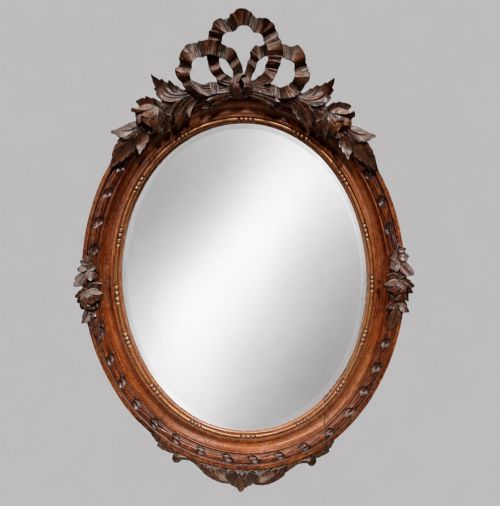
An edwardian oval hanging mirror brings lightness and reflection to a room, framed in rich mahogany or giltwood.
Edwardian Oval Hanging Mirror
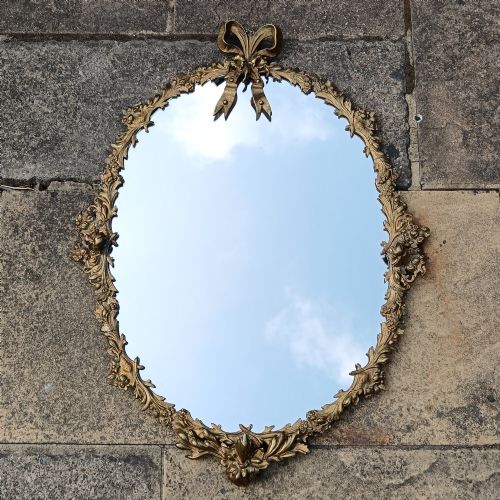
An edwardian oval hanging mirror provides a vertical or horizontal curved focal point for a wall, combining domestic utility with decorative poise. These wall mirrors appear frequently in mahogany and giltwood, reflecting the revivalist tastes of the period.
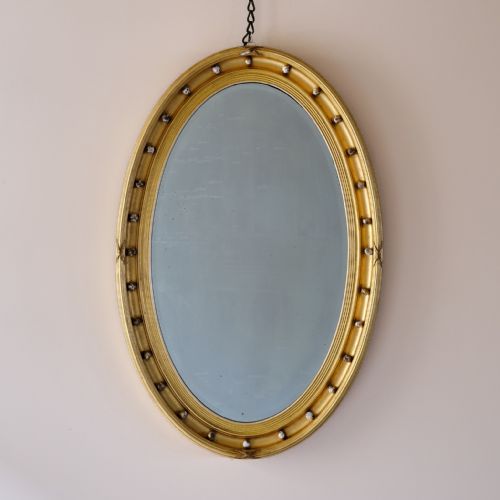
The evidence shows forms ranging from plain oak frames to ornate Adam revival and Louis XVI revival gilt gesso designs. Many pieces display simple Edwardian craftsmanship, whilst others draw upon earlier Georgian and Regency motifs.
Buyers will encounter both understated timber frames and elaborately carved giltwood examples across this selection. They suit hallways, bedrooms and drawing rooms equally well, offering practical reflection within a compact decorative footprint.
Materials and Construction Techniques
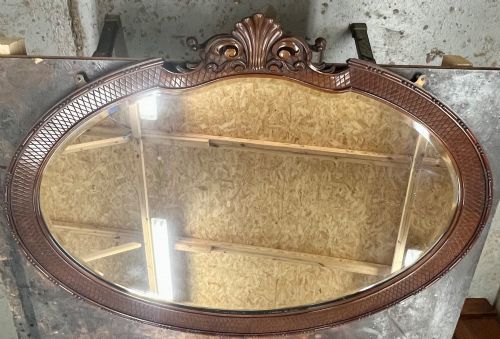
Makers utilised solid timbers such as mahogany and oak, often shaping the wood into smooth curved frames or applying intricate fretwork. Mahogany versions frequently featured delicate inlay work, setting dark timber against lighter stringing.
Giltwood and gesso pieces relied on skilled carving and plasterwork over a wooden base, finished with gold leaf to catch the light. Early plates often consisted of mercury glass, whilst later Edwardian examples utilised clear bevelled glass.
Carpenters joined frame corners with precision, ensuring the heavy glass plates remained secure within the hanging structures. Brass rings and chains attached to the reverse allowed these substantial mirrors to be mounted safely upon walls.
Scottish makers favoured mahogany fretwork, adding a distinct regional flourish to otherwise classical oval wall mirrors.
Assessing Quality and Craftsmanship
The distinction between standard production and superior craftsmanship lies in the depth and crispness of the carved ornament. Hand-carved giltwood and gesso show sharp relief work, whereas lesser pieces rely on simpler moulded plaster.
Timber selection dictates the visual weight of wooden frames, with dense, well-figured mahogany representing the upper tier of production. Plain oak and simpler softwood frames occupy a more utilitarian domestic sphere.
The original condition of the glass plate and the integrity of the frame joints heavily influence the standing of any individual piece. Intricate fretwork requires careful preservation, and the survival of original mercury plates adds historical depth.
The Edwardian Oval Hanging Mirror Glossary
- Gesso
- A plaster mixture applied to wood frames as a base for gilding. It allows for intricate moulded relief decoration before gold leaf is applied.
- Giltwood
- Timber that has been coated with gold leaf. This finish provided a brilliant reflective surface popular in formal reception rooms.
- Fretwork
- Ornamental design created by cutting patterns through thin wood using a scroll saw. It appears frequently on regional mahogany hanging mirrors.
- Bevelled glass
- A mirror plate with edges ground and polished at an angle. This technique creates a prismatic border that catches the light.
Edwardian Oval Hanging Mirror: Frequently Asked Questions
Where should I hang an oval mirror?
These mirrors suit narrow spaces like hallways and landings where an oval shape softens sharp architectural lines. They also function well above mantelpieces or dressing tables.
Ensure the wall fixings match the weight of the frame, particularly for heavier giltwood and gesso examples.
How do I identify an Edwardian mirror?
Edwardian pieces often combine lighter mahogany framing with revivalist details drawn from earlier Georgian and Adam styles. Look for construction methods and timber characteristics typical of the early twentieth century.
Archival records show these frames frequently incorporated bevelled glass plates alongside inlaid stringing.
Did these mirrors always have bevelled glass?
Not all examples feature bevelled edges, though this finish became increasingly popular during the late Victorian and Edwardian periods. Flat glass plates remain common on simpler oak and mahogany frames.
The presence of original mercury plating often points towards earlier Victorian or eighteenth-century origins.