

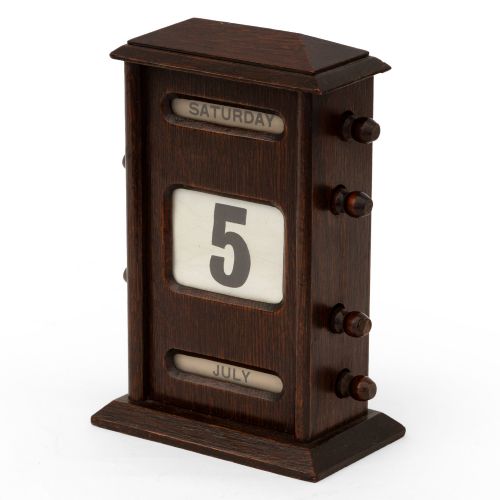
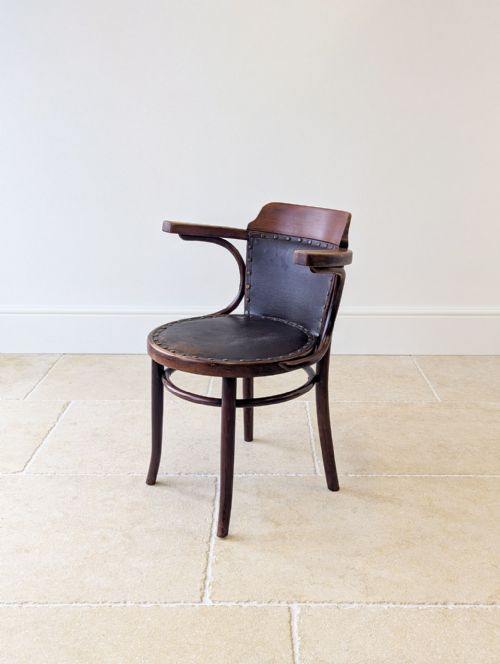
Edwardian Office Desk
An edwardian office desk provides functional workspace paired with period craftsmanship, bringing traditional joinery and rich timbers into modern studies.
Edwardian Office Desk
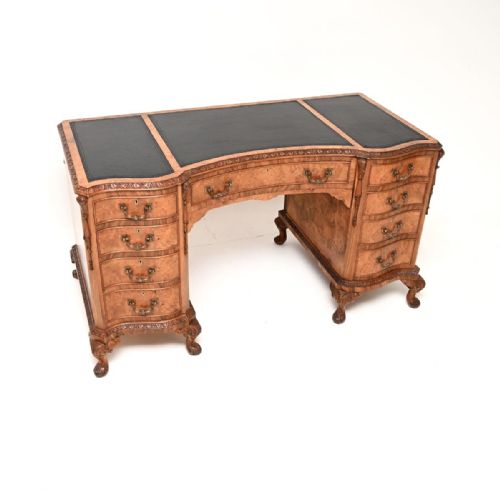
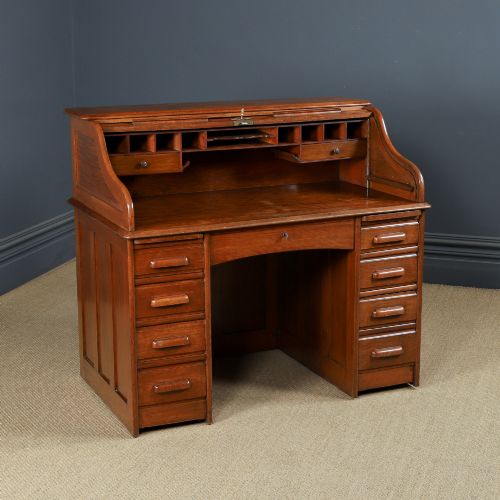
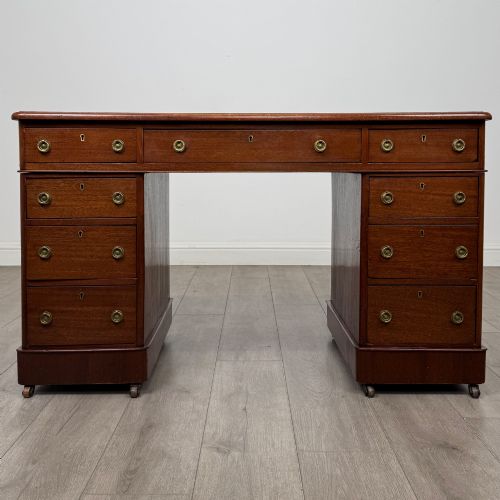
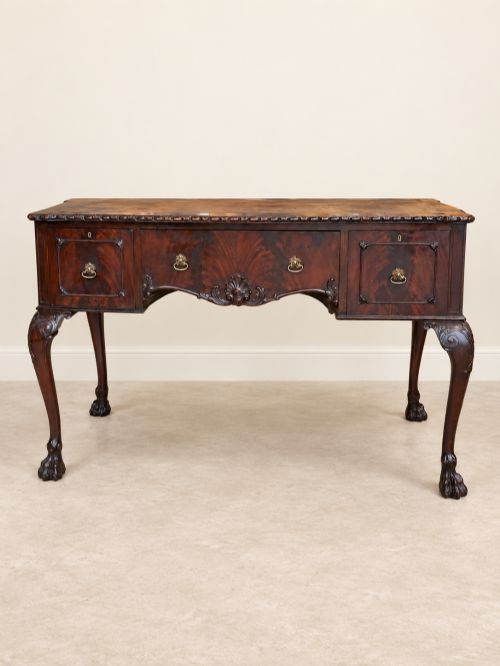
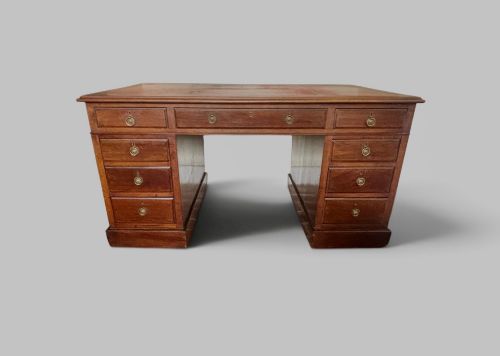
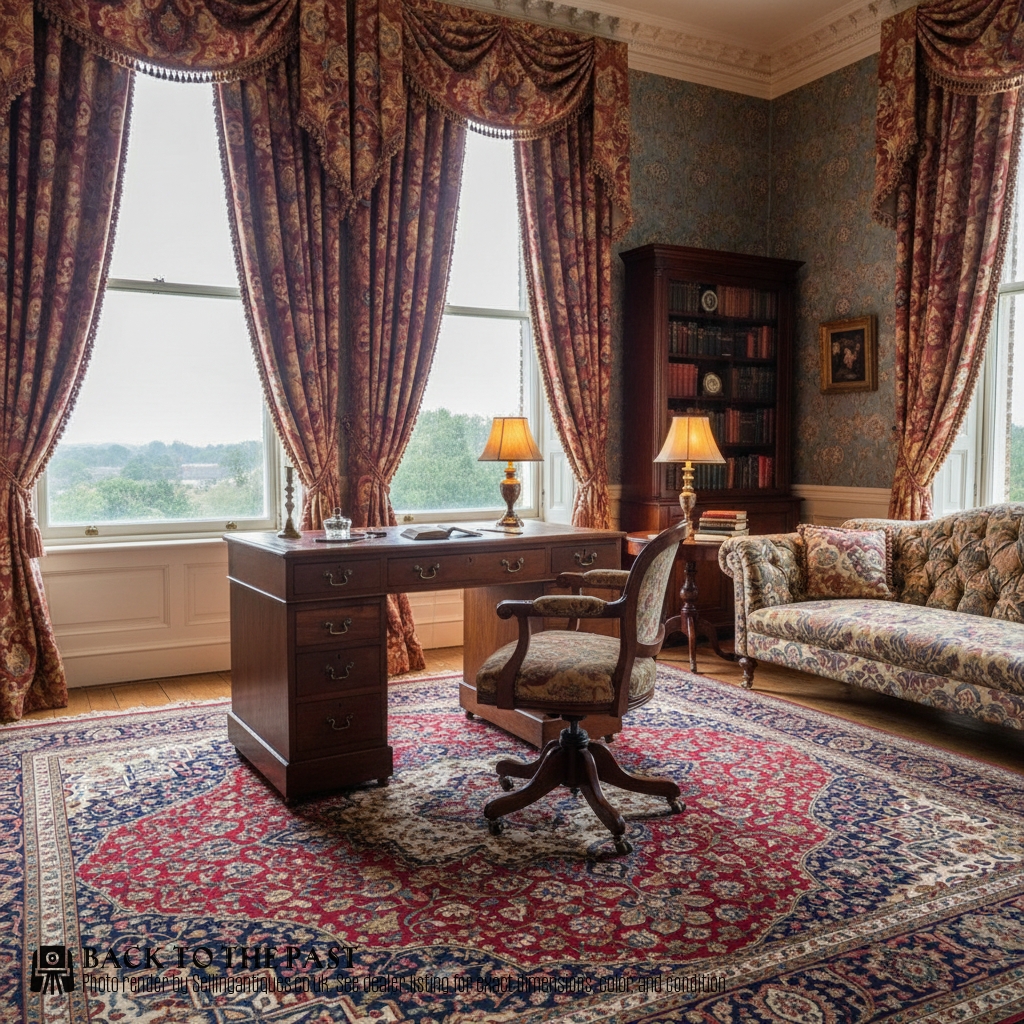
The edwardian office desk encompasses pedestal formats, writing tables, roll-top variants and swivel armchairs designed for administrative tasks. Surviving examples range from compact walnut writing tables to large oak and mahogany pedestal desks fitted with multiple drawers.
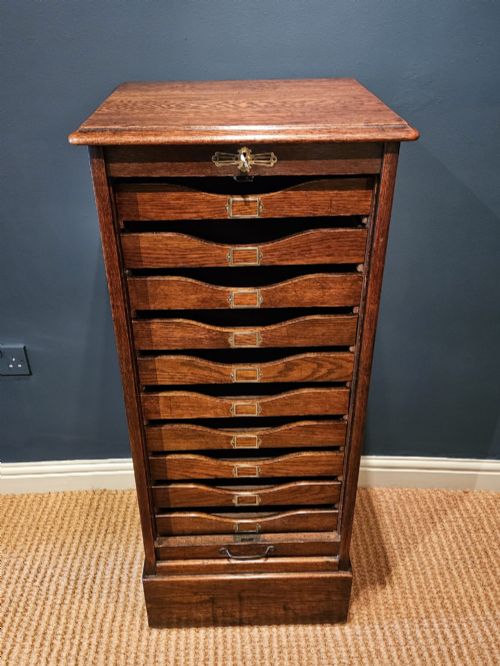
Makers of the period also produced specialised storage forms including tambour-front filing cabinets and desktop accessories like letter boxes. Pieces frequently display revival styles such as Chippendale, Sheraton, and Queen Anne alongside Arts and Crafts simplicity.
The category extends into the late nineteenth and early twentieth centuries, drawing heavily upon Victorian utilitarian forms while introducing lighter proportions. Buyers encounter both grand partners desks and modest kneehole writing tables suited to domestic studies.
How They Were Made
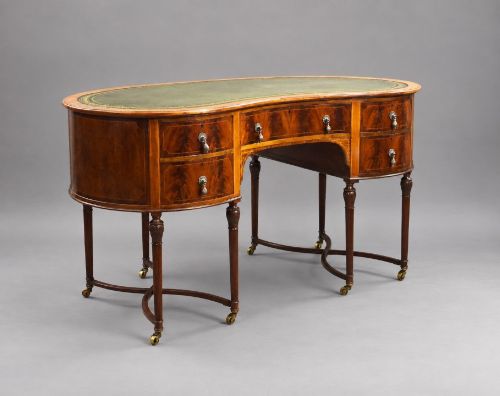
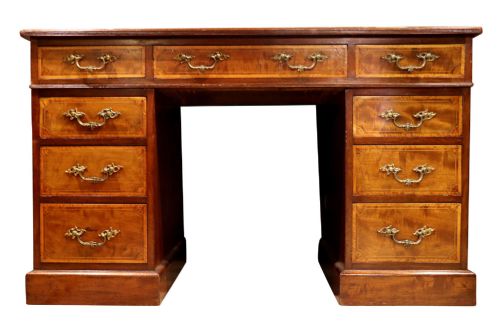
Construction relies upon dense hardwoods including mahogany, oak, walnut and burr walnut, frequently accented with satinwood inlay or brass hardware. Writing surfaces are regularly inset with tooled leather panels in green or red tones.
Edwardian Office Desk Retail Price Guide 2026
Typical asking prices for edwardian office desk among the pieces listed under this phrase on Sellingantiques today, from the lower quarter to the upper quarter. They describe what is for sale here now, not the wider market.
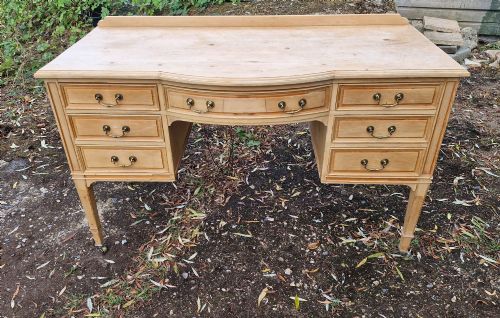
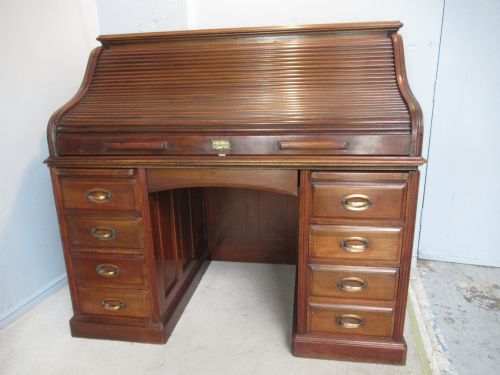
The listings show desk forms ranging from compact pine writing tables to heavy burr walnut partners desks and revolving oak armchairs.
What Varies in Quality
Quality rests in the selection of timber figures, such as the richness of burr walnut veneers or flame mahogany grain, matched symmetrically across drawer fronts and desk tops. The presence of original hardware, working locks and matching keys elevates a piece above standard utility items.
Secondary timbers and internal drawer construction indicate workshop standards, with superior examples utilising solid mahogany or oak throughout rather than cheaper softwoods. The complexity of carved details, inlaid stringing and the smoothness of revolving mechanisms distinguish workshop output.
Trollope & sons·Edwards & Roberts·Maple and Co·Angus of London·William Birchcraft·Cooke’s of Finsbury, London
The Edwardian Office Desk Glossary
- Pedestal desk
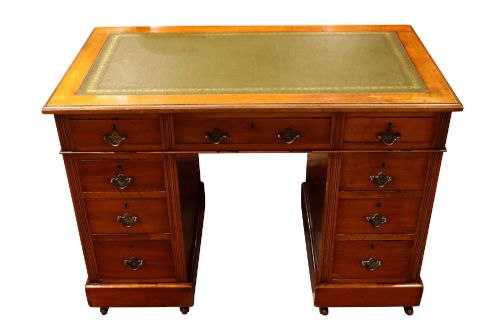
- A heavy writing desk supported by two banks of drawers flanking a central kneehole space. These large pieces often feature leather-lined tops and generous storage capacity.
- Partners desk
- A double-sided pedestal desk designed for two people to work opposite one another, featuring drawers and cupboards on both faces. These large freestanding pieces were traditionally used in libraries and boardrooms.
- Tambour
- A flexible shutter door formed of narrow vertical strips of wood glued to canvas, allowing it to slide smoothly around a curved track. This mechanism conceals pigeonholes and document slots on roll-top desks and cabinets.
- Revolving desk chair
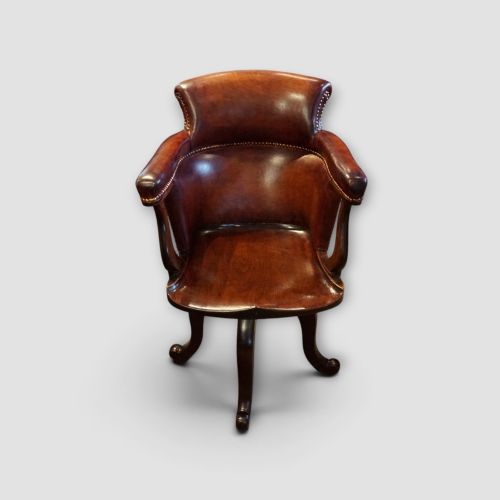
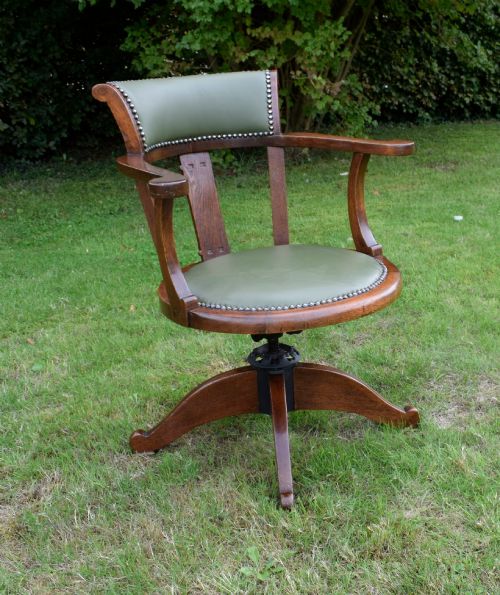
- An ergonomic office seat mounted on a central iron spindle that allows rotation, frequently paired with a curved bentwood or tub back. Many examples incorporate tilting mechanisms and green or red leather upholstery.
- Kneehole table
- A compact writing table with a single central drawer above the leg space, flanked by smaller side drawers. These pieces offer a lighter alternative to full pedestal desks.
Edwardian Office Desk: Frequently Asked Questions
How do I identify an Edwardian desk?
Edwardian desks date from the reign of King Edward VII between 1901 and 1910, though the style extends slightly either side. They often combine lighter proportions than Victorian furniture with revival details like satinwood inlay or Chippendale carved edges.
Common materials include mahogany, oak, and walnut, frequently complemented by inset leather writing surfaces.
What is a partners desk?
A partners desk is a large pedestal desk finished on all four sides to allow two people to sit and work opposite each other. They contain duplicate drawers and cupboards facing outward in both directions.
These substantial pieces were originally designed for solicitors, bankers, and senior executives working in large shared offices.
Are desk chairs adjustable?
Many period office chairs feature mechanical swivel actions mounted on iron spiders with four or five wooden legs. Some models include height adjustment screws and tilting mechanisms to support the user.
Upholstered seat pads in green or red leather are common on these revolving armchairs and tub seats.
What is a tambour filing cabinet?
A tambour filing cabinet utilises flexible wooden slats running on a curved track to enclose internal document drawers or vertical filing space. This design saved floor space in busy Edwardian offices by eliminating outward-swinging doors.
They are most frequently constructed from solid oak with visible slat lines.