


Edwardian Oak Welsh Dresser
These pieces of edwardian oak welsh dresser design offer generous storage and historic character, grounding a dining room or kitchen with practical presence.
Edwardian Oak Welsh Dresser
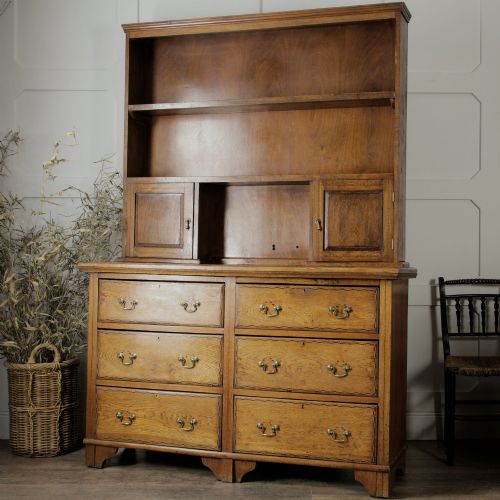
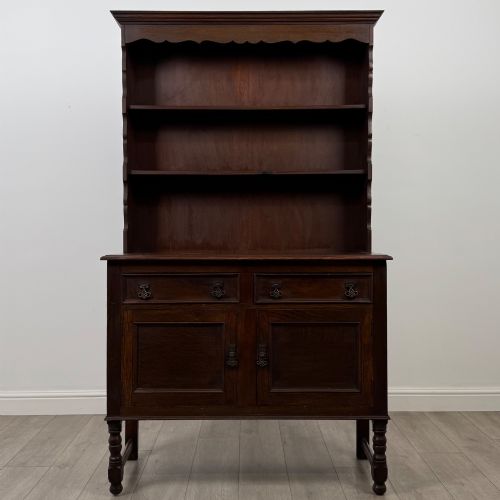
When you search for an edwardian oak welsh dresser, you encounter heavy timber storage furniture designed for displaying and holding domestic tableware. The forms range from traditional pot board dressers to pieces fitted with plate racks and glazed doors.
The pieces appearing on this page span the Edwardian period alongside Victorian, 19th century, and early 20th century examples. You find variations styled after Arts and Crafts, Jacobean Revival, and Georgian Revival aesthetics, alongside English Country interpretations.
Most examples combine a lower cabinet or sideboard base with an upper plate rack or shelving unit. Proportions shift from monumental country house editions down to unusual slim cottage formats.
Materials and Construction Methods
Makers built these pieces primarily from solid oak, sometimes utilising tiger oak figuring or honey-coloured timber surfaces. The primary structure relies on heavy joinery designed to support stacked ceramic plates and heavy kitchen wares.
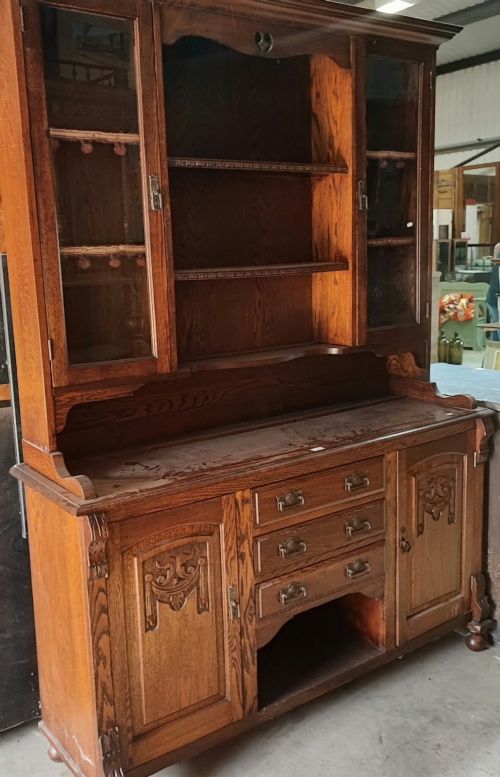
Hardware details incorporate brass and iron handles, hinges, and fittings. Upper display sections frequently feature mirror glass or leaded glass doors to protect the contents while maintaining visibility.
Some dressers arrive with secret compartments designed to hide the good silver from hungry household staff.
Judging Quality and Execution
The distinction between standard utility items and finer pieces rests in the carving work and timber selection. Tiger oak figuring and decorative carving elevate the visual weight of the furniture.
Structural integrity depends on the retention of original brass and iron hardware, leaded glass panels, and solid pot boards. The integration of the upper plate rack with the lower cabinet shows the ambition of the original workshop.
Heals of London·Liberty & Co.
The Edwardian Oak Welsh Dresser Glossary
- Pot board
- An open lower shelf beneath a dresser base traditionally used for storing heavy pots and pans. This feature appears on traditional country house examples.
- Plate rack
- The upper shelving superstructure designed to display plates upright against the wall. It forms an integral part of the traditional welsh dresser silhouette.
- Tiger oak
- Oak timber exhibiting distinctive medullary ray figuring that resembles tiger stripes. This desirable grain pattern appears in several Edwardian and Victorian pieces.
- Leaded glass
- Glass panes held together by lead cames within cabinet doors. This technique provides structural support for larger glass areas while adding decorative geometric patterns.
Edwardian Oak Welsh Dresser: Frequently Asked Questions
What is an Edwardian oak Welsh dresser?
An edwardian oak welsh dresser is a traditional storage and display unit featuring a lower wooden cabinet or sideboard combined with an upper plate rack. These pieces were constructed primarily during the early twentieth century and the Victorian era.
They serve as practical furniture for dining rooms and kitchens, offering enclosed cupboard space alongside open shelving for tableware.
How do I style a Welsh dresser?
You can use the open plate racks to display vintage ceramics, pewter plates, and glassware collections. The lower cabinets provide concealed storage for table linens and dining accessories.
Position the piece against a principal wall in a kitchen or dining area to let the timber grain and proportions anchor the room.
How do I tell Arts and Crafts dressers apart?
Arts and Crafts examples emphasise simplified construction, visible joinery, and honest materials rather than heavy historical revival ornamentation. They frequently feature clean lines and unpretentious brass or iron hardware.
In contrast, Jacobean or Georgian revival pieces incorporate formal carved motifs, moulding details, and traditional period styling.
What is a pot board base?
A pot board base is an open lower platform shelf positioned near the floorboards beneath the main cabinet structure. Makers originally included this open shelf for storing heavy pots and kitchen utensils.
This architectural feature appears frequently on country house and regional dresser variations.