
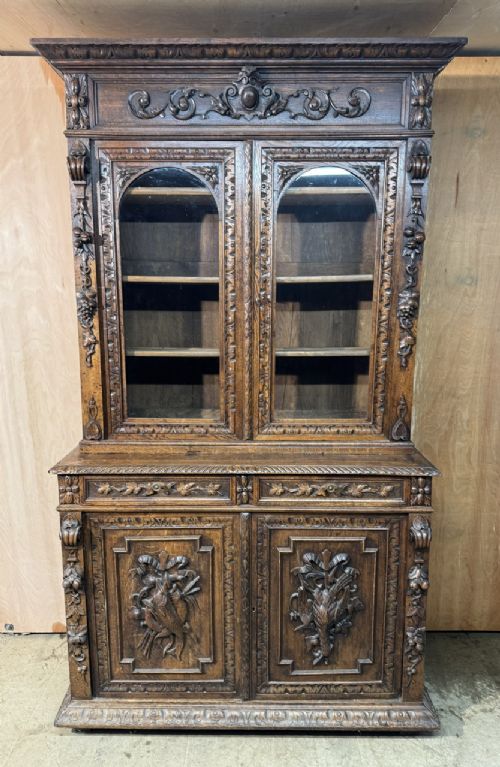
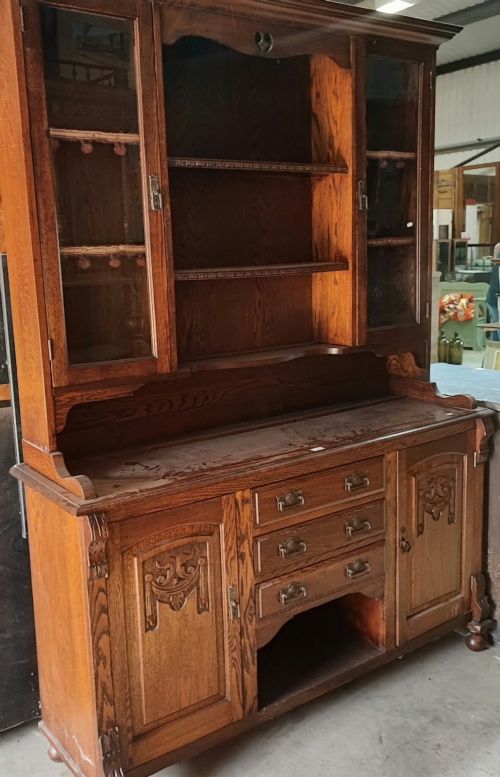
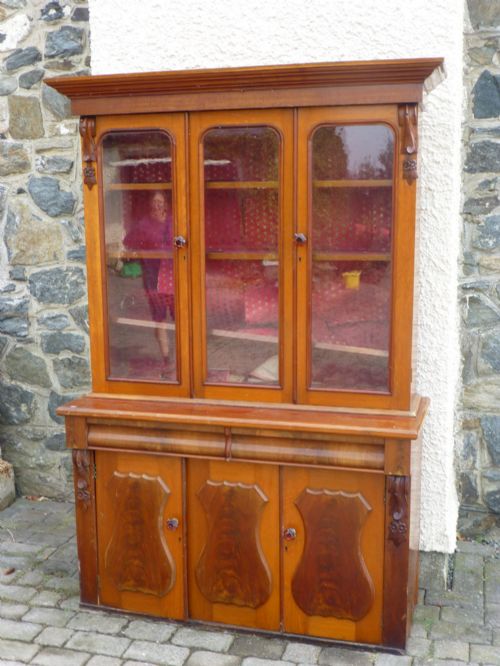
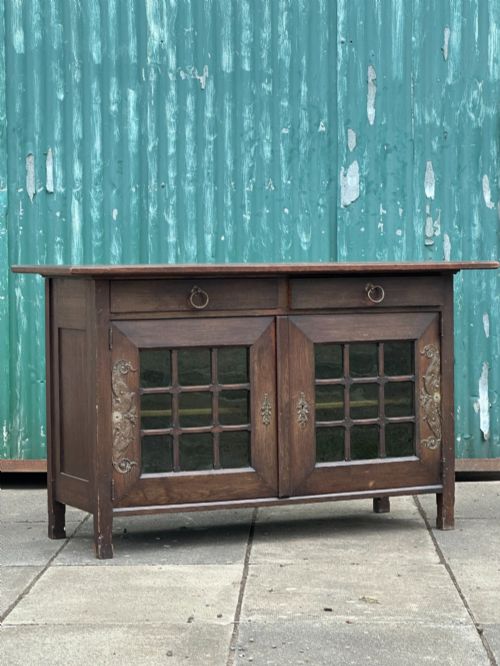


Glazed Oak Sideboard
These glazed oak sideboard pieces bring solid timber and glazed display space together, offering practical storage with room to show your china and books.
Glazed Oak Sideboard
A glazed oak sideboard combines enclosed wooden storage with glass-fronted upper sections, drawing on centuries of British cabinet-making traditions. When you search for a glazed oak sideboard, you encounter substantial furniture items that bridge the gap between a traditional dining room server and a display cabinet.
The versions most frequently met on this page span from the Victorian and Edwardian eras into the nineteen-thirties, reflecting regional styles from Welsh dressers to Arts and Crafts side cabinets. These pieces often feature glass doors, leaded panes, or mirror backs set above cupboard bases.
Makers utilised sturdy timbers to build furniture intended for everyday domestic service in kitchens, dining rooms, and libraries. The resulting forms range from simple country dressers to heavily carved revival cabinets.
Judging quality and execution
The distinction between standard domestic furniture and superior items rests upon the depth of the carving, the selection of figured timber, and the integrity of the joinery. Better examples display careful attention to proportion and finish.
Hardware and glazing details also separate pieces, with hand-beaded glass frames and original brass fittings indicating higher workshop standards. The structural solidity of the lower cupboard base relative to the upper glazed cabinet dictates the overall durability.
Current listings span the eighteenth to the twentieth centuries, featuring oak, glass, lead, and brass across Arts and Crafts, Victorian, and Edwardian styles.
Liberty & Co.
The Glazed Oak Sideboard Glossary
- Glazed oak sideboard
- A storage item combining a wooden cupboard base with glass-fronted upper shelving. These pieces serve to display and store dining china or books.
- Welsh dresser
- A traditional kitchen or dining storage form comprising base cupboards surmounted by open or glazed plate racks. Cornish and West Country variants share similar vernacular roots.
- Leaded glass
- Small panes of glass held together by strips of lead to form geometric or floral patterns. This technique strengthens large window and cabinet openings.
- Revival style
- Design work that looks back to historical periods such as the Tudor, Jacobean, or Gothic eras. Makers incorporated antique motifs into nineteenth-century furniture.
Glazed Oak Sideboard: Frequently Asked Questions
What rooms suit a glazed oak sideboard?
These cabinets suit dining rooms, kitchens, and living spaces where both enclosed storage and display room are required.
Their substantial timber presence anchors a room while the glass doors keep dust away from displayed items.
How do I care for antique oak?
Maintain the timber by applying traditional beeswax periodically and avoiding direct sunlight or excessive heat sources.
Keep humidity stable to prevent the solid oak panels and glazed frames from shifting.
Are these cabinets one piece or two?
Many examples are constructed as two separate sections, featuring a heavy cupboard base with a glazed bookcase or dresser top resting upon it.
This two-part construction aids transportation and placement within domestic interiors.
How do I identify Edwardian oak furniture?
Edwardian pieces often show lighter timber finishes and cleaner lines compared to dark Victorian revival items.
Arts and Crafts influences frequently appear in this period through subtle brass hinges and exposed joinery.