
Edwardian Oak Server
An edwardian oak server delivers practical dining room storage in robust timber, combining period utility with solid craftsmanship.
Edwardian Oak Server
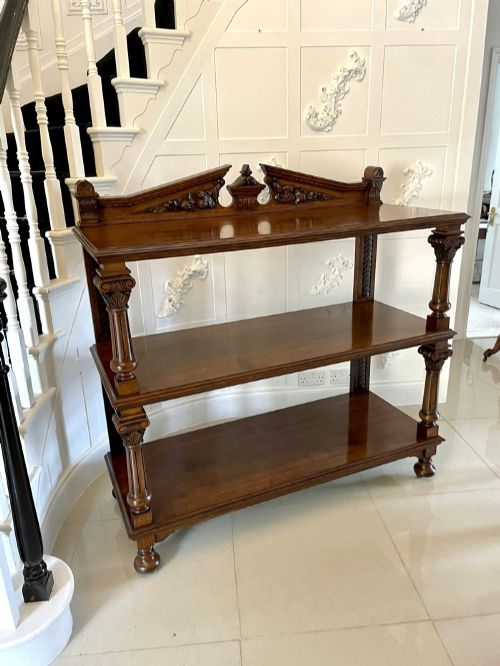
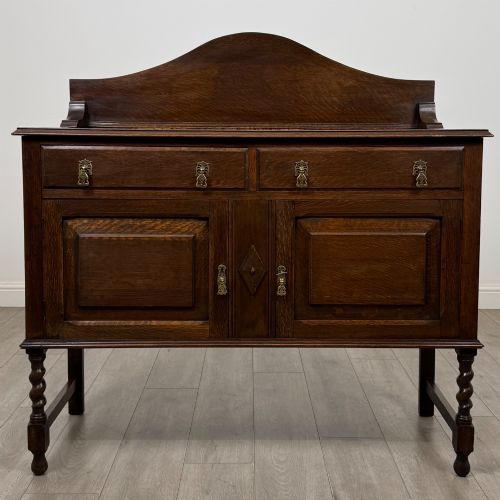
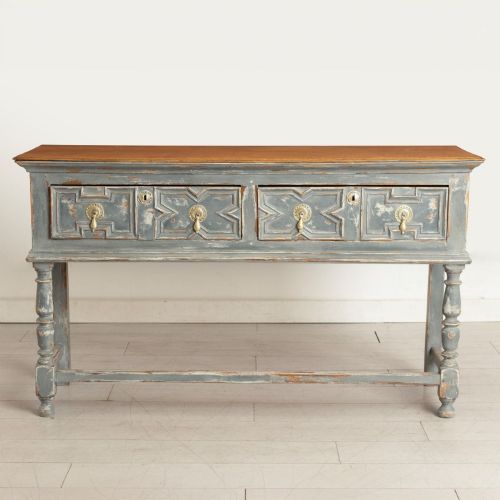
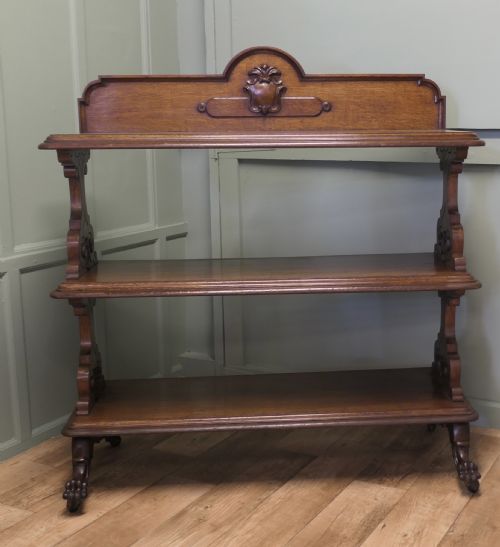
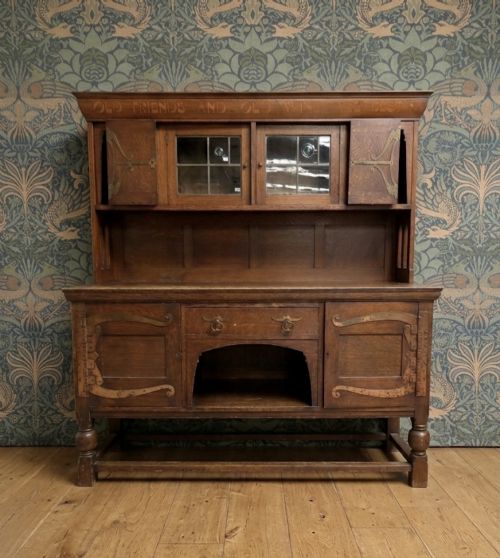
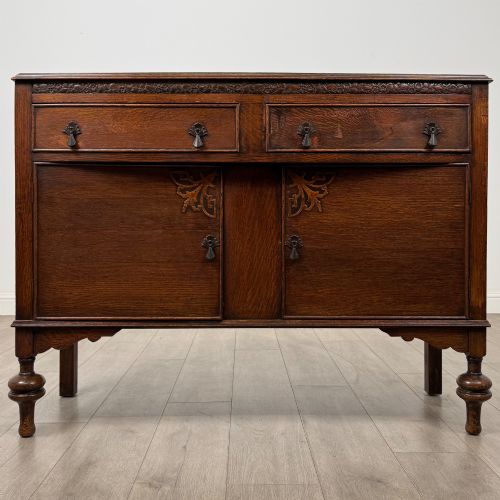
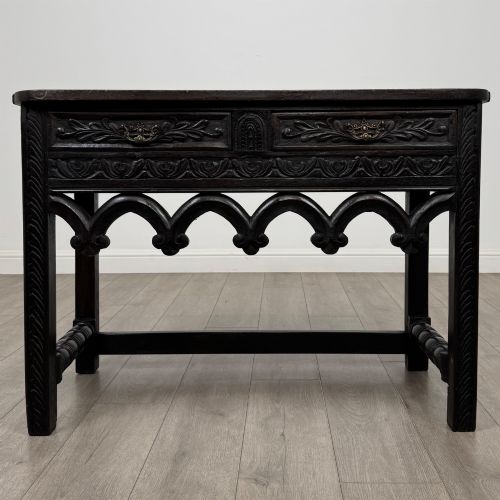
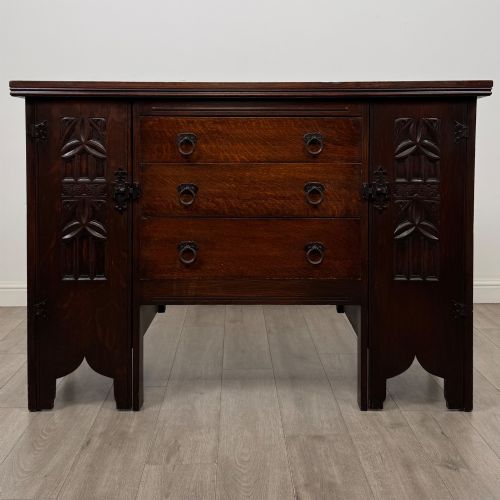
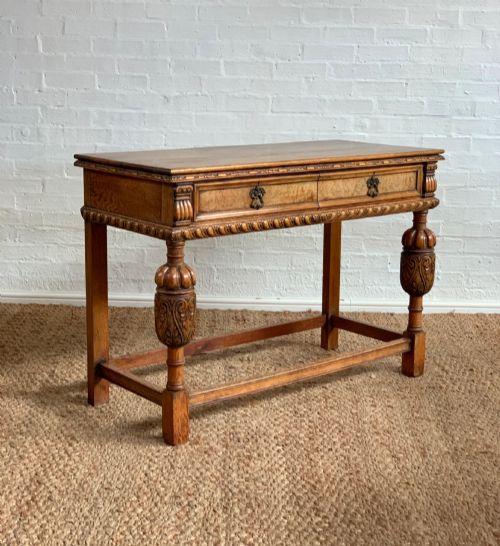
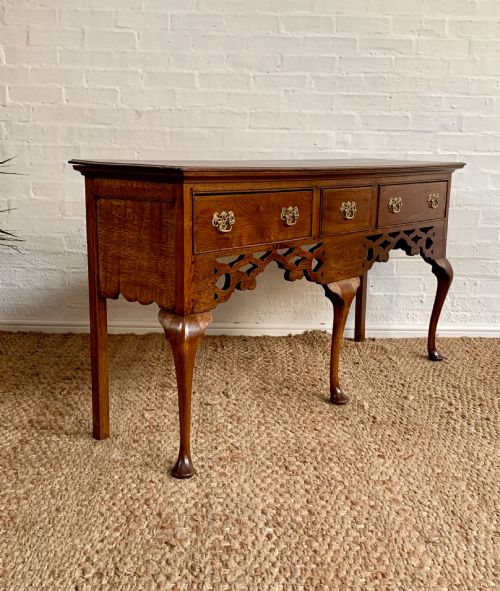
When searching for an edwardian oak server, buyers encounter a variety of substantial dining room furniture including sideboards, buffet units, and dresser bases. These forms originated to serve food and store dining silver in large households during the late nineteenth and early twentieth centuries.
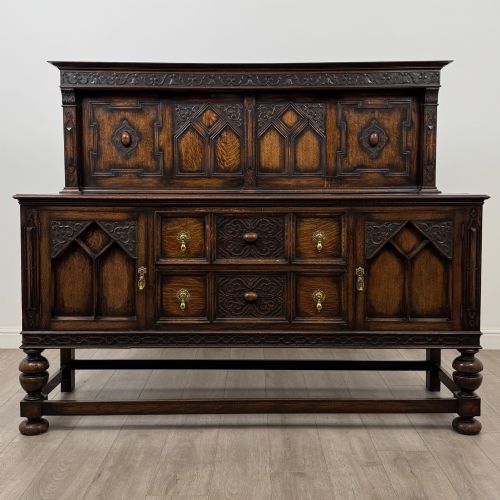
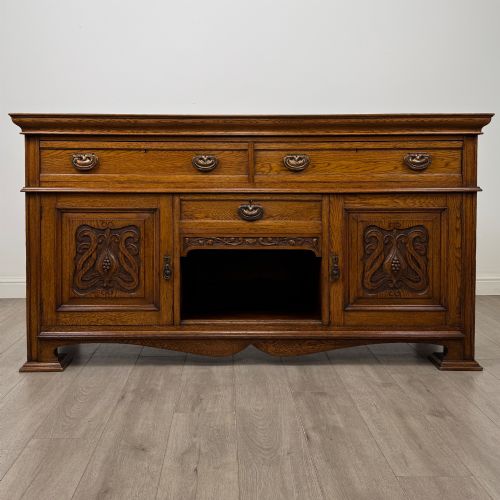
The pieces on this page span the Edwardian period and the late nineteenth century, alongside revival styles. Buyers frequently find items displaying Jacobean, Gothic, or Arts and Crafts influences alongside straightforward Edwardian designs.
Materials and Construction
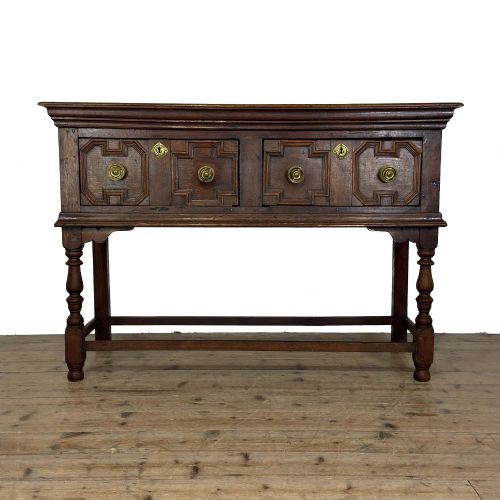
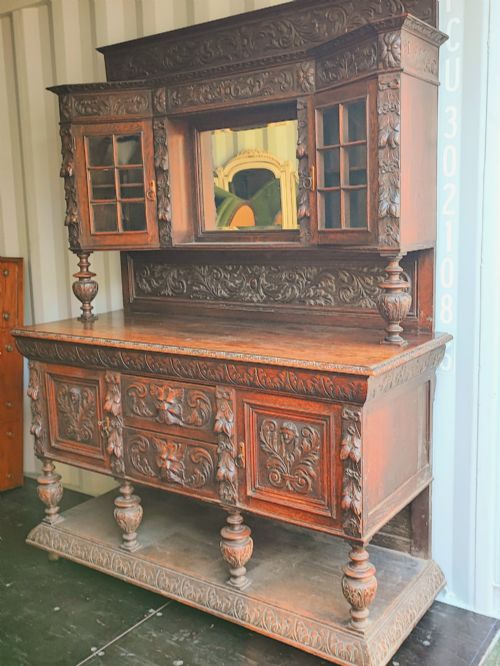
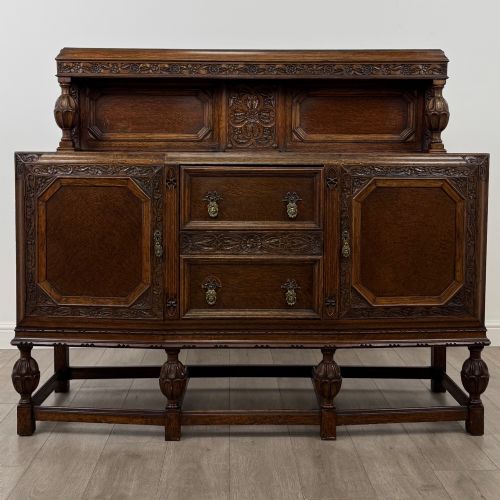
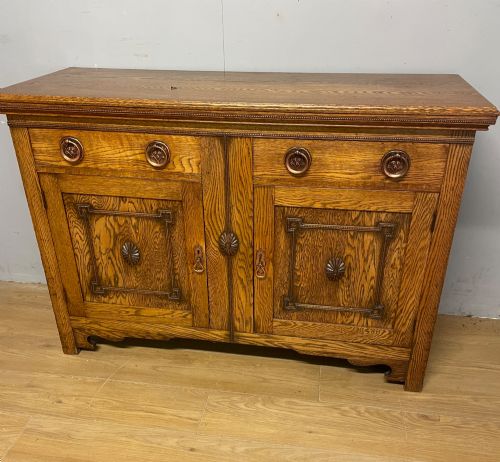
Makers utilised solid oak alongside decorative veneers such as pollard oak and burr walnut to create durable framework and striking grain patterns. Carved ornamentation, panelled doors, and raised mouldings provide textural depth to the primary timber.
Metal fittings in brass, copper, and iron appear as handles, hinges, and escutcheons, securing doors and drawers. Glass elements sometimes supplement cabinets, while occasional painted finishes alter the raw timber surface.
Edwardian Oak Server Retail Price Guide 2026
Typical asking prices for edwardian oak server among the pieces listed under this phrase on Sellingantiques today, from the lower quarter to the upper quarter. They describe what is for sale here now, not the wider market.
Listings feature oak combined with brass, copper, and iron hardware across Edwardian, Victorian, and Arts and Crafts styles.
Assessing Craftsmanship
Quality depends upon the crispness of hand-carved details, the selection of figured oak timbers, and the structural integrity of joints in drawers and doors. Pieces designed by notable firms show greater attention to proportion and artistic unity than standard commercial production.
The integration of secondary woods and the preservation of original brass or copper hardware distinguish superior examples from heavily altered or later utility furniture.
Ambrose Heal for Heal and Son·Leonard Wyburd for Liberty·Shapland and Petter·Beresford and Hicks London
The Edwardian Oak Server Glossary
- Server
- A low dining room table or sideboard used for holding dishes and serving food.
- Dresser base
- A lower storage unit with drawers and cupboards, historically topped with open shelving.
- Buffet
- A heavy side cabinet or sideboard designed for food display and storage.
- Pollard oak
- Timber taken from trees that were pollarded, resulting in a dense, highly figured grain pattern.
- Arts and Crafts
- A design movement prioritising traditional craftsmanship and simple forms over mass production.
- Barley twist
- A decorative turning technique resembling a twisted rope, common on furniture legs and supports.
Edwardian Oak Server: Frequently Asked Questions
What is an edwardian oak server?
An edwardian oak server is a domestic serving table or sideboard produced during the Edwardian era, constructed primarily from oak timber.
These pieces were utilised in dining rooms to hold serving dishes, cutlery, and glassware during meals.
How do I identify an edwardian piece?
Edwardian furniture typically displays lighter oak tones, restrained carving, and clean structural lines compared to heavier Victorian predecessors.
Look for stylistic hints such as Arts and Crafts simplicity or Edwardian Revival proportions that date the item to the early twentieth century.
Where were these servers placed?
Servers were positioned against dining room walls to provide an accessible surface close to the dining table.
They also found placement in large hallways and reception rooms as decorative display surfaces.
How do I care for oak furniture?
Maintain oak surfaces by dusting with a dry cloth and occasionally applying traditional beeswax to nourish the timber.
Keep pieces away from direct heat sources and strong sunlight to prevent the wood from drying or cracking.
What styles influence these servers?
Makers drew inspiration from earlier historical movements, incorporating Jacobean revival panels, Gothic architectural motifs, and Arts and Crafts principles.
These diverse styles resulted in servers ranging from heavily carved statement pieces to clean, functional golden oak tables.