


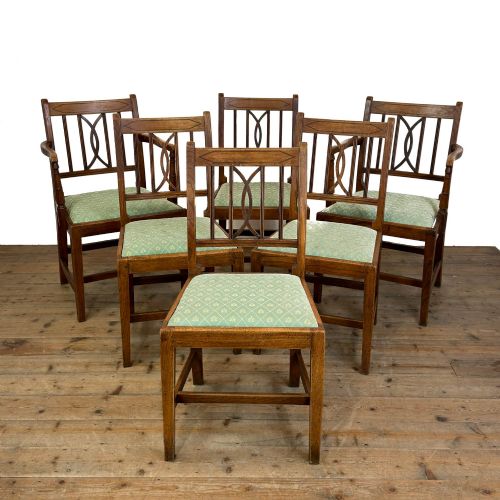

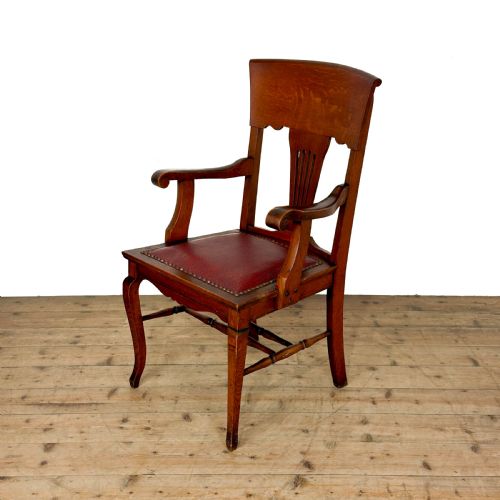
Edwardian Oak Carvers
Edwardian oak carvers bring substantial timber and sturdy armchairs to the dining table, offering period craftsmanship suited to daily use.
Edwardian Oak Carvers
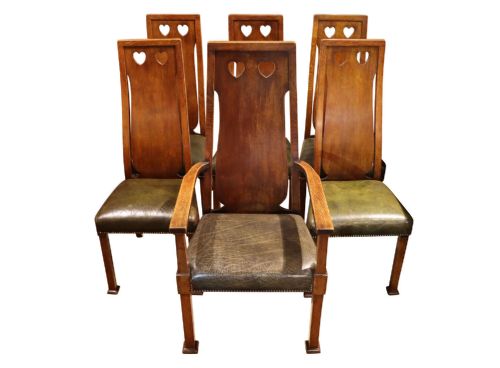
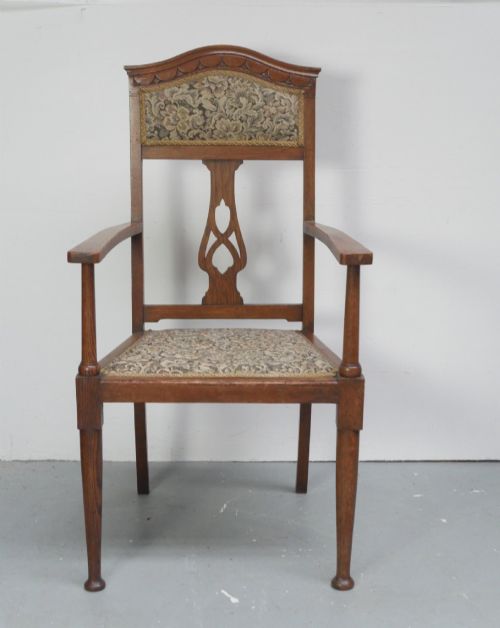
Edwardian oak carvers represent sturdy timber armchairs designed to sit at the heads of dining tables. These pieces emerge from periods spanning the early twentieth century alongside revivals touching upon Jacobean and Arts and Crafts styles.
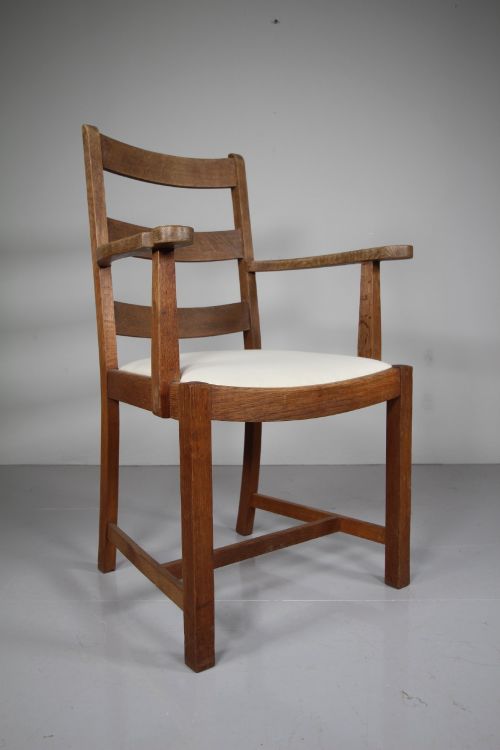
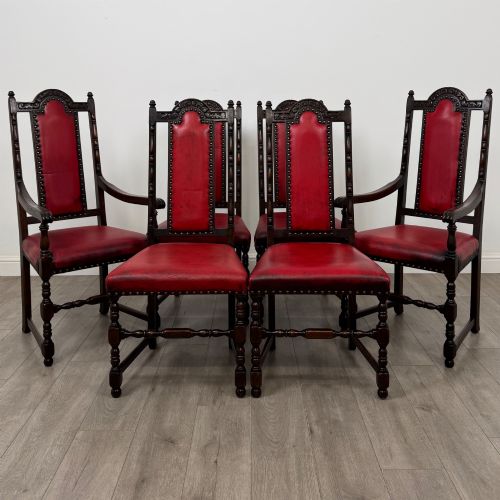
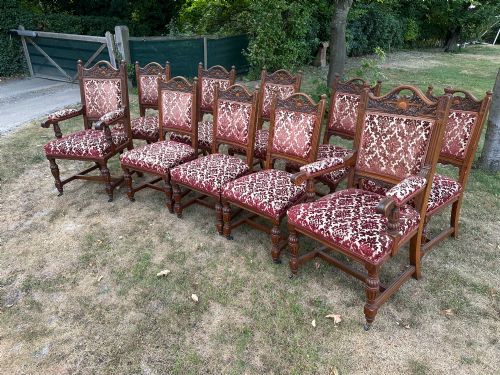
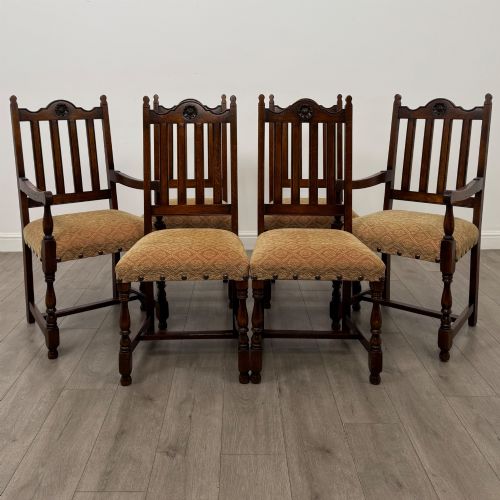
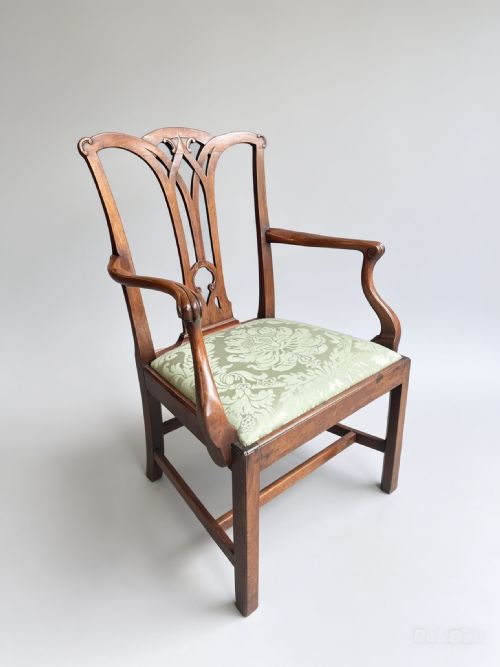
The versions most commonly found here feature high backs, open arms and heavy oak framing. They appear singly, in pairs or alongside matching sets of smaller side chairs.
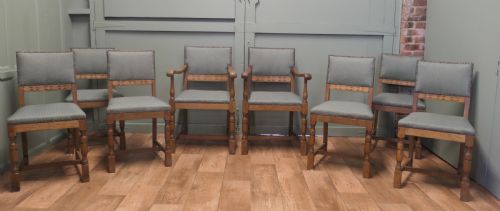
Craftsmen built these armchairs to handle robust domestic use, incorporating materials like leather, rush and woven fabric into the seating. Their forms draw heavily on vernacular country traditions as well as thoughtful workshop design.
Timber construction and seating materials
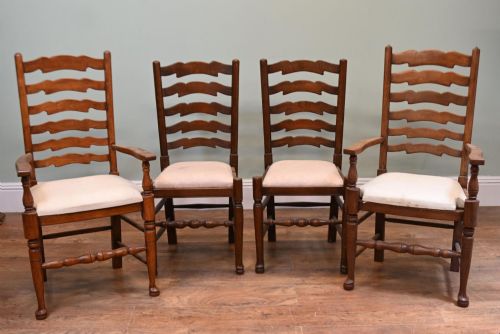
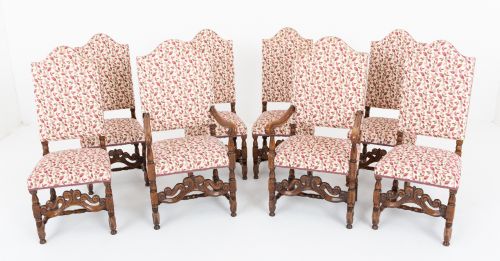
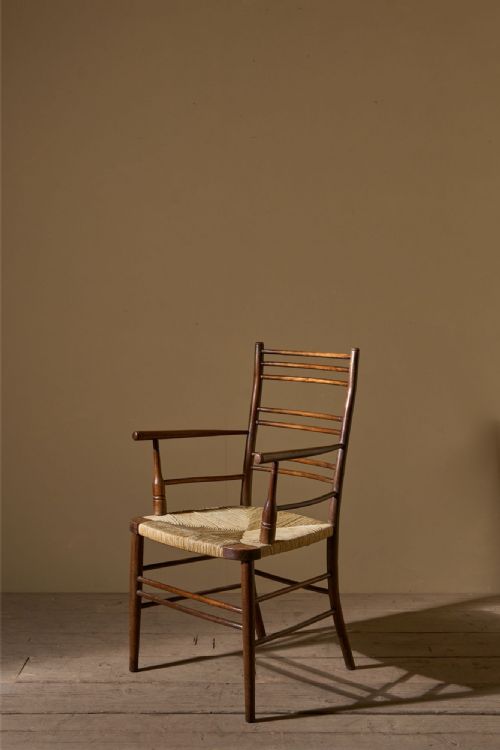
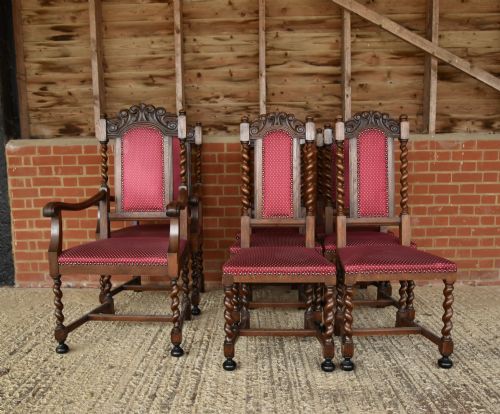
Joinery relies on solid oak, shaped and jointed to bear weight across broad armrests and tall back rails. Workshops utilised turned barley twist supports, carved panels and ladder backs to build rigid frames.
Seats integrate natural rush, padded leather with brass studs, or textured upholstery fabrics fixed directly to the wooden rails. Metal brackets and fastenings occasionally reinforce the internal joints of heavier armchairs.
Edwardian Oak Carvers Retail Price Guide 2026
Typical asking prices for edwardian oak carvers among the pieces listed under this phrase on Sellingantiques today, from the lower quarter to the upper quarter. They describe what is for sale here now, not the wider market.
Some sturdy armchairs arrive bearing the distinct scars of Victorian dining halls, having survived a century of enthusiastic elbows.
Distinguishing craftsmanship and finish
The refinement of the carving and the selection of the timber dictate the grade of each armchair. Dense golden oak with deeply figured grain sits above plain, utilitarian boards.
Makers who paid attention to the balance of the arm supports and the tightness of the joinery produced chairs that endured decades of heavy handling without loosening.
Goodyers London·Heals Letchworth·Liberty Morris And Co·W Williamson And Sons·Shapland And Petter
The Edwardian Oak Carvers Glossary
- Carver
- An armchair designed with elbow rests, traditionally placed at the ends of a dining table.
- Barley twist
- A cylindrical wooden turning carved in a helical spiral pattern resembling twisted rope.
- Rush
- Dried marsh grass woven tightly to form a durable, textured seat base.
- Ladderback
- A chair back constructed from a series of horizontal wooden slats set between upright posts.
- Jacobean Revival
- A nineteenth and twentieth century design style mimicking seventeenth century British heavy oak furniture.
Edwardian Oak Carvers: Frequently Asked Questions
How do I identify an Edwardian oak carver?
Look for sturdy oak frames combined with design elements like barley twist turnings, ladder backs or carved panels characteristic of the early twentieth century.
Examine the construction under the seat and around the arm joints for period joinery methods typical of workshops from that era.
Were these chairs used only for dining?
While primarily manufactured as armchairs for the heads of dining tables, many low and elbow variants served as hall chairs or fireside seating.
Their robust timber construction allowed them to move easily between dining rooms, libraries and hallways depending on household needs.
How do I care for leather and rush seats?
Leather seat pads benefit from occasional light conditioning to prevent the hide from drying out or cracking under normal daily use.
Rush seats require dry cleaning and should be kept away from excessive moisture to preserve the natural plant fibres.
What styles influence these carvers?
Many examples draw inspiration from Arts and Crafts simplicity, Gothic Revival ecclesiastical forms, and heavier Jacobean Revival motifs.
Country traditional vernacular also heavily shapes the ladder back and farmhouse chair designs seen across the period.