


Edwardian Oak Bookstand
These edwardian oak bookstand pieces bring solid timber utility and compact display to a room, offering a practical way to keep volumes close at hand.
Edwardian Oak Bookstand
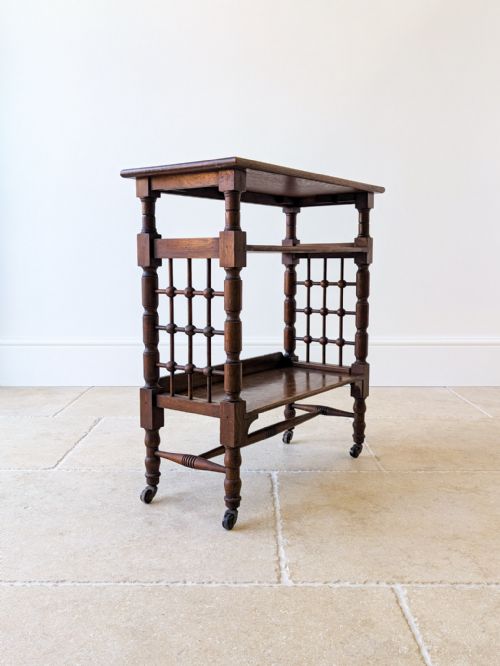
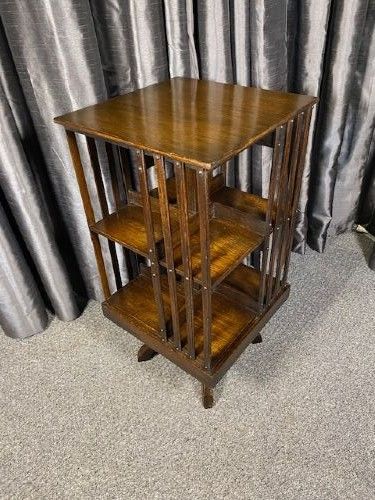
An edwardian oak bookstand covers a range of practical library furniture built from the late nineteenth century through to the early decades of the twentieth century. These items take several distinct forms, from rotating desk models and tall open shelving to sliding desk accessories.
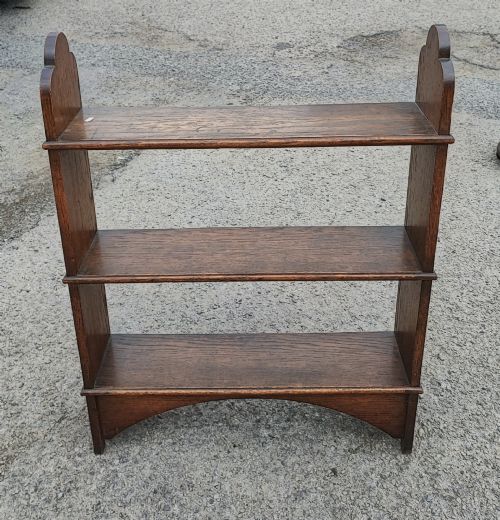
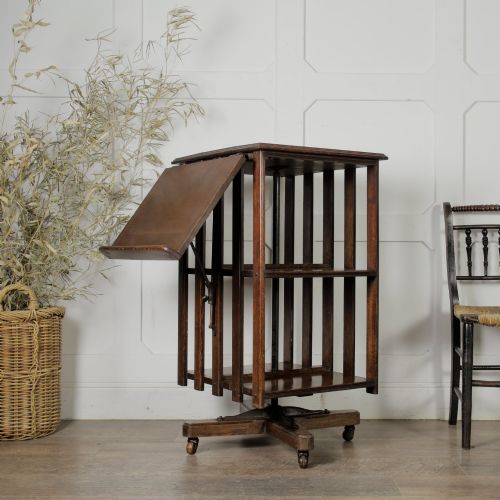
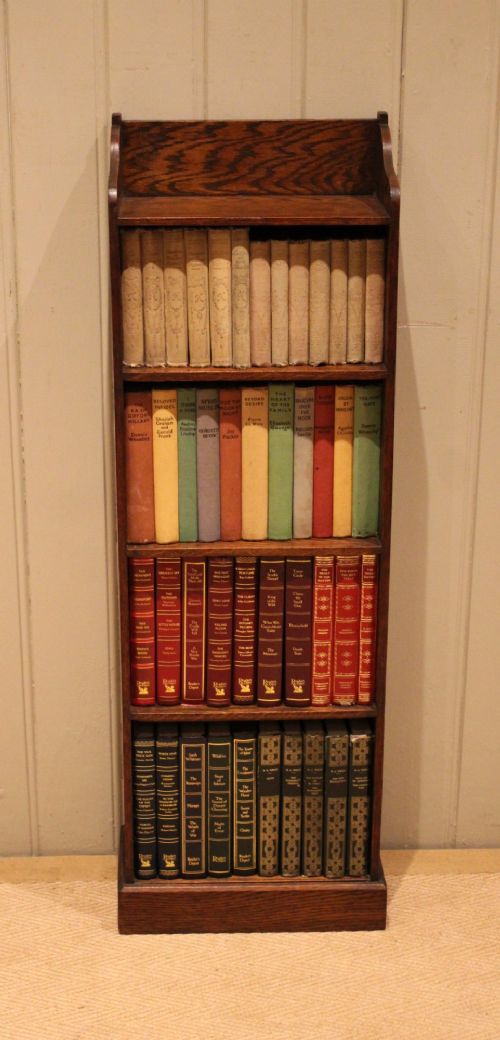
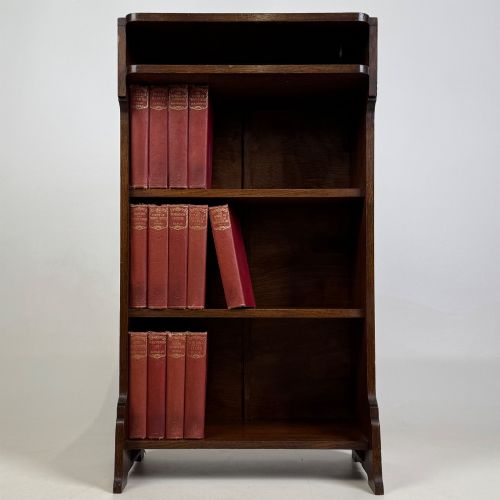
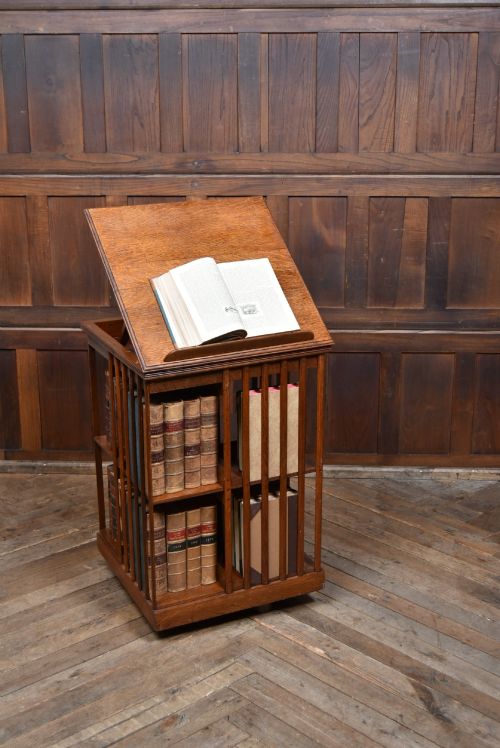
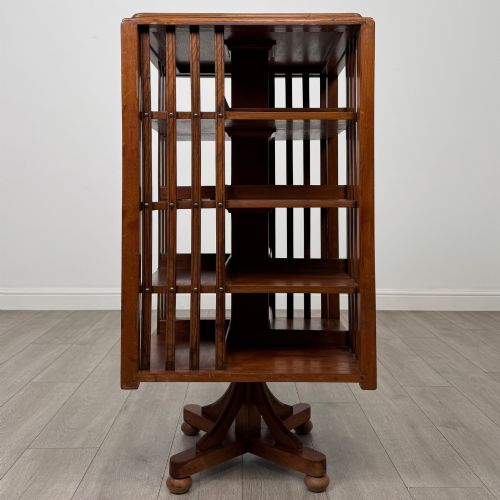
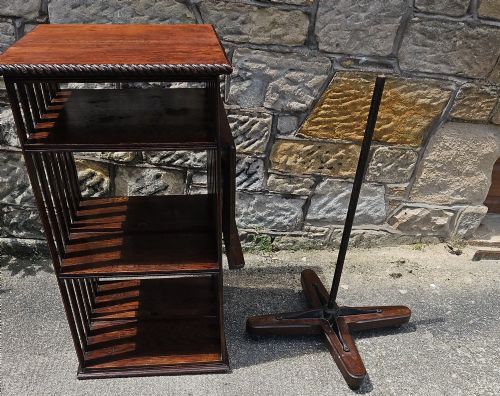
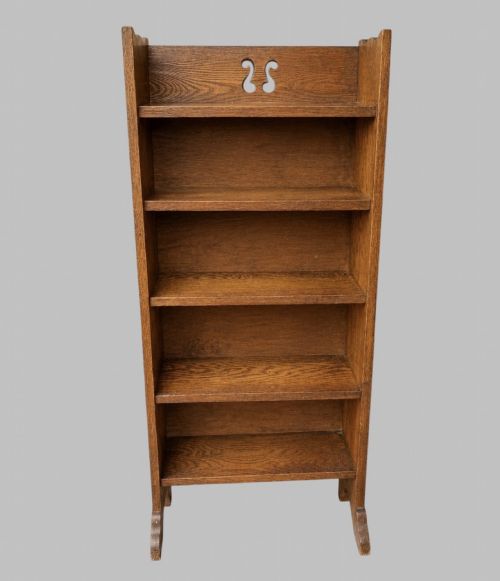
Revolving formats appear frequently among the pieces, designed to sit on tables or stand directly on the floor for easy access to a collection of volumes. Open shelves and waterfall bookcases also feature, utilising solid oak timber across various proportions.
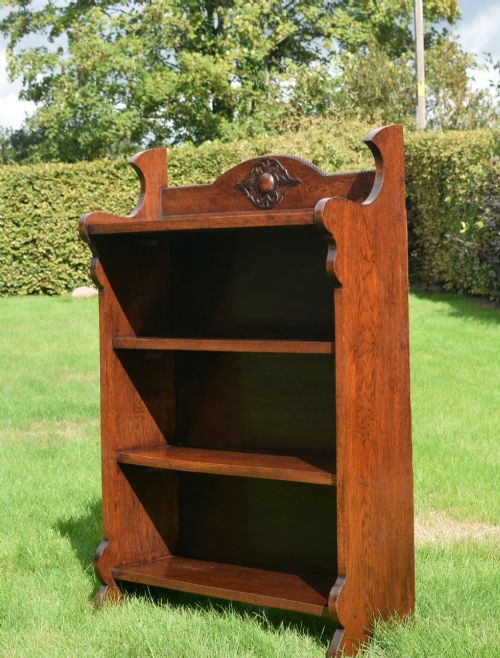
The aesthetic draws heavily on the Edwardian era alongside Arts and Crafts influences, displaying decorative cut-outs, fret-cut panels, and occasional Jacobean Revival details. Makers utilised mahogany and brass hardware alongside the primary timber to construct these functional pieces.
Character and Proportion
Proportion and scale also dictate distinction, ranging from small table-top stands to tall library bookcases. The integration of decorative elements like brass mountings and distinctive cut-outs elevates simpler forms.
The selection spans several periods, including Edwardian, Arts and Crafts, and Jacobean Revival.
The Edwardian Oak Bookstand Glossary
- Revolving Bookcase
- A freestanding or table-top stand fitted with a internal pivot mechanism allowing the cabinet to turn freely. This design grants access to books from multiple angles without moving the furniture.
- Book Slide
- An extending desk accessory fitted with expandable ends to hold a small selection of volumes upright between bookends. It sits neatly on a desk or table surface.
- Waterfall Bookcase
- A set of open shelves where each tier recedes from the one below, creating a stepped profile resembling cascading water. This form maximises top-surface access while keeping a compact footprint.
- Arts and Crafts
- A design movement emphasising hand-craftsmanship, simple structural forms, and honest use of materials. Pieces often feature visible joinery and decorative cut-outs.
Edwardian Oak Bookstand: Frequently Asked Questions
How do I use a revolving bookcase?
Place the stand near a favourite chair or desk where multiple volumes are needed within arm's reach. The rotating mechanism lets you access different compartments simply by turning the unit.
Ensure weight is distributed evenly across the shelves to maintain smooth rotation. Avoid overloading single compartments to protect the central pivot structure.
What is an extending book slide?
An extending book slide sits on a table or desktop to keep a row of reference books upright and tidy. The adjustable span accommodates varying numbers of volumes.
These compact items suit smaller spaces where a full bookcase is impractical. They combine practical wooden framing with brass or metal adjustments.
How do I identify Arts and Crafts features?
Look for distinctive decorative cut-outs, fret-cut panels, and solid golden oak construction. These design elements prioritise honest materials and straightforward craftsmanship over heavy ornamentation.
Such details appear on open shelves and smaller table-top stands from the early twentieth century. They reflect a shift away from elaborate Victorian revival styles.
Where should I place an oak bookstand?
These compact pieces fit well in studies, living rooms, or hallways where floor space is at a premium. Table-top models sit comfortably on sideboards or large desks.
Keep wooden furniture away from direct heat sources and strong sunlight to protect the oak finish. Regular placement in stable indoor conditions preserves the timber.