


Rotating Oak Bookcase
A rotating oak bookcase brings sensible British desk and floor storage into a room, turning smoothly on a hidden mechanism.

Rotating Oak Bookcase
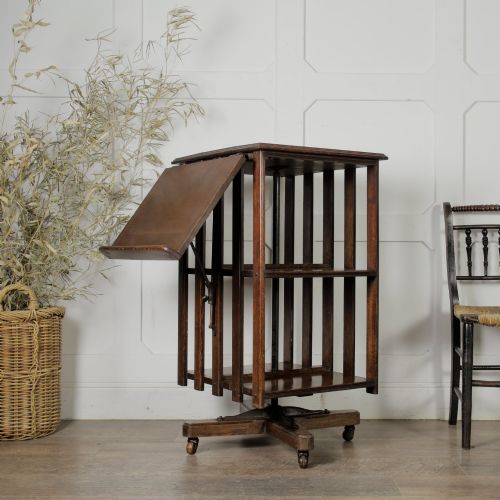
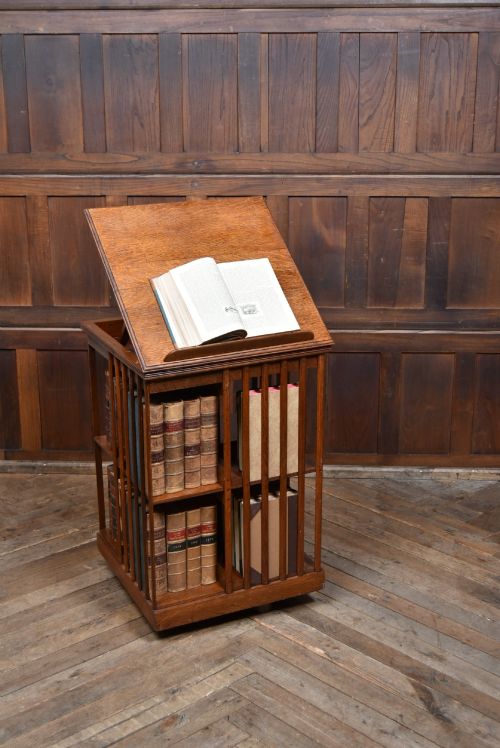
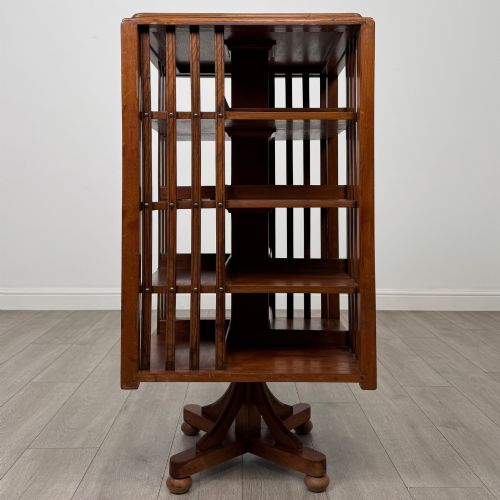
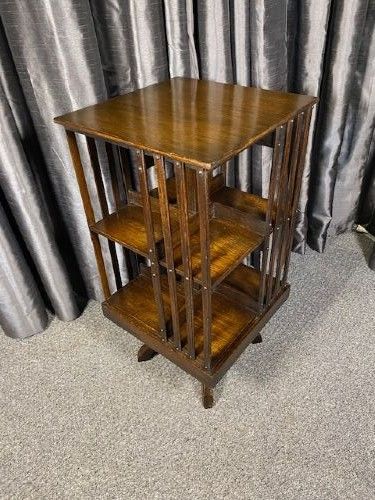
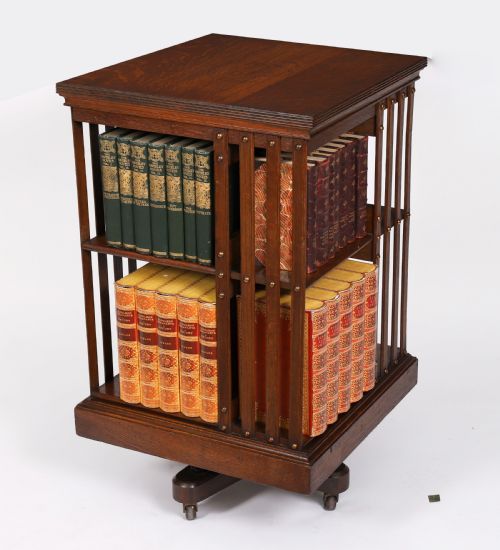
A rotating oak bookcase gives you compact book storage that spins on the spot to bring volumes within arm's reach. You will most frequently meet Edwardian and Victorian floor-standing or table top models built from oak.
The selection ranges from small desktop and table top versions to large and tall floor-standing revolving bookcases. Makers produced these pieces across several decades spanning the late nineteenth and early twentieth centuries, drawing on Arts and Crafts and Art Nouveau styles.
While oak is the dominant timber recorded in the evidence, you will also encounter examples fashioned from mahogany. Forms vary from simple circular tiers to larger shelved structures designed to sit beside a desk or chair.
How these pieces were constructed
Makers utilised solid oak and mahogany timbers for the main frame and shelving, shaping sturdy panels to bear the weight of heavy volumes. Timber selection dictated the grain pattern and overall visual weight of the revolving structure.
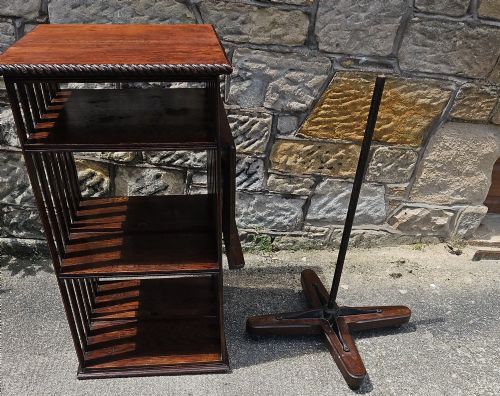
Internal iron and cast iron mechanisms provided the crucial pivot for smooth rotation, often finished with brass fittings. Ceramic components occasionally appeared in the construction of specific fittings or hardware.
Listings span periods from the Victorian era through the Edwardian period up to nineteen thirty, predominantly featuring oak and iron construction.
What separates the standard
The distinction between ordinary and superior pieces rests on the weight of the timber and the engineering of the revolving mechanism. Solid oak construction paired with a well-balanced internal pivot ensures the bookcase turns effortlessly without listing.
Stylistic detailing separates standard production items from those bearing Arts and Crafts or Art Nouveau design characteristics. Subtle points of proportion and timber selection elevate certain examples above utility items.
The Rotating Oak Bookcase Glossary
- Revolving bookcase
- A freestanding or table top bookcase built upon a central pivot that allows the entire unit to turn around. This design maximises storage efficiency in limited spaces.
- Edwardian
- Dating from the reign of King Edward VII, this period favoured lighter furniture designs and simpler forms than the preceding Victorian era. Oak remained a primary material for utilitarian and decorative items alike.
- Arts and Crafts
- A design movement valuing honest construction, visible craftsmanship, and simple materials over industrial ornamentation. Pieces from this style often display straightforward joinery and sturdy oak surfaces.
- Art Nouveau
- A decorative style characterised by sinuous, flowing lines and organic motifs drawn from the natural world. On desk top bookcases, this influence appears in subtle panel carvings or metalwork details.
Rotating Oak Bookcase: Frequently Asked Questions
Where should I place a rotating bookcase?
These pieces suit positions beside a desk, armchair, or in the corner of a study where floor space is limited. Their ability to spin means they function well without needing clearance for doors or drawers.
Ensure there is enough surrounding clearance for the tiers to rotate fully without striking adjacent walls or furniture.
How do I maintain the revolving mechanism?
Keep the internal pivot clean of dust and debris to ensure the bookcase continues to spin without friction. Periodic inspection of the central bearing keeps the movement smooth.
Apply a light lubricant to the metal components only if recommended for the specific iron or brass pivot type.
Can these bookcases hold heavy books?
Solid oak and mahogany models were built to support substantial volumes of literature without sagging. Distributing heavier encyclopaedias or reference books across the lower tiers helps maintain stability.
Avoid overloading the top shelves of tall or table top versions to keep the centre of gravity low during rotation.
What is the difference between table top and floor models?
Table top versions sit directly upon a desk or surface to keep working reference books close at hand. Floor-standing variants are taller structures designed to stand independently on the floor.
Both types utilise the same central rotating principle, differing primarily in scale and placement within a room.