



Edwardian Novelty Pincushion
These edwardian novelty pincushion pieces combine whimsical figural silver work with practical function, offering charm for the desk or dressing table.
Edwardian Novelty Pincushion
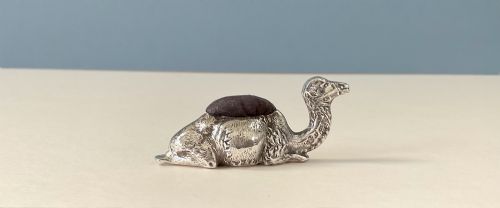
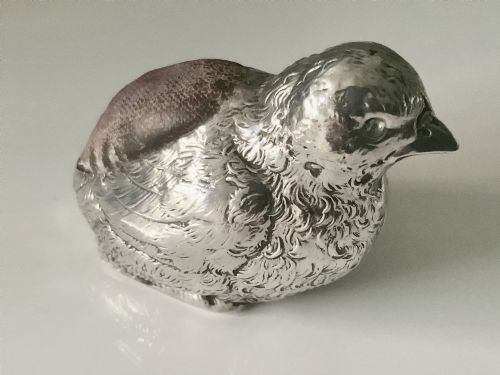
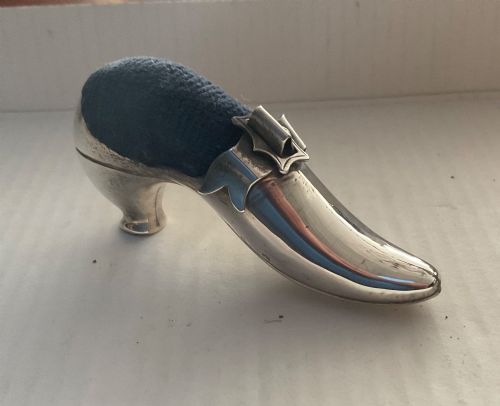
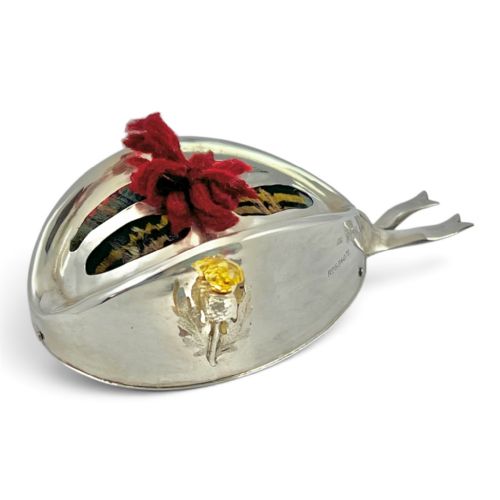
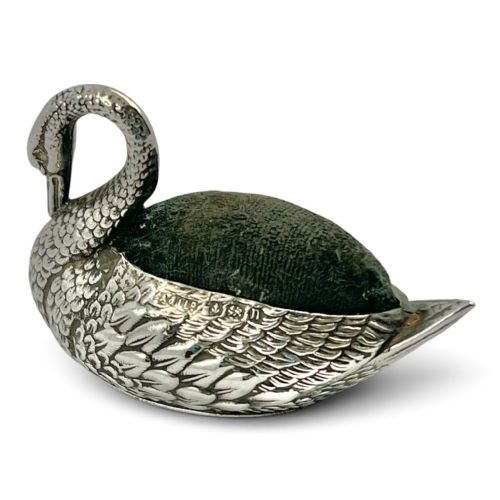
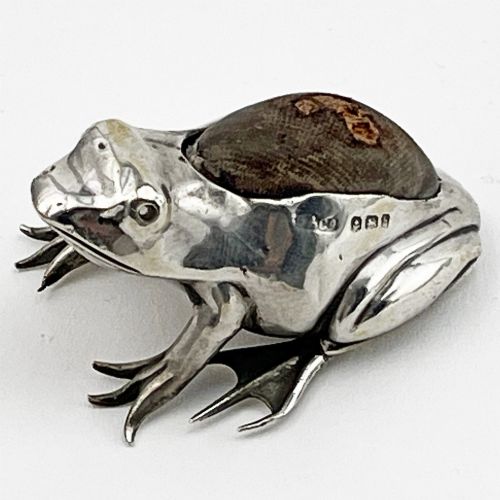
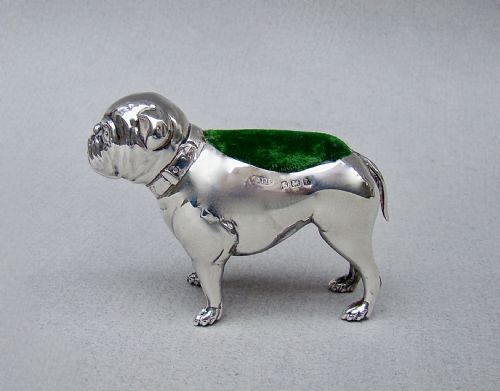
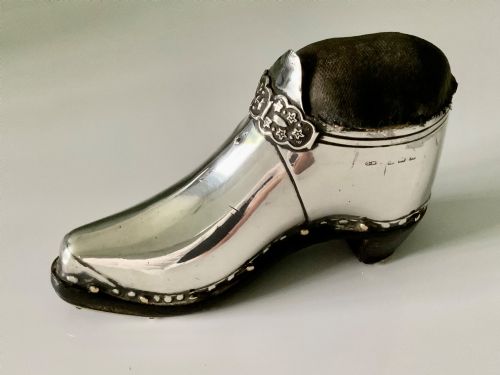
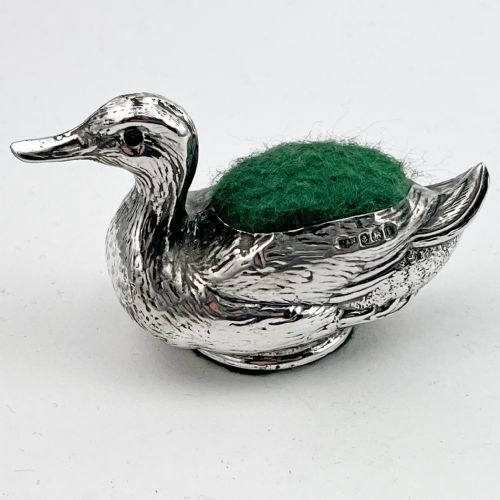
An edwardian novelty pincushion takes the form of animals, birds, footwear, and household objects fashioned in silver. These miniature sculptures serve as desktop or dressing table accessories holding pins in their fabric inserts.
The pieces on this page lean heavily towards the Edwardian period, supplemented by Victorian examples and later 20th century items. Common animal forms include pigs, birds, ducks, and swans, alongside items like shoes, boots, and canoes.
Makers designed these small objects to appeal to the Victorian and Edwardian taste for playful desk ornaments. Each piece uses a fabric or velvet pad tucked firmly into the silver body.
How they were made
Silversmiths constructed the bodies of an edwardian novelty pincushion from sterling silver or silver plate, often shaping them through casting or stamping. Makers then fitted coloured velvet, felt, wool, or fabric inserts into the hollow silver mounts to receive pins.
Listings feature sterling silver combined with velvet, wool, and silk fabric across Edwardian and Victorian forms.
What varies in quality
The integration between the metal body and the textile insert also dictates overall standard. Original fabric pads that sit flush within chased silver mounts represent superior assembly compared to later replacements.
Adie & Lovekin·Sampson Mordan & Co.
The Edwardian Novelty Pincushion Glossary
- Hallmark
- Official stamp applied to silver items indicating the assay office, metal standard, and date letter. These marks confirm the period and origin of silver objects.
- Chasing
- A metalworking technique where the silversmith punches and hammers patterns onto the front surface of the metal. This method creates texture and fine details on figural silver.
- Sterling silver
- An alloy consisting of silver and other metals, usually copper, maintaining a purity standard. Most British items from this era bear the lion passant mark for this standard.
- Vienna bronze
- Cold-painted bronze sculptures produced in Austrian foundries during the late 19th and early 20th centuries. These pieces often feature realistic polychrome painted finishes.
Edwardian Novelty Pincushion: Frequently Asked Questions
What were novelty pincushions used for?
Victorians and Edwardians kept these small silver items on dressing tables, writing desks, or sewing stations to hold straight pins close at hand. They functioned as both practical sewing tools and decorative ornaments.
Craftsmen designed them in amusing shapes to provide a touch of humour and elegance to daily domestic life.
Are the pincushion inserts original?
Many surviving pieces retain their original velvet, felt, or wool pads, though frequent use often required owners to replace the worn fabric over the decades. Inspecting how the textile meets the silver rim helps determine if the material is period-correct.
Original inserts usually show uniform fading and wear that matches the age of the silver mount.
Which animal shapes are most common?
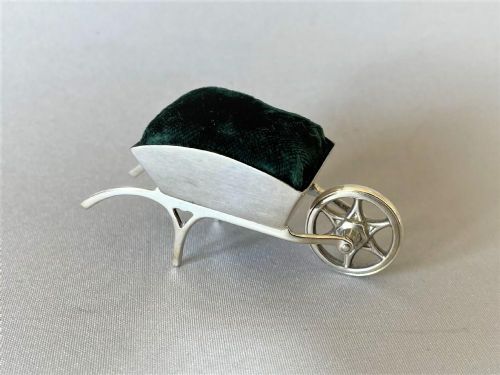
Pigs, swans, ducks, and various birds appear frequently among the surviving inventory, reflecting popular Edwardian tastes in miniature silver work. Less common forms include frogs, elephants, and whimsical objects like wheelbarrows or boots.
Figural representations of domestic and wild animals formed the core output for specialty silversmiths.