



Edwardian Needlepoint Seat
When you search for edwardian needlepoint seat, you encounter upholstered chairs and stools featuring stitched textiles from several historical periods.
Edwardian Needlepoint Seat
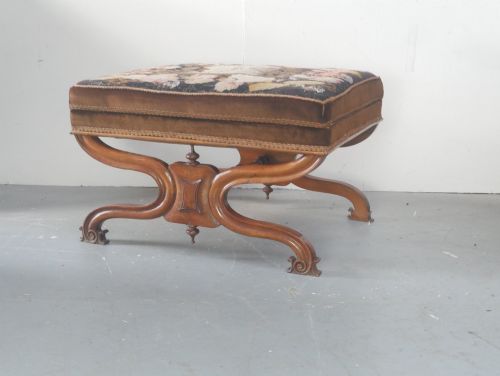
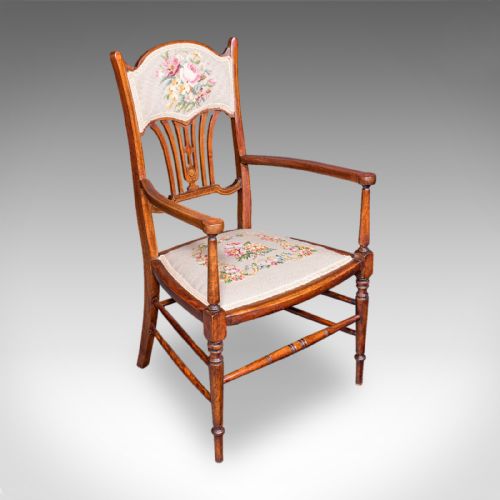
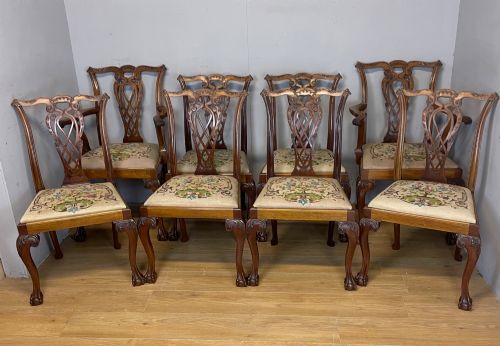
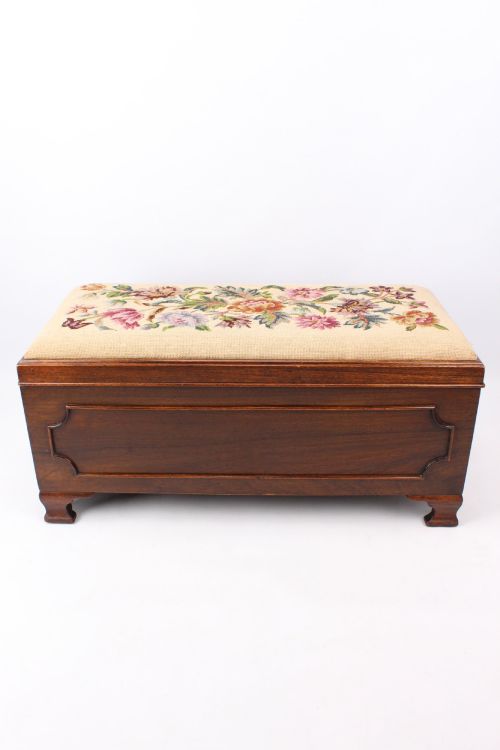
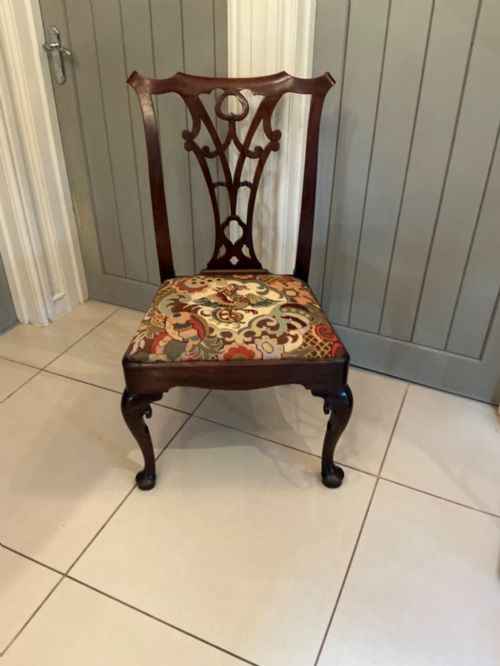
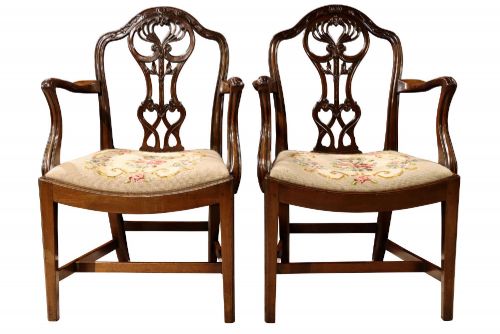
An edwardian needlepoint seat encompasses various forms such as armchairs, side chairs, piano stools, nursing chairs, and ottomans. These pieces combine wooden frames with stitched textile coverings executed in wool and tapestry.
While the search targets the Edwardian era, the listings include examples spanning from the eighteenth century through the Victorian period, 1900, 1910, and 1920. Side chairs and armchairs constructed from mahogany, walnut, and beech appear frequently among these forms.
Materials and construction
Frames are built primarily from timbers such as mahogany, walnut, beech, rosewood, and oak, often shaped into revival styles including Chippendale, Queen Anne, and Georgian. Joinery techniques secure the wooden skeletons of side chairs, armchairs, and stools.
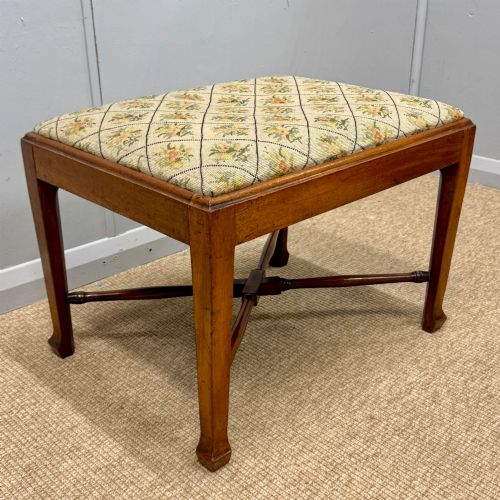
Upholstery relies on textiles, wool, tapestry, and hand-stitched needlepoint secured over the seat platforms. Decorative elements include marquetry inlay, carved details, and cross stretchers.
Object types range from dining chairs and armchairs to piano stools, nursing chairs, ottomans, window seats, and hall chairs.
Distinctions in execution
The refinement of the carved wooden frames and the precision of the joinery set higher grades apart from simpler pieces. Woods like figured mahogany and walnut display greater depth than standard beech or plain timbers.
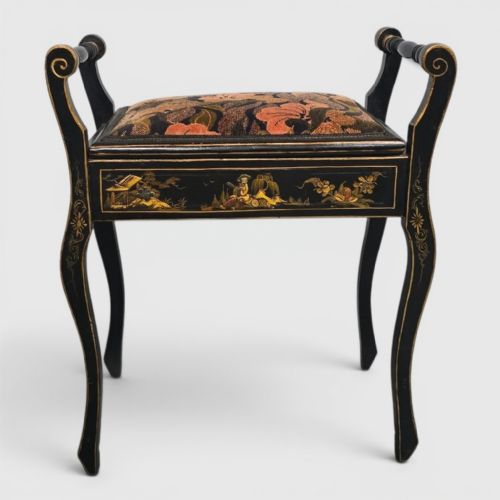
The density and intricacy of the wool and tapestry needlepoint work define the upper tier of textile execution. Well-preserved upholstery and deliberate stylistic adherence, such as Chinoiserie or Arts and Crafts motifs, distinguish superior examples.
Charles Tozer·Warings·Liberty and Co·Jas Shoolbred
The Edwardian Needlepoint Seat Glossary
- Needlepoint
- A type of counted thread embroidery stitched over a stiff canvas mesh. It forms the durable patterned surface seen on many chair and stool seats.
- Tapisserie
- A textile worked in wool and other threads to create pictorial or geometric designs. It covers the frames of various antique seats and ottomans.
- Cabriole leg
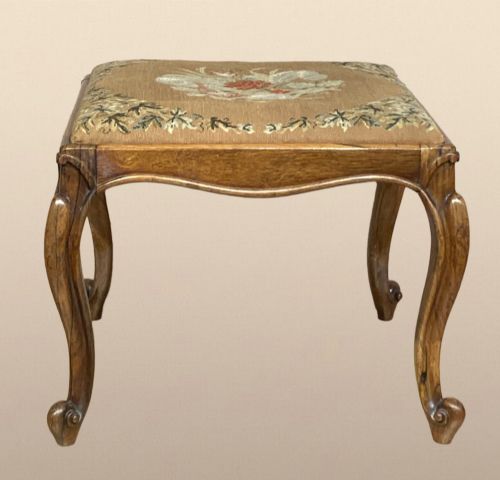
- A furniture leg that curves outward at the knee and tapers inward at the ankle. It appears on Victorian rosewood dressing stools and other period seating.
- Cross stretcher
- Wooden bars connecting the lower legs of a chair or stool for stability. They are found on dressing table stools and dining chairs.
- Lyre-back
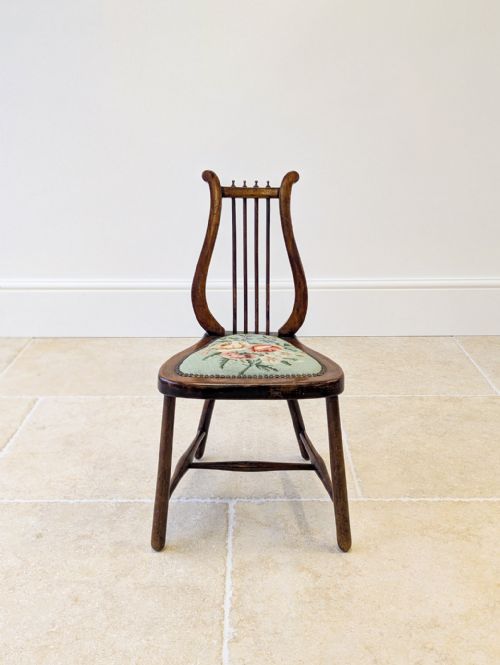
- A chair backrest shaped in the contour of a musical lyre. This form appears on Edwardian beech side chairs.
Edwardian Needlepoint Seat: Frequently Asked Questions
What periods do these seats come from?
The listings span multiple eras, including the eighteenth century, the Victorian period, the Edwardian years, and into the early twentieth century. Styles often reflect earlier revivals such as Chippendale, Queen Anne, and George II.
Makers and cabinetmakers working across these decades adapted traditional forms while retaining period characteristics in their timber frames and textile upholstery.
How are piano stools different from standard chairs?
Piano stools are specifically designed for keyboard players, often featuring revolving tops, storage compartments, or upholstered needlepoint seats adjusted for height. They include tripod bases or rectangular frames with cross stretchers.
Unlike dining or salon chairs, their primary function required stability and ease of movement during musical performance.
Where were these pieces used originally?
These seats served various domestic spaces such as morning rooms, dressing rooms, bedrooms, and drawing rooms. Smaller stools and side chairs functioned as flexible seating options.
Larger armchairs and dining sets were positioned in formal reception rooms and dining halls, matched to the interior decor of the period.
What woods are commonly found?
Mahogany and walnut predominate among the higher-grade frames, frequently displaying rich grain patterns and polished finishes. Beech and oak also appear, particularly in Arts and Crafts pieces and utility seating.
Rosewood is utilised on specific Victorian stools and corner chairs, sometimes enhanced with marquetry inlay.