

Edwardian Music Stand Cabinet
An edwardian music stand cabinet keeps sheet scores neat in a parlour, offering dedicated upright storage that collectors prize for compact domestic utility.
Edwardian Music Stand Cabinet
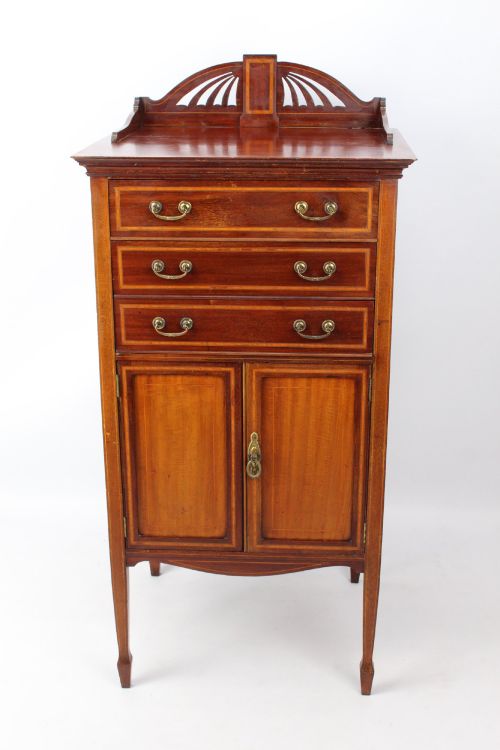
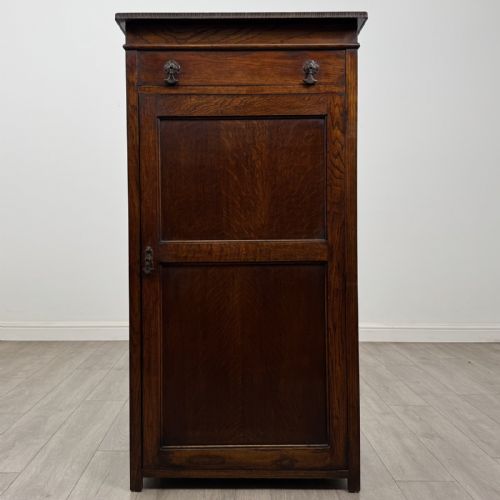
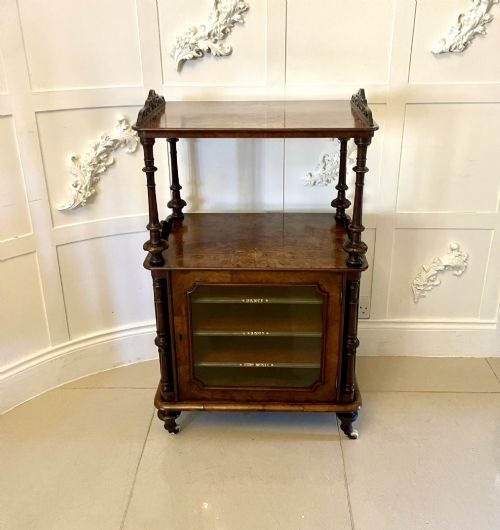
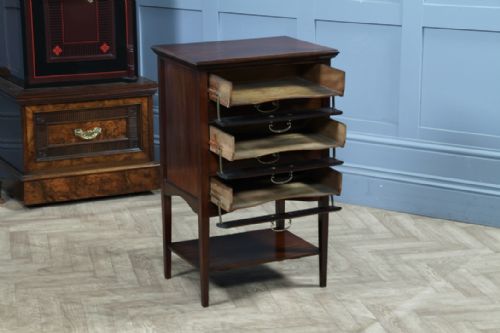
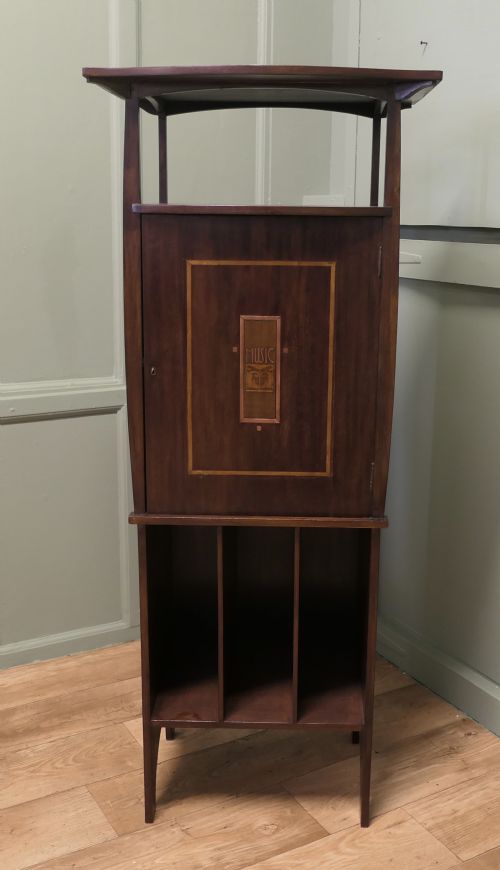
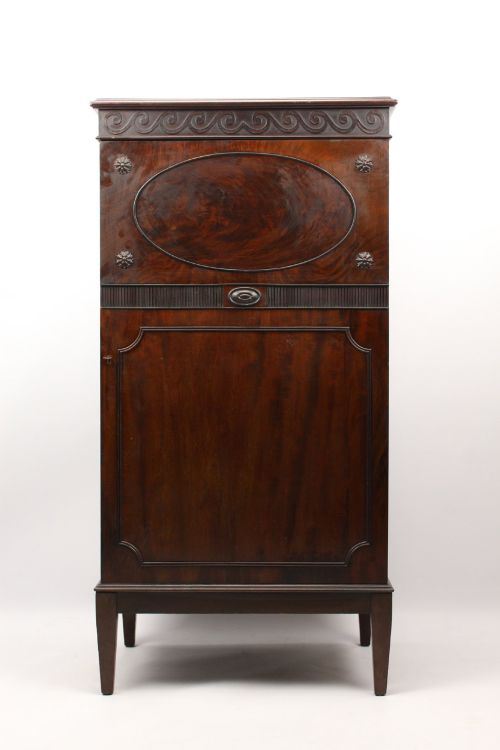
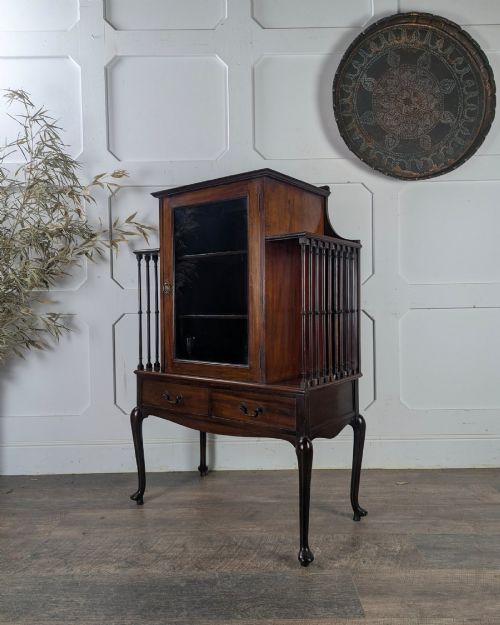
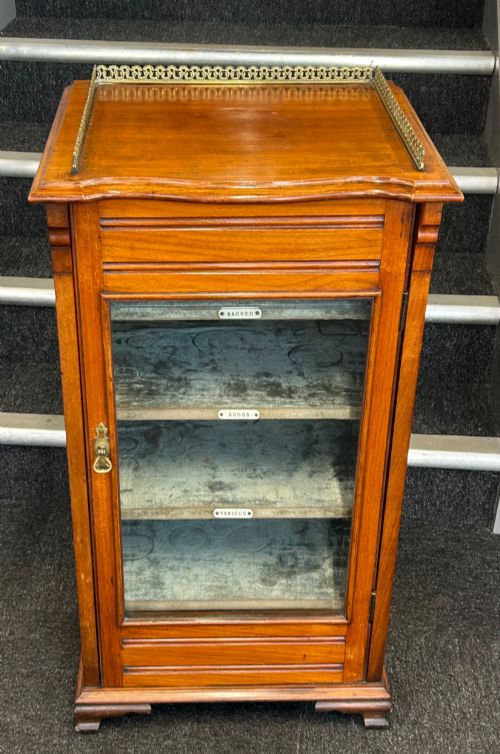
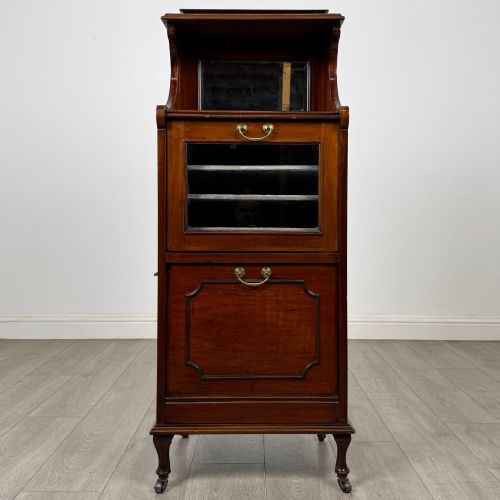
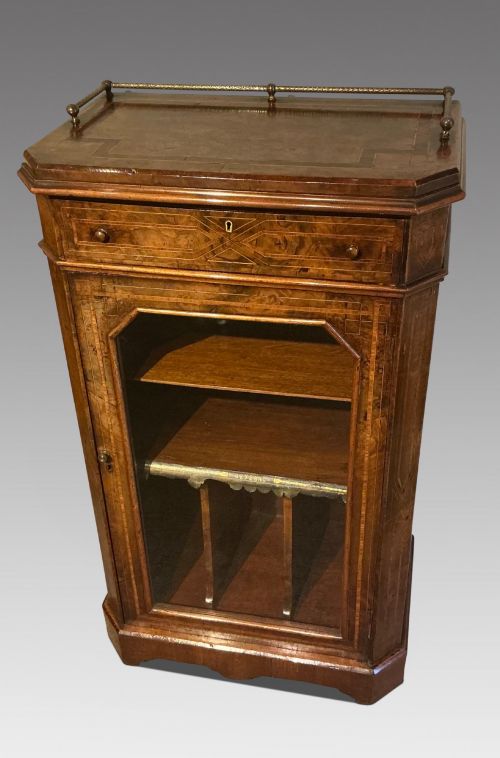
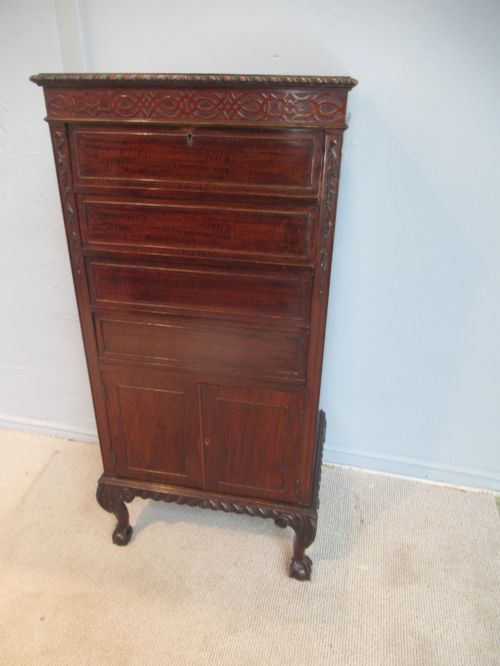
An edwardian music stand cabinet is typically encountered as a tall, upright case designed specifically for holding sheet music, folios, and scores in a domestic setting. These pieces frequently appear in mahogany, walnut, and burr walnut, often featuring drop-front drawers or internal shelving behind a single glazed or panelled door.
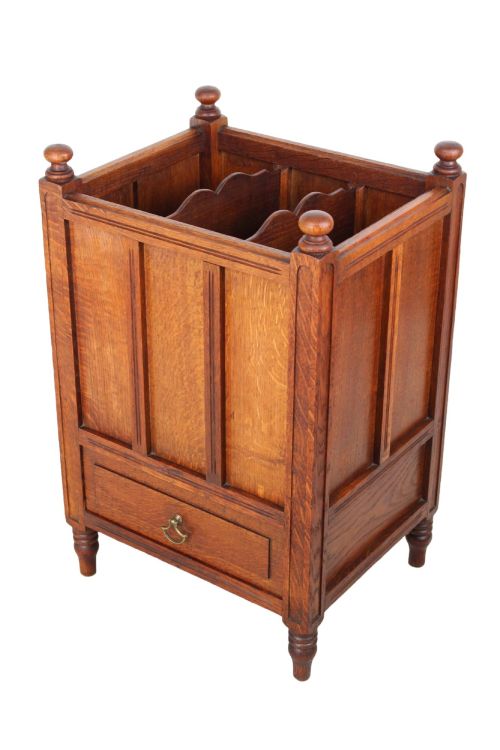
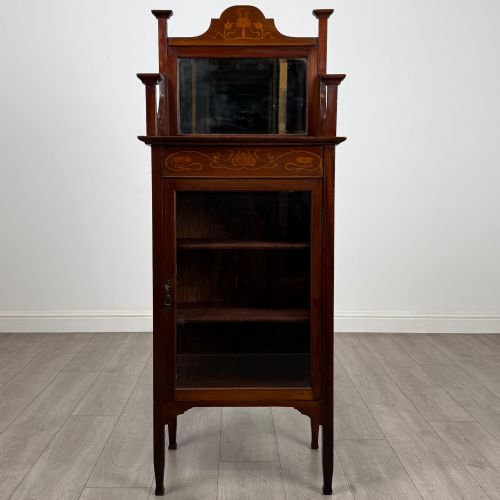
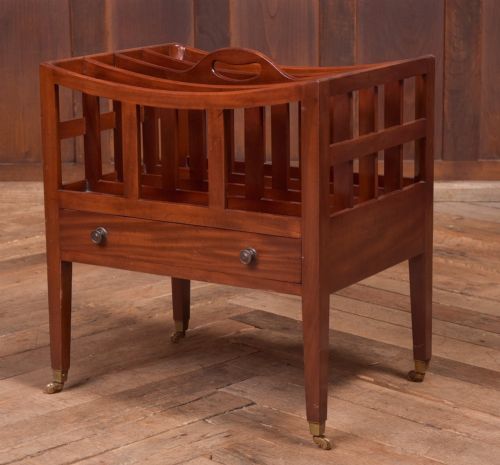
The selection here encompasses variations ranging from simple Edwardian and Victorian canterburys to more decorative Arts and Crafts and Art Nouveau forms. Makers adapted the essential music storage concept into several related formats, including side cabinets, display cases, and multi-functional filing units with lift-up lids.
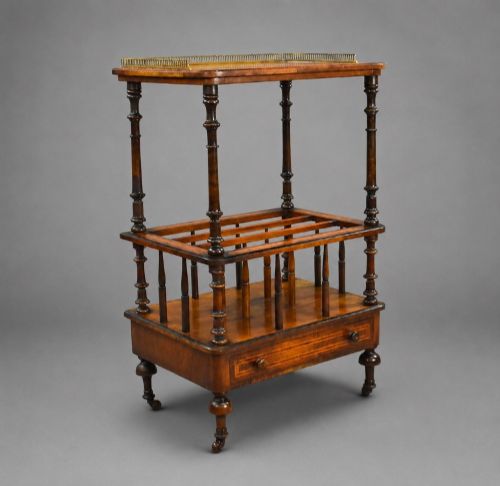
Originating predominantly from the late nineteenth and early twentieth centuries, these cabinets reflect the musical pursuits of period parlours. Buyers will find both standard drop-front drawer configurations and open rack canterburys designed to keep scores accessible to the pianist.
Materials and construction
Cabinetmakers relied heavily on mahogany, oak, and walnut, frequently applying burr walnut or satinwood veneers to create richly figured exterior surfaces on the main body. Inlaid stringing in contrasting timbers often accents the door panels and top surfaces, characteristic of the Edwardian period preference for refined surface detail.
Functional hardware such as brass handles, hinges, and occasional glass panels define the apertures of these pieces. Drop-front drawers utilise internal partitions to prevent sheet music from curling, while specialised canterburys incorporate vertical dividers for upright folio storage.
Some cabinets hid their sheet music behind drop-fronts so well that dinner guests might mistake them for ordinary writing desks.
Judging cabinet quality
Quality in these pieces is dictated by the selection of timbers and the precision of the cabinetmaker's joinery, particularly in the construction of drop-front drawer mechanisms. Superior examples display carefully matched burr veneers and crisp inlay work rather than painted substitutes.
The integrity of the internal divisions and the smoothness of the drawer action separate standard utility items from finer workshop productions. Better examples retain original brass fittings, intact glass, and stable structural frames without excessive timber shrinkage.
GM Elwood for JS Henry·Denby & Spinks·U Phone of Leeds
The Edwardian Music Stand Cabinet Glossary
- Drop-front
- A drawer or compartment front hinged at the bottom that folds outward to provide immediate access to sheet music stored within. This mechanism keeps scores flat and protected from bending.
- Canterbury
- A low stand or cabinet featuring vertical partitions designed for holding sheet music, folios, or periodicals. Originating in the late eighteenth century, the form remained popular through the Victorian and Edwardian eras.
- Inlay
- A technique where pieces of contrasting wood, such as satinwood or boxwood, are fitted into recesses in the primary timber surface to create decorative patterns. It defines much of the cabinetwork from this period.
- Burr walnut
- Timber taken from the gnarled growth of a walnut tree, yielding a swirling, highly figured grain pattern. Cabinetmakers prized it for veneering prominent exterior surfaces.
- Stringing
- Thin, narrow strips of contrasting wood inlaid into channels cut into the furniture surface. It provides a delicate border around drawer fronts and tabletops.
Edwardian Music Stand Cabinet: Frequently Asked Questions
What is an edwardian music stand cabinet used for?
These cabinets were originally manufactured to house sheet music, scores, and songbooks neatly beside a piano or in a formal parlour.
Today, buyers utilise them for storing art supplies, correspondence, or modern media while retaining period character in a living space.
How do I tell an Edwardian piece from a Victorian one?
Edwardian cabinets generally exhibit lighter timbers, simpler rectilinear forms, and subtle satinwood inlay work reflecting a shift toward airier interior aesthetics.
Victorian counterparts tend to be heavier in proportion, frequently employing dark burr walnut, heavier carved details, and more robust plinth bases.
Will standard sheet music fit inside?
Most Edwardian music cabinets feature internal dimensions specifically calculated for standard nineteenth-century folio sizes and music sheets.
Drop-front drawers are shallow by design to prevent scores from sliding over one another, though modern oversized scores may require careful placement.
Where should I place a music cabinet at home?
Their compact, upright footprints make these cabinets well suited for hallways, studies, or beside seating areas where floor space is limited.
Avoid positioning them in direct sunlight or beside active heat sources to protect the delicate veneer and timber joints from drying out.