
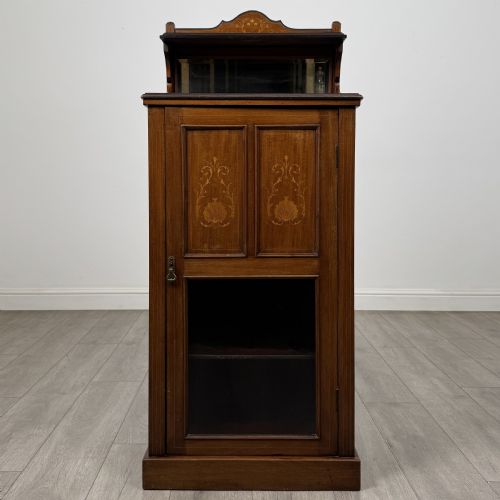
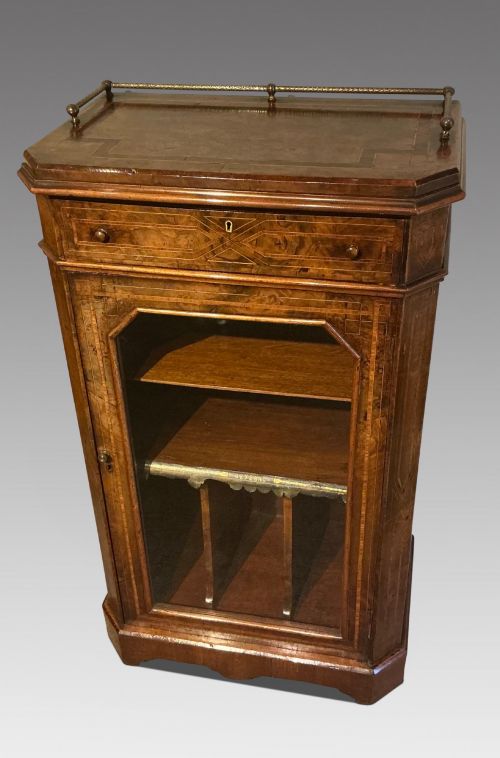


Inlaid Sheet Music Chest
These inlaid sheet music chests are tidy cabinets designed to store scores, offering polished Edwardian and Victorian woodwork.
Inlaid Sheet Music Chest
When you search for an inlaid sheet music chest, you are looking at specialised storage furniture created to keep sheet music organised. The examples meeting this description span the Victorian and Edwardian periods up to the nineteen thirties, with Edwardian mahogany pieces appearing most frequently alongside Victorian walnut and rosewood variants.
These forms range from tall four-drawer cabinets to side cabinets and glazed music sheet cases. Most specimens serve to hold documents or specimen collections today just as they once stored scores in a Victorian parlour.
How they were made
Cabinet makers constructed these pieces primarily using solid timbers and veneers of mahogany, walnut, and rosewood. Burr walnut and burr yew wood frequently provide striking grain patterns across the primary surfaces.
Decoration relies on intricate satinwood inlay and marquetry details set directly into the wood. Brass hardware completes the construction, appearing on handles, hinges, and occasional glass-fronted door mountings.
Listings span the Victorian and Edwardian eras into the nineteen thirties, utilising mahogany, walnut, rosewood, and satinwood inlay.
What varies in quality
The standard of an inlaid sheet music chest is determined by the precision of its marquetry and the choice of timber figure. Finer pieces display crisp satinwood inlay and rich burr walnut veneers rather than plain secondary woods.
Construction details such as dovetailed drawer boxes and substantial brass furniture distinguish superior cabinets from simpler utilitarian versions.
Keeble London
The Inlaid Sheet Music Chest Glossary
- Marquetry
- Decorative patterns formed by fitting together thin slices of wood veneer into a design. This technique defines the ornamentation on many Victorian music cabinets.
- Satinwood inlay
- Contrasting pale timber inserted into a darker primary wood to create geometric or floral borders. It provides the characteristic brightness seen on Edwardian examples.
- Burr walnut
- Wood taken from a growth on a walnut tree featuring swirling, knotted grain patterns. It is prized for its decorative appearance on cabinet doors.
- Music cabinet
- A specialised piece of furniture fitted with shallow drawers or internal shelves designed to hold sheet music. These often feature drop-front drawers or glazed doors.
Inlaid Sheet Music Chest: Frequently Asked Questions
What are inlaid sheet music chests?
These are specialised small cabinets built to hold sheet music and scores, featuring multiple shallow drawers or internal compartments.
They emerged strongly during the Victorian and Edwardian eras, constructed in woods like mahogany, walnut, and rosewood with decorative inlay.
How were these chests used?
Musicians used them beside pianos to keep sheet music organised, flat, and protected from dust and damage.
Today, the shallow drawers make them suitable for storing documents, art prints, or small collections in a modern home.
How do I date a music cabinet?
Dating relies on timber choices, construction methods, and decorative styles such as Edwardian satinwood inlay or Victorian burr walnut.
Earlier pieces from the eighteen seventies tend to feature heavy rosewood or walnut, while nineteen hundreds examples favour lighter mahogany.
Where should I place one?
Their compact footprint allows them to fit easily into living rooms, hallways, or studies as accent storage.
They work well beside seating areas or desks where their shallow drawers can hold everyday papers and items.