


Mahogany Record Storage Cabinet
A mahogany record storage cabinet is a practical piece designed to protect music collections while adding traditional warmth to a room.
Mahogany Record Storage Cabinet
A mahogany record storage cabinet combines functional organisation with the rich timber tones characteristic of early twentieth century furniture. Buyers seeking a mahogany record storage cabinet will find that most examples originate from the Edwardian period or the decades immediately following.
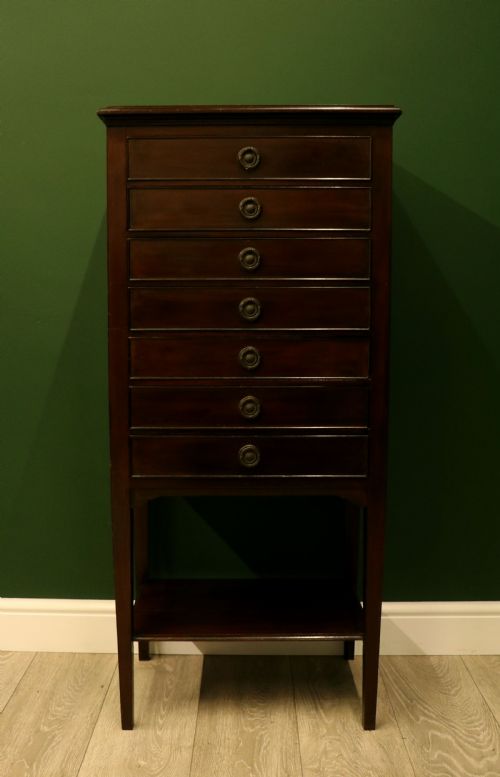
These items frequently appear under descriptions such as music cabinets or record cabinets, reflecting their original purpose of holding sheet music. The prevailing forms follow Edwardian and Sheraton Revival aesthetics, alongside occasional Art Deco variations.
Construction dates span from the late nineteenth century through to nineteen thirty, encompassing both Edwardian pieces and later iterations adapted for modern formats.
How they were made
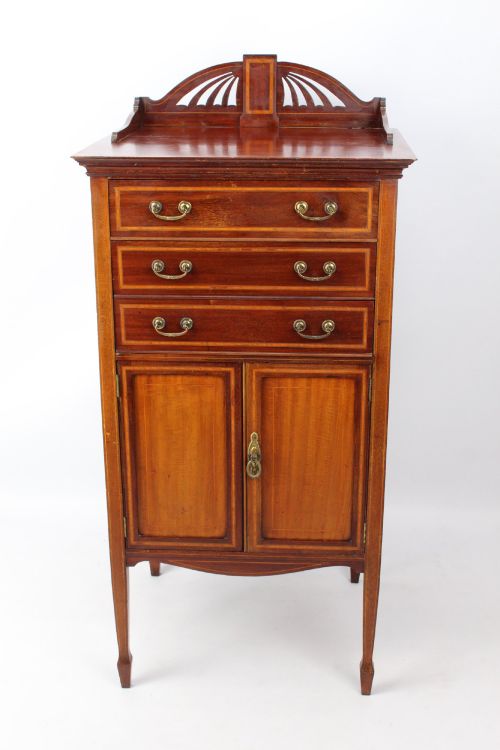
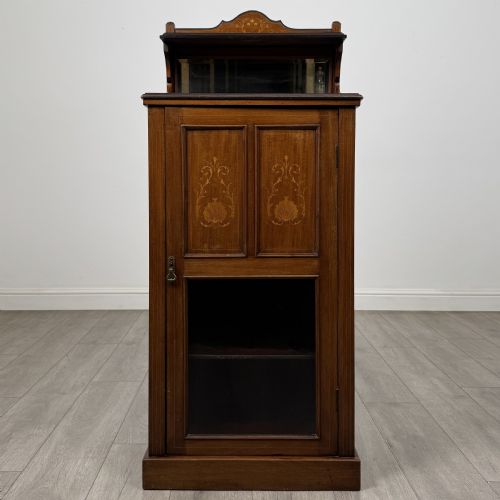
Cabinet makers utilised solid mahogany and mahogany veneers, often incorporating decorative elements such as satinwood and boxwood inlay to define panel borders and drawer fronts. Structural hardware relies on brass fittings, while internal components occasionally feature glass or mirrored sections.
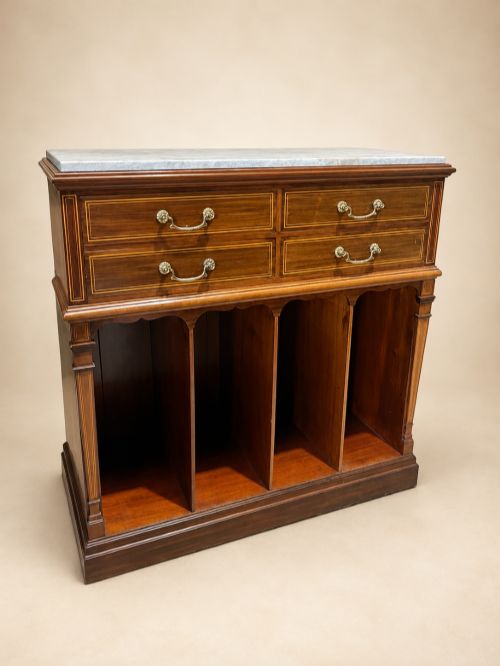
Surviving examples demonstrate traditional cabinet-making joins and polished timber surfaces, sometimes incorporating raised galleries on the top surface. Selected pieces integrate marble details or specialised internal shelving suited to holding paper and discs.
Some Edwardian models include tiny internal partitions originally designed to keep individual waltzes from sliding into a disorderly heap.
What varies in quality
The standard of a mahogany record storage cabinet rests upon the crispness of its satinwood and boxwood inlay work and the depth of the timber grain. Finer examples display precise geometric stringing and carefully selected veneer matching across the doors and drawers.
Construction integrity distinguishes workshop output, particularly in the movement of doors and the retention of original brass hardware. Pieces featuring raised galleries or decorative timber borders demonstrate higher ambition in design than plain utility boxes.
The Mahogany Record Storage Cabinet Glossary
- Mahogany
- A durable tropical hardwood known for a reddish-brown colour and fine grain that takes a high polish. It forms the primary structural material for these storage pieces.
- Inlay
- A decorative technique where contrasting materials such as satinwood or boxwood are inserted into recesses in the mahogany surface. This method creates geometric borders and floral motifs.
- Raised gallery
- A low decorative railing positioned around the top edge of a cabinet to prevent items from sliding off. This feature is common on Edwardian pieces.
- Edwardian
- A period spanning from nineteen hundred to nineteen ten characterised by lighter, more refined furniture designs often reviving eighteenth-century Sheraton styles.
Mahogany Record Storage Cabinet: Frequently Asked Questions
What were these cabinets originally used for?
These pieces were built primarily to organise and store sheet music, scores, and early sound recordings within the home. Their internal shelving and drawers kept delicate paper collections flat and protected from dust.
Over time, owners adapted the internal spaces to hold vinyl LPs and other modern physical media while retaining the exterior appearance of traditional parlour furniture.
How do I date an Edwardian music cabinet?
Dating relies on stylistic markers such as tapered legs, delicate string inlay, and the specific proportions favoured during the early twentieth century. Edwardian pieces often display Sheraton Revival influences with light-coloured wood contrasts on dark mahogany.
Construction methods also provide clues, as machine-cut components began to supplement hand joinery around nineteen hundred, marking the transition from Victorian heavy manufacturing.
Can these cabinets hold modern vinyl records?
Many music cabinets feature dimensions and internal shelving depths well suited to accommodating standard LP records and sleeves. Buyers should check internal measurements carefully, as older compartments were originally sized for sheet music portfolios rather than twelve-inch vinyl.
Adjusting or removing internal dividers is sometimes necessary to fit larger collections safely inside the older wooden housing.
How should I care for mahogany furniture?
Maintenance involves keeping the timber away from direct heat sources and strong sunlight to prevent the mahogany finish from fading or drying out. Regular dusting with a soft, dry cloth preserves the polished surface without the need for heavy silicone sprays.
Applying a traditional beeswax polish occasionally helps nourish the wood grain and maintain the rich colour developed over the decades.