

Edwardian Music Cupboard
An edwardian music cupboard provides dedicated storage for sheet music and scores, combining practical interior shelving with refined period timber work.
Edwardian Music Cupboard
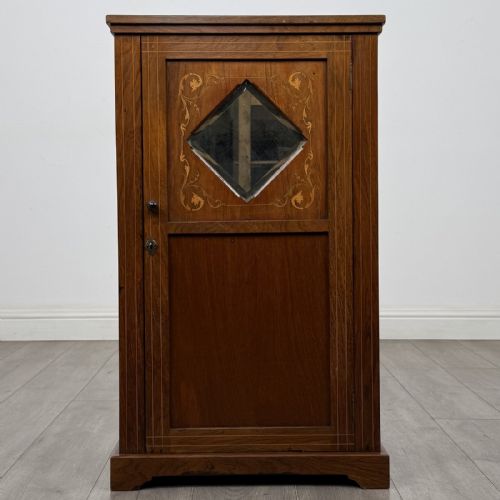
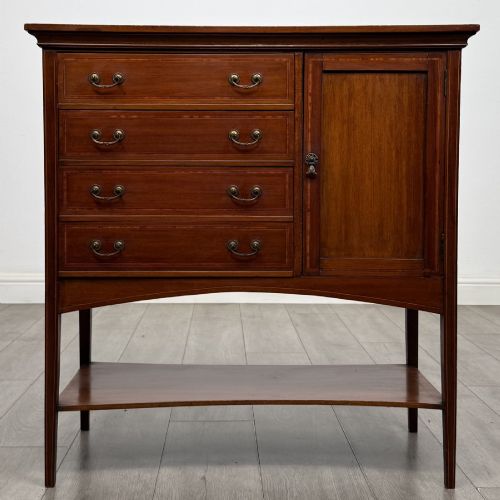
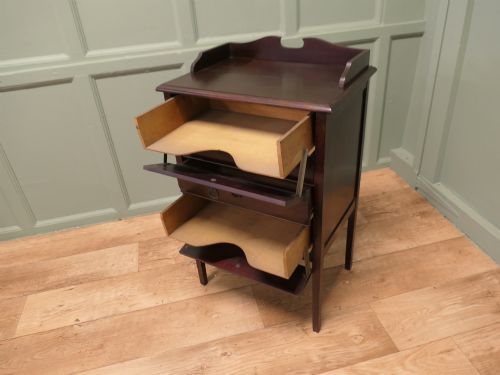
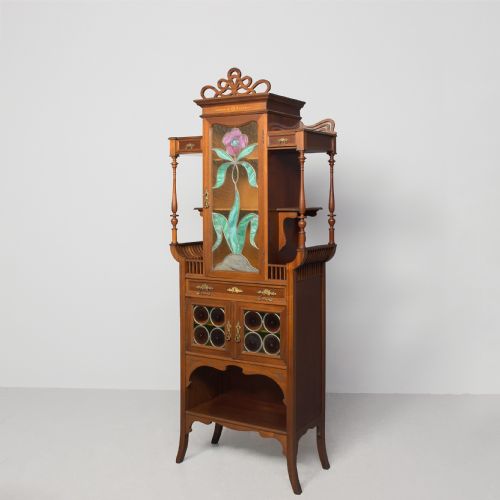
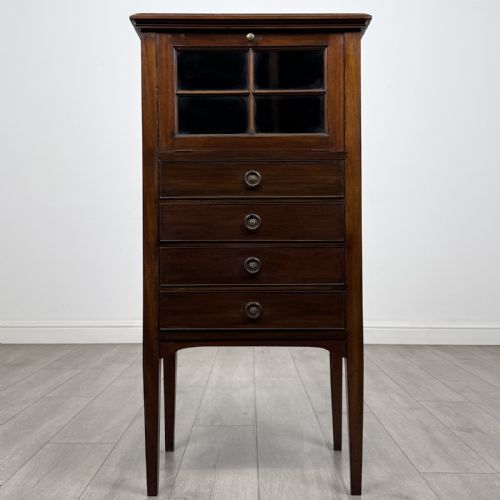
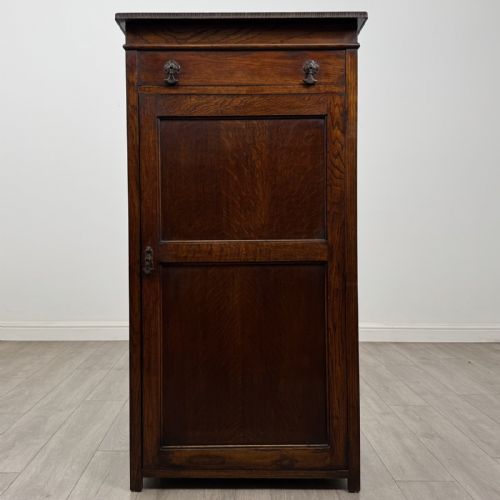
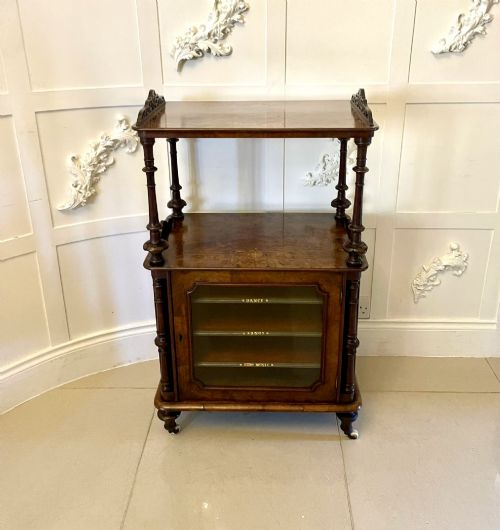
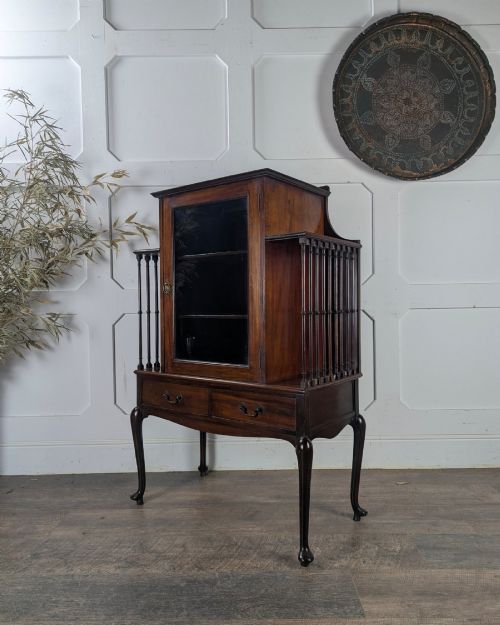
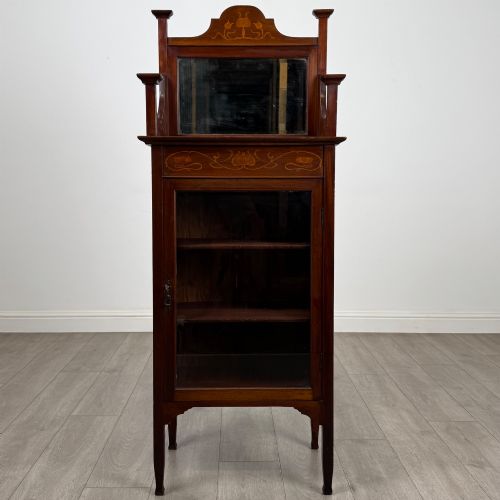
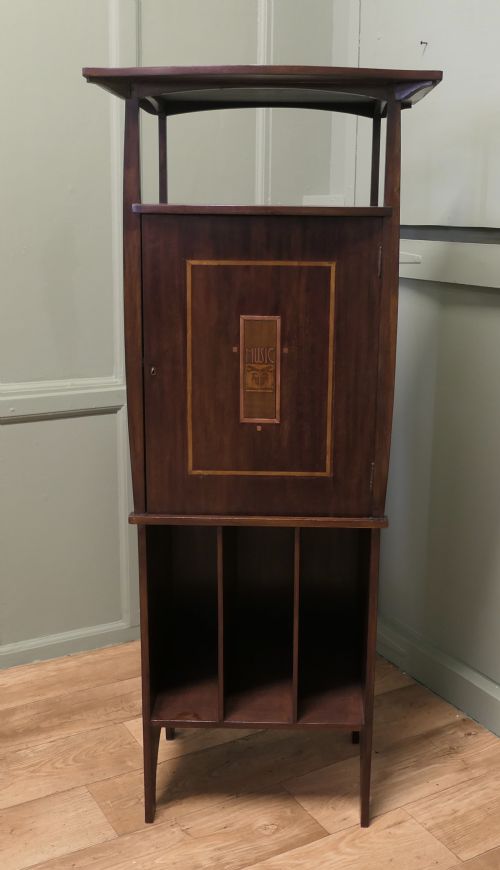
An edwardian music cupboard is a specialised piece of furniture designed to house sheet music, scores, and folios. These cabinets appear most frequently in mahogany, walnut, and rosewood, often featuring specialised internal drop-front drawers or vertical filing partitions.
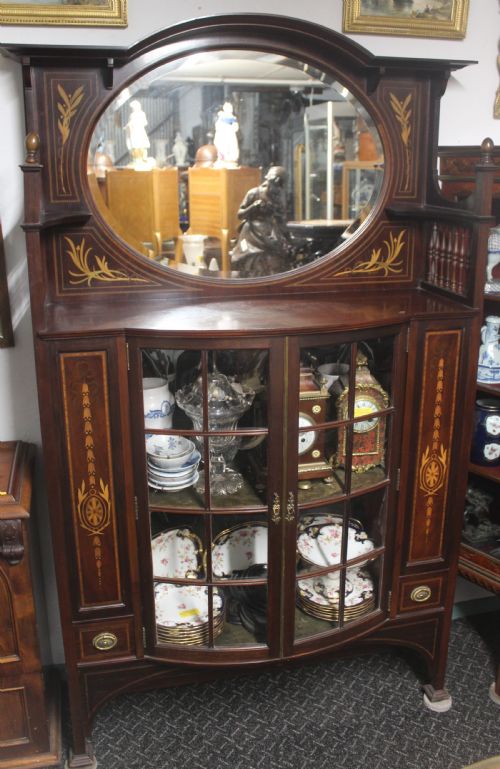
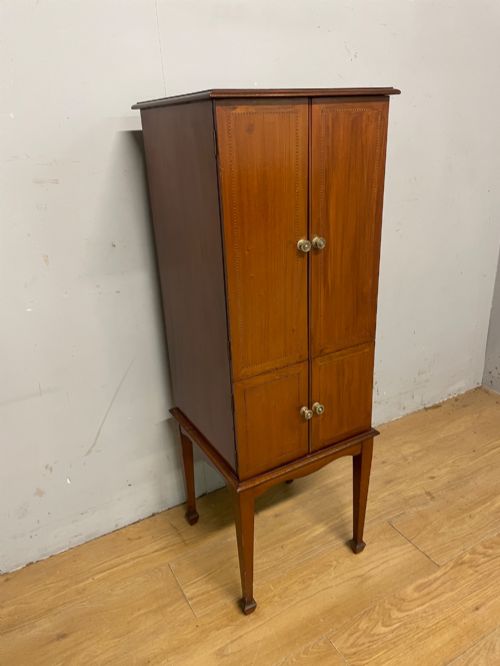
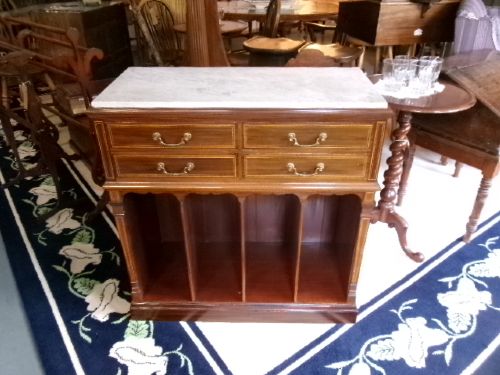
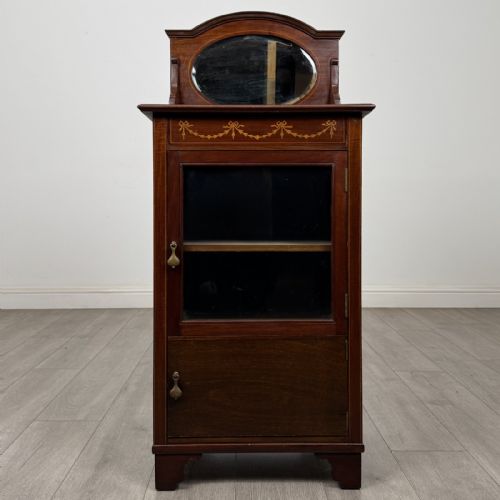
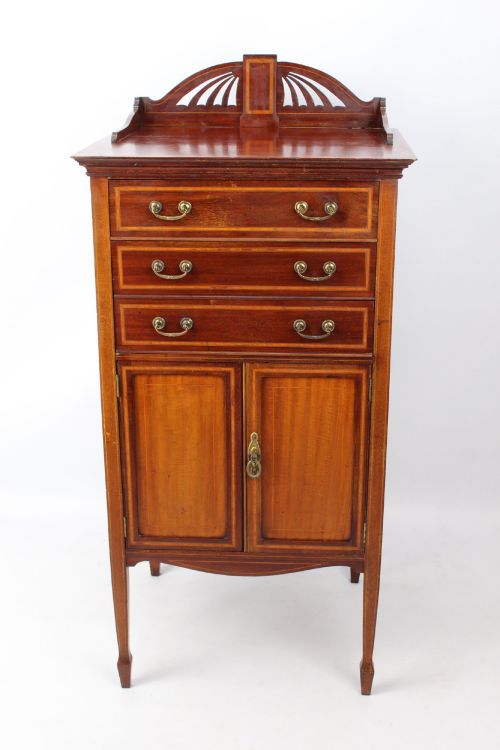
Most examples originate from the Edwardian period and the early twentieth century, though nineteenth-century Victorian and later 1930 variants also occur. Forms range from tall, narrow pedestal formats to bow-fronted side cabinets and glazed display combinations.
How They Were Made
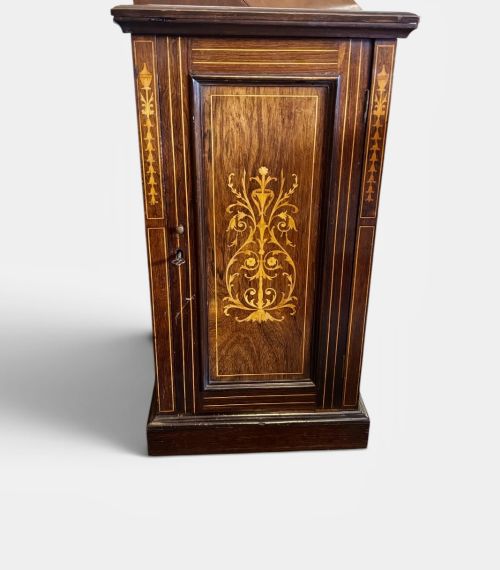
Cabinet makers utilised solid timbers and veneers such as mahogany, satinwood, burr walnut, and oak. Surfaces frequently incorporate delicate marquetry inlay, contrasting stringing, and glazed panels.
Hardware consists primarily of brass handles, hinges, and occasional locking mechanisms. Interiors utilise fitted wooden shelving, tambour doors, and specialised internal compartments tailored for paper storage.
Edwardian Music Cupboard Retail Price Guide 2026
Typical asking prices for edwardian music cupboard among the pieces listed under this phrase on Sellingantiques today, from the lower quarter to the upper quarter. They describe what is for sale here now, not the wider market.
Some nineteenth-century musicians clearly played with intense dedication, requiring specialised lounge servers and cabinets just to manage the sheer weight of their paper scores.
What Varies in Quality
The standard of timber selection and complexity of internal fittings dictate the hierarchy of these pieces. Fine examples showcase carefully matched burr veneers, intricate marquetry, and maker signatures from established London workshops.
Construction integrity in the joints, the smooth operation of specialised drop-front internal drawers, and the condition of original brass hardware distinguish finer production from simpler utility pieces.
GM Elwood for JS Henry·Denby & Spinks·Collinson & Lock London·Keeble, London
The Edwardian Music Cupboard Glossary
- Marquetry
- Decorative patterns created by fitting thin pieces of wood veneer onto a solid surface. This technique allows for intricate floral or geometric designs across cabinet doors and top panels.
- Tambour door
- A flexible door constructed from narrow vertical strips of wood glued to a canvas backing. It slides along a tracked groove to enclose a cabinet opening without swinging outward.
- Satinwood
- A durable, yellowish timber prized for its lustrous sheen and smooth grain. Makers used it extensively for contrasting stringing and inlay work.
- Pedestal cabinet
- A tall, narrow freestanding piece of furniture designed for compact spaces. These typically house multiple shallow internal drawers for sheet music organisation.
Edwardian Music Cupboard: Frequently Asked Questions
What fits inside an edwardian music cupboard?
These cabinets contain shallow internal shelves, drop-front drawers, or vertical filing compartments designed specifically for paper scores and sheet music.
Many pieces adapt well to modern storage needs for documents, art prints, or vinyl records.
How do I identify an edwardian piece?
Edwardian cabinets typically display lighter timbers, subtle satinwood inlay, and refined proportions dating from around the turn of the twentieth century.
Victorian predecessors often utilise darker, heavier rosewood or burr walnut with denser marquetry decoration.
Where were these cabinets placed in the home?
Original placement centered around the drawing room, music room, or parlor where the family piano stood. The narrow footprint allowed them to fit easily into tight alcoves.
Today they function equally well in studies, hallways, or living areas as side tables and display cases.
What is a tambour door?
A tambour door consists of narrow vertical wooden slats attached to a flexible backing fabric that slides along a curved track. This mechanism conceals the interior shelving without requiring clearance for a swinging door.
Cabinet makers applied this space-saving design primarily to oak and mahogany filing units.