
Edwardian Mirror with Drawers
An Edwardian mirror with drawers combines a practical glass surface with useful storage below, uniting everyday utility with period craftsmanship.
Edwardian Mirror with Drawers
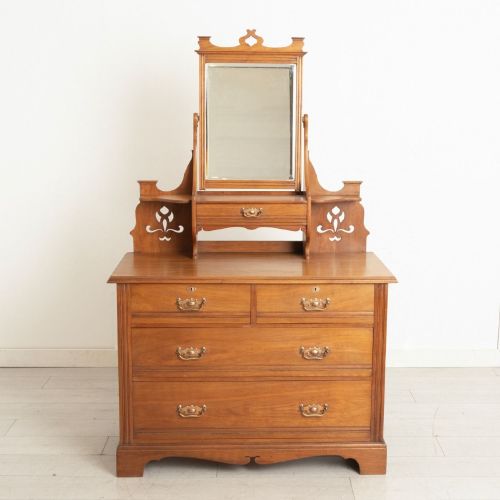
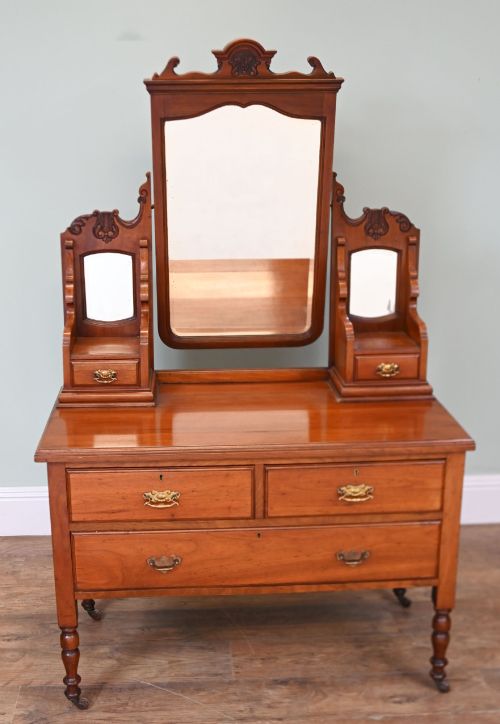
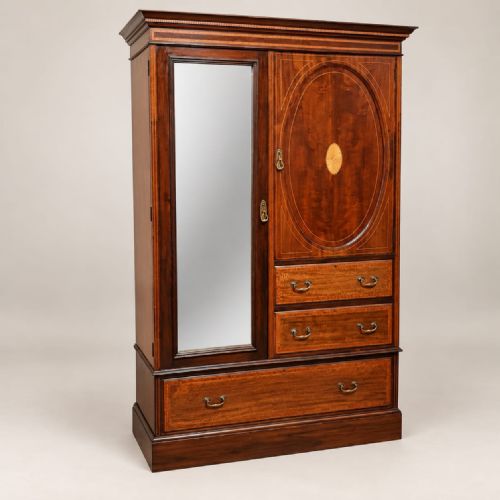
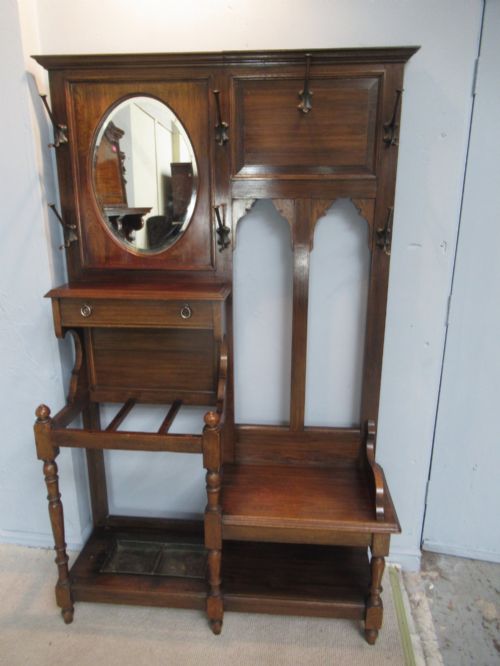
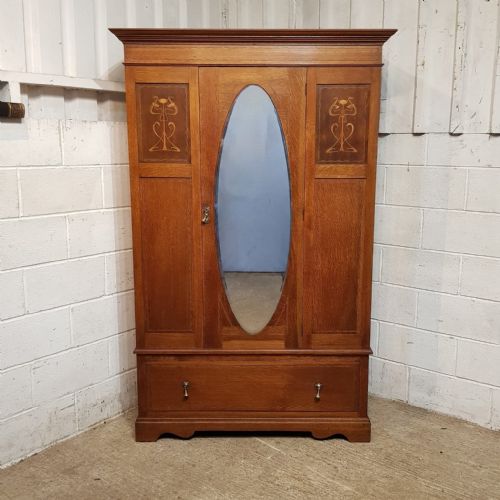
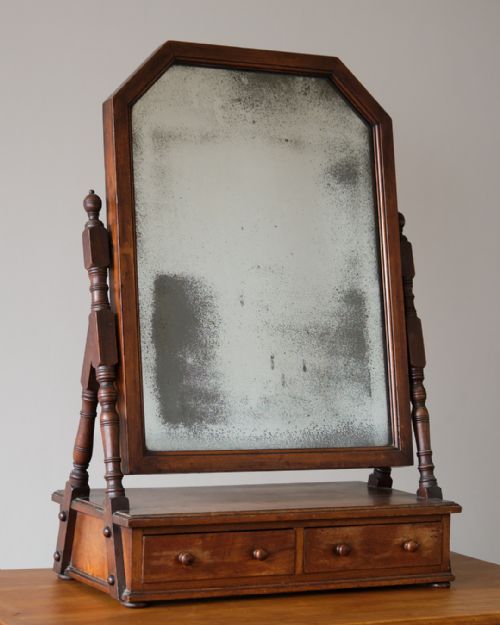
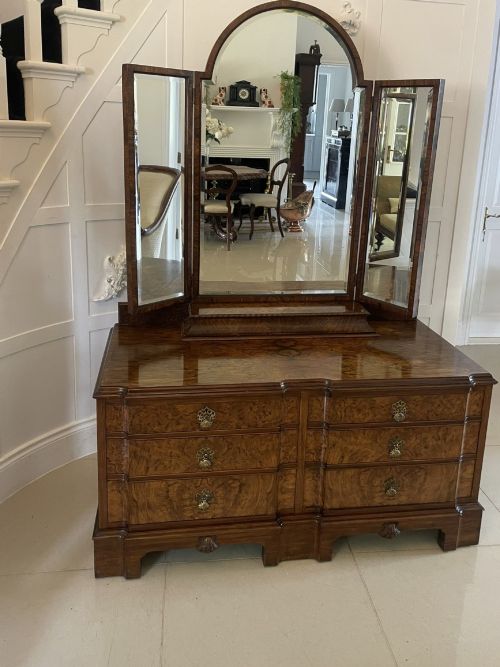
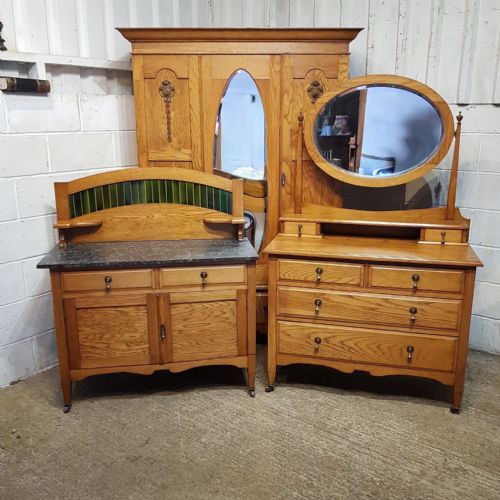
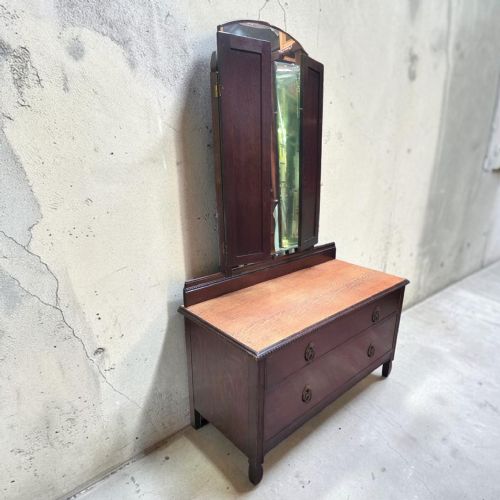
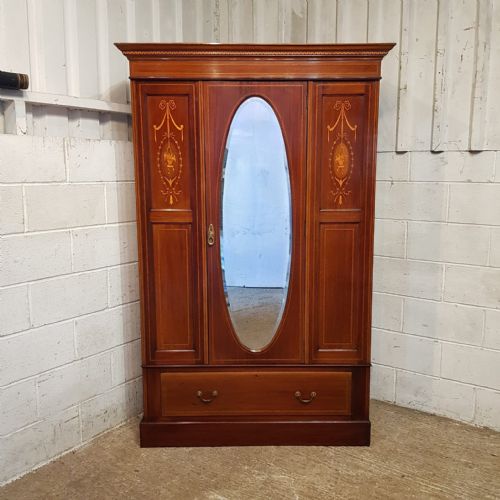
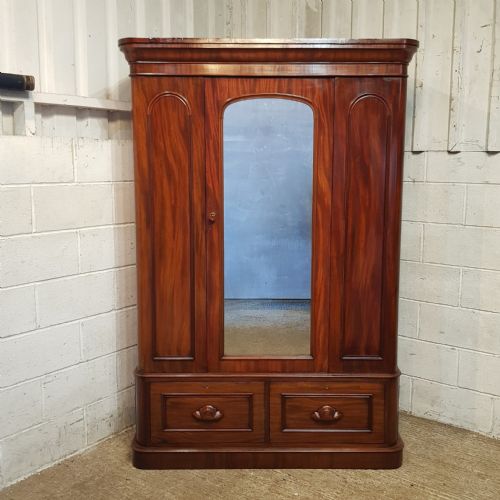
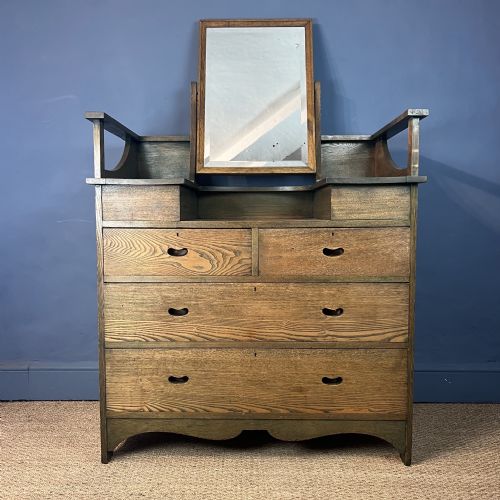
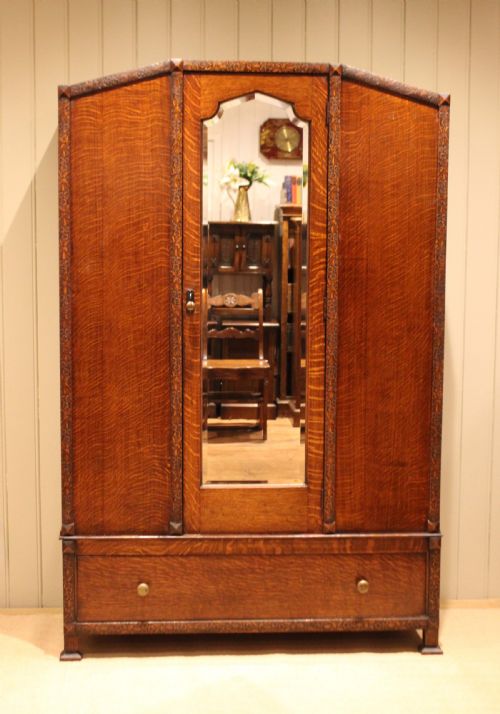
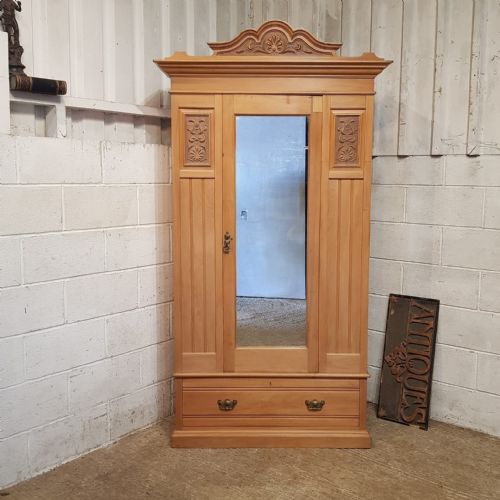
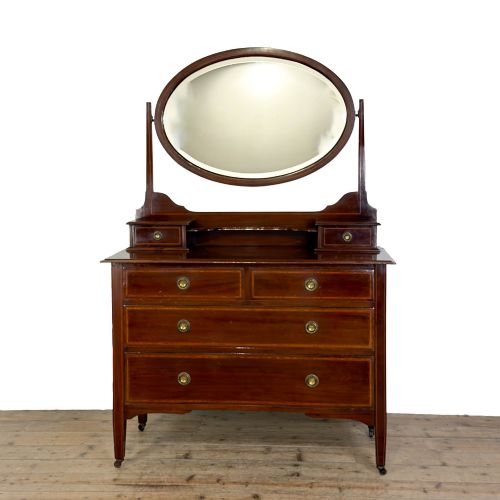
An edwardian mirror with drawers takes several distinct forms across the inventory, ranging from compact dressing table mirrors to larger dressing chests and wardrobes fitted with storage compartments. Buyers searching this phrase most frequently encounter dressing mirrors, toilet mirrors, and dressing chests that integrate small drawers directly beneath the glass.
The pieces emerge predominantly from the Edwardian period and the late Victorian era, with construction dates stretching from the late nineteenth century into the early decades of the twentieth. Makers worked within established historical revivals, producing items influenced by Queen Anne, Chippendale, and Arts and Crafts design principles alongside simpler domestic furniture.
Materials and construction
Cabinetmakers relied heavily on hardwoods such as mahogany, oak, walnut, and satinwood, occasionally utilising pine for secondary framing and internal drawer components. Timber selection dictated the character of the piece, with figured grains and satinwood inlay providing decorative contrast on finer surfaces.
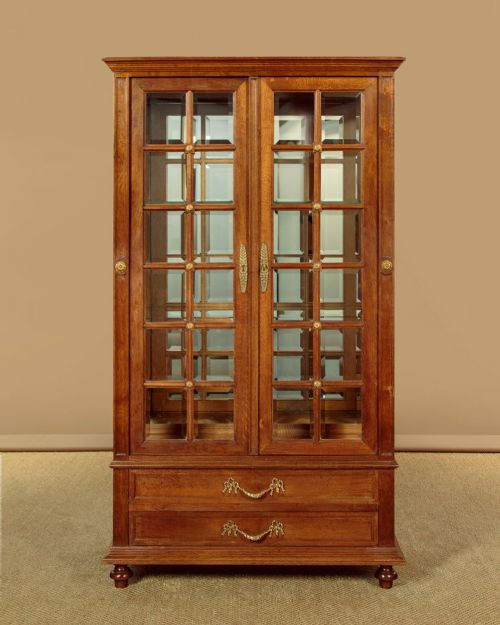
Mirrors were set into adjustable frames supported by upright arms, positioned above small compartment bases or integrated chest drawers constructed with traditional joinery. Brass fittings, gilt mounts, and leaded glass panels appear on selected examples, adding functional hardware and decorative detail to the woodwork.
The inventory records pieces spanning the Victorian, Edwardian, and Regency periods alongside specific Revival styles.
Distinctions in craftsmanship
Quality separates pieces through the selection of timber veneers, the precision of inlay work, and the structural integrity of the drawer construction. Superior examples display carefully matched wood grains, hand-cut dovetail joints in the drawer carcases, and original brass or metal hardware that complements the proportion of the frame.
The clarity and depth of the mirror glass itself, along with the stability of the pivoting support arms, indicate the standard of production. Finer items demonstrate refined carving, balanced proportions, and maker labels or stamps that connect the furniture to established workshops of the period.
George Walton·Maple and Co·Wright and Hunter·Harris Lebus·Heals
The Edwardian Mirror with Drawers Glossary
- Dressing mirror
- A small mirror designed to sit upon a table or chest, often featuring attached drawers in its base. These pieces provided a portable reflective surface for grooming before larger fitted wardrobes became standard.
- Cheval mirror
- A full-length freestanding mirror mounted on a vertical frame that swivels between four supporting pillars. This form allows the user to view their entire reflection.
- Satinwood
- A pale, durable hardwood known for its lustrous sheen, frequently utilised for fine inlay and decorative banding on Edwardian furniture. Cabinetmakers prized it for contrasting darker timbers like mahogany.
- Dovetail
- A traditional wood joint formed by interlocking wedge-shaped fingers, securing drawer corners with exceptional strength. Its presence indicates quality cabinetmaking.
- Arts and Crafts
- A design movement prioritising honest construction, visible craftsmanship, and simple materials over machine-made ornamentation. Pieces from this tradition often display exposed joinery and minimal decorative carving.
Edwardian Mirror with Drawers: Frequently Asked Questions
What is an edwardian mirror with drawers?
An edwardian mirror with drawers is a piece of antique furniture that combines a tilting or fixed looking glass with one or more small storage compartments. These items range from tabletop toilet mirrors to substantial dressing chests.
They were designed for bedrooms and dressing rooms to hold small personal items while providing a reflective surface for daily grooming.
How were these mirrors used?
These pieces served as functional dressing aids in domestic bedchambers during the late nineteenth and early twentieth centuries. The integrated drawers kept brushes, cosmetics, and small valuables close at hand.
Their tabletop and chest configurations allowed people to groom themselves efficiently in natural light before dressing for the day.
How do I care for antique wood?
Maintain antique timber surfaces by dusting them regularly with a soft, dry cloth and avoiding modern silicone-based polishes. Keep the furniture away from direct sunlight and heat sources to prevent the wood from drying out.
Apply a traditional beeswax occasionally to nourish the grain and protect the finish without building up residue.
How can I tell the period?
Determine the period by examining the timber species, construction methods, and stylistic influences present in the design. Edwardian pieces often feature lighter woods and satinwood inlay, while Victorian examples tend to use heavier mahogany and darker oak.
Look for original hardware, backboards, and maker labels that confirm the date of manufacture.