


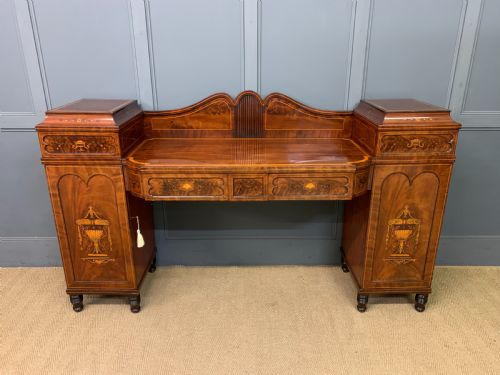


Edwardian Marquetry Pedestal Table
An edwardian marquetry pedestal table brings floral woods and balanced proportions into a room, serving as a useful surface with decorative depth.
Edwardian Marquetry Pedestal Table
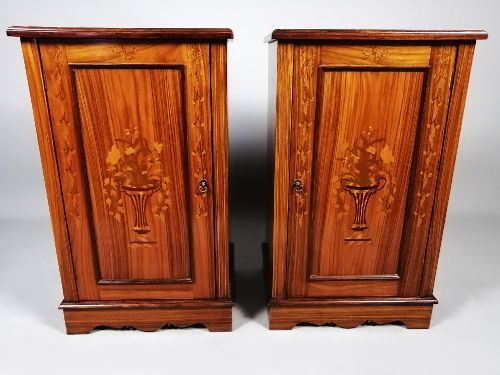
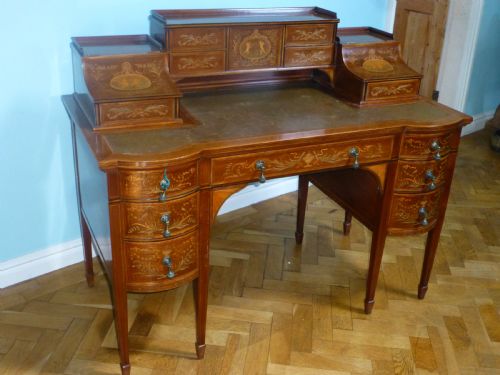
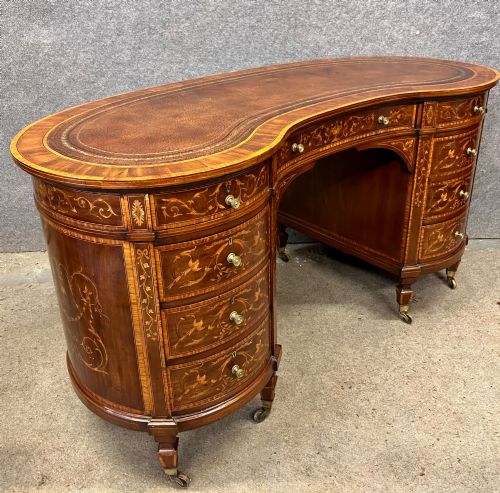
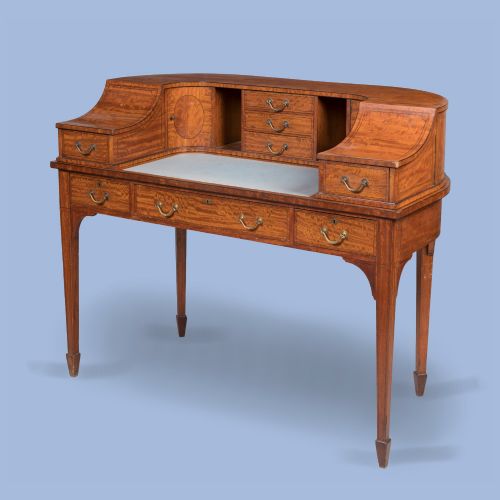
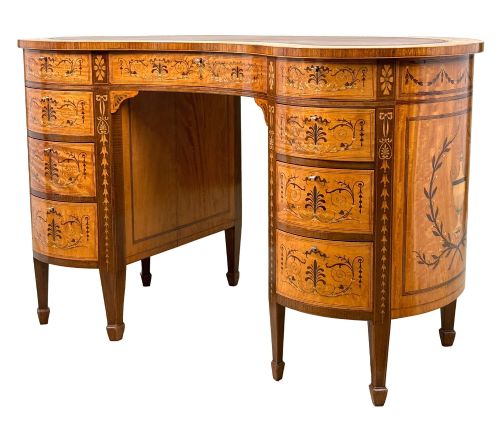
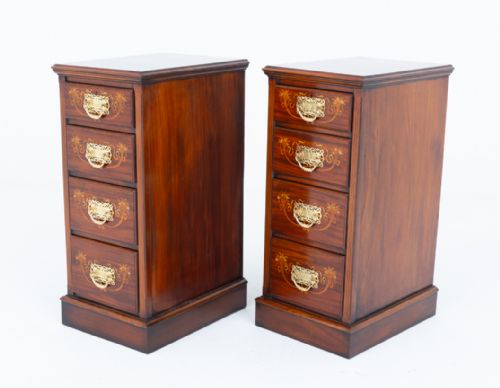
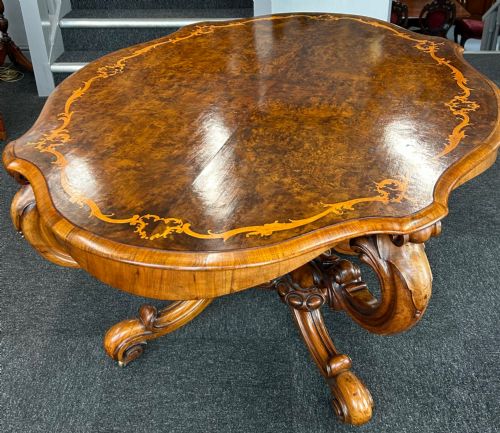
An edwardian marquetry pedestal table is part of a broad family of inlaid wooden furnishings produced around the turn of the twentieth century. While search terms often specify a single column support, buyers encounter related items such as centre tables, kidney desks, and bedside cupboards finished with detailed surface patterns.
The material vocabulary spans satinwood, mahogany, and walnut, frequently combined with contrasting borders. Makers drew heavily on earlier Georgian forms, reviving Sheraton and Neo-Classical idioms to suit contemporary drawing rooms and studies.
How they were made
Cabinet makers utilised dense timber carcases of mahogany or walnut, applying fine veneers across the top surfaces. Satinwood often formed the bright ground for central motifs, providing a sharp visual contrast against darker surrounding woods.
Marquetry inlay relied on hand-cut botanical and classical motifs composed of dyed and natural woods, sometimes accented with brass stringing. Artisans assembled these delicate veneer packets with hot animal glue before scraping and polishing the panels to a smooth finish.
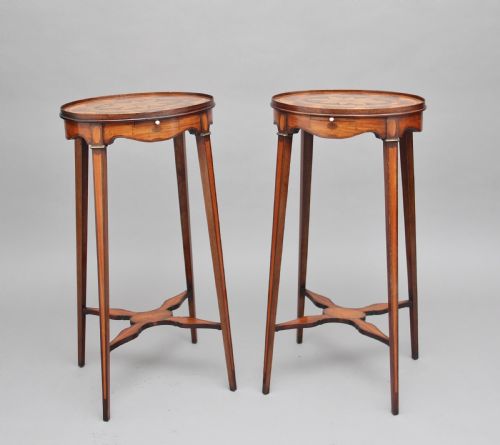
An eighteenth-century sideboard quietly shares the catalogue with nimble Edwardian plant stands and multi-drawer Carlton House desks.
What varies in quality
The standard of execution in the marquetry work marks the primary division between everyday pieces and superior examples. Crisp junction lines between individual veneer pieces and rich, variegated grain selection indicate skilled workshop production.
Structural integrity of the central column and base determines the daily utility of the piece. Heavier timbers, stable secondary woods, and well-balanced pedestals ensure the table remains firm and sound through decades of use.
Edwards and Roberts·Gill and Reigate·James Shoolbred
The Edwardian Marquetry Pedestal Table Glossary
- Marquetry
- Decorative patterns formed by fitting together small pieces of wood veneer onto a structural surface. This technique allows intricate floral, ribbon, or neoclassical motifs to be rendered across tabletops and desk lids.
- Satinwood
- A lustrous, hard timber native to Ceylon and the West Indies, prized for its golden-yellow sheen. It frequently serves as the primary veneer on lighter Edwardian and Sheraton Revival writing furniture.
- Pedestal
- A central vertical support that carries the weight of a table top down to a stable foot or set of legs. It frees the perimeter from four corner legs, allowing easier seating.
- Sheraton Revival
- A design movement spanning the late nineteenth and early twentieth centuries that reinterprets the light, elegant furniture forms of George Sheraton. Pieces typically feature tapered legs, satinwood panels, and delicate floral inlay.
Edwardian Marquetry Pedestal Table: Frequently Asked Questions
How do I care for marquetry surfaces?
Keep inlaid wooden surfaces away from direct sunlight and strong heat sources to prevent the natural veneers from drying or splitting. Regular dusting with a soft, dry cloth maintains the finish without needing heavy polishes.
Apply a microcrystalline wax sparingly once or twice a year to nourish the timber and protect the delicate wood-to-wood joints of the inlay.
Were these tables used for writing?
Many tables of this period served multi-purpose roles in the home, functioning as lamp stands, display surfaces, or casual writing spots depending on their height and top design. Dedicated writing variants often incorporated leather inserts and small stationery drawers.
Smaller pedestal formats were primarily intended for drawing rooms to hold ornaments, books, or tea services rather than heavy daily correspondence.
How do I date an inlaid table?
Examine the secondary woods inside drawers and beneath the top, as pine and oak usage shifted across the nineteenth and twentieth centuries. Tool marks, screw types, and construction methods offer reliable clues alongside stylistic motifs.
Compare the overall proportion and inlay style against documented cabinet maker portfolios from the Edwardian and late Victorian eras to narrow the decade.
What is the difference between a centre table and a pedestal table?
A centre table stands freely in the middle of a room, finished on all sides with four legs or a substantial base designed to be viewed from every angle. It provides a generous surface area for lamps and decorative objects.
A pedestal table specifically relies on one central column rising from a weighted base, which allows chairs or knees to tuck closely underneath the top without striking corner legs.