
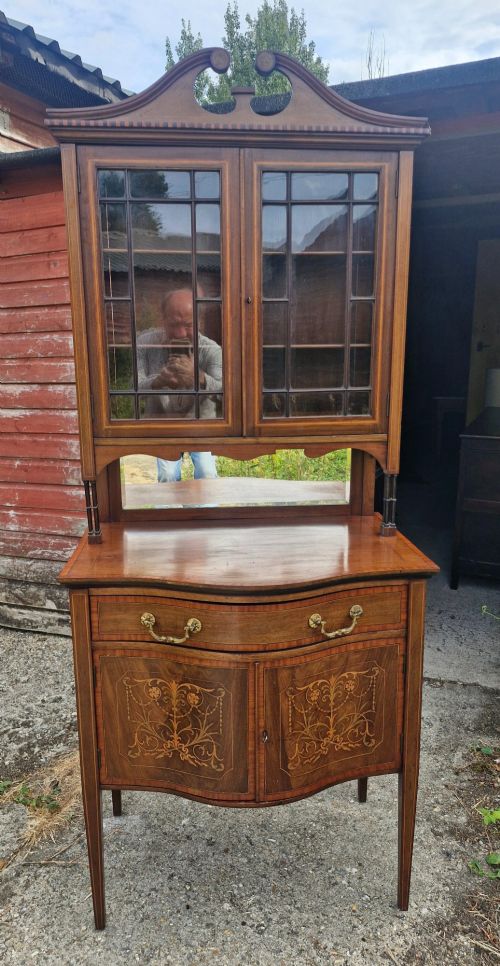
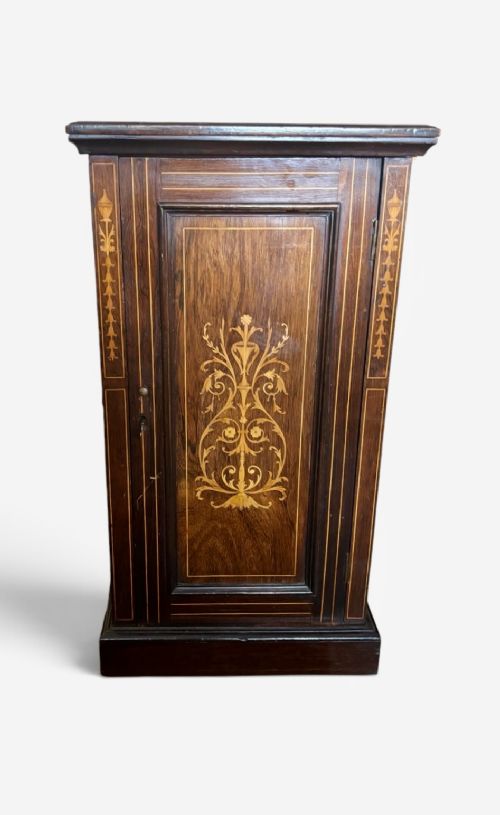
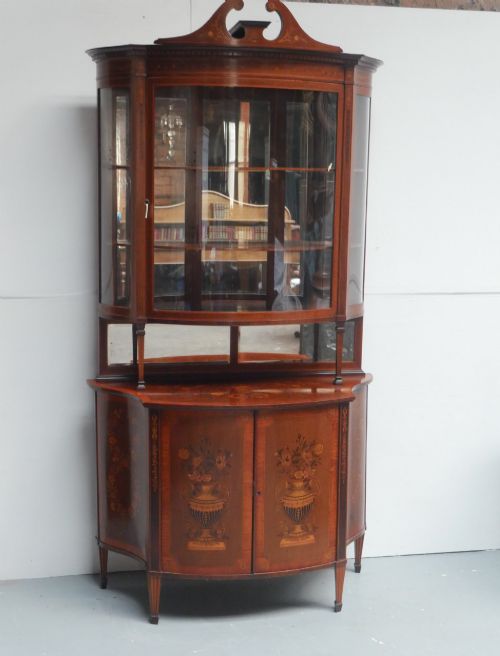
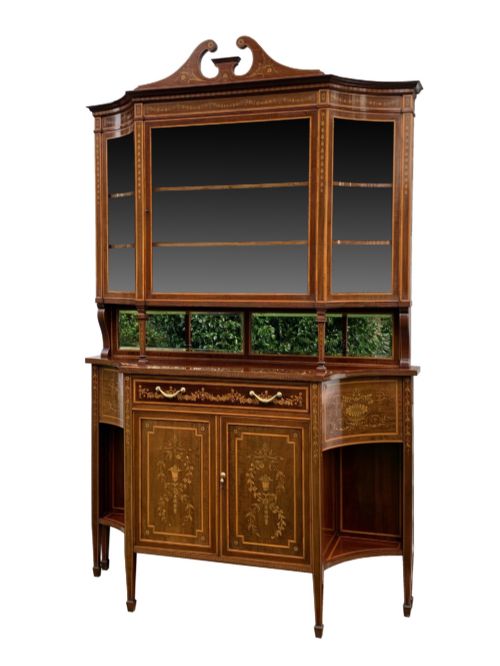
Edwardian Marquetry Display Cabinet
These pieces unite glass and figured timbers with precise foliage and urn motifs, bringing light and formal display to a room.

Edwardian Marquetry Display Cabinet
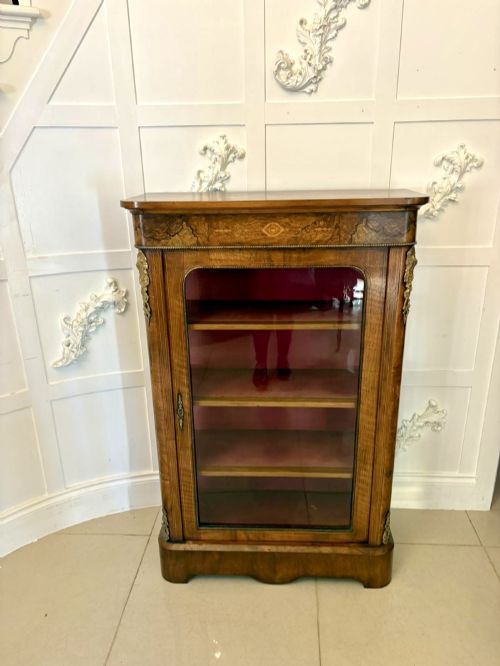
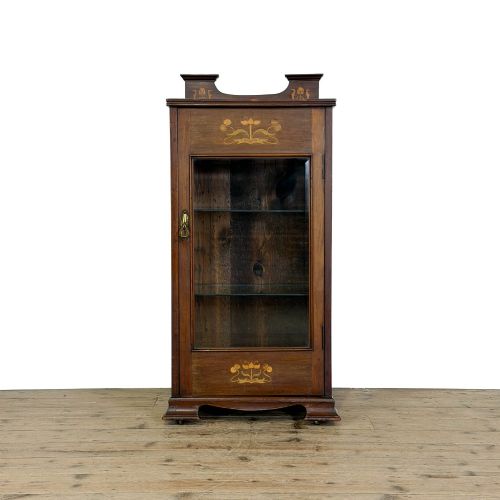
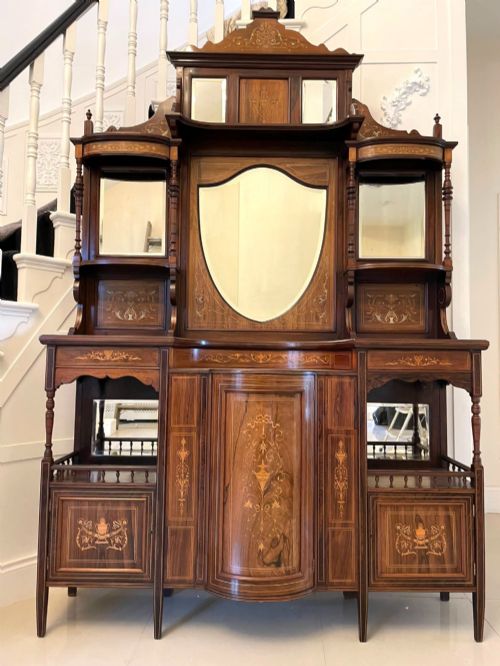
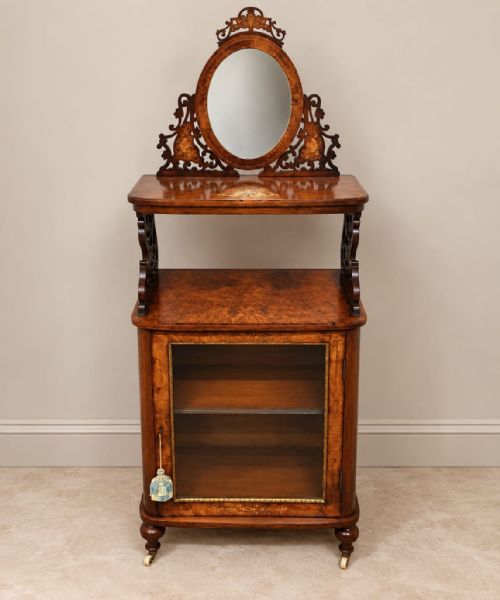
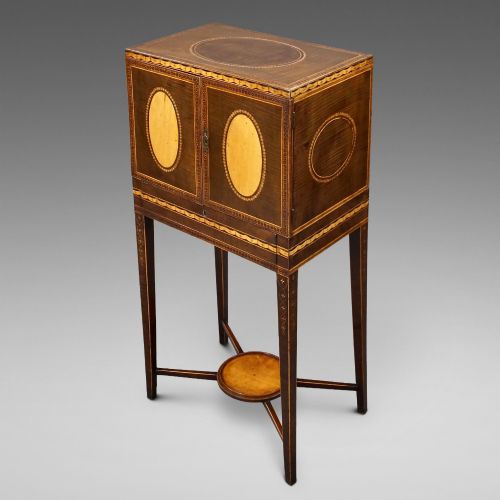
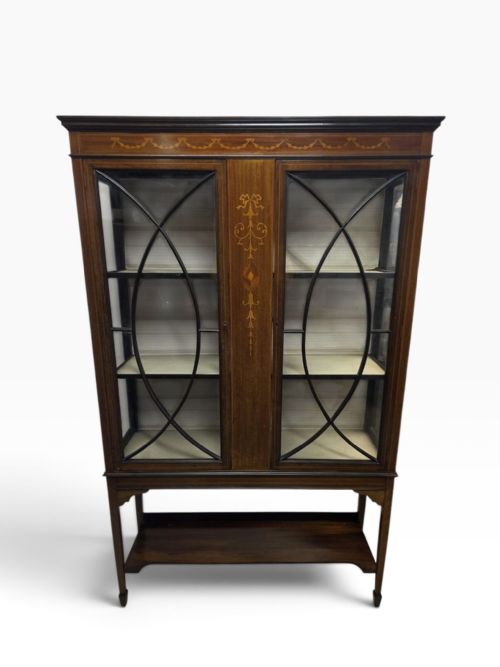
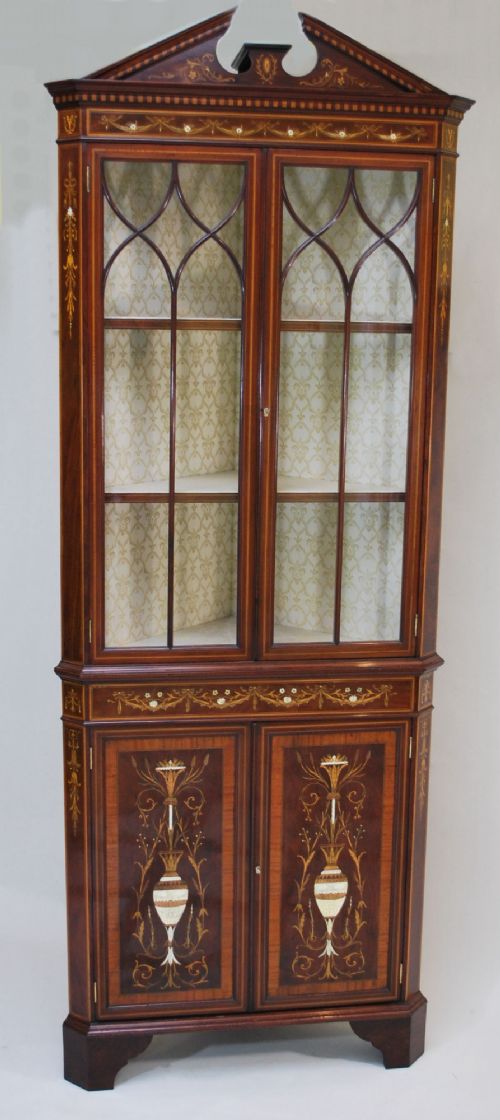
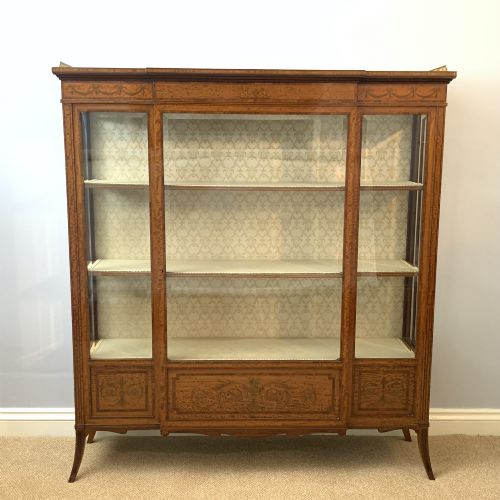
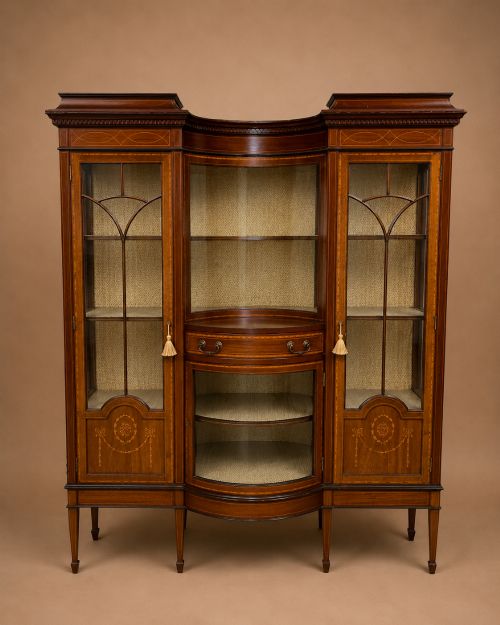
An edwardian marquetry display cabinet is typically formed from mahogany, satinwood, or burr walnut, enclosing shelves behind glazed doors to exhibit prized ceramics and glass. The form draws heavily on earlier Sheraton Revival vocabulary, incorporating slender proportions and classical inlay motifs.
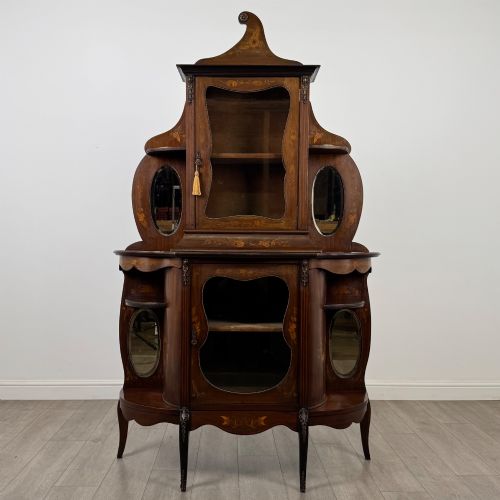
Most examples date from the Edwardian period or the late nineteenth century, though related Victorian and eighteenth-century styles appear alongside them. Cabinets range from tall two-part standing furniture to compact corner units and pedestal cases designed to occupy smaller spaces.

How they were made
Cabinet makers constructed carcass frames from solid mahogany or walnut, applying veneers of figured satinwood, amboyna, or harewood to principal surfaces. Marquetry panels were assembled by cutting contrasting dyed and natural woods into floral or scroll patterns before pressing them into the surface.
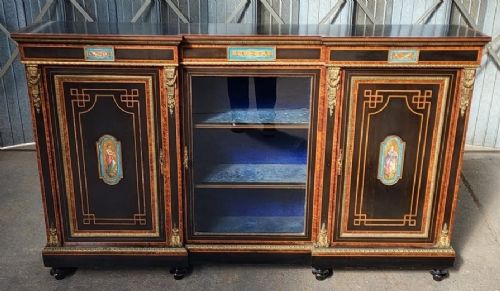
Glazing typically utilised delicate timber astragal bars to divide the glass into panes, while brass hinges, locks, and occasionally ormolu mounts finished the exterior. Interior surfaces often retained silk or velvet linings suited to the display of small objects.
Edwardian Marquetry Display Cabinet Retail Price Guide 2026
Typical asking prices for edwardian marquetry display cabinet among the pieces listed under this phrase on Sellingantiques today, from the lower quarter to the upper quarter. They describe what is for sale here now, not the wider market.
Some miniature display cabinets were built specifically to hold tiny porcelain teacups.
What varies in quality
Quality rests upon the crispness of the timber selection and the precision of the marquetry cutting, where tighter joints between contrasting veneers signal superior workshop output. The depth of figure in the underlying mahogany or burr walnut also separates standard production from finer creations.
Design complexity marks the upper tier, seen in serpentine fronts, cross-banded borders, and the inclusion of maker signatures such as Edwards & Roberts or Maple & Co. Structural integrity in the glazed doors and fine astragal mouldings further distinguishes better pieces.
Edwards & Roberts·Maple & Co
The Edwardian Marquetry Display Cabinet Glossary
- Marquetry
- Decorative veneer work forming pictorial or symmetrical patterns using different coloured woods. It differs from inlay by assembling the entire design as a sheet before application.
- Astragal
- A small convex moulding used to hold glass panes within a frame. These delicate wooden strips divide cabinet doors into geometric patterns.
- Satinwood
- A lustrous yellow timber imported from tropical regions and frequently used for veneering and stringing. It provides a bright contrast against darker woods like mahogany.
- Ormolu
- Gilded bronze mounts applied to furniture for decorative effect. They accent corners, friezes, and feet on high-status cabinets.
- Pier Cabinet
- A shallow cabinet designed to stand against a wall pier between windows. These pieces often feature glass doors and mirrored backs.
Edwardian Marquetry Display Cabinet: Frequently Asked Questions
How do I care for my cabinet?
Keep wooden furniture away from direct sunlight and heat sources to prevent veneer lifting or timber splitting. Dust regularly with a soft dry cloth and apply a quality wax polish sparingly.
Check the internal lining periodically and avoid placing excessively heavy items on glass shelves. Ensure the cabinet stands level so the glazed doors close evenly without binding.
What is the difference between marquetry and inlay?
Marquetry involves assembling an entire decorative picture or pattern from various wood veneers before gluing the whole sheet onto the carcass. Inlay requires carving recesses directly into the solid wood or veneer to insert individual pieces.
Edwardian display cabinets frequently employ marquetry across their main doors and lower panels, framed by simple inlaid stringing lines.
Where should I place a corner cabinet?
Corner cabinets make effective use of neglected room angles while providing glazed display space for collections. They work particularly well in dining rooms or drawing rooms where floor space is limited.
Ensure the corner walls are stable and that the cabinet can be secured safely if top-heavy. Position them away from damp exterior walls to protect the internal timber and linings.
How do I distinguish Edwardian from Victorian cabinets?
Victorian cabinets from the nineteenth century tend to feature heavier proportions, darker ebonised or burr walnut finishes, and bolder ormolu mounts. They often include serpentine shapes and rich rosewood.
Edwardian pieces from around 1900 generally display lighter mahogany and satinwood timbers, more restrained neoclassical revival motifs, and slender legs. Sheraton Revival influences dominate this later era.