

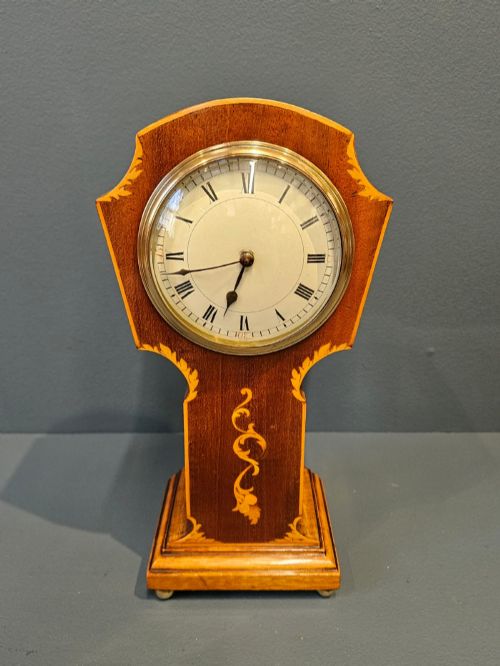


Edwardian Marquetry Clock
An Edwardian marquetry clock brings refined wooden detail and precise timekeeping into a room, uniting period cabinet work with mechanical movement.
Edwardian Marquetry Clock
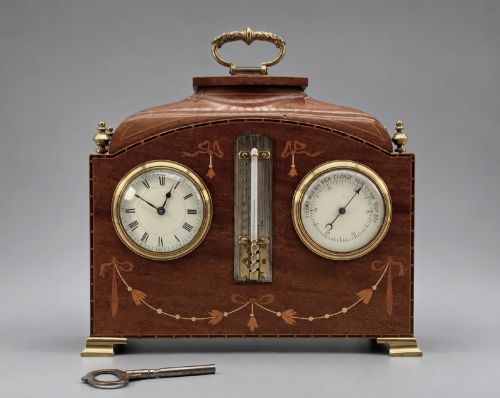
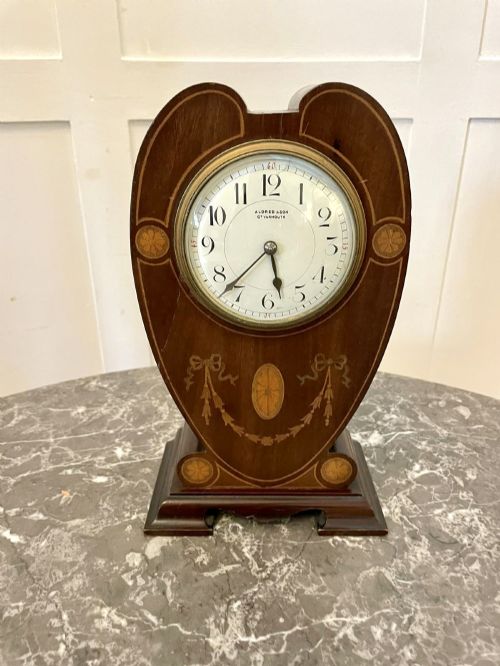
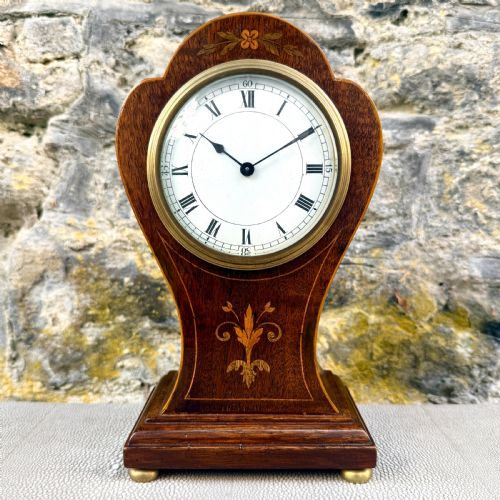
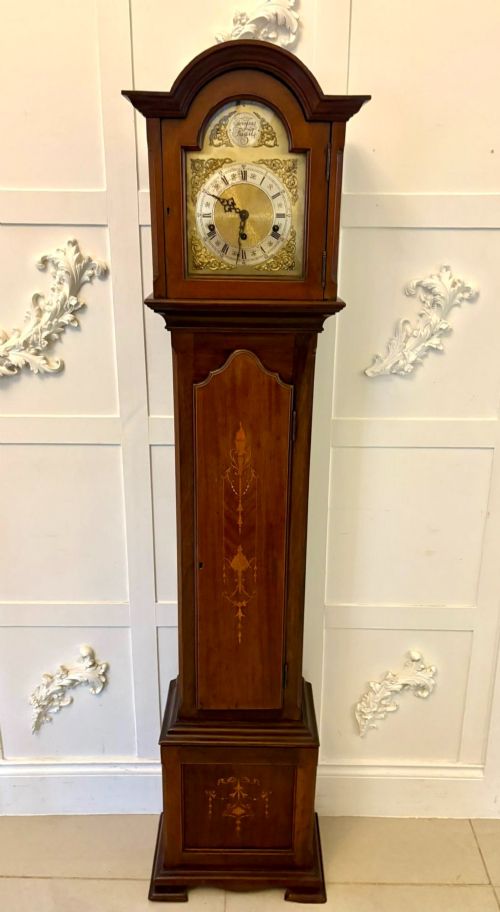
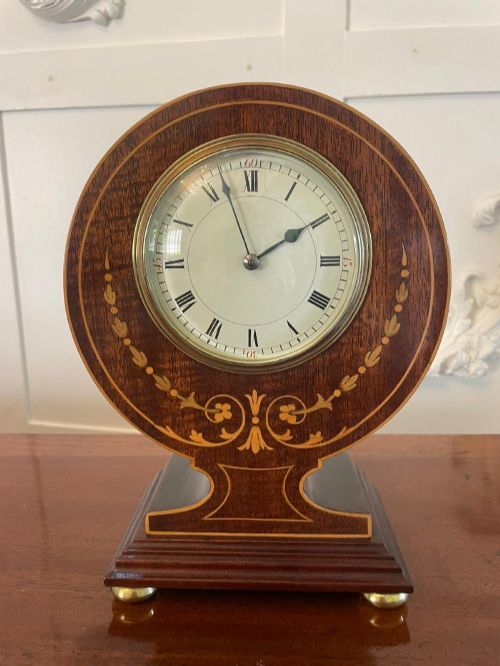
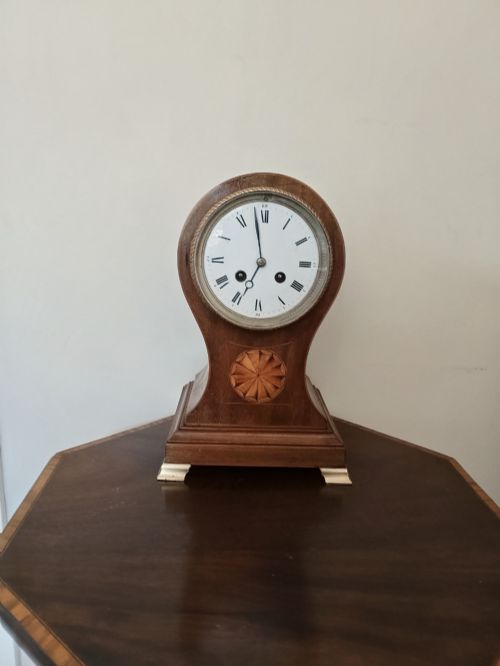
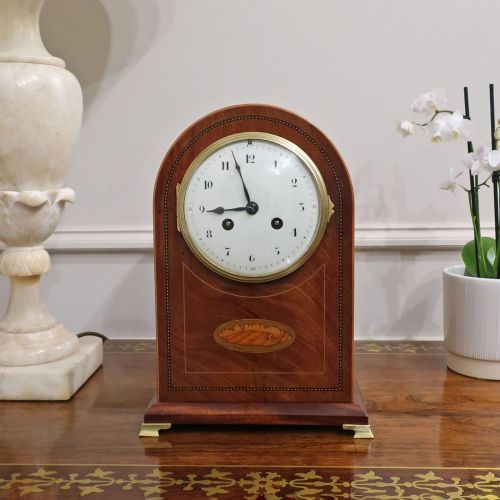
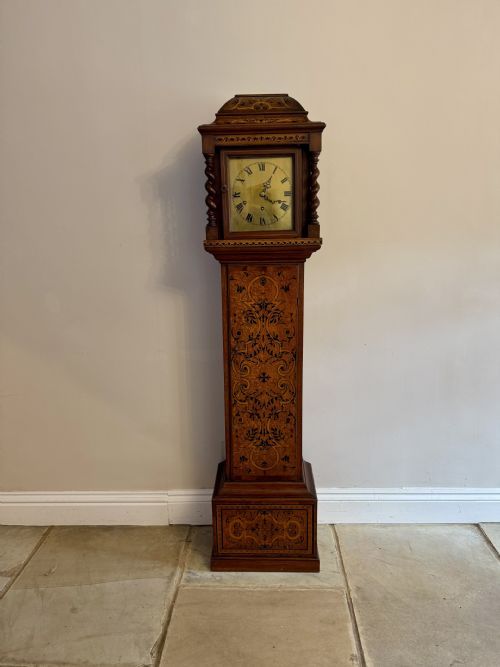
An edwardian marquetry clock combines period cabinetry with traditional timekeeping, most commonly appearing as compact mantel clocks or taller floor-standing longcase and grandmother designs. These pieces often feature dark timber carcases decorated with contrasting plant or geometric motifs set directly into the wood.
The selection ranges from small balloon and dome-top mantel formats to substantial chiming floor clocks housed in mahogany, rosewood, or oak. While many date strictly to the Edwardian decade and surrounding years, related late nineteenth-century Victorian and Belle Epoque examples appear alongside them.
Judging quality
The sophistication of the marquetry design separates standard production from finer work, with pictorial elements like floral sprays or figures demanding greater skill than simple geometric banding. The crispness of the timber cabinet work and the presence of named makers or complex chiming movements elevate the status of a piece.
Heavier brass casting on feet and bezels, combined with well-preserved silvered or enamelled dial plates, indicates higher manufacturing standards. The integration of musical or multi-tube striking mechanisms reflects superior horological ambition.
Edwardian Marquetry Clock Retail Price Guide 2026
Typical asking prices for edwardian marquetry clock among the pieces listed under this phrase on Sellingantiques today, from the lower quarter to the upper quarter. They describe what is for sale here now, not the wider market.
W. Burton·Seikosha Seiko
The Edwardian Marquetry Clock Glossary
- Marquetry
- Decorative woodwork where pieces of contrasting veneer are assembled to form pictorial or geometric patterns on a carcase. This technique defines the visual character of the wooden cases.
- Fusee
- A conical pulley used in spring-driven clocks to maintain equal power as the mainspring unwinds. It ensures more accurate timekeeping throughout the running cycle.
- Mantel clock
- A portable clock designed to sit on a fireplace mantel or shelf. These pieces usually feature carrying handles or flat bases.
- Longcase clock
- A tall pendulum clock enclosed in a wooden case standing directly on the floor. They are frequently referred to as grandfather clocks.
- Grandmother clock
- A smaller, scaled-down version of the traditional longcase clock. They share the same mechanical layout in a reduced housing.
Edwardian Marquetry Clock: Frequently Asked Questions
What is an edwardian marquetry clock?
An edwardian marquetry clock is a timekeeper housed in a wooden case decorated with detailed veneer patterns. These instruments date primarily from the early twentieth century and merge practical timekeeping with decorative cabinet art.
They reflect the prevalent design tastes of the period, drawing on earlier Sheraton revival themes alongside Art Nouveau influences.
Where should I place a mantel clock?
Mantel clocks suit flat surfaces such as sideboards, shelves, and drawing-room mantels where their decorative inlays remain visible. Ensure the surface is level to keep the pendulum swinging evenly.
Keep them away from direct heat sources and damp walls to protect the timber carcase and internal metalwork.
How do I wind an eight day clock?
Use the appropriate key on the winding squares located on the dial face, turning gently until you feel resistance. Do not overwind the springs, as this can damage the internal mechanism.
Many of these movements require attention once a week to maintain continuous operation and chime functions.
How can I tell the period of a clock?
Examine the timber selection, dial construction, and style of the inlay work for period-specific clues. Edwardian pieces often pair rich mahogany with delicate satinwood or boxwood floral details.
Horological style, such as the shape of the balloon case or the presence of an Art Nouveau floral motif, helps confirm the date of manufacture.