



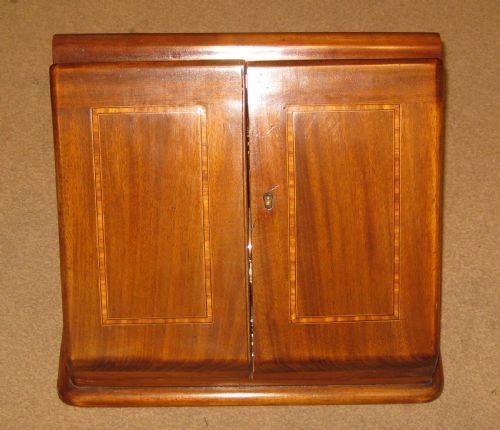


Edwardian Desktop Compendium
These pieces are Edwardian desktop compendiums, fitted wood cabinets and combination boxes designed to keep correspondence and smoking requisites orderly.
Edwardian Desktop Compendium
An Edwardian desktop compendium gathers the necessary items for correspondence and tobacco into a single wooden housing. These pieces combine stationery boxes, calendar desks, and smokers' cabinets within one desktop footprint.
The versions most frequently met on this page span the late nineteenth century into the Edwardian period, constructed in mahogany, oak, and walnut. They take the form of stationery cabinets, drop-front boxes, and combination smoker's cases.
Makers of the era utilised boxwood inlay, brass mounts, and glass panels to elevate utilitarian desk furniture into decorative items for the study or club lounge.
Materials and construction
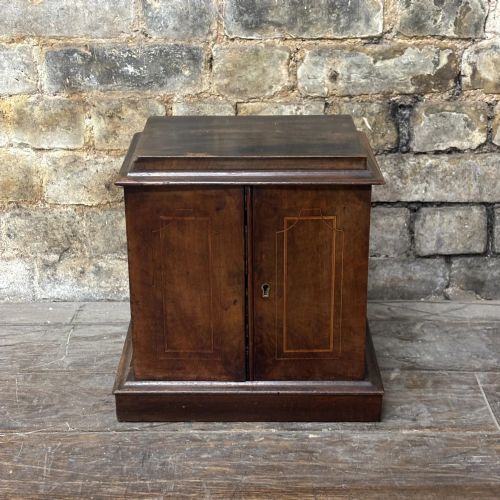
Carpenters built these compendiums using solid timbers and veneered foundations of oak, mahogany, and burr walnut. Boxwood inlay frequently provides linear stringing or geometric motifs across the cabinet doors and drop fronts.
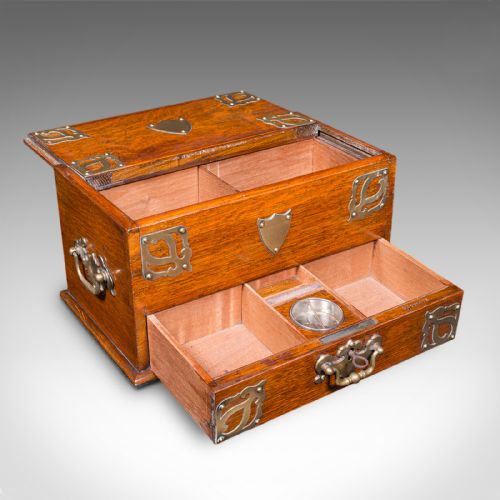
Fittings incorporate cast brass hinges, locking mechanisms, and drop handles, alongside interior glass inkwells and ceramic or paper calendars. Leather is utilised for lined writing surfaces and internal compartments within cigar and tobacco cases.
Edwardian Desktop Compendium Retail Price Guide 2026
Typical asking prices for edwardian desktop compendium among the pieces listed under this phrase on Sellingantiques today, from the lower quarter to the upper quarter. They describe what is for sale here now, not the wider market.
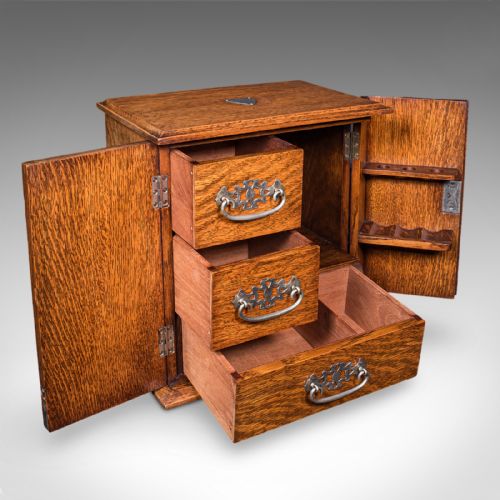
A doctor's smoking cabinet suggests that medical practitioners required immediate access to a cigar after hours of making house calls.
Distinctions in quality
Quality rests upon the selection of timber figures and the precision of the joinery rather than the sheer scale of the piece. Burr walnut and figured mahogany command attention through rich grain patterns, whereas plain oak serves a more utilitarian purpose.
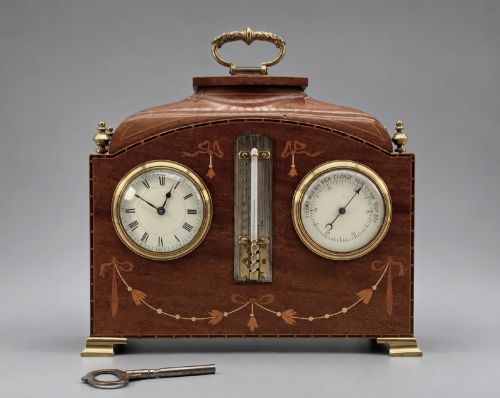
The integration of multiple functions, such as combining a clock, barometer, and thermometer into a single mahogany housing, marks the upper tier of desktop accessories. Simpler stationary boxes rely on clean proportions and intact boxwood inlay to demonstrate fine workshop standards.
The Edwardian Desktop Compendium Glossary
- Stationery cabinet
- A desktop box fitted with internal divisions and slots for paper, envelopes, and correspondence. These pieces often feature sloping lids or tambour doors.
- Smoker's cabinet
- A small cupboard designed to hold pipes, tobacco, and cigars, frequently equipped with a locking door and internal cedar linings. They are also known as humidors or smoker's boxes.
- Marquetry
- The art of applying pieces of veneer to a structure to form decorative patterns and pictures. Boxwood is commonly employed for this contrasting detail on darker woods.
- Drop-front
- A hinged panel that folds downward to reveal an internal writing surface or compartments. This mechanism allows access to stationery without lifting the main lid.
- Barometer
- An instrument measuring atmospheric pressure, occasionally incorporated into multi-function desktop compendiums alongside clocks and thermometers.
Edwardian Desktop Compendium: Frequently Asked Questions
How were smoking cabinets used?
Smoking cabinets and cigar boxes served to store pipes, loose tobacco, and cigars securely away from dust and moisture. They kept smoking requisites neat and accessible upon a desk or table.
Many examples feature locking doors and specialised interior compartments tailored for gentleman's use in private libraries or smoking rooms.
What woods were used for these boxes?
Makers constructed these desktop pieces using native and imported timbers such as oak, mahogany, and walnut. Burr walnut and figured mahogany provided decorative surfaces for finer items.
Boxwood inlay and brass mounts frequently accented the exterior woodwork, adding contrast to the dark grain of the primary timber.
How do I date an antique stationery cabinet?
Dating relies upon stylistic markers, timber choice, and construction methods recorded in the piece. Late Victorian and Edwardian examples often display boxwood stringing, brass hardware, and adjustable date mechanisms.
Earlier pieces from the mid-nineteenth century tend towards simpler oak construction, while transitional items from around nineteen hundred incorporate multi-function designs.