
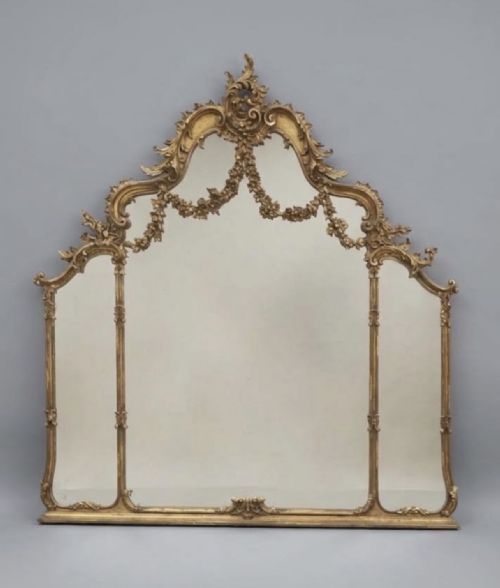

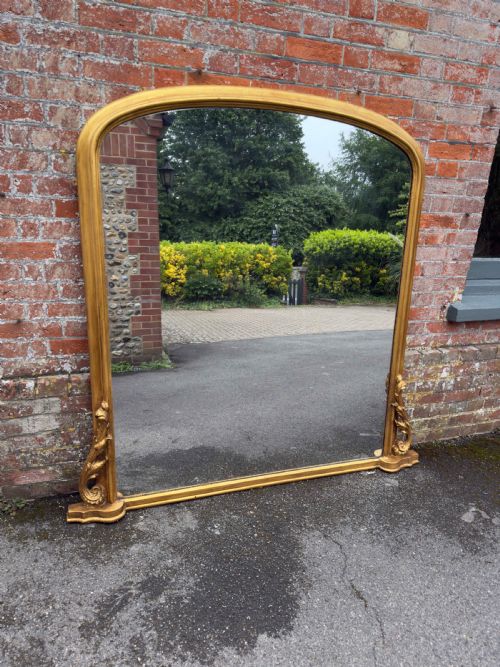


Edwardian Mantelpiece Mirror
An edwardian mantelpiece mirror anchors a room above the fireplace, offering generous glass and carved framing that reflects light and deepens space.
Edwardian Mantelpiece Mirror
The search phrase edwardian mantelpiece mirror brings up large wall-hung and resting glass pieces designed to sit directly above a fireplace surround. These items function primarily as overmantel mirrors, commanding attention in reception rooms by spanning the width of the mantel shelf.
Materials shift between heavy gilded finishes and warm timber constructions such as oak and mahogany. Buyers encounter ornate giltwood designs alongside restrained wooden frames suited to diverse period interiors.
How they were made
Carved wood and gesso form the foundation of ornate gilt pieces, where plaster layers receive intricate moulding before receiving gold leaf. Pine and oak serve as sturdy structural timbers for heavier architectural frames.
Glass plates are set within rebated frames, often secured by backing boards that protect the silvered rear surfaces. Joinery techniques balance the considerable weight of the mirror glass with decorative carved crests.
Site listings show periods ranging from 1860 to 1920, encompassing Victorian, Edwardian, and Rococo Revival styles.
What varies in quality
The crispness of carved detail and the depth of gesso moulding separate standard framing from exceptional craftsmanship. Superior pieces exhibit sharp relief in ornamental motifs rather than soft, muddy casting.
The condition of the original gilding and the clarity of the mirror plate itself dictate the overall integrity of the piece. Substantial timber frames require solid joinery to support heavy glass panels over decades of use.
The Edwardian Mantelpiece Mirror Glossary
- Overmantel mirror
- A large looking glass specifically designed to be hung or placed upon the mantelpiece above a fireplace. These pieces often feature wide proportions to match the hearth below.
- Gesso
- A plaster-like mixture applied to wood frames to create a smooth surface for gilding or carving. It allows artisans to shape intricate relief ornamentation.
- Giltwood
- Timber that has been coated with gold leaf or metallic powder. This finish adds bright reflectivity and warmth to formal reception rooms.
- Arch top
- A mirror frame featuring a curved upper section. This classic profile softens rigid room geometries.
Edwardian Mantelpiece Mirror: Frequently Asked Questions
Where should I place an overmantel mirror?
These mirrors traditionally rest on the mantel shelf or hang securely to the wall directly above a fireplace opening. Their proportions are calculated to balance the width of the hearth below.
Positioning them here allows the glass to catch and distribute natural light from windows across the entire reception room.
How do I hang a heavy mirror safely?
Due to the substantial weight of timber frames and thick glass plates, wall-hung pieces require heavy-duty fixings attached directly into wall studs or masonry. Professional installation ensures the mirror remains secure.
Many examples are also designed to rest partially on the mantel shelf with top safety brackets anchoring the frame to the wall.
Are these mirrors all from the Edwardian period?
The selection encompasses pieces created across the nineteenth and early twentieth centuries, spanning Victorian, Edwardian, and revival styles. Cabinetmakers continued traditional methods across these decades. Nomenclature often groups similar overmantel forms together regardless of the exact decade of manufacture.
What woods were commonly used for frames?
Makers utilised sturdy timbers such as oak, mahogany, and pine to construct the core structure of these large mirrors. Softer woods like pine frequently served as the base for gesso and gilt finishes. Exposed wood frames often display rich natural grain patterns beneath polished surfaces.