
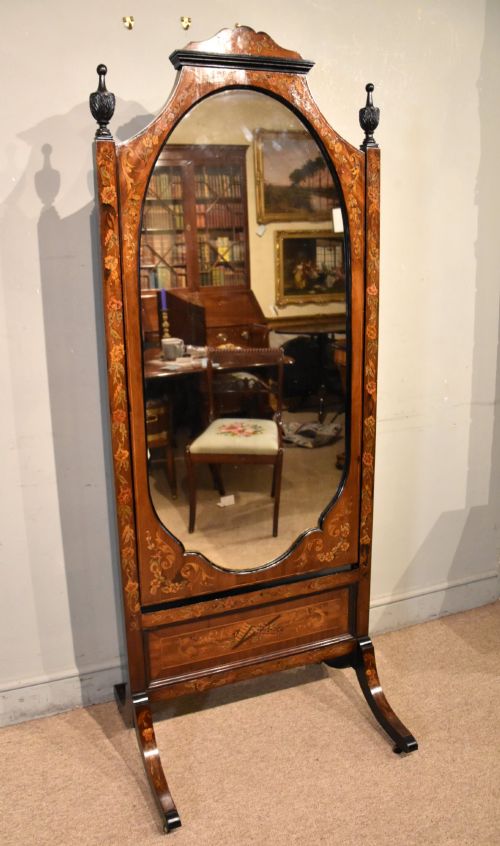
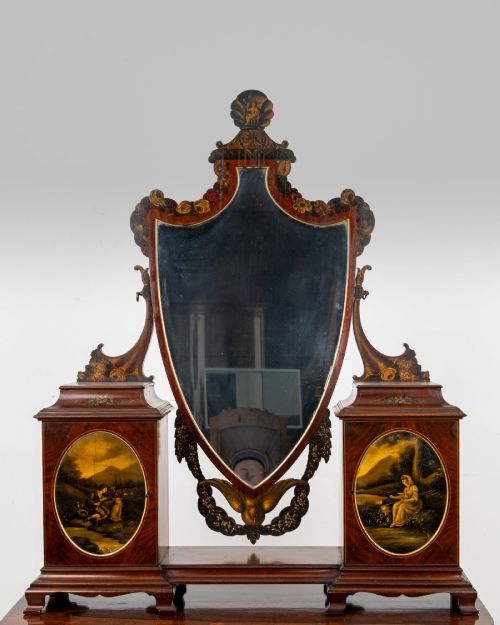


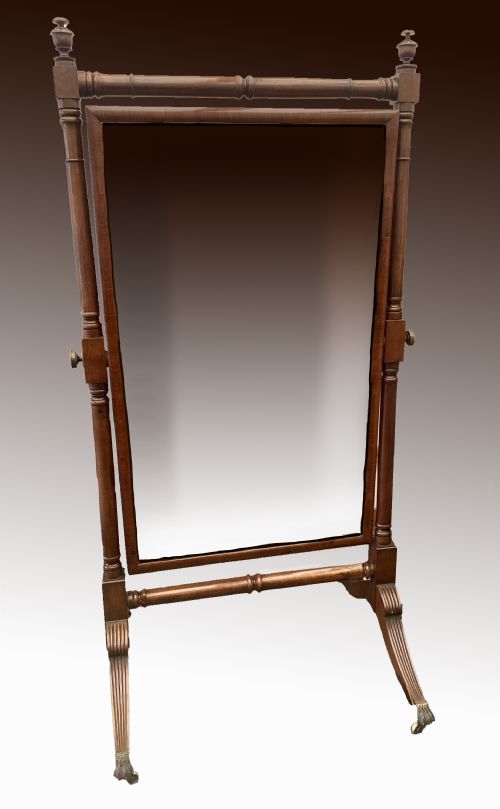


Edwardian Mahogany Swing Glass
Edwardian mahogany swing glass pieces are tabletop and freestanding mirrors designed for daily grooming, offering adjustable reflection within warm timber frames.
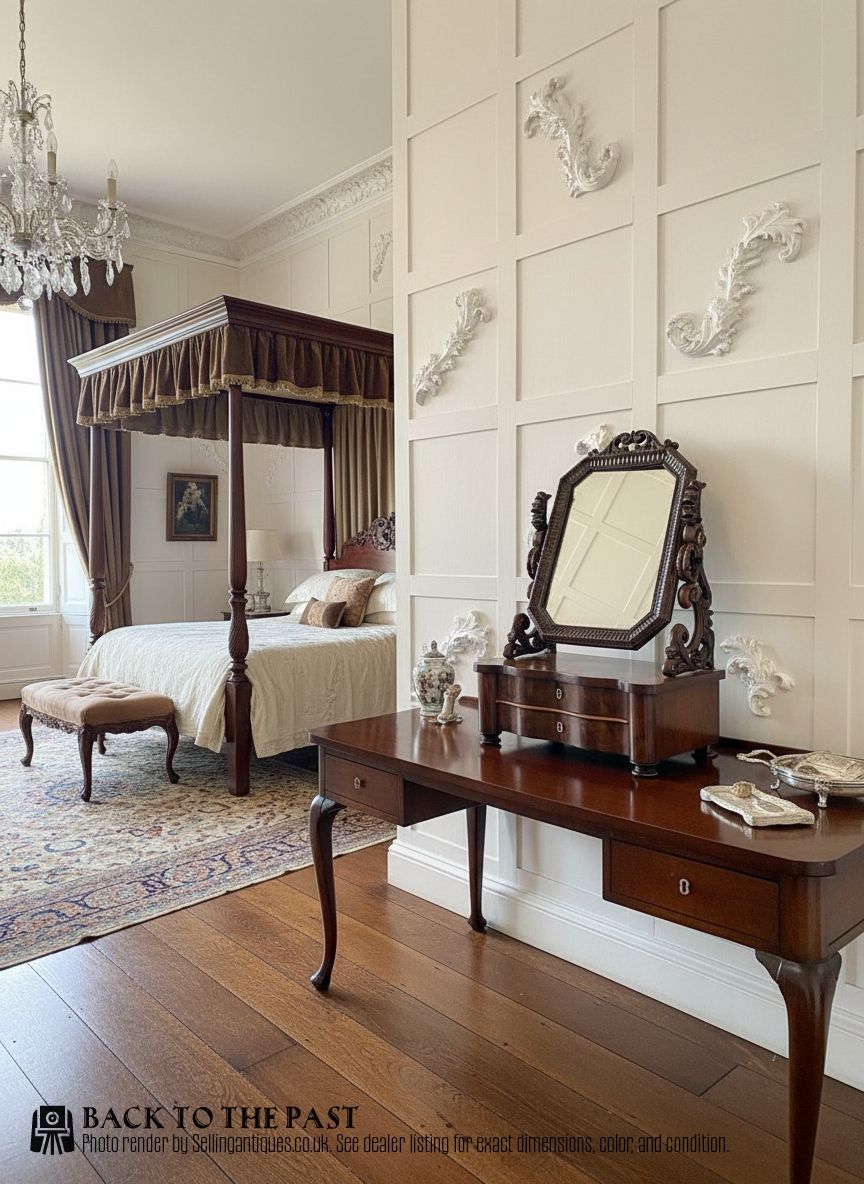
Edwardian Mahogany Swing Glass
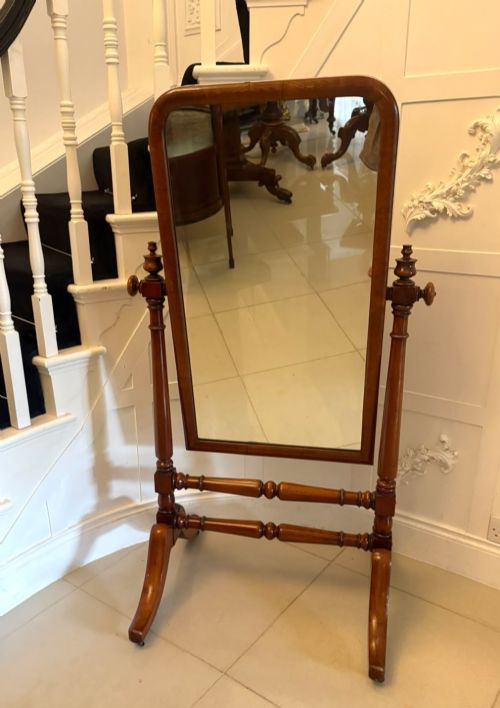
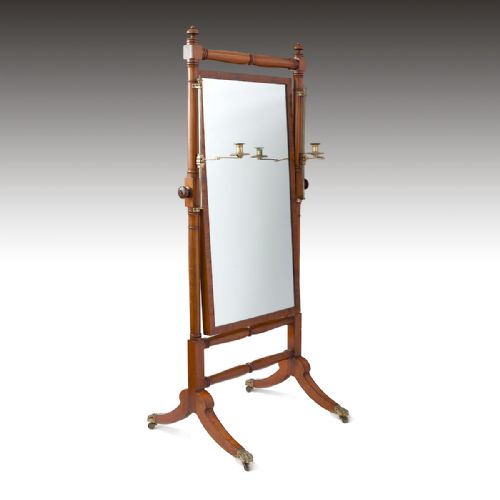
When you search for edwardian mahogany swing glass, you encounter dressing table mirrors and larger freestanding cheval mirrors designed for the bedroom. The pieces on this page span the Edwardian period, Victorian era, Regency style, and Georgian designs.
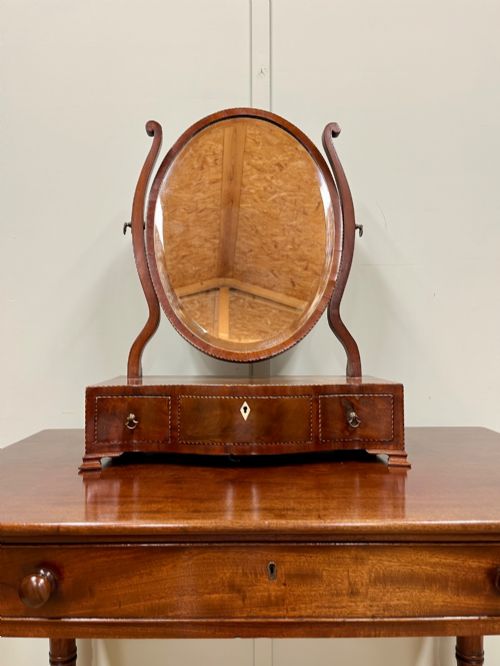
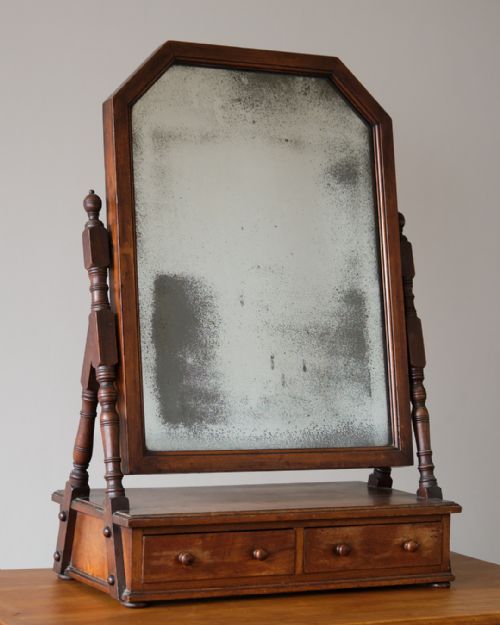
The form typically consists of a vertically pivoting mirror plate mounted within upright standards on a stable base or miniature chest. Smaller examples sit upon a dressing table, whilst taller cheval mirrors stand directly on the floor.
How they were made
Cabinet makers utilised solid mahogany and flame mahogany veneer over secondary timbers to construct the frames and bases. Artisans frequently applied marquetry inlay to embellish the surfaces of Edwardian and Victorian examples.
The swinging mechanism relies on brass pivots, screws, or side-arm pins that allow the glass to tilt at various angles. Mirror glass is set within rebated frames, sometimes accompanied by small bone escutcheons or subtle brass hardware.
Some miniature dressing mirrors include tiny concealed drawers for hiding secret love letters or stray cufflink backs.
What varies in quality
The depth of figure in the mahogany veneer and the crispness of any marquetry inlay define the visual merit of the piece. Substantial timber framing and well-proportioned upright standards provide better stability than lighter, plainer constructions.
Original brass hardware and smoothly functioning pivot mechanisms indicate careful manufacture and preservation. Finer examples display meticulous joinery and proportion that harmonise with the period of their origin.
Heal And Sons
The Edwardian Mahogany Swing Glass Glossary
- Cheval mirror
- A large freestanding mirror supported on four legs or a heavy frame that allows the entire plate to swing vertically. These tall pieces were essential for full-length attire checks in period dressing rooms.
- Swing glass
- A mirror plate suspended on side pivots within a frame so the angle of reflection can be adjusted. This setup is common to both tabletop dressing glasses and floor-standing cheval mirrors.
- Flame mahogany veneer
- Thin slices of mahogany cut from where branches join the trunk to create a fiery, repeating grain pattern. Cabinet makers laid these veneers over stable base woods to achieve decorative surfaces.
- Marquetry inlay
- Pieces of contrasting timber fitted into a prepared recess to form decorative patterns on the frame. This technique adds visual complexity to Edwardian and Victorian mahogany furniture.
Edwardian Mahogany Swing Glass: Frequently Asked Questions
What is an edwardian mahogany swing glass?
An edwardian mahogany swing glass is a tilting mirror housed in a mahogany frame, made during the early twentieth century.
These pieces function either as tabletop dressing mirrors or larger floor-standing cheval mirrors for daily use.
How do you use a swing glass?
You adjust the brass side pivots to tilt the mirror plate to the desired angle for grooming.
They sit securely on dressing tables or floor bases, providing adjustable reflections in bedrooms and dressing rooms.
How do you date an edwardian mirror?
You examine the timber species, construction methods, hardware, and inlay styles relative to documented design periods.
Edwardian examples often feature lighter mahogany frames with subtle inlay, whereas earlier Georgian pieces show heavier proportions.
Where were these mirrors placed?
These mirrors were placed on top of dressing chests or directly onto bedroom floors.
Their adjustable frames made them practical for close-up grooming or viewing complete outfits.