
Edwardian Mahogany Side Cupboard
When you search for an edwardian mahogany side cupboard, you enter a domain of practical timber storage built with lighter proportions than Victorian predecessors.
Edwardian Mahogany Side Cupboard
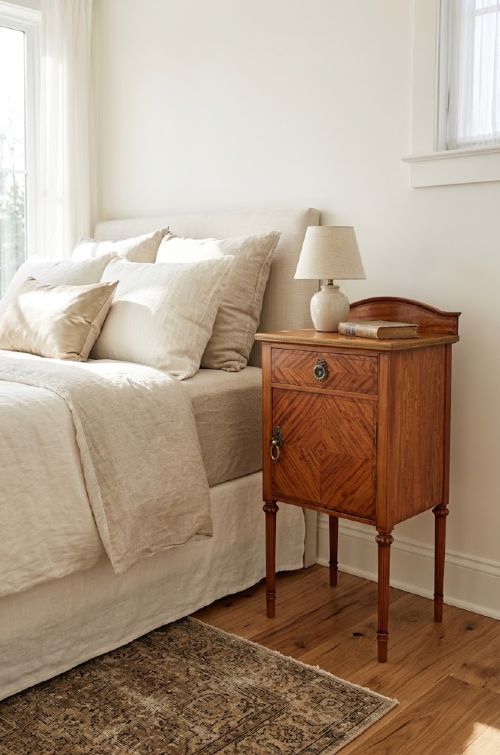
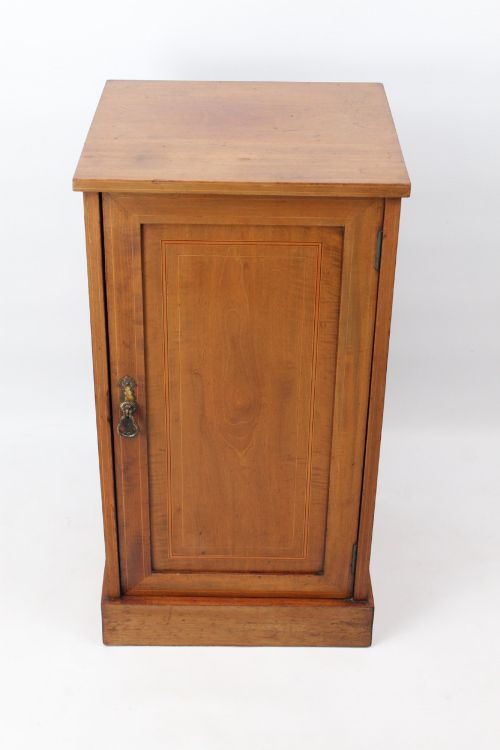
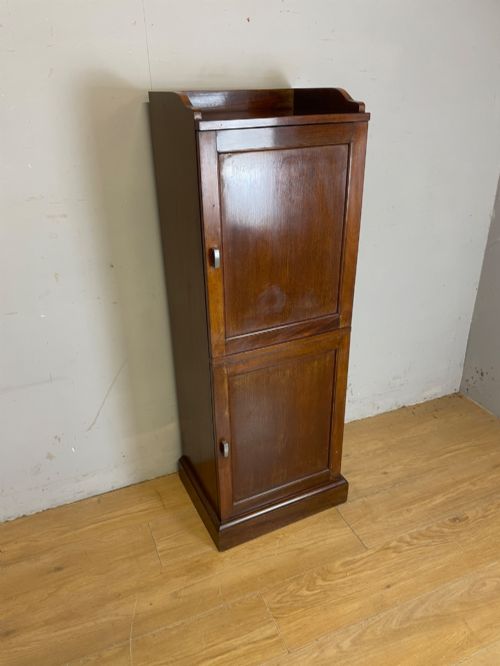
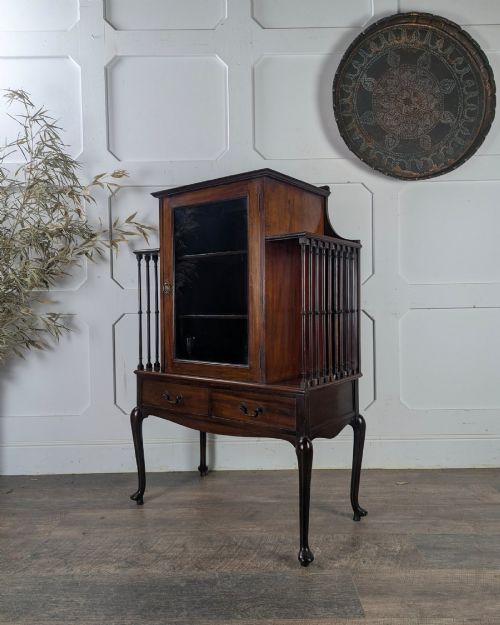
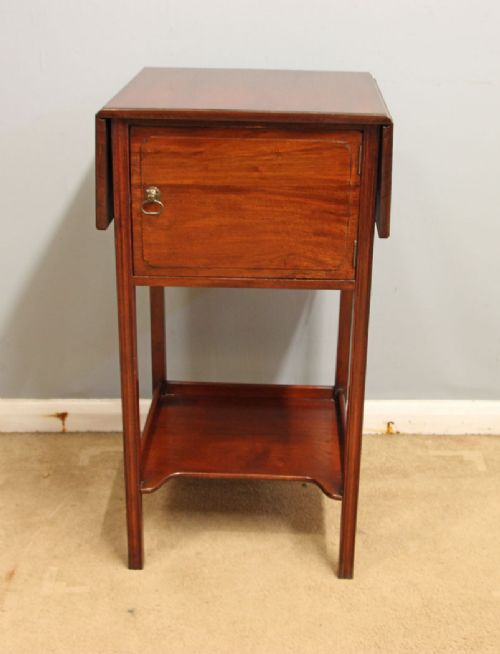
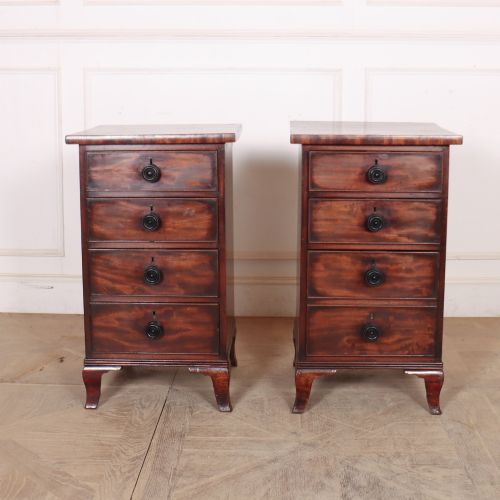
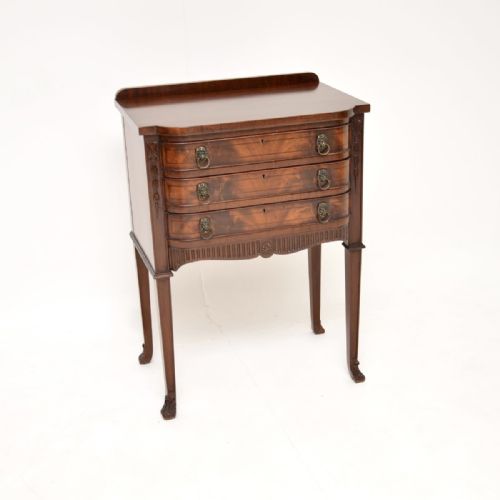
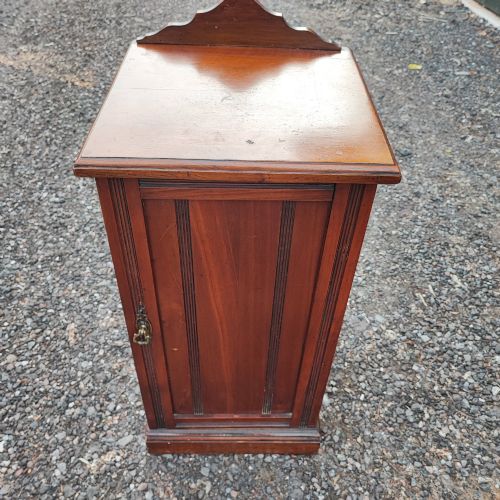
An edwardian mahogany side cupboard is primarily encountered as a compact bedside pot cupboard or a small display piece designed for domestic utility. These items frequently incorporate single doors, enclosed shelving, and delicate proportions typical of the period.
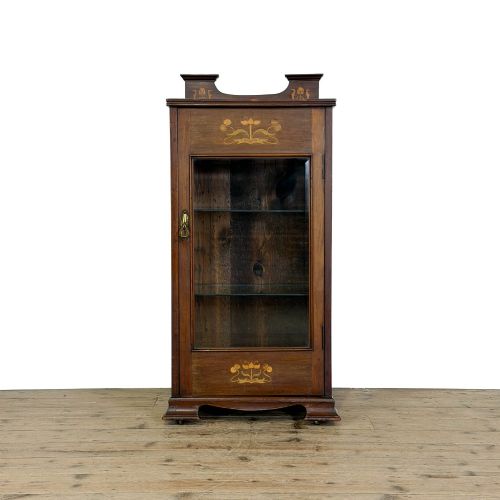
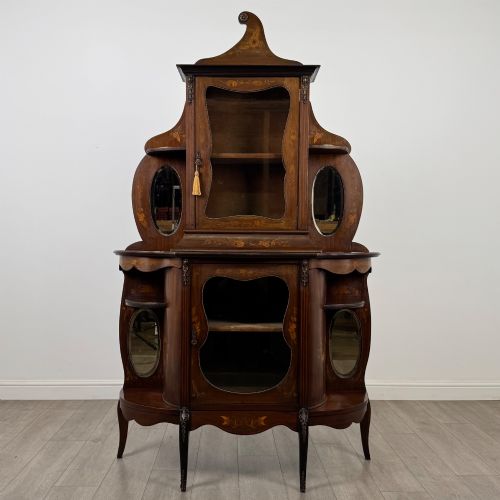
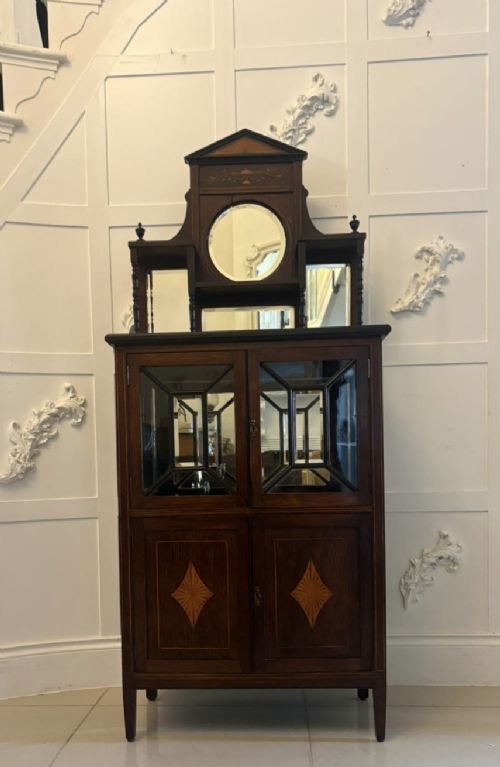
The selection ranges from simple freestanding bedside tables to elaborate music cabinets and glazed display furniture. Pieces often reflect Sheraton revival or art nouveau influences alongside standard Edwardian forms.
How they were made
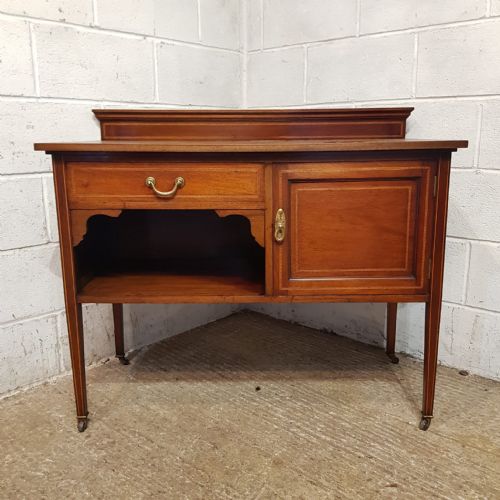
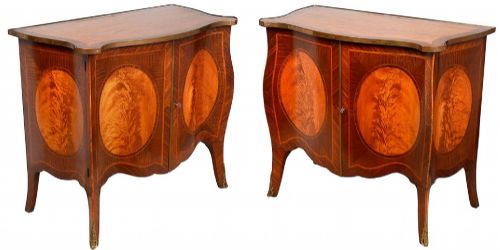
Makers utilised solid mahogany and supporting timber frameworks embellished with contrasting satinwood inlay, boxwood crossbanding, and marquetry details. Brass hardware and occasional glass panels or mirror-backs completed the construction of these cabinets.
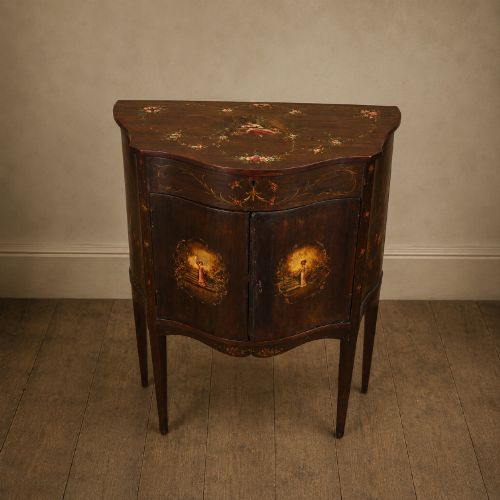
Surface decoration relied heavily on fine banding and hand-painted motifs rather than heavy carving, creating a lighter visual aesthetic than earlier nineteenth-century furniture.
Listings feature mahogany, satinwood, and boxwood alongside glass and mirror-back additions, spanning Edwardian, Victorian, and Regency periods.
What varies in quality
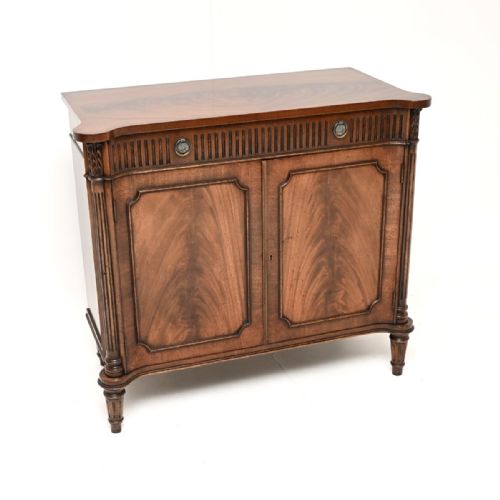
The standard of timber selection and the precision of the inlay work distinguish finer examples from standard commercial output. Matching grain patterns across doors and drawers indicate superior craftsmanship.
Makers known for retail excellence produced pieces with refined interior fittings, robust joinery, and meticulous attention to decorative banding.
Maple and Co·Howard and Sons·Warring and Gillow·Collinson and Lock·Christopher Pratt of Bradford·Keeble London
The Edwardian Mahogany Side Cupboard Glossary
- Pot cupboard
- A small bedside cabinet originally constructed to enclose a chamber pot. These practical items typically feature a single door above a small enclosed space.
- Satinwood inlay
- A decorative technique utilising contrasting light-coloured exotic wood inserted into the mahogany surface. This ornamentation defines much of the revival style.
- Crossbanding
- A narrow strip of veneer laid across the grain of the main timber panel around the border. It provides a neat framing effect on doors and tabletops.
- Demi-lune
- A half-moon shape utilised for console tables and commodes. Such curved furniture fits neatly against walls in narrow hallways and bedrooms.
Edwardian Mahogany Side Cupboard: Frequently Asked Questions
What is a pot cupboard?
A pot cupboard is a small bedside cabinet designed during the nineteenth and early twentieth centuries to enclose a chamber pot. These compact units offered a discrete and hygienic storage solution before modern indoor plumbing became universal.
Today, these versatile items function perfectly as standard bedside tables or small lamp stands in living spaces, retaining their original proportions and internal shelving.
How do I identify Edwardian furniture?
Edwardian furniture is generally characterised by lighter proportions, refined satinwood inlay, and a leaning towards revival styles such as Sheraton and Adam. The timber framing avoids the heavy, dark mass of high Victorian pieces.
Examination of secondary timbers and construction methods helps confirm the era, alongside typical decorative motifs like boxwood crossbanding and subtle floral marquetry.
Where were side cupboards used?
These cabinets served primarily in bedrooms as bedside storage for personal items and washing paraphernalia. Larger variations found placement in drawing rooms and hallways as display units or music cabinets.
Their compact footprints allowed them to fit into tight domestic spaces while providing surface area for lamps and decorative objects.
What is Sheraton revival style?
Sheraton revival refers to late nineteenth and early twentieth-century furniture inspired by the neoclassical designs of eighteenth-century designer Thomas Sheraton. This aesthetic favours tapered legs, satinwood banding, and symmetrical geometric inlay.
Cabinets built in this fashion display a balanced, elegant character that contrasts sharply with the earlier ornate Victorian taste.