

Edwardian Mahogany Server Table
An edwardian mahogany server table brings disciplined grain and quiet proportion into a dining room, offering a sturdy surface for service and display.
Edwardian Mahogany Server Table
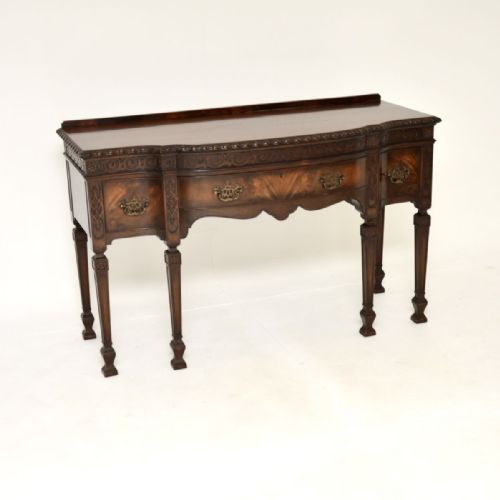
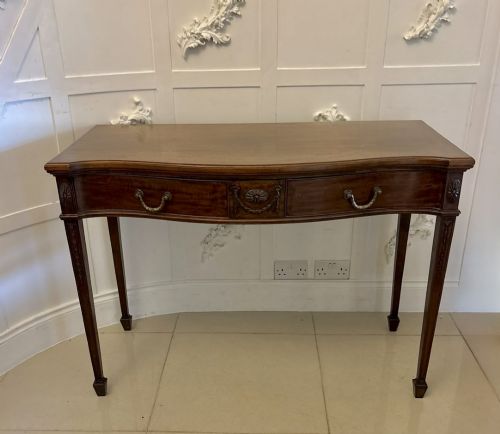
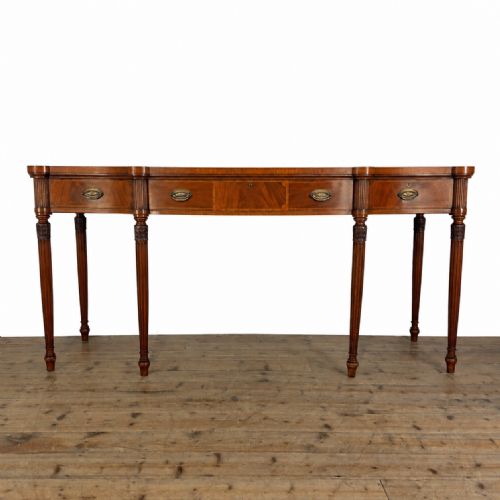
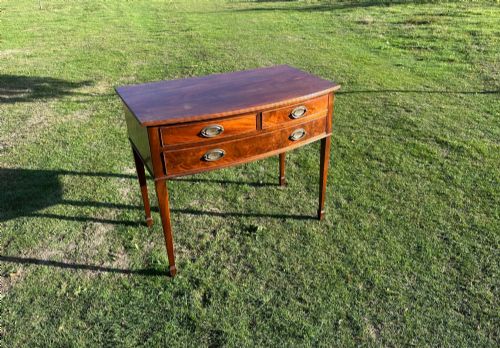
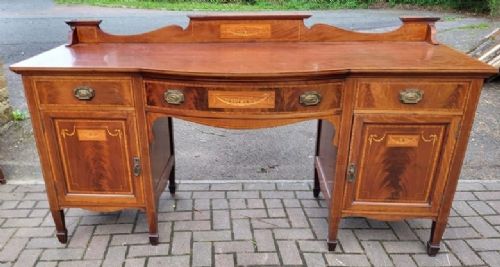
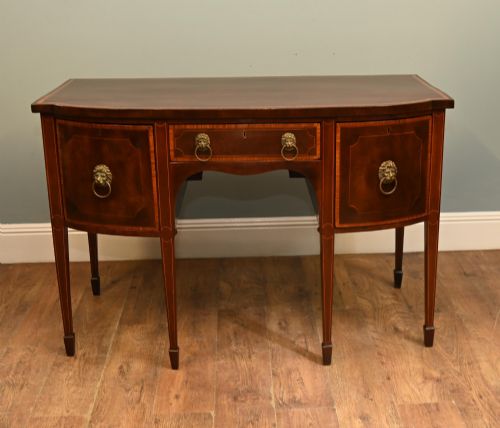
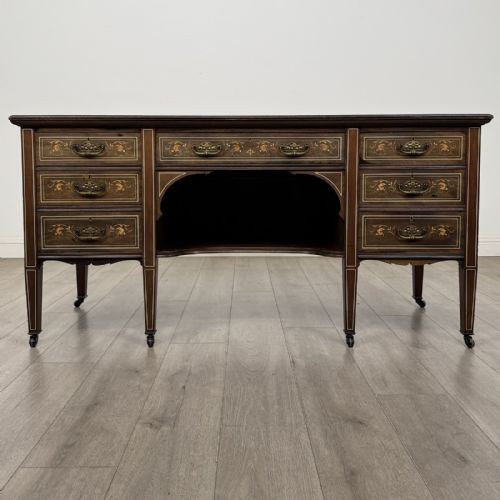
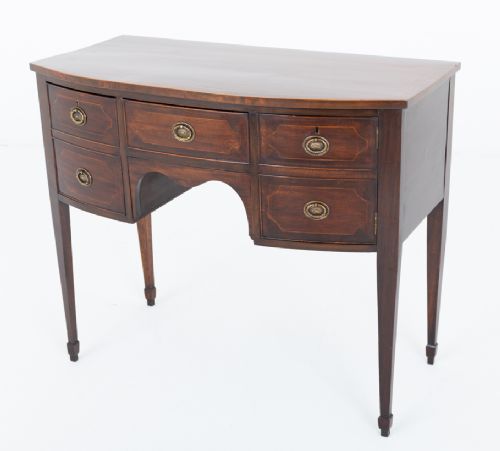
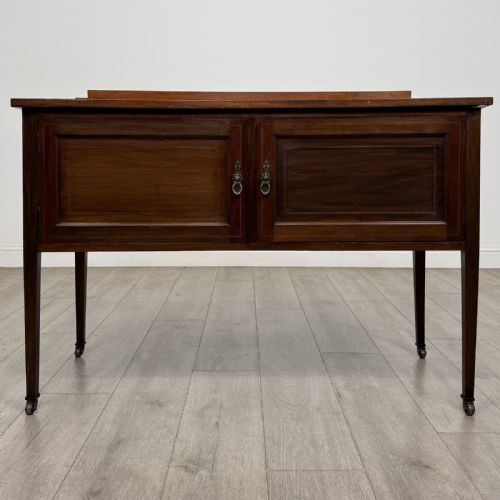
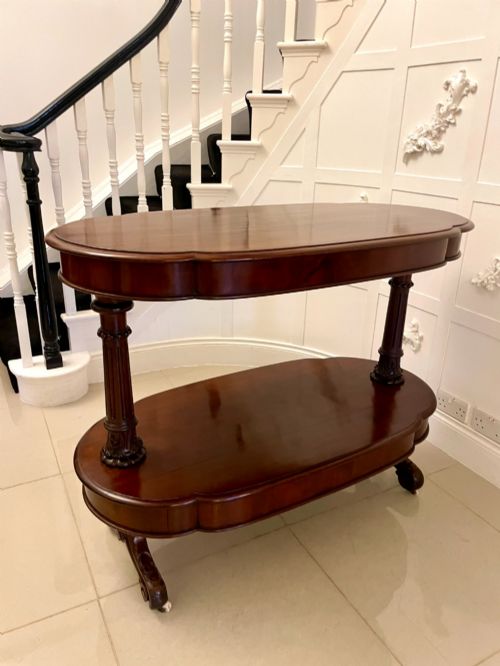
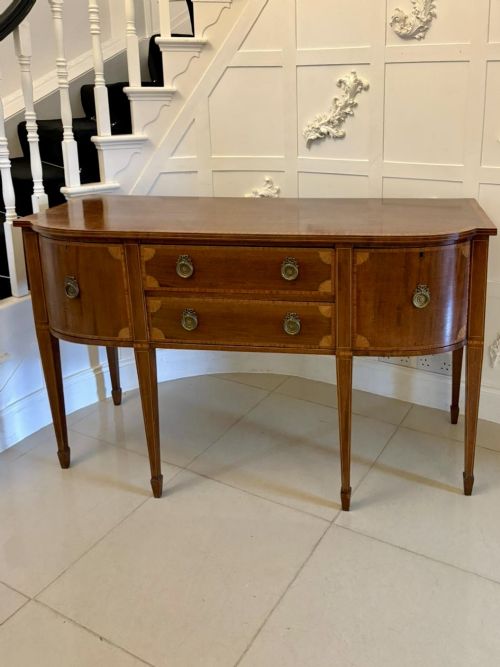
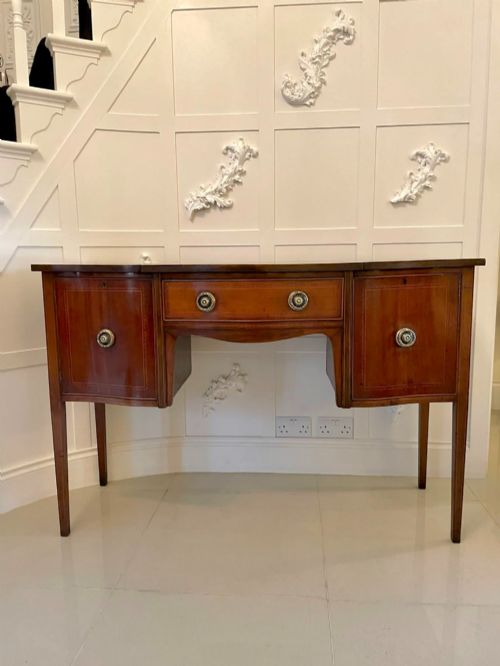
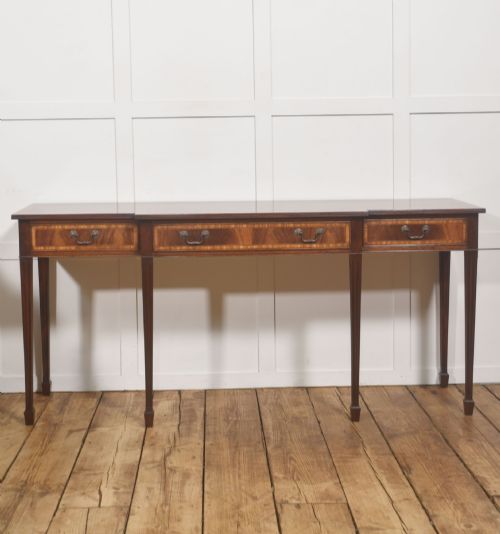
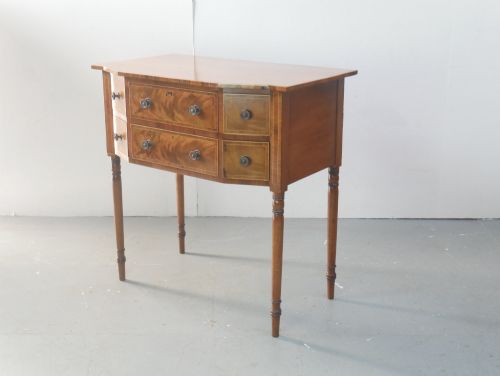
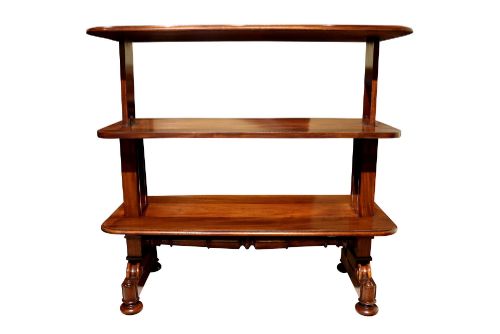
When you search for an edwardian mahogany server table, you encounter a selection spanning primarily from the Edwardian period and the early twentieth century, alongside Victorian, Georgian, and nineteenth-century examples. The forms vary from straightforward console and hall tables to serpentine, bow front, and breakfront sideboards with fitted cupboards or drawers.
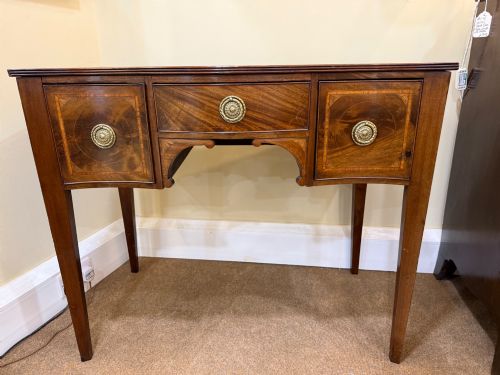
The pieces on this page lean heavily toward Edwardian interpretations of Sheraton and Adam styles, often featuring slender tapered legs or paw feet. Sideboards and buffets dominate the heavier end of the form, while console and side tables provide a lighter footprint for hallways and dining spaces.
Materials and Technique
Makers constructed these tables predominantly from solid mahogany and flame mahogany veneer, chosen for depth of grain and warm reddish-brown tone. Cabinetmakers then enriched the primary timber with satinwood and boxwood inlay, creating delicate contrasting borders and geometric banding.
Brass hardware such as handles, feet, or campaign fittings appear alongside intricate wood inlays to punctuate the design. The joinery relies on traditional cabinetry techniques, supporting substantial timber surfaces and curved serpentine or bow fronts without warping.
Edwardian Mahogany Server Table Retail Price Guide 2026
Typical asking prices for edwardian mahogany server table among the pieces listed under this phrase on Sellingantiques today, from the lower quarter to the upper quarter. They describe what is for sale here now, not the wider market.
Materials span solid mahogany, flame mahogany veneer, satinwood, and boxwood inlay.
Craftsmanship and Proportion
The distinction between ordinary and superior pieces rests upon the crispness of the wood inlay and the selection of timber veneers. Flame mahogany with symmetrical figuring and finely cut satinwood or boxwood lines demands greater skill from the cabinetmaker than plain planks.
Structural harmony also separates the range, where balanced proportions in serpentine and breakfront shapes reflect thoughtful design. Superior examples maintain tight joints and clean lines across complex curves, whereas simpler pieces rely on straightforward rectangular execution.
M. D. Miller & Sons
The Edwardian Mahogany Server Table Glossary
- Flame mahogany
- A veneer cut from timber where the branch meets the trunk, producing a distinctive rippled, flame-like pattern. This figured wood is prized for its dramatic visual movement.
- Satinwood inlay
- A contrasting light-coloured timber inserted into the mahogany surface in thin decorative bands. It creates sharp visual borders along table edges and drawer fronts.
- Serpentine front
- A furniture front curving outward in the centre and inward at the sides. This contour requires precise woodworking to maintain structural integrity.
- Breakfront
- A piece of furniture where the central section projects forward from the flanking wings. It adds architectural depth to large sideboards and serving tables.
- Crossbanding
- A border of veneer laid with the grain running perpendicular to the main surface. It frames panels of mahogany to give a finished, tailored edge.
Edwardian Mahogany Server Table: Frequently Asked Questions
How do I distinguish an Edwardian server from a Georgian original?
Edwardian interpretations often display lighter satinwood inlay and machine-assisted veneer work, drawing inspiration from earlier Sheraton and Hepplewhite designs. They tend to feel slightly more delicate in their joinery compared to heavier eighteenth-century prototypes.
Examining the underside and drawer linings reveals secondary timbers that help clarify the true age of the piece. Subtle shifts in colour and hardware style also point toward the turn of the twentieth century.
Can I use a server table as a hall console?
Many servers and side tables adapt well to entrance halls because their narrow depths leave walkways clear while offering a surface for post and keys. Console and hall tables share this practical footprint.
Placing one against a hallway wall provides both storage drawers and a display space for lamps or ceramics. Their finished backs and compact proportions suit transitional domestic spaces.
What is the difference between a sideboard and a serving table?
Serving tables are traditionally open-framed tables with legs and sometimes drawers, designed strictly for holding dishes during a meal. Sideboards incorporate enclosed cupboards and multiple drawers for storing dining silver and linen.
While both serve the dining room, sideboards offer substantial enclosed storage beneath the surface. Serving tables present a lighter, more open architectural profile.
How do I care for mahogany surfaces?
Mahogany responds well to regular dusting with a soft, dry cloth to prevent grit from dulling the wax finish. Avoiding direct sunlight and sudden temperature changes protects the timber and veneer from splitting.
Applying a traditional beeswax polish periodically nourishes the wood and maintains its natural lustre. Coir mats and felt pads protect the top from moisture and heat during daily use.